Proper commercial roof insulation is not just about keeping your building warm; it is a critical, year-round defense system that prevents massive heat loss in the winter, significantly cuts your energy bills, and protects your entire roof assembly from the severe damage caused by ice and moisture. For Wichita businesses, the right insulation is the foundation of a successful, long-lasting roofing system.
How does good roof insulation save my company money on winter energy bills?
Good roof insulation saves your company money because it acts like a thick thermal blanket that stops heat from escaping through the roof deck, forcing your furnace to run less often to maintain a comfortable temperature inside the building. Heat naturally moves from warmer areas to colder areas, so in the winter, the heat generated by your HVAC system is constantly trying to escape up through the roof.
The insulation’s effectiveness is measured by its R-value, which indicates how well it resists heat flow. When you double the R-value, you roughly halve the amount of heat lost through the roof assembly. For example, if you upgrade your insulation from R-10 to R-20, you can expect a noticeable drop in heating costs. In commercial buildings, where the roof is often the largest single surface area, studies show that upgrading insulation can reduce total energy consumption by 15% to 25% [Source: U.S. Environmental Protection Agency Energy Star Program: https://www.energystar.gov/buildings/save_energy_commercial_buildings]. This means the initial cost of quality insulation is quickly paid back through years of lower utility bills.
What type of insulation is best for a flat commercial roof in Kansas?
The best types of insulation for flat commercial roofs in Kansas are usually rigid foam boards, such as Polyisocyanurate (Polyiso) or Expanded Polystyrene (EPS), because they offer the highest R-value per inch, are durable, and provide a stable base for the waterproofing membrane. These materials are chosen because they can handle the weight of rooftop equipment and foot traffic without crushing.
- Polyiso: This is the most common and often preferred type. It provides excellent thermal resistance (high R-value) and is relatively lightweight. It is essential in Kansas because it maintains good insulation value across a wide range of temperatures.
- EPS: This is a less expensive option but still effective. It is lighter and often used for tapered systems (see below), but its R-value can be lower than Polyiso, so more thickness is often required to achieve the same energy performance.
Choosing the right type is only half the battle; the correct thickness is equally important to meet energy codes and achieve true savings in our cold climate.
How does insulation help prevent the formation of ice dams on my roof?
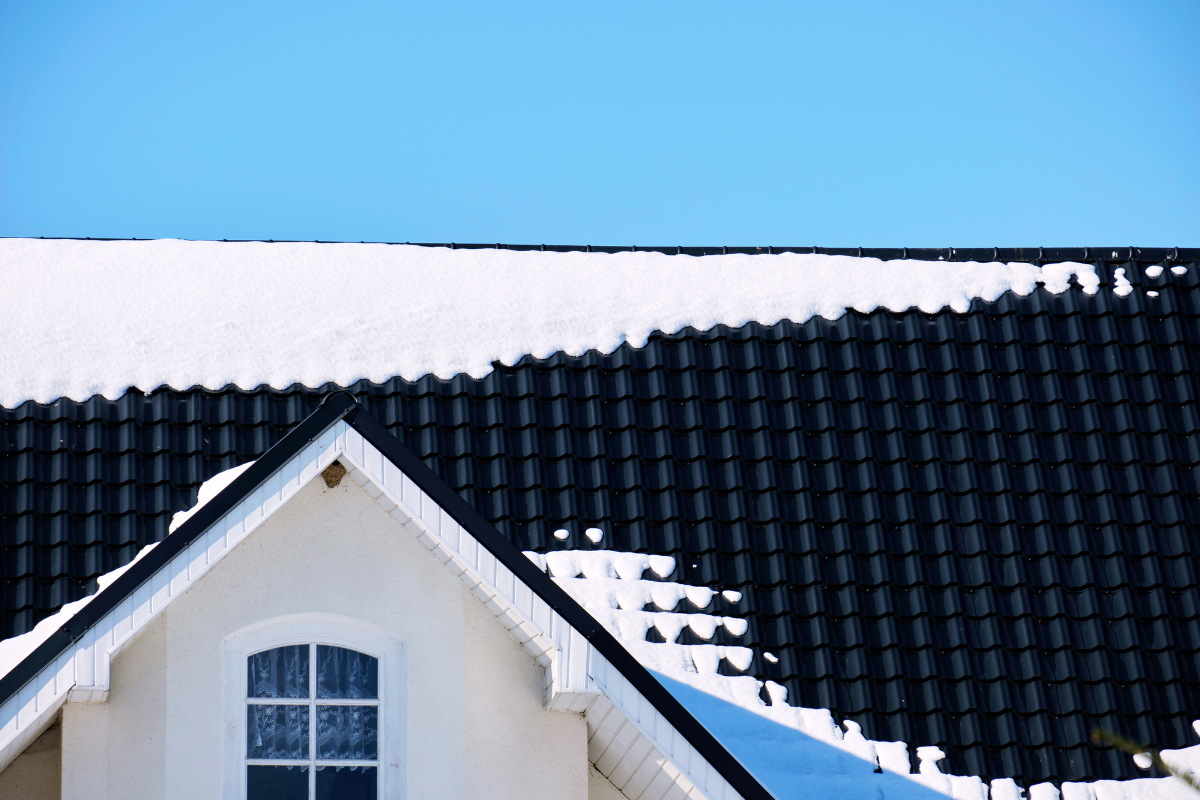
Insulation prevents the damaging formation of ice dams by keeping the heat inside the building, which keeps the entire roof surface cold enough so that snow melts evenly or not at all, preventing refreezing at the eaves or drainage points. Ice dams form when heat escapes through the roof, melts the snow directly above the heated area, and then that meltwater runs down the cold, unheated edges of the roof (the eaves) and refreezes into a wall of ice.
This wall of ice then causes water to back up under the roof membrane and into the building. Proper, continuous insulation ensures the roof deck temperature stays cold—ideally near the outside air temperature—so that snow is not prematurely melted by escaping heat. By stopping the unnatural melting and refreezing cycle, insulation protects your gutters, prevents water from backing up, and saves you from costly water damage claims.
Why is it important to use tapered insulation when installing a new roof?
Tapered insulation is crucial because it creates a gentle slope across a flat roof surface, guiding rainwater and meltwater directly toward the drains or gutters, which prevents standing water, also known as ponding water. Standing water is the number one enemy of any commercial roof, drastically shortening the membrane’s life and increasing the chances of leaks.
Tapered systems are simply rigid foam boards cut at varying thicknesses to create an intentional slope (or pitch). Even on a “flat” commercial roof, water needs to move off the surface quickly. If water sits on a roof for 48 hours or more, it can void some membrane warranties because it weakens the membrane and speeds up material breakdown. Using tapered insulation is a simple engineering solution that guarantees positive drainage, giving your roof a longer life and protecting your investment from water damage.
What happens if my current roof insulation gets wet?
If your current roof insulation gets wet from a leak, the results are highly detrimental: it loses most of its energy-saving R-value, becomes a heavy weight on your structural deck, and creates a breeding ground for mold and mildew inside the roof assembly. Most commercial insulation materials are not designed to function when soaked.
- Loss of Efficiency: When water replaces the air pockets within foam insulation, its ability to stop heat transfer drops by up to 90% [Source: Roofing Contractors Association Report on Moisture]. Your furnace then runs constantly, causing your energy bills to skyrocket.
- Structural Risk: Saturated insulation can become extremely heavy. For a hypothetical 10,000 square foot roof, wet insulation could add tens of thousands of pounds of extra weight, dangerously straining the structural deck, especially when combined with a heavy snow load.
- Hidden Mold: Wet, trapped insulation provides the perfect dark, damp environment for mold spores to multiply, leading to air quality issues inside your building that are expensive and difficult to remediate.
If a moisture survey finds widespread wet insulation, Solid Rock Commercial Roofing will recommend a full replacement because the only way to fix it is to tear off the membrane and replace the saturated material with new, dry insulation.
Frequently Asked Questions (FAQs)
Do I need to remove my old insulation before installing a new roof?
Generally, yes, if the existing insulation is wet, damaged, or severely compressed, it must be removed. If the old insulation is dry and in good condition, a contractor might install a new layer of membrane and insulation over the existing layer (a “recover” or “re-roof” job) to save on disposal costs. However, if any moisture is present, full tear-off is mandatory to prevent trapping water inside the new roofing system. A reliable contractor will always perform a moisture survey using thermal imaging to make this critical determination.
Is there a specific R-value required for commercial roofs in Kansas?
Yes, commercial buildings in Kansas must meet certain minimum energy efficiency standards set by the International Energy Conservation Code (IECC), which dictate the minimum R-value you must install for new construction or total replacement projects. These minimum values are often quite high (e.g., R-25 to R-30 or more, depending on the material and building type) to ensure adequate winter performance. A professional contractor knows these codes and will ensure your new insulation package meets or exceeds the required R-value for the Wichita climate zone.
Can insulation help protect my roof from hail damage?
Yes, quality high-density rigid board insulation provides a stable, firm base beneath the roofing membrane, which significantly helps the membrane resist penetration and crushing damage from hail impact. If the membrane is laid directly over a soft, old, or thin layer of insulation, hail is more likely to bruise or puncture the surface. A solid, new insulation layer helps transfer the impact energy across a wider area, reducing the risk of a breach during a typical Kansas hailstorm.
Final Thoughts: The Insulation Investment
Insulation is the unsung hero of your commercial roof. It is not just a building component; it is a long-term investment that actively reduces your operating expenses every single month by dramatically cutting your heating and cooling costs. More importantly, proper insulation acts as a shield, preventing ice dams and protecting your entire structural assembly from the moisture damage that leads to mold, rot, and emergency structural repairs. Don’t compromise on the quality or R-value of your insulation.
Contact Solid Rock Commercial Roofing today to schedule a comprehensive roof assessment, including a thermal or moisture survey. Our Wichita experts will help you select the precise insulation system—including tapered options—to maximize your energy savings, stop ice dam formation, and secure your building’s defense system against the harsh Kansas weather.
Call us to book your inspection and ensure your roof is insulated for peak winter performance.