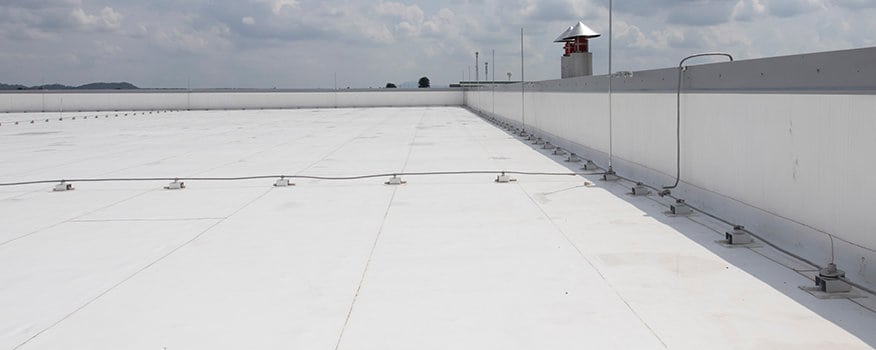
Comprehensive TPO and PVC Roof Repair Solutions in Wichita
At Solid Rock, we specialize in offering a wide selection of commercial roofing in Wichita. Bringing the most value to our customers is our top priority. For over 25 years we have taken pride in keeping up with the latest in roofing technology including TPO and PVC roofs. Both roofs are flexible allowing them to conform to temperature changes and natural shifting as the building ages.
We will get you the perfect TPO/PVC roof for your needs Call us today for a free estimate: (316) 227-2628
Every roofing project we complete begins with a thorough inspection performed by one of our expert roofers. This allows us to provide an accurate quote based on your needs. Our commercial roofing company in Wichita has built a reputation for offering superior customer service, skilled workmanship and the highest quality materials to ensure you are completely satisfied. We are committed to finding suitable roofing solutions that offer optimum protection, long life and cost-effective pricing.
TPO Roofing Installation
We believe in keeping our ears to the ground to keep up with the latest industry materials, trends and techniques. TPO (Thermoplastic Olefin) roofing has been gaining attention in the flat roof and low slope roof markets, especially for commercial properties. One of the main attractions to TPO is that it is considered a “green” roofing material. As a result, it becomes a more affordable option as it can save you money on your energy bills.
TPO is available in a number of light colors that help deflect the sun keeping the roof cooler. It is also resistant to corrosion and chemicals. Mildew and algae are repelled which can save you even more money on maintenance costs to pressure wash unwanted growth. When properly installed, your TPO roof can last from 10 to 20 years.
Our team of experts has installed hundreds of TPO roofs with excellent results. We take care to ensure your roof is installed to the highest standards to improve protection and help your roof enjoy an extended lifetime.
PVC Roofing Installation
PVC (polyvinyl chloride) is a strong roofing material that is highly durable and requires very little maintenance. It is a common choice for flat roofs as it is puncture and rip-resistant keeping it sound with an expected life of at least 20 years. It is chemical resistant which makes it a good choice for commercial buildings.
One of the main differences between TPO and PVC roofing is that PVC cannot come into contact with asphalt materials. Because of this, if you are installing a roof near asphalt roofing that won’t be replaced, PVC cannot be used. In this case, we will recommend a number of different options, including TPO. Many of our clients like the fact that PVC roofing comes in a number of different thicknesses. With a thicker material, your roof can be more resistant to splitting and cracks.
We handle all PVC roof types Call us today for a free estimate (316) 227-2628
Solid Rock is highly experienced in the installation of PVC commercial roofing. We provide outstanding workmanship in hand with superior customer service to make your roof installation experience pleasant and worry-free.
We repair and restore commercial PVC and TPO roofs in Wichita, Manhattan, Lawrence, Hays, Topeka, Salina, Hutchinson, Emporia, McPherson and all surrounding areas. Call us today at (316) 227-2628 to schedule a free estimate! We also offer TPO and PVC roofing in Olathe, including installation, repair, and restoration.
Installing PVC roofing involves preparing the roof surface, laying down insulation if needed, and then rolling out the PVC membrane. Secure the membrane using mechanical fasteners or adhesive, ensuring proper seams and overlaps for optimal waterproofing.
How to install TPO roofing membrane?
Installing a TPO roofing membrane involves preparing the roof surface, laying down the membrane, and securely fastening it using mechanical fasteners or adhesive. Ensure proper seams are welded for waterproofing and finish with edge detailing for optimal performance.
How is TPO roofing installed?
The installation of TPO roofing involves several key steps. First, the existing roof surface is prepared, followed by laying down the TPO membrane. The membrane is then secured using mechanical fasteners or adhesive, ensuring a watertight seal for durability and energy efficiency.
How is PVC roofing installed?
The installation of PVC roofing involves cleaning the roof surface, applying a suitable adhesive or mechanical fasteners, and then rolling out the PVC membrane, which is then heat-welded at the seams to ensure a watertight seal.
How to install PVC roofing membrane?
The installation of PVC roofing membrane involves preparing the roof surface, laying down the membrane, and securing it with mechanical fasteners or adhesive. Ensure proper overlaps and seal seams to prevent leaks for a durable finish.
How to install a PVC roof?
Installing a PVC roof involves preparing the surface, laying down insulation, and then securing the PVC membrane using mechanical fasteners or adhesives. It's crucial to ensure proper seams and overlaps for a watertight seal.
How to install TPO roofing?
The installation of TPO roofing involves preparing the roof surface, laying down the TPO membrane, and securing it using mechanical fasteners or adhesives. Proper sealing of seams and edges is crucial for optimal performance and durability.
What tools are needed for PVC roofing installation?
The tools needed for PVC roofing installation include a utility knife, seam roller, heat welding tool, measuring tape, and safety equipment. These tools ensure precise cuts, secure seams, and overall effective installation of the roofing material.
What is the best method for TPO roofing?
The best method for TPO roofing involves proper installation techniques, including mechanically fastening or adhering the membrane to ensure durability and energy efficiency. Regular maintenance and inspections also enhance the roof's lifespan and performance.
How to seal joints in PVC roofing?
Sealing joints in PVC roofing involves cleaning the area thoroughly, applying a compatible PVC adhesive or seam tape, and ensuring proper pressure is applied to create a watertight seal. Regular inspections can help maintain integrity.
What are common mistakes in TPO installation?
Common mistakes in TPO installation include inadequate surface preparation, improper seam welding, and neglecting to account for drainage. These errors can lead to leaks, reduced energy efficiency, and premature roof failure.
How to prepare the surface for PVC roofing?
Preparing the surface for PVC roofing involves cleaning the area thoroughly, ensuring it is free of debris, moisture, and contaminants. Additionally, any existing roofing materials should be inspected and repaired to create a smooth, stable base for proper installation.
What are TPO roofing installation guidelines?
The TPO roofing installation guidelines include ensuring a clean, dry surface, properly overlapping seams, using appropriate adhesives or mechanical fasteners, and adhering to manufacturer specifications for insulation and membrane installation to ensure durability and performance.
How to ensure proper drainage in PVC roofs?
Ensuring proper drainage in PVC roofs involves designing a sloped surface and strategically placing drains, gutters, and downspouts to direct water away from the roof. Regular inspections and maintenance are also essential to prevent blockages and water pooling.
What are the benefits of TPO roofing?
The benefits of TPO roofing include its excellent durability, energy efficiency, and cost-effectiveness. This roofing material is flexible, resistant to UV rays, and can help reduce energy costs, making it an ideal choice for commercial properties.
How to insulate under PVC roofing?
Insulating under PVC roofing involves installing rigid foam insulation boards or spray foam to enhance thermal efficiency. Ensure proper sealing and ventilation to prevent moisture buildup, which can compromise the roof's integrity.
What safety measures for TPO roofing installation?
Safety measures for TPO roofing installation include using personal protective equipment (PPE), ensuring proper ladder and scaffold setup, securing tools and materials, and adhering to fall protection regulations to prevent accidents and ensure a secure work environment.
How to troubleshoot PVC roofing issues?
Troubleshooting PVC roofing issues involves inspecting for visible damage, checking seams for leaks, and ensuring proper drainage. If problems persist, consult a professional for thorough evaluation and repair to maintain the roof's integrity and performance.
What materials are best for TPO roofing?
The materials best for TPO roofing include high-quality thermoplastic polyolefin (TPO) membranes, which are known for their flexibility, durability, and energy efficiency. These membranes are typically reinforced with polyester or fiberglass for added strength and longevity.
How to maintain installed PVC roofs?
Maintaining installed PVC roofs involves regular inspections for damage, cleaning debris, and checking for leaks. Ensure proper drainage and address any issues promptly to extend the roof's lifespan and maintain its energy efficiency.