As fall sets in and the air turns colder, business owners in Wichita, Derby, Newton, and nearby areas need to prepare their roofs before winter arrives. Cold weather, ice, and snow can cause serious damage—especially to flat or low-slope roofs.
If you wait until a leak starts, it’s often too late. Repairs in winter are harder, more expensive, and take longer. That’s why fall is the right time to act.
At Solid Rock Commercial Roofing, we help Kansas businesses stay ahead of the weather. This guide walks you through simple but important steps to protect your roof—and your building—before the first cold snap hits.
Key Takeaways
- Fall is the best time to inspect and repair commercial roofs in Wichita and surrounding areas before winter causes costly damage.
- Common problem areas include:
- Clogged gutters, drains, and scuppers
- Loose flashing and roof seams
- Ponding water and soft spots
- Unsealed HVAC units and rooftop penetrations
- Overhanging tree branches
- Trapped moisture under the roof membrane
- Clogged gutters, drains, and scuppers
- Flat and low-slope roofs are especially at risk during freeze-thaw cycles and snow accumulation.
- Routine maintenance helps avoid emergency repairs, which are more expensive and harder to schedule during winter months.
- Solid Rock Commercial Roofing offers local expertise, cold-weather repair capabilities, and preventive service plans tailored to Kansas weather.
- Businesses that perform fall inspections avoid disruptions, protect warranties, and extend the life of their roof.
- Documenting roof conditions with photos and reports before winter can support future insurance claims and service planning.
- Call Solid Rock at (316) 227-2628 or visit solidrockcorp.com/contact-us to schedule your fall inspection before the first freeze.
What Makes Wichita’s Weather Tough on Roofs
Wichita’s fall weather can shift fast. You might see warm afternoons followed by freezing nights. By late October, snow or ice storms are not unusual.
This freeze-thaw pattern is hard on roofing materials. It can cause them to expand and shrink, which leads to cracks. Water that freezes on your roof gets heavy and can block drains or tear open seams.
Flat and low-slope roofs are especially at risk. Water doesn’t drain off as quickly, and if leaves or dirt block the gutters or scuppers, pooling water turns into dangerous ice.
Preparing your roof now—in September or October—is the smartest way to avoid damage during the colder months.
Fall Roof Maintenance Checklist for Businesses
Here’s a checklist that building owners and property managers can use to prepare their roofs before winter:
1. Clean Out Gutters, Drains, and Scuppers
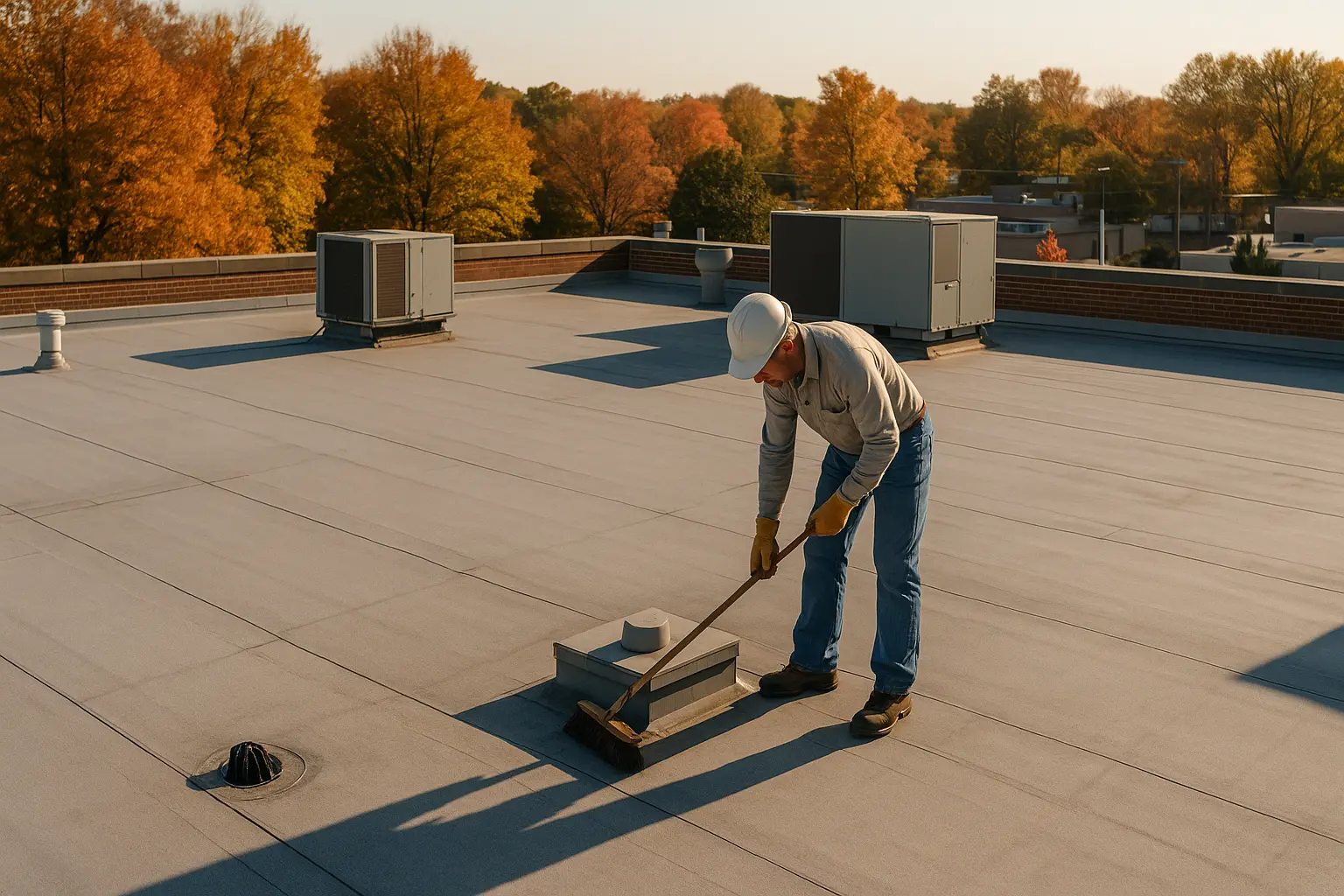
Gutters and drains filled with leaves or debris are a major cause of winter roof problems. When water can’t drain, it stays on the roof, freezes, and adds weight. Over time, that ice can cause serious leaks or damage.
Scuppers—drainage holes on flat roofs—should also be checked. If they’re blocked, water will pool near roof edges and possibly seep into the building.
Even a simple cleaning in October can prevent costly leaks during a January freeze.
2. Inspect Flashing and Seams
Flashing is the material that covers joints where the roof meets walls, edges, or equipment. Seams are where different parts of the roof come together.
As temperatures rise and fall, these areas move slightly. Over time, the sealants used can dry out or crack. Even small gaps let in moisture—and that can lead to big problems later.
Solid Rock inspectors pay close attention to these areas. We look for loose flashing, cracks, or signs that sealants are wearing out.
3. Look for Ponding Water and Soft Spots
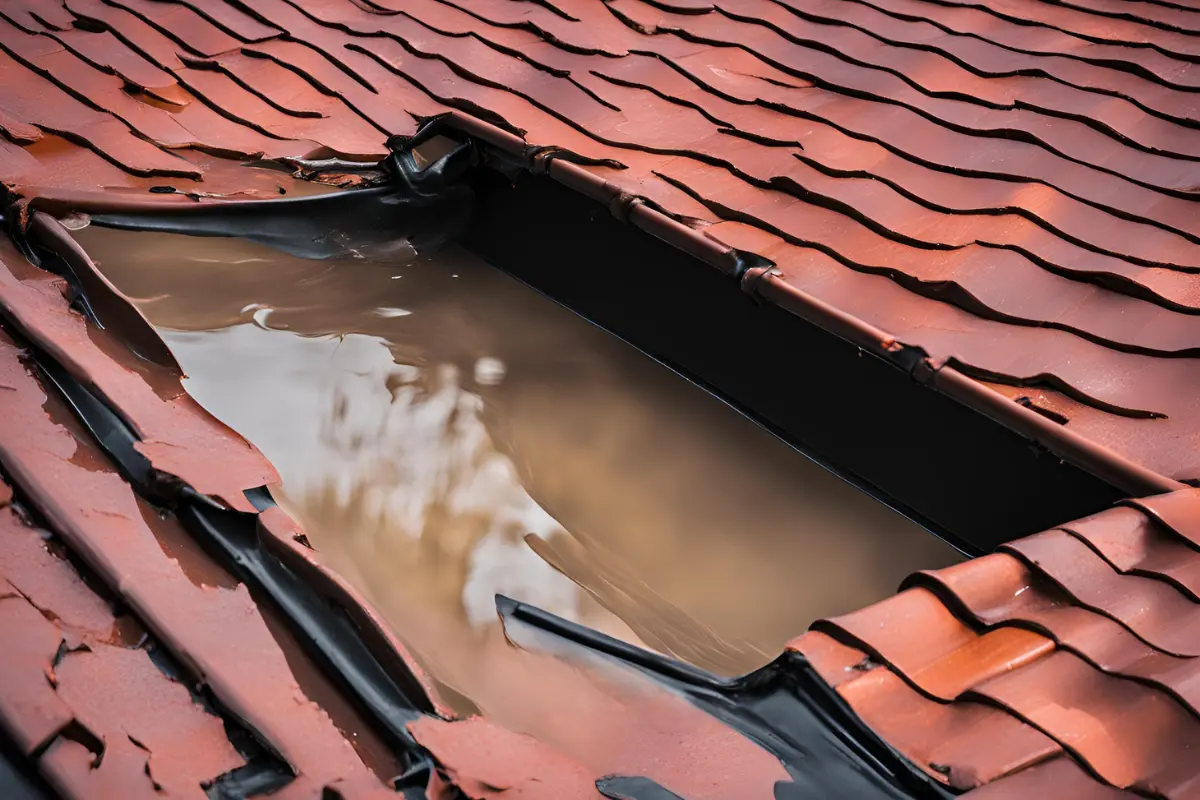
Ponding is when water collects in low areas of your roof. If it stays too long, it can damage the roof surface. When that water freezes, it adds weight and pressure—sometimes enough to crack the roof or cause leaks.
Soft spots are also warning signs. They can mean the roof deck or insulation underneath is wet or damaged. These spots might collapse or leak under the pressure of snow or ice.
We can help level low spots and reinforce weak areas before they get worse.
4. Secure Roof Edges and Coping
The roof’s edges are where strong winter winds do the most damage. If metal flashing or coping (the caps on top of walls) is loose, the wind can lift or tear it off.
This exposes the roof to more water damage. Worse, the loosened materials could fall and pose safety risks.
Now is the time to tighten all edge materials and make sure seals are still holding.
5. Test for Trapped Moisture
Just because a roof looks okay on top doesn’t mean it’s dry inside. Moisture can get trapped under the membrane or inside insulation. This weakens the roof over time, and repairs are harder in the cold.
At Solid Rock, we use moisture scanners and infrared cameras to find damp areas. Fixing these spots before snow piles up is much easier—and far less expensive—than emergency work in the middle of winter.
6. Inspect Around HVAC Units and Vents
HVAC systems, skylights, pipes, and vents all pass through the roof. That means they create openings—and openings are where leaks happen most often.
Sealants around rooftop units can crack or shrink. Flashing may loosen. Bolts and seams can rust or come apart.
Walk around all rooftop equipment and look for trouble spots. Solid Rock’s team knows what to look for and how to seal these areas properly, even in colder weather.
7. Trim Nearby Trees
Overhanging tree limbs may seem harmless, but in winter, they can be a real threat. Ice-covered branches can snap and fall, damaging the roof or piercing the surface.
Leaves that fall into drains can cause blockages. Trimming trees now helps protect your roof and keeps drains clearer as more leaves fall.
8. Take Photos and Keep a Roof File
Take photos of your entire roof in the fall—especially around flashing, drains, and roof equipment. Write down what was checked or repaired.
This helps if you need to file an insurance claim or compare damage later. Solid Rock provides clients with digital inspection reports that make this step easy.
Why Fall Is the Right Time for Roofing Work
There are many good reasons to take care of roofing work in the fall:
- Weather is ideal: Not too hot, not too cold. Materials set better, and crews work more efficiently.
- Avoid delays: Once winter hits, many roofers get booked up fast. Emergencies take priority, and you may have to wait.
- Lower costs: Planned maintenance is almost always cheaper than emergency repairs.
- Stay under warranty: Many roofing manufacturers require proof of annual inspections. Skipping fall maintenance could put your coverage at risk.
Why Wichita Businesses Choose Solid Rock
Here’s what sets Solid Rock Commercial Roofing apart:
Local Expertise
We’re based right here in south-central Kansas. We understand the specific challenges local buildings face. Whether you have TPO, PVC, EPDM, modified bitumen, or a coated system—we’ve worked on it.
Cold-Weather Know-How
Not every roofing contractor can work safely or effectively in cold weather. We use temperature-rated materials and follow the right steps so repairs last through the winter.
Preventive Service Plans
We offer ongoing maintenance plans for businesses that want year-round protection. Our reports include photos, notes, and service records. You always know where your roof stands.
Cost-Effective Repairs
We focus on repairs and restoration whenever possible. If your roof doesn’t need full replacement, we’ll suggest ways to extend its life with coatings or reinforcements.
What Happens If You Don’t Prepare?
Imagine these two examples:
Example 1: Wichita Strip Mall
No fall maintenance. Drains clogged. The first snowstorm hits in December. Water pools, freezes, then melts and leaks into the ceilings of several stores. Repairs take days. Businesses lose income. Tenants complain.
Example 2: Derby Business Park
Solid Rock inspected the roof in October. We cleaned the drains, fixed a seam, and resealed HVAC flashing. When the same snowstorm came, water drained off properly. No leaks. No interruptions.
Fall prep made all the difference.
Conclusion: Prepare Before It’s Too Late
Kansas winters are tough. Your roof will face freezing nights, ice, snow, and strong winds. The good news? A little effort in the fall can protect your entire building.
Clearing drains, checking seams, inspecting equipment, and fixing weak spots now can prevent big problems later. And it’s easier, safer, and more affordable to fix these things before the weather turns bad.
Schedule your fall roof inspection with Solid Rock Commercial Roofing today.
Visit https://solidrockcorp.com/contact-us/ or call (316) 227-2628 to get started.
Frequently Asked Questions (FAQs)
Why is fall the best time for commercial roof maintenance?
Fall offers mild weather that’s ideal for inspections and repairs. Materials bond better, crews work more safely, and you can prevent damage before freezing temperatures, snow, and ice hit your roof.
What types of roofs does Solid Rock Commercial Roofing service?
We work with all major commercial roofing systems, including TPO, PVC, EPDM, modified bitumen, and roof coatings—common across flat and low-slope roofs in Kansas.
What are signs that my roof needs attention before winter?
Warning signs include:
- Standing water or ponding
- Clogged drains or gutters
- Cracked or peeling flashing
- Soft spots or sagging areas
- Debris buildup or overhanging branches
Even if you don’t see problems, we recommend an annual inspection.
Can Solid Rock detect hidden moisture inside the roof?
Yes. We use infrared cameras and moisture meters to check for trapped moisture below the membrane—often before any visible damage appears.
What’s included in a fall roof inspection from Solid Rock?
A fall inspection includes:
- A written report with repair or maintenance recommendations
- Visual walk-through of the entire roof
- Checking flashing, seams, drains, and equipment
- Noting areas of wear or risk
- Photo documentation
What happens if I skip fall roof maintenance?
You risk:
- Voiding your roof’s warranty
- Water leaks during freeze-thaw cycles
- Emergency repairs after snow or ice storms
- Damage to your building’s interior or structure
How much does a fall roof inspection cost?
Pricing varies depending on the size and condition of your roof. Contact us for a free estimate or quote at (316) 227-2628 or through solidrockcorp.com/contact-us.
Does Solid Rock offer ongoing maintenance plans?
Yes. We offer maintenance packages for commercial buildings that include scheduled inspections, cleaning, small repairs, and digital reports.
Can you still work on my roof if it’s already cold?
Yes. Our team is trained and equipped to handle cold-weather repairs using the right materials and methods for winter conditions.
How do I schedule a fall inspection with Solid Rock?
Visit https://solidrockcorp.com/contact-us or call (316) 227-2628 to schedule your inspection today.
This article is a collaboration between Solid Rock Corporation and OpenAI’s ChatGPT. Created on Sep 12, 2025, it combines AI-generated draft material with Solid Rock’s expert revision and oversight, ensuring accuracy and relevance while addressing any AI limitations.