Key Takeaways
- Snow weight increases dramatically as moisture content rises.
- Flat and low-slope commercial roofs hold snow longer than steep roofs.
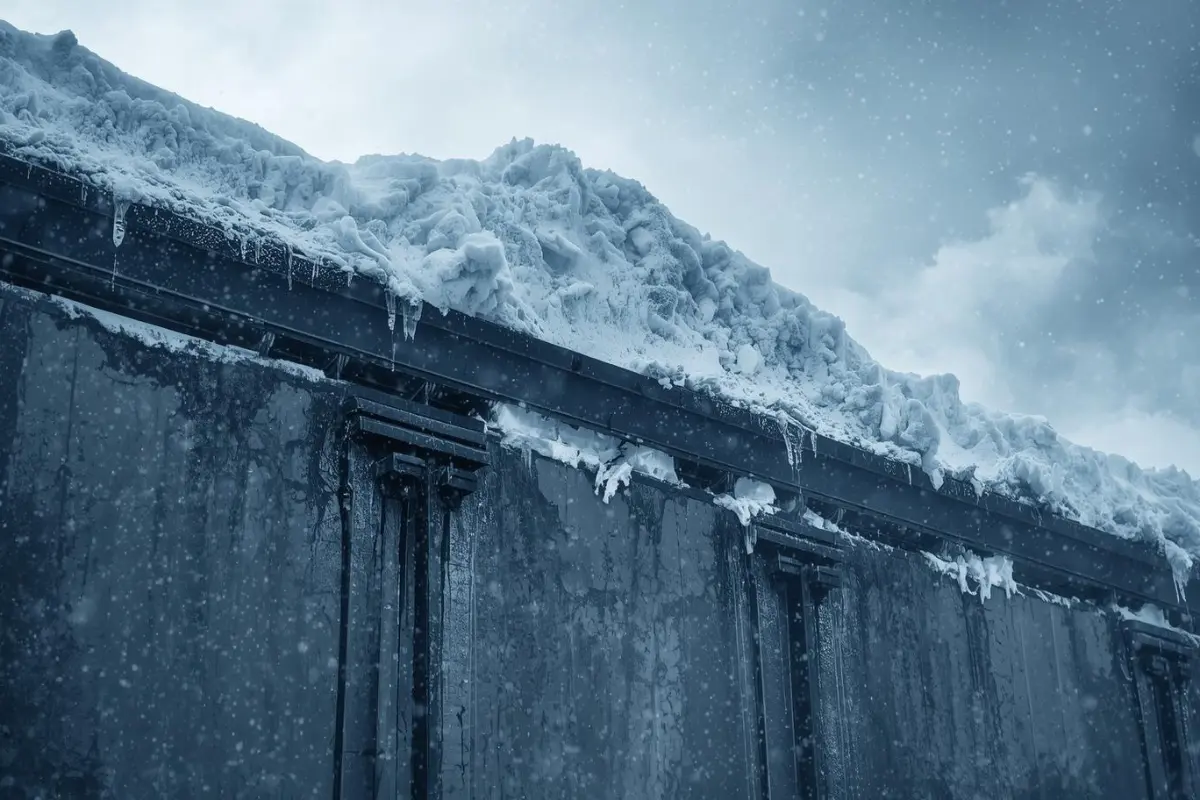
- Ice dams form when uneven heat causes melting and refreezing at roof edges.
- Blocked drains increase ponding, refreezing, and structural stress.
- Snow drifting creates uneven pressure on structural supports.
- Preventive inspections before and after winter storms reduce emergency repairs.
- Strong structural design, proper insulation, and effective drainage reduce collapse risk.
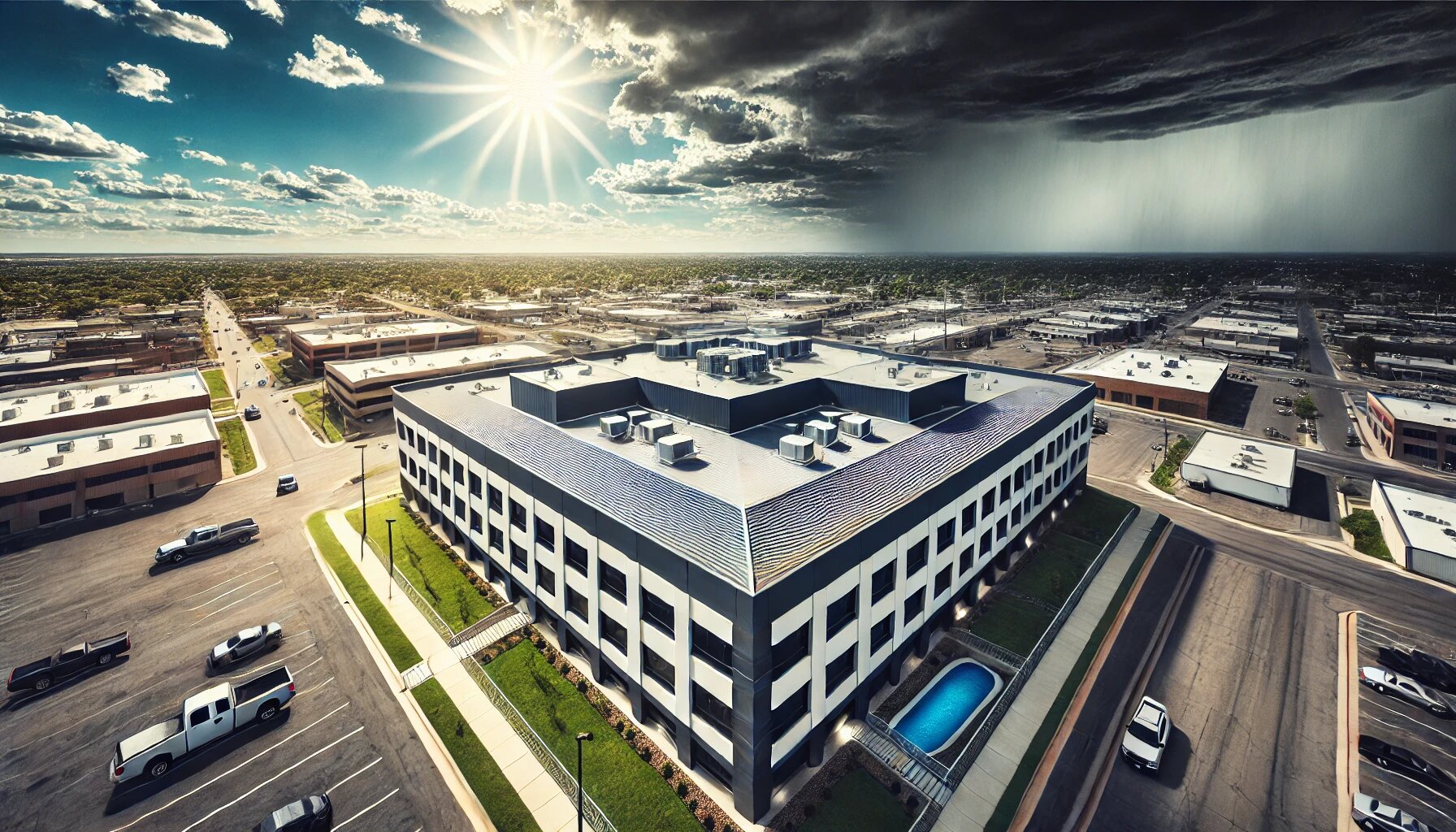
Winter weather places serious stress on commercial roofing systems. Snow and ice may appear manageable at first, but their weight can add up quickly across wide, flat surfaces. Commercial roofs often span tens of thousands of square feet, which means even a few inches of heavy snow can create enormous downward pressure.
Understanding how snow loads and ice dams affect your building helps you plan ahead. A strong roof system—designed to meet structural standards and supported by routine maintenance—can greatly reduce the risk of leaks, interior damage, or structural failure during winter months.
How Much Does Snow Actually Weigh on a Commercial Roof?
Snow weight depends on how much water it contains. According to the Federal Emergency Management Agency (FEMA), fresh snow typically weighs between 3 and 5 pounds per cubic foot, while wet snow can exceed 20 pounds per cubic foot. Ice weighs even more. [High Confidence – FEMA Snow Load Safety Guide]
Snow Weight Comparison Chart
| Type of Snow | Approximate Weight (lbs per cubic foot) | Risk Level |
| Fresh Snow | 3–5 lbs | Low |
| Packed Snow | 10–15 lbs | Moderate |
| Wet Snow | 20+ lbs | High |
| Ice | 30+ lbs | Very High |
If one foot of wet snow covers a 50,000-square-foot commercial roof, the structure may be supporting hundreds of thousands of pounds. On a larger facility, the total load can reach into the millions of pounds.
Flat roofs do not shed snow easily. Instead, accumulation remains in place until it melts or is removed.
What Is Snow Load and How Is It Calculated?
Snow load refers to the force snow applies to a structure. Engineers design commercial buildings using standards from ASCE 7, which provides formulas based on regional snow data and structural requirements. These standards are widely adopted in U.S. building codes. [High Confidence]
Snow load calculations consider:
- Local ground snow load values
- Roof slope
- Wind exposure
- Heat escaping from the building
- Snow drifting potential
Even buildings built to code can experience stress when snowfall exceeds seasonal averages or when drifting creates uneven distribution.
Why Are Flat and Low-Slope Commercial Roofs More Vulnerable?
Commercial roofs are often flat or have very little slope. This design supports rooftop equipment and maximizes usable interior space. However, it also allows snow to remain longer.
Wind can push snow toward parapet walls, mechanical units, or roof corners. This creates drifts that increase pressure in specific areas.
Concept Illustration
Wind Direction → → →
⬜⬜⬜⬜⬜
⬜⬜⬛⬛⬛ ← Heavier snow drift near parapet
Uneven loads place extra strain on structural supports beneath those areas.
What Are Ice Dams and Why Do They Form?
Ice dams form when snow melts unevenly due to heat escaping from the building interior. Meltwater flows toward colder edges of the roof and refreezes, forming a ridge of ice. The U.S. Department of Energy explains that insufficient insulation contributes to this melt-freeze cycle. [High Confidence]
Although ice dams are often associated with homes, commercial roofs can experience similar conditions, especially when insulation is inconsistent or drainage is blocked.
Why Are Ice Dams Dangerous for Commercial Roofs?
Ice dams trap water behind them. That trapped water can seep under roofing membranes or flashing systems.
Repeated freeze-thaw cycles:
- Stretch seams
- Stress fasteners
- Loosen flashing
- Saturate insulation
When insulation becomes wet, thermal performance decreases. This may increase heating costs and allow more melting, which worsens the cycle.
Interior consequences may include:
- Ceiling stains
- Mold growth
- Equipment exposure
- Work disruptions
Even minor leaks can interrupt business operations.
Can Heavy Snow Cause Roof Collapse?
Yes, though it is uncommon. The National Institute of Standards and Technology (NIST) has documented building failures linked to excessive snow loads combined with structural weaknesses. [High Confidence]
Common contributing factors include:
- Snow exceeding design limits
- Uneven drifting
- Deferred maintenance
- Aging structural components
Collapse often results from multiple issues occurring at the same time. Early warning signs may appear before a serious event occurs.
How Does Proper Roof Design Reduce Winter Risks?
A well-designed commercial roof includes structural framing sized to handle local snow loads according to ASCE 7 standards. [High Confidence]
Strong winter performance also depends on:
- Secure membrane attachment
- Properly fastened insulation
- Reinforced flashing details
- Effective drainage layout
Drainage becomes especially important once melting begins. Water adds extra weight, and ponding can increase stress.
Why Is Drainage Critical During Winter?
Internal drains, scuppers, and gutters allow melted snow to exit the roof surface. If these systems are clogged, water may pool and refreeze overnight.
Winter Drainage Checklist
✓ Clear debris before winter
✓ Inspect drain strainers
✓ Confirm scuppers are open
✓ Check for ponding after storms
Even small blockages can allow large ponding areas to form across flat surfaces.
How Do Insulation and Ventilation Help Prevent Ice Dams?
Even insulation reduces uneven heat transfer. The Department of Energy supports maintaining consistent insulation levels to limit irregular melt patterns. [High Confidence]
When roof temperatures remain steady, snow melts gradually and evenly. This reduces the formation of thick ice ridges along edges.
What Warning Signs Should Building Owners Watch For?
After heavy snowfall, monitor your building for:
- Sagging ceiling tiles
- Water stains
- Cracking or popping sounds
- Doors that suddenly stick
- Ponding water during thaw
These signs may indicate structural stress or moisture intrusion.
When Should Snow Be Removed from a Commercial Roof?
Snow removal may be necessary when:
- Snow depth approaches structural design limits
- Drifting creates concentrated loads
- Ponding becomes visible during melting
Removal should be handled by trained professionals. Improper methods may puncture or damage the roofing membrane.
Frequently Asked Questions
How much snow is too much for a commercial roof?
The answer depends on your building’s engineered snow load capacity. A structural engineer or roofing professional can review documentation and compare it to current accumulation levels. [High Confidence]
Do flat roofs fail more often than sloped roofs?
Flat roofs do not fail more often, but they retain snow longer, which requires monitoring during heavy winter events.
Can ice dams happen on large warehouses?
Yes. If insulation is uneven or drainage is blocked, freeze-thaw cycles can occur on commercial roofs just as they do on residential roofs.
Should building staff remove snow themselves?
Snow removal should be performed by trained professionals to reduce injury risk and prevent membrane damage.
How often should inspections occur in winter climates?
At minimum, schedule inspections before winter and after significant snow events.
How Can Preventive Maintenance Reduce Winter Damage?
Routine inspections before winter identify loose flashing, clogged drains, aging membranes, or insulation gaps. Addressing these concerns ahead of snow season lowers the risk of emergency repairs.
Maintenance planning may include:
□ Professional roof inspection
□ Drainage system cleaning
□ Structural documentation review
□ Insulation evaluation
□ Snow response planning
Preparation reduces uncertainty and protects building operations.
Winter snow and ice are predictable seasonal events, but their impact on commercial roofing systems varies widely. By understanding snow load weight, ice dam formation, and drainage performance, building owners can reduce structural risk and interior damage.
A roof built to proper structural standards, combined with proactive inspection and maintenance, provides strong defense against winter weather stress. Planning ahead allows commercial property owners to maintain operations safely and avoid costly surprises during snow season.
This article is a collaboration between Solid Rock Corporation and OpenAI’s ChatGPT. Created on February 18, 2026, it combines AI-generated draft material with Solid Rock’s expert revision and oversight, ensuring accuracy and relevance while addressing any AI limitations.