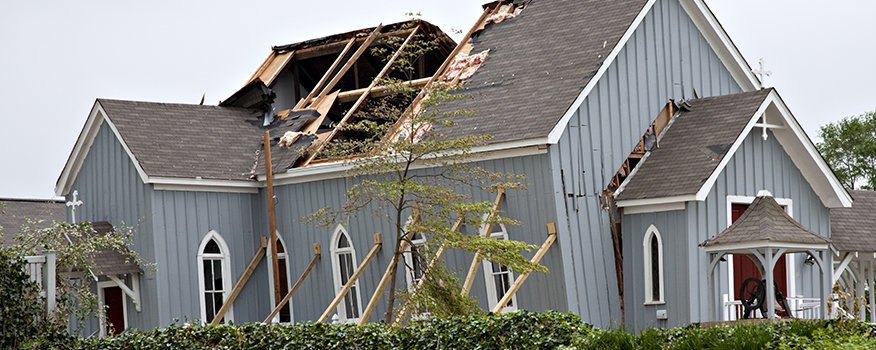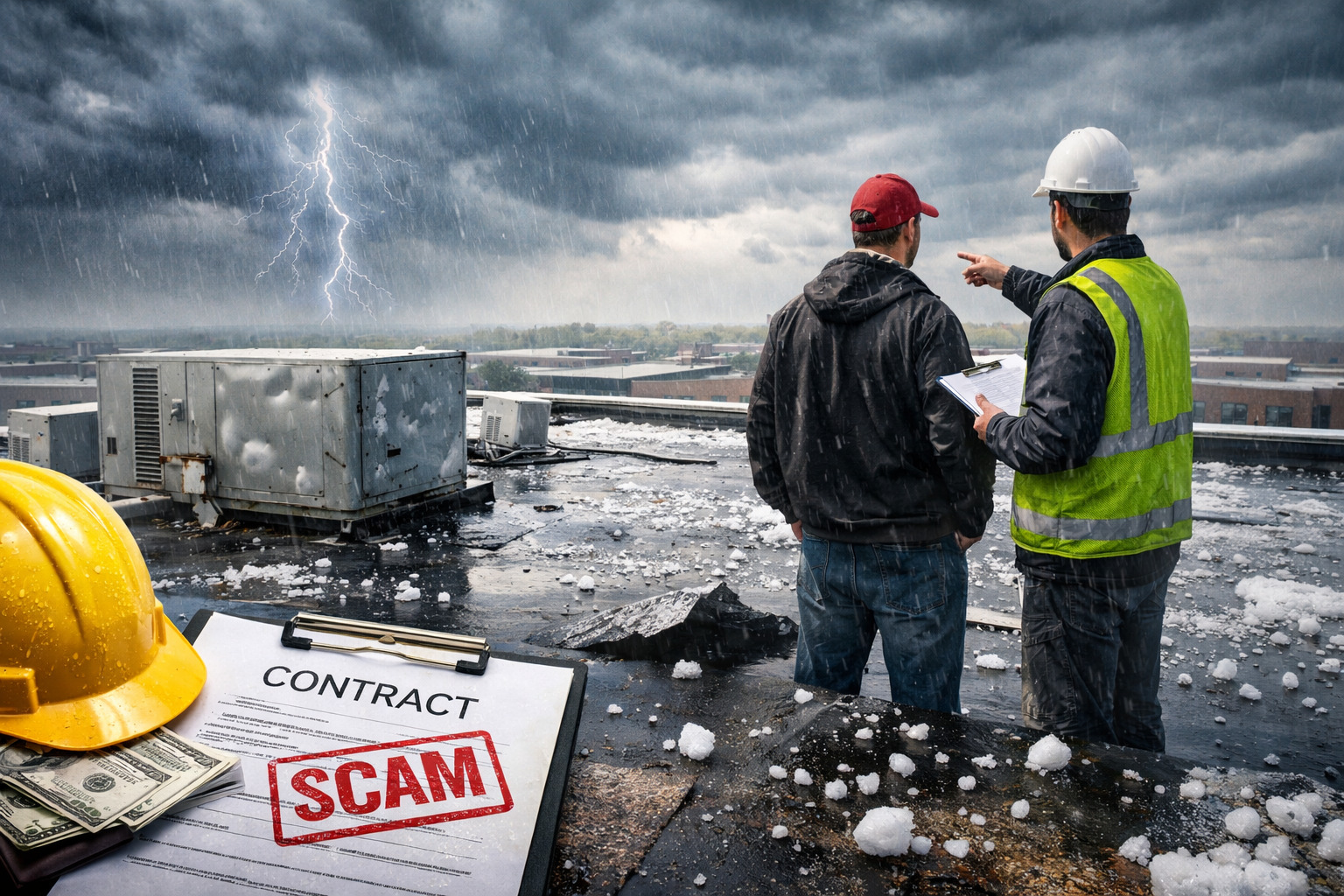
Hailstorms are a normal part of life in Kansas. Each year, strong storms move across the Great Plains, bringing heavy rain, powerful winds, and large hailstones. These storms can damage cars, crops, buildings, and roofs.
Commercial buildings are often hit hard during these storms. Warehouses, factories, office buildings, and retail centers usually have large flat or low-slope roofs. When hail strikes these roofs, it can dent metal panels, damage protective coatings, and weaken roofing materials.
According to the National Oceanic and Atmospheric Administration (NOAA), the Great Plains region, including Kansas, experiences some of the highest numbers of severe hail events in the United States.
Cities such as Wichita, Derby, and Newton often see multiple storms during the spring and summer months. After these storms pass, many building owners want to know if their roofs were damaged and what steps they should take next.
Unfortunately, storms sometimes bring another problem that property owners do not expect.
After large hailstorms, dishonest contractors may move into an area looking for quick roofing jobs. They know that many building owners are worried about possible damage and may feel pressure to fix problems quickly.
Federal consumer protection agencies report that contractor fraud often increases after natural disasters.
Commercial buildings can be especially attractive targets because roofing projects on large properties can involve expensive repairs and insurance claims.
Learning how these scams work can help building owners protect their property and avoid costly mistakes.
Key Takeaways
- Hailstorms are common in Kansas. Cities like Wichita, Derby, and Newton often experience severe storms that can damage commercial roofs.
- Roofing scams often appear after major storms. Some contractors move into storm-damaged areas looking for quick roofing jobs and insurance claims.
- Storm-chasing contractors may leave the area after completing work. If problems appear later, building owners may struggle to reach them for repairs or warranty support.
- Promises to “cover your deductible” can signal insurance fraud. Contractors who make this offer may inflate insurance claims or cut corners during installation.
- Some contractors exaggerate or misrepresent roof damage. Getting multiple inspections can help confirm whether repairs or replacement are truly needed.
- High-pressure sales tactics are a warning sign. Property owners should avoid signing contracts immediately after a storm without reviewing the details.
- Poor installation or cheap materials can cause long-term problems. Commercial roofs require proper installation to perform well for many years.
- Working with an established local roofing contractor can reduce risk. Local companies depend on their reputation and are more likely to remain available after the project is finished.
- A professional inspection is often the best first step after a hailstorm. This helps determine whether your roof needs repair, maintenance, or replacement.
Why Commercial Buildings Are Often Targeted After Storms
Commercial roofs are very different from residential roofs.
Most homes have sloped roofs covered with shingles. Damage can sometimes be seen from the ground or from nearby windows.
Commercial roofs are much larger and are usually flat or slightly sloped. Some cover tens of thousands of square feet. They are built with several layers of materials that work together to keep water out of the building.
These layers may include insulation boards, waterproof membranes, protective coatings, and metal flashing around vents or rooftop equipment.
Because these roofs are large and complex, damage may not be easy to see right away. Hail impacts may only affect the outer surface, or they may weaken deeper layers of the roofing system.
For many property owners, it can be difficult to tell the difference.
After a storm, building owners often ask questions such as:
- Was my roof damaged by the hail?
- Should I file an insurance claim?
- Do I need repairs or a full roof replacement?
Since most property owners do not inspect roofs regularly, they often rely on roofing contractors to answer these questions.
Insurance claims can make the process even more complicated. When a commercial roof is damaged, an insurance adjuster may inspect the property. Reports, photos, and repair estimates are often required.
For busy property managers, this process can feel overwhelming.
Because of this, many building owners begin by scheduling a professional commercial roof inspection after a severe storm.
Honest contractors use inspections to carefully evaluate the roof and explain what they find. Dishonest contractors may use the same situation to push unnecessary work.
Imagine a warehouse owner in Wichita returning to work the morning after a hailstorm. Before lunch, a contractor arrives and claims nearby roofs were badly damaged. The contractor warns that leaks could start soon and encourages the owner to sign a contract immediately.
Without getting another opinion, the owner could end up paying for repairs that were never needed.
The “Storm Chaser” Contractor
One of the most common roofing scams after severe weather involves contractors often called “storm chasers.”
Storm chasers travel from region to region following major storms. When hail hits a new area, they quickly move in and begin contacting property owners about roof repairs.
Not every traveling contractor is dishonest. Some companies help communities recover after severe weather. However, many reports of roofing fraud involve contractors who appear suddenly after storms and leave once their work is finished.
Storm chasers often try to secure contracts as quickly as possible.
They may visit commercial properties and say they have already found storm damage in the neighborhood. Some claim they are repairing several nearby roofs and can offer a lower price if the owner agrees to join the project right away.
They may also say their repair crews will only stay in town for a short time.
These messages can make property owners feel rushed.
Imagine a property manager at a shopping center in Derby. A contractor stops by and explains that several nearby buildings already need roof replacements. The contractor offers a discount if the shopping center signs the agreement the same day.
The manager may feel pressure to act quickly.
However, once the work is finished, the contractor may leave the area.
If leaks appear months later, the property owner may struggle to contact the company again.
Commercial roofs are designed to last many years. Because of this, it is often safer to work with contractors who maintain a long-term presence in the local community.
The Deductible Fraud Problem
Another scam that appears after hailstorms involves insurance deductibles.
When property owners file insurance claims for roof damage, the insurance policy usually requires them to pay part of the repair cost. This amount is called the deductible.
For large commercial buildings, deductibles can be thousands of dollars.
Some contractors try to attract customers by promising to “cover” the deductible. They may say the roof can be replaced without any out-of-pocket cost.
At first, this may sound like a helpful offer.
However, insurance industry organizations report that waiving deductibles while billing insurers for the full project cost may be considered insurance fraud.
Contractors who make these offers often recover the missing money in other ways.
Some increase the price submitted to the insurance company. Others reduce their costs by using cheaper materials or skipping parts of the job.
Imagine a factory owner in Newton who receives a roof replacement estimate after a hailstorm. The contractor promises the deductible will not be a problem and asks the owner to sign the agreement quickly.
Later, the owner discovers that lower-quality materials were used during installation. Some components listed in the proposal were not installed.
The roof may appear fine at first, but these shortcuts can cause problems later.
Deductible fraud may also create complications if the insurance company discovers dishonest billing practices during the claim review.
When Damage Is Exaggerated
Another common issue after hailstorms involves exaggerated damage claims.
Most property owners cannot easily examine their roofs. Because of this, they often trust contractors to explain what they find.
Dishonest inspectors sometimes point to small dents, marks, or normal wear and claim these are signs of severe hail damage.
In some situations, contractors show photos of damage without clearly proving that the images came from the roof being inspected.
Consider a retail center in Wichita that receives an inspection after a hailstorm. The contractor shows the property manager photos of marks on the roof and says the damage is serious.
Concerned about protecting the building, the manager files an insurance claim.
Later, another contractor inspects the roof and explains that the marks are normal wear rather than storm damage.
Instead of replacing the entire roof, the building only needed minor maintenance.
Accurate documentation helps determine whether a building truly needs commercial roof repair in Wichita or if the existing roof is still performing well.
Getting more than one opinion can prevent expensive mistakes.
High-Pressure Contracts
Pressure is another warning sign after storms.
Some contractors try to convince property owners that they must sign a contract immediately. They may claim that waiting could cause insurance problems or increase the cost of repairs.
In most cases, commercial insurance policies allow time for inspections and claim documentation after a storm.
Despite this, dishonest contractors sometimes rely on urgency to push owners into fast decisions.
Imagine a warehouse owner in Sedgwick County being told that roofing materials are almost gone and the contractor’s crew will soon leave town.
The owner is told that signing the contract that day is the only way to secure the repair.
Feeling rushed, the owner signs without reviewing the agreement carefully.
Later, they discover the contract limits their ability to choose another contractor or review the insurance claim.
Taking time to read contracts carefully and gather multiple inspections can help prevent these problems.
Poor Workmanship and Cost Cutting
Some roofing problems do not appear right away.
They may develop months or even years after a project is finished.
Commercial roofing systems depend on careful installation. Membrane seams must be sealed correctly, insulation must be placed evenly, and flashing must protect areas around rooftop equipment and drains.
When contractors rush the job or use lower-quality materials, the roof may fail sooner than expected.
Imagine a distribution center replacing its roof after a hailstorm. The project appears successful at first.
Within a year, leaks begin appearing during heavy rain.
A later inspection reveals that seams were not sealed correctly and some materials differed from those listed in the proposal.
In other situations, building owners later learn that solutions such as commercial roof coatings or targeted repairs could have extended the life of the roof without replacing it completely.
Working with experienced commercial roofing contractors can help avoid these costly problems.
How Property Owners Can Reduce Their Risk
Property owners can take several steps to reduce the risk of roofing scams.
One of the best protections is working with contractors who have a strong history in the local community. Companies that operate locally depend on their reputation and long-term relationships.
Checking a contractor’s insurance coverage and commercial roofing experience is also helpful before signing any agreement.
Professional inspections should include written reports and photos that clearly show the roof’s condition.
Taking time to review multiple inspections and speak with insurance representatives can help property owners make informed decisions.
Although these steps require patience, they can prevent costly mistakes after a storm.
Conclusion: Protect Your Property After the Next Kansas Hailstorm
Hailstorms are common across Kansas. Strong storms can move through Wichita, Derby, Newton, and nearby communities several times each year.
When these storms strike, commercial roofs may suffer dents, punctures, or hidden damage.
Storms can also attract dishonest contractors looking for quick roofing jobs. Some may exaggerate damage, pressure owners into signing contracts, or complete work using poor materials.
Property owners can reduce these risks by learning how common scams work and taking time to evaluate their options.
Scheduling a professional inspection, reviewing documentation, and comparing contractor recommendations can help prevent costly mistakes.
A commercial roof protects valuable equipment, employees, and daily business operations. Careful decisions after a storm can help keep your building protected for many years.
If your commercial building may have experienced hail damage, it is wise to have the roof inspected by a trusted local contractor.
Solid Rock Commercial Roofing serves Wichita, Derby, Newton, and surrounding Kansas communities with commercial roofing solutions designed for long-term durability.
To schedule your inspection, visit:
https://solidrockcorp.com/contact-us/
Or call (316) 227-2628 to set up your appointment with Solid Rock Commercial Roofing.
Frequently Asked Questions (FAQs)
How do I know if my commercial roof has hail damage?
Hail damage on commercial roofs is not always easy to see from the ground. Some signs may include dents in metal panels, damage to roof coatings, or punctures in roofing membranes. However, many problems are hidden beneath the surface. A professional commercial roof inspection can help determine whether hail caused damage and whether repairs are needed.
Should I trust a roofing contractor who knocks on my door after a storm?
Not always. Some contractors travel to storm-damaged areas looking for quick work. These contractors are often called “storm chasers.” While some may be legitimate, others may exaggerate damage or pressure owners into signing contracts. It is usually safer to research the company, verify their credentials, and consider working with a local roofing contractor.
Is it legal for a contractor to cover my insurance deductible?
Many insurance organizations warn that waiving a deductible while billing the insurance company for the full project cost may be considered insurance fraud. Contractors who make these promises may recover the money by inflating the claim or cutting corners during installation.
Should I get more than one roof inspection after a hailstorm?
Yes. Getting multiple inspections can help confirm whether your roof actually needs repairs or replacement. Different contractors may provide different recommendations, and comparing their reports can help you make a more informed decision.
How long do I have to file a commercial hail damage insurance claim?
The time limit for filing a claim depends on the details of your insurance policy. Many policies allow several months or even longer to report storm damage. Property owners should review their insurance documents or speak with their insurance provider to understand the exact deadline.
What are warning signs of a roofing scam after a hailstorm?
Some common warning signs include:
- Contractors who pressure you to sign a contract immediately
- Promises to cover your insurance deductible
- Claims that your roof must be replaced without clear documentation
- Contractors who arrive from outside the area and leave quickly after the work is finished
If you notice these signs, it may be wise to seek a second opinion before moving forward.
Do all hail-damaged commercial roofs need to be replaced?
No. Some roofs can be repaired or restored depending on the type and severity of the damage. In some cases, targeted repairs or solutions like roof coatings may extend the life of the existing system. A professional inspection can help determine the best option for your building.
What should I do first after a hailstorm hits my commercial building?
The first step is to check your property for visible damage and document anything unusual. Then schedule a professional inspection to evaluate the roof and determine whether repairs are needed. This information can also help support an insurance claim if damage is confirmed.
Why is working with a local commercial roofing company important?
Local roofing companies typically have a long-term presence in the community. Because they depend on their reputation, they are more likely to provide reliable service and remain available if questions or repairs arise later.
This article is a collaboration between Solid Rock Corporation and OpenAI’s ChatGPT. Created on March 18, 2026, it combines AI-generated draft material with Solid Rock’s expert revision and oversight, ensuring accuracy and relevance while addressing any AI limitations.
Why is working with a local commercial roofing company important?
External Links:
1. “After the Storm: Avoiding Contractor Fraud”
This guide from the FeLocal roofing companies typically have a long-term presence in the community. Because they depend on their reputation, they are more likely to provide reliable service and remain available if questions or repairs arise later.
This article is a collaboration between Solid Rock Corporation and OpenAI’s ChatGPT. Created on March 13, 2026, it combines AI-generated draft material with Solid Rock’s expert revision and oversight, ensuring accuracy and relevance while addressing any AI limitations.deral Trade Commission (FTC) explains how contractor scams often appear after severe weather events and outlines warning signs property owners should watch for when hiring repair contractors. It provides practical guidance that complements the risk awareness discussed in this article.
URL:https://consumer.ftc.gov/articles/after-storm-avoid-contractor-fraud
2. “How to Avoid Roofing Scams After a Storm”
Published by the Insurance Information Institute, this article examines common post-storm roofing scams and explains how fraudulent practices—such as deductible waivers and inflated insurance claims—can affect property owners and insurers. It offers helpful context for understanding the financial and legal risks tied to storm-related roofing work.
URL:https://www.iii.org/article/how-avoid-roofing-scams-after-storm
3. “Contractor Fraud After Disasters”
This resource from the National Insurance Crime Bureau (NICB) outlines how fraud schemes often emerge after natural disasters, including roofing scams tied to hail and wind damage claims. The article highlights investigative findings and prevention strategies that are useful for commercial property owners and risk managers.
URL:https://www.nicb.org/prevent-fraud-theft/prevent-fraud/contractor-fraud-after-disasters