Introduction: Why Tax Strategy Matters for Roof Investments
Most commercial roof decisions begin with a problem. A leak shows up during a storm. Water stains appear on the ceiling. Or the roof simply looks worn after years of sun, wind, and hail.
Fixing the issue is the first step. But the type of fix you choose also affects your finances.
Many building owners focus on cost, timing, and how long the repair will last. Those factors matter. But one piece often gets overlooked—how the project will be treated at tax time.
A roof coating is a good example. It can stop leaks, protect the roof, and extend its life. It usually costs less than a full replacement, which makes it an appealing option. From a tax standpoint, though, it is not always simple.
In some cases, the full cost can be deducted in the same year. In others, the cost must be spread out over several years. That difference can affect cash flow, yearly budgeting, and how future projects are planned.
As costs continue to rise, more building owners are viewing roofing decisions as part of a broader financial strategy. A roof is not just a structure—it is also an asset that affects long-term performance and cost.
Understanding how a commercial roof coating is taxed can help you make a more informed decision.
Key Takeaways
- Roof coatings can be tax-deductible—but not always.
Whether you can deduct the full cost depends on how the project is classified. - The IRS separates roofing work into repairs and improvements.
Repairs are usually deductible right away, while improvements must be depreciated over time. - Purpose matters more than the product.
The same roof coating can be treated differently based on the roof’s condition and what the project is meant to accomplish. - Maintenance-focused coatings are more likely to be deductible.
If the goal is to fix minor issues and maintain performance, the cost may qualify as a current expense. - Life-extending coatings are often treated as improvements.
If the coating adds many years to the roof’s life or restores a failing system, it will likely be capitalized. - Two similar projects can have different tax outcomes.
Small differences in scope, condition, or intent can change how the expense is treated. - Tax strategies like Section 179 and bonus depreciation may help.
These options can allow faster cost recovery, even for capitalized projects. - Good documentation is critical.
Clear records, detailed invoices, and defined scope of work help support the correct tax classification. - Planning ahead can improve financial outcomes.
Timing your project and aligning it with your tax strategy can impact cash flow and savings. - Local conditions matter.
In areas like Wichita, weather-related damage makes coatings a common solution, often tied to both repairs and insurance claims. - Always review your situation with a tax professional.
Tax treatment depends on project details, and professional guidance helps avoid costly mistakes.
Understanding Tax Deductibility for Commercial Roofing
To understand how roof coatings are treated, it helps to start with how the IRS views building expenses.
Most roofing work falls into one of two categories: repairs or improvements.
Repairs are meant to keep a building in working condition. This includes fixing leaks, sealing weak areas, and addressing normal wear. Many projects that fall under commercial roof repair are handled this way.
The advantage of repairs is straightforward. In many cases, the full cost can be deducted in the same year, which lowers taxable income right away.
Improvements are treated differently. These projects add value, extend the life of the building, or change how it is used. Instead of taking the full cost at once, the expense must be spread out over time through depreciation.
To decide which category applies, the IRS looks at three main factors:
- Does the work make the property better than it was before?
- Does it restore a roof that was worn or failing?
- Does it change how the property is used?
If the answer to any of these is “yes,” the project is more likely to be treated as an improvement.
This is where roof coatings can become less clear. They can fall into either category depending on how they are used.
What Qualifies as a Commercial Roof Coating?
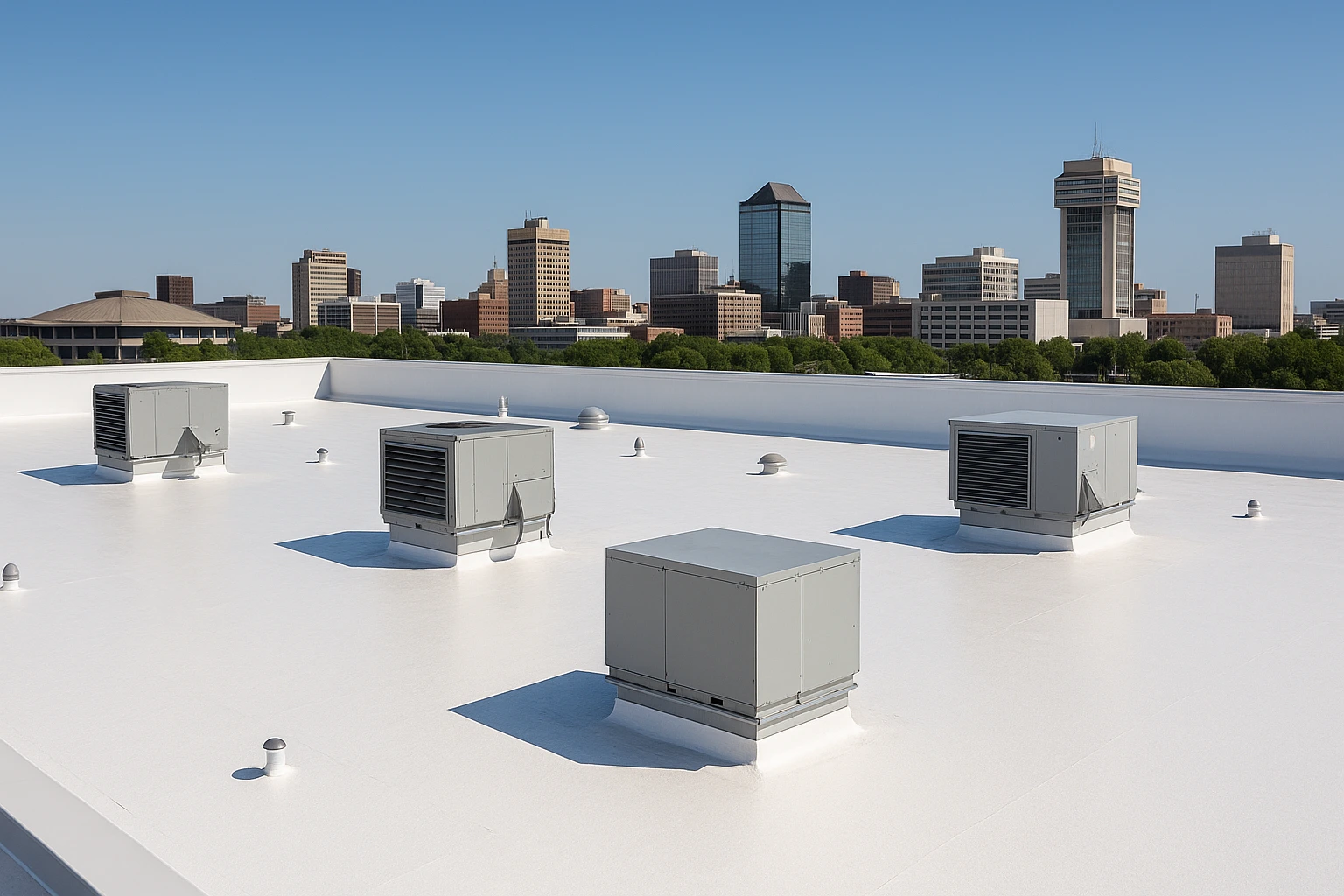
A commercial roof coating is a liquid material applied over an existing roof. Once it dries, it forms a protective layer across the surface.
This layer helps block water, reflect sunlight, and slow down damage caused by weather.
Coatings are often used to extend the life of a roof without moving forward with a full commercial roof replacement. For many building owners, this creates a practical middle option between ongoing repairs and full replacement.
There are several types of coatings. Silicone coatings perform well in areas where water may collect. Acrylic coatings are often chosen for reflectivity and cost control. Polyurethane coatings are known for their strength and resistance to impact.
While these differences affect performance, they do not determine tax treatment. What matters more is the purpose of the project and the condition of the roof before the work begins.
In simple terms, coatings can either maintain a roof or extend its life. That distinction plays a large role in how they are classified.
Are Commercial Roof Coatings Tax-Deductible?
The question most building owners ask is simple: Can the cost of a roof coating be deducted?
The answer depends on how the coating is used.
If a coating is applied to maintain the roof, it may be treated as a repair. This usually applies when the goal is to fix small leaks, seal worn areas, and keep the roof functioning as expected. Projects like commercial roof coating services are often used in this way.
In these situations, the cost may be deducted in the same year.
However, if the coating changes the roof in a more substantial way, the outcome shifts. If it adds years of life or restores a roof that is close to failure, it is more likely to be treated as an improvement.
When that happens, the cost must be spread out over time.
This is why two projects that look similar on the surface can be treated differently. The condition of the roof and the goal of the work both play a role.
How Tax Treatment Can Differ
A few simple examples can help show how this works in practice.
In one case, a warehouse has a roof with a few leaks. The rest of the system is still in good shape. A coating is applied to seal those areas and protect the surface. The roof continues to perform without major change.
This type of project is often treated as a repair, which means the cost may be deducted right away.
In another case, a roof has reached the end of its useful life. Instead of replacing it, the owner installs a coating system designed to add another ten years of use.
This changes the condition of the roof in a major way. As a result, the project is more likely to be treated as an improvement, and the cost is depreciated over time.
There are also mixed cases. A building owner might replace one section of the roof while coating another. In that situation, part of the cost may be deducted, while the rest is spread out.
These examples show why each project needs to be evaluated on its own.
Can You Recover Costs Faster?
Even when a coating project is treated as an improvement, there may still be ways to recover the cost sooner.
Section 179 allows businesses to deduct certain improvements in the same year they are completed. Some roofing projects may qualify, depending on how they are classified.
Bonus depreciation offers another option. It allows a large portion of the cost to be written off early, rather than over a long period.
The details of these rules can change, and not every project qualifies. Because of this, reviewing your situation with a tax professional can help you understand what options are available.
These tools can help reduce the difference between repair and improvement from a financial standpoint.
How Building Owners Can Plan Ahead
Roofing projects tend to produce better financial results when they are planned ahead of time.
Timing can make a difference. Completing a project before the end of the year may allow deductions to be taken sooner, which can help in higher-income years.
Documentation is just as important. Clear records make it easier to support how a project is classified. This includes detailed invoices, a clear scope of work, and records showing the condition of the roof before and after the work.
The contractor you choose also plays a role. A contractor who provides clear, detailed information can make tax reporting more straightforward.
Planning ahead gives you more control over both the roofing outcome and the financial result.
Common Mistakes to Avoid
Some common mistakes can create issues later.
One is assuming that all roof coatings are deductible. In reality, the details of the project determine how it is treated.
Another is poor documentation. Without clear records, it becomes harder to support your position if questions come up later.
Some building owners also focus only on upfront cost and overlook how tax treatment affects the total financial outcome.
Taking time to review both the roofing need and the financial impact can help avoid these problems.
Why This Matters for Wichita-Area Building Owners
In Wichita and nearby areas like Derby and Newton, commercial roofs face steady wear from weather. Hail, strong winds, and temperature changes can shorten the life of a roofing system.
Because of this, coatings are often used after storms or as part of regular maintenance plans.
In some cases, insurance may cover part of the work. This can affect how costs are handled and reported.
For local building owners, roofing decisions often involve both repair needs and financial planning at the same time. Looking at both sides helps create a clearer path forward.
Should You Choose a Roof Coating?
Choosing a roof coating depends on your goals and the condition of your roof.
If the roof is still in good shape and you want to maintain it, a coating can be a practical option. It may also allow for a faster tax deduction.
If the roof is close to failure and the coating is meant to extend its life, the project is more likely to be treated as an improvement.
It helps to consider how long you plan to keep the building, how the roof is performing now, and how the project fits into your financial plans.
Looking at both the physical condition and the financial impact leads to better decisions.
Conclusion: Aligning Roofing Decisions with Financial Strategy
Commercial roof coatings can be a practical option for many building owners. They can stop leaks, protect the roof, and delay the need for a full replacement. But their value goes beyond performance—it also depends on how the project is treated for tax purposes.
Some coating projects may be deducted right away, while others must be spread out over time. The difference depends on the condition of the roof, the scope of the work, and the goal of the project.
By understanding how repairs and improvements are classified, keeping clear records, and planning ahead, you can make roofing decisions that support both your building and your finances.
If you’re thinking about a roof coating or want a clear picture of your roof’s condition, Solid Rock Commercial Roofing can help you review your options and move forward with confidence.
Visit https://solidrockcorp.com/contact-us/ or call (316) 227-2628 to set up your appointment and discuss the right solution for your building.
Frequently Asked Questions
1. Is a commercial roof coating tax-deductible?
A commercial roof coating can be tax-deductible, but it depends on how the project is classified. If the coating is used for basic maintenance, it may be deducted in the same year. If it extends the life of the roof or restores major damage, it may need to be depreciated over time.
2. What determines if a roof coating is a repair or an improvement?
The IRS looks at the purpose of the project. If the coating fixes minor issues and keeps the roof in working condition, it is more likely a repair. If it adds years to the roof’s life or restores a failing system, it is more likely an improvement.
3. Can I write off the full cost of a roof coating in one year?
You may be able to write off the full cost in one year if the coating is considered a repair. If it is classified as an improvement, the cost must usually be spread out over several years through depreciation.
4. Do all commercial roof coatings qualify for the same tax treatment?
No. Two coating projects can be treated differently for tax purposes. The condition of the roof, the scope of the work, and the goal of the project all affect how the cost is classified.
5. Does a roof coating count as a capital improvement?
It can. If the coating extends the roof’s life in a major way or restores it from a worn-out condition, it is more likely to be treated as a capital improvement.
6. Are there ways to recover costs faster if the project is not deductible?
Yes. Options like Section 179 and bonus depreciation may allow you to recover costs more quickly, even if the project is classified as an improvement. A tax professional can help determine what applies to your situation.
7. How does roof condition affect tax deductibility?
Roof condition is a key factor. A coating applied to a roof in good condition is more likely to be treated as maintenance. A coating applied to a failing roof is more likely to be treated as an improvement.
8. Do I need documentation for tax purposes?
Yes. Clear documentation is important. This includes invoices, scope of work, and records showing the roof’s condition before and after the project. These details help support how the expense is classified.
9. Should I talk to a tax professional before starting a roofing project?
Yes. A tax professional can help you understand how the project may be classified and what tax benefits may apply. This can help you avoid surprises later.
10. Is a roof coating better than a full roof replacement?
It depends on the condition of your roof and your goals. A coating can be a cost-effective way to extend the life of a roof that is still in good condition. If the roof is failing, a replacement may be the better long-term option.
This article is a collaboration between Solid Rock Corporation and OpenAI’s ChatGPT. Created on May 04, 2026, it combines easy-to-read information with Solid Rock’s expert oversight to ensure accuracy and relevance.
Recommended Reading
1. IRS Publication 535: Business Expenses (Repairs vs. Improvements Guidance)
Provides official IRS guidance on how to distinguish between deductible repairs and capital improvements, including the “betterment, restoration, or adaptation” standards discussed in this article.
URL: https://www.irs.gov/publications/p535
2. IRS Tangible Property Regulations – Capitalizing vs. Expensing (Audit Technique Guide)
This IRS resource offers deeper insight into how property-related expenses are evaluated, with detailed explanations that help clarify gray areas common in roofing and building maintenance projects.
URL: https://www.irs.gov/businesses/small-businesses-self-employed/tangible-property-final-regulations
3. “Qualified Improvement Property and Section 179 Deduction” – Congressional Research Service
Explains how Section 179 and depreciation rules apply to building improvements, giving helpful context for understanding when roofing-related expenses may qualify for accelerated tax treatment.
URL: https://crsreports.congress.gov/product/pdf/IF/IF11120