Owning an older commercial building in Wichita comes with many challenges. One of the biggest is keeping the roof in good condition. Over time, heat, rain, hail, wind, and cold weather can wear down roofing materials. Even a well-maintained roof can begin to show signs of damage.
For some building owners, the first warning sign is a leak near an air conditioning unit. Others may notice standing water, damaged seams, or repairs that never seem to end. When these problems become more common, owners face a difficult choice. Should they keep repairing the roof, replace it, or explore another option?
This is why some property owners are looking into spray foam roofing in Wichita, KS. This type of roofing may offer a way to restore an older roof without removing the entire roofing system. It can also provide extra insulation and create a continuous surface without seams across the main roof area.
However, spray foam roofing is not right for every building. The existing roof must be in suitable condition before this type of system can be installed.
Understanding how spray foam roofing works, what benefits it may offer, and what problems could prevent its use can help building owners make informed decisions.
Key Takeaways
- Spray foam roofing may be a practical option for older commercial buildings. It can sometimes restore an aging roof without removing the entire existing roofing system, provided the roof is in suitable condition.
- A seamless roofing surface can reduce certain leak risks. Spray polyurethane foam creates a continuous layer with fewer field seams, but areas around drains, vents, and rooftop equipment still need proper sealing and maintenance.
- Spray foam adds insulation to the roof. This may help improve a building’s thermal performance, although actual energy savings depend on the building’s condition and how it is used.
- Not every older commercial roof is suitable for spray foam. Trapped moisture, damaged decking, weak structural supports, and incompatible roofing materials may require repairs or a different roofing solution.
- Protective coatings and regular maintenance are necessary. SPF roofing systems need a compatible coating to protect the foam from sunlight and weather. The coating must be inspected and maintained over time.
- A professional roof inspection should guide the decision. For commercial building owners in Wichita, Derby, Newton, and nearby communities, an inspection can help determine whether spray foam restoration or roof replacement is the better choice.
Why Owners of Older Commercial Buildings Consider Spray Foam Roofing
Commercial roofs rarely wear out overnight. Most develop problems slowly over many years. A small leak may appear near a vent or piece of rooftop equipment. A repair may stop that leak, but another problem could develop elsewhere.
As the roof gets older, repairs may become more frequent. Building owners may spend more time dealing with leaks, water damage, and maintenance calls. They may also worry about how roof problems could affect employees, tenants, equipment, or stored products.
At some point, another repair may no longer seem like the best choice.
A complete roof replacement is one option, but it can be a major project. Removing old roofing materials takes time and creates waste. Workers may need to move equipment or plan their work around normal business hours.
For some buildings, spray foam roofing may offer another solution.
Spray polyurethane foam can sometimes be installed over an existing roof. This is only possible when the old roofing materials are dry, stable, and suitable for the new system. Damaged areas must be repaired or removed before work begins.
When these conditions are met, the owner may be able to restore the roof without a full tear-off.
This can be helpful for warehouses, retail stores, offices, and other commercial buildings where roofing work must be planned around daily business activities.
Some owners are also interested in the insulation that spray foam provides. Older buildings may have roofs with limited insulation. Adding foam may help reduce the amount of heat that moves through the roof.
Still, every building is different. A roof with major water damage or weak structural support may need more work than a spray foam restoration can provide.
The first step is finding out what condition the roof is in.
What Is Spray Polyurethane Foam Roofing, and How Does It Work?
Spray polyurethane foam roofing, often called SPF roofing, is made by spraying a special foam onto a prepared roof surface. The foam expands and forms a solid layer that sticks to the roof.
The material starts as two liquids. When mixed using special equipment, the liquids react and expand into a firm foam. Once applied, the foam creates a continuous layer across the roof.
This is different from roofing systems that use large sheets of material joined together at seams.
The foam also provides insulation. However, it cannot be left exposed to sunlight. A protective coating must be applied over it to help prevent damage from the sun and weather.
Both the foam and coating are needed to form the finished roofing system.
For building owners interested in commercial spray foam roofing, it helps to understand that the system does more than cover the old roof. It combines a new foam layer with a protective surface designed to work together.
How Spray Foam Roofing Is Installed
Before spray foam can be applied, a roofing contractor must inspect the existing roof.
The contractor checks for leaks, trapped moisture, damaged materials, and other problems. Some areas may need repairs, while others may need to be removed.
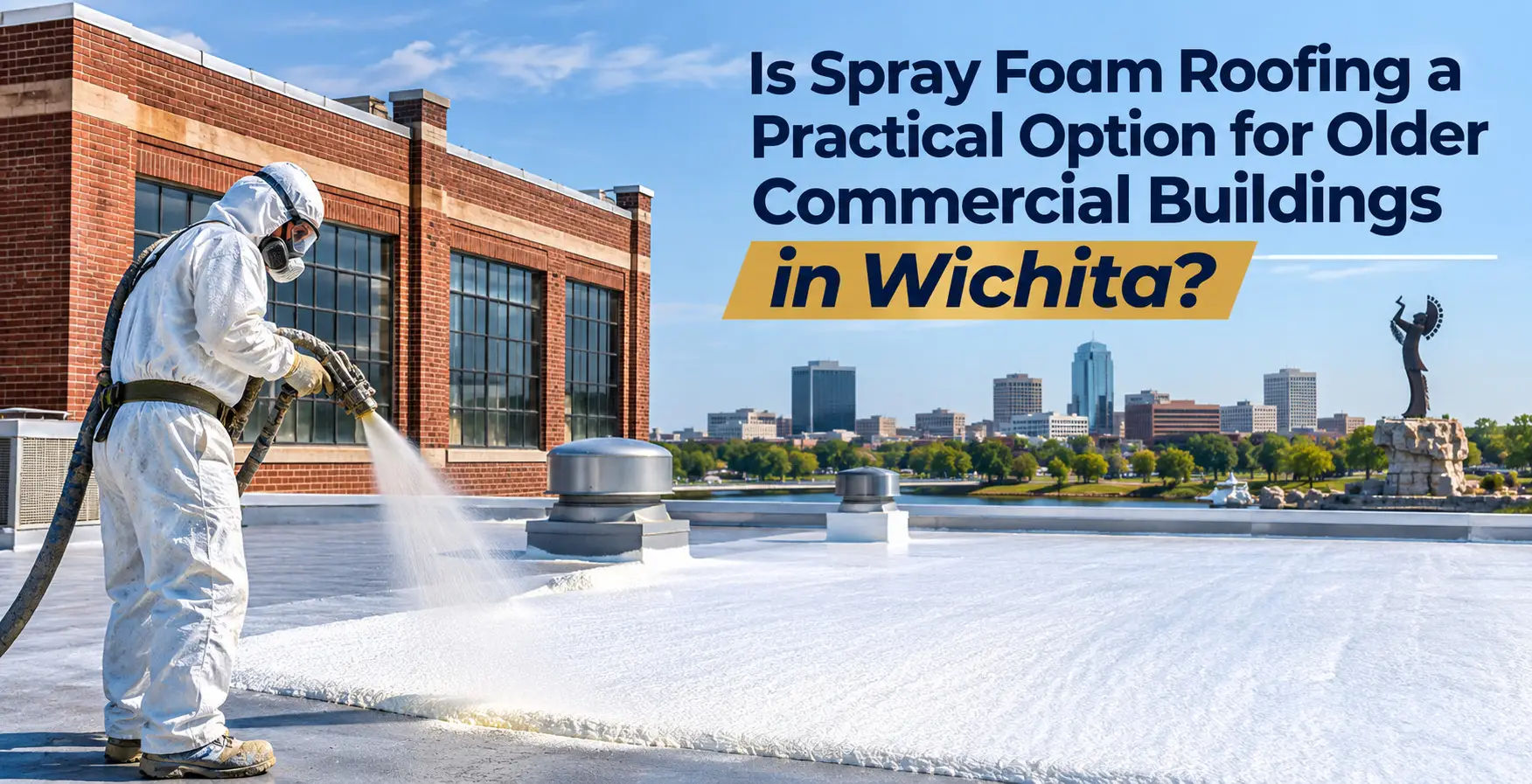
Once the roof is ready, trained workers use special equipment to spray the foam across the surface.
The foam expands and forms a firm layer. It can also be shaped around vents, pipes, and other rooftop features.
In some cases, workers can adjust the thickness of the foam to help water flow toward roof drains.
After the foam is applied, a protective coating is added. This coating helps protect the foam from sunlight and weather.
Weather conditions during installation matter. Strong winds can cause foam to spray onto nearby objects. Moisture, temperature, and humidity can also affect how well the materials are applied.
For these reasons, spray foam roofing should be installed by trained professionals who follow the manufacturer’s instructions.
Potential Benefits of Spray Foam Roofing for Older Commercial Buildings
Spray foam roofing offers several possible benefits for older commercial properties. These benefits depend on the building, the existing roof, and the quality of the installation.
A Roof Surface Without Seams
Many commercial roofing systems have seams where sections of roofing material meet. Over time, these areas may weaken or begin to separate.
Water can enter through damaged seams and cause leaks.
Spray foam roofing creates one continuous foam layer across the main roof surface. This means there are fewer seams that could become problem areas.
For example, imagine an older Wichita warehouse that has needed several repairs around roof seams. If the roof is suitable for restoration, spray foam may provide a new surface without those same seams.
However, this does not mean the roof can never leak. Areas around vents, drains, air conditioning units, and roof edges still need proper sealing and care.
A seamless roof can reduce some common problem areas, but proper installation and regular maintenance are still needed.
Extra Insulation for Older Buildings
A commercial roof does more than keep rain out. It also affects how heat moves into and out of the building.
Some older commercial buildings have less roof insulation than newer properties.
Spray polyurethane foam provides insulation as part of the roofing system. Adding it may help reduce heat movement through the roof.
This may be useful for warehouses, offices, retail stores, and other buildings with large roof areas.
Better insulation may also help maintain indoor comfort. However, owners should not expect the same results from every building.
Energy use depends on many factors, including existing insulation, heating and cooling equipment, air leaks, and how the building is used.
A roofing contractor can explain how spray foam may meet the building’s needs, but any expected energy savings should be based on the actual property.
Restoring a Roof Without Removing Everything
One reason owners explore spray foam roofing is the chance to keep some or all of the existing roofing materials in place.
A complete roof replacement often requires workers to remove old materials before installing the new system.
This can create extra work, waste, and scheduling challenges.
When the existing roof is suitable for spray foam, some of that removal may not be needed.
However, this does not mean spray foam can simply cover any old roof.
Wet insulation, loose materials, and damaged sections must be repaired or removed. If the roof has serious problems, replacement may still be the better choice.
Working Around Rooftop Equipment
Older commercial buildings often have many features on their roofs. These may include air conditioning units, pipes, vents, drains, and other equipment.
Some roofing materials can be harder to install around these areas because they must be cut and fitted into place.
Spray foam can follow many roof shapes and surfaces. This may make it useful on roofs with several equipment openings or uneven areas.
Even so, these locations still need careful work. The foam must be applied correctly, and areas where the roof meets equipment must be properly sealed.
Protective Coatings and Future Maintenance
Spray foam needs a protective coating because sunlight can damage exposed foam over time.
An elastomeric roof coating may be used on certain spray foam systems when it meets the manufacturer’s requirements.
The coating helps protect the foam from sunlight and weather.
Like other roofing materials, coatings wear over time. They must be checked and maintained.
If the foam remains in good condition, the roof may be able to receive another coating in the future.
This can be useful for long-term roof care, but recoating cannot fix every problem. Damaged foam or trapped moisture must be addressed before a new coating is applied.
Why the Existing Roof Must Be Checked Before Installing Spray Foam
Before choosing spray foam roofing, owners need to know what is happening beneath the roof surface.
Two buildings may have roofs that look almost the same from the outside. Yet one may be suitable for restoration while the other needs major repairs.
This is why a roof inspection matters.
For owners looking into commercial roof restoration in Wichita, checking the condition of the existing roof should come before choosing a new roofing system.
Checking the Existing Roofing Materials
Commercial buildings can have many types of roofing materials. Some have metal roofs, while others use roofing membranes or layers of asphalt-based materials.
Not every material works with spray foam in the same way.
A contractor must identify the existing roof type and check whether spray foam can stick to it properly.
The contractor should also look for loose materials, damaged seams, worn flashing, and areas that have been repaired before.
These findings help show whether the roof can support a spray foam system.
Finding Hidden Water Damage
Water damage is one of the biggest concerns when restoring an older roof.
Sometimes a roof has trapped moisture even when there are no clear signs of a leak inside the building.
Water may collect beneath the surface after entering through damaged seams, vents, or flashing.
If spray foam is installed over wet materials, the moisture problem may remain hidden.
This can lead to more damage later.
A contractor may use special moisture tests or remove small sections of roofing material to look for hidden problems.
Wet or damaged materials must be addressed before a new roofing system is installed.
Checking the Roof’s Support
The roof deck is the surface supported by the building’s roof structure. It must be strong enough and in suitable condition for the planned roofing work.
Older buildings may have damaged decking or other support problems caused by age, moisture, or past repairs.
Spray foam cannot fix weak roof supports.
If there are signs of serious structural problems, a qualified professional may need to examine the building before roofing work begins.
The contractor must also check that the planned system meets the rules that apply to the building, including local building codes and manufacturer requirements.
These checks help owners avoid installing a new roof over problems that have not been solved.
Why Spray Foam Roofing Is Not Right for Every Commercial Roof
Spray foam roofing can be a good option for certain buildings, but it has limits.
One major concern is widespread moisture damage. If large areas of the existing roof are wet, workers may need to remove damaged materials before installing a new system.
In some cases, so much material needs to be removed that a complete replacement may make more sense.
Weak roof decking is another problem. If the surface beneath the roofing materials is damaged, adding spray foam will not make it strong again.
The existing roofing materials also matter. Some surfaces may need special preparation before foam can be applied. Others may not be suitable for the planned system.
Building use can affect the decision as well.
For example, some commercial roofs have equipment that needs regular service. Workers may walk across the roof often to reach heating and cooling units.
Spray foam roofing can be damaged by sharp tools, heavy impacts, or repeated foot traffic in certain areas. Protective walkways may be needed to reduce the chance of damage.
Weather can also limit installation. Strong winds may make spraying difficult and increase the risk of foam reaching nearby cars or buildings.
These concerns do not mean spray foam is a poor roofing choice. They mean the system must be suitable for the property.
A building with major damage may need another type of restoration or a complete roof replacement.
The goal should always be to fix the roof’s actual problems rather than choose a material before the building has been inspected.
Spray Foam Restoration vs. Commercial Roof Replacement
When a commercial roof gets older, owners often compare restoration with replacement.
Both options have their place, but they solve different problems.
Restoration focuses on improving an existing roof that is still suitable for continued use. Replacement involves removing roofing materials and installing a new system.
Spray foam restoration may allow suitable materials to remain in place. This can reduce the need for removal work.
Replacement may be needed when the existing roof has too much damage or when the materials beneath the surface must be repaired.
Imagine two older warehouses in Wichita.
The first has a stable roof deck, limited damage, and roofing materials that are suitable for spray foam. The owner wants to address roof wear and add insulation.
Spray foam restoration may be worth exploring for that property.
The second warehouse has wet insulation, damaged decking, and serious drainage problems. In this case, installing foam over the existing roof may not solve the problems.
A more extensive roofing project may be needed.
Cost is another part of the decision. Restoration may require less removal work, but repairs and preparation can add to the price.
Replacement may cost more at the start, but it can allow workers to address problems that restoration cannot fix.
Owners should compare the full scope of work, future maintenance needs, and how long they plan to use the building.
The right choice depends on the roof’s condition and the owner’s goals.
How Wichita’s Weather Affects Spray Foam Roofing
Wichita commercial roofs face many types of weather throughout the year.
Summer brings heat and strong sunlight. Winter brings colder temperatures. Thunderstorms can produce heavy rain, strong winds, and hail.
These conditions can affect any roofing system.
Heat and Temperature Changes
Roofing materials expand and contract as temperatures rise and fall.
A spray foam roofing system must be designed and installed to handle the conditions at the property.
The foam, protective coating, and areas around rooftop equipment must work together.
Regular inspections help owners spot damage or wear before small problems become larger ones.
Storms and Hail
Severe storms are a concern for commercial property owners across the Wichita area.
Hail and flying debris can damage many roofing materials, including spray foam systems.
The amount of damage depends on the storm, the roofing system, and the protective coating.
A seamless roof does not mean a storm-proof roof.
After a major storm, a roof inspection can help identify damage that may need repair.
Sunlight and Roof Coating Care
Strong sunlight can damage polyurethane foam when it is not protected.
This is why a protective roof coating is part of the SPF system.
Over time, the coating may wear and need attention.
Owners should follow the recommended inspection and maintenance plan for their roofing system.
Keeping the coating in good condition helps protect the foam beneath it.
How to Know if Your Older Commercial Building Is a Good Candidate
The best way to find out whether spray foam roofing may work for an older building is to have the roof checked by a qualified commercial roofing contractor.
The inspection should help answer several important questions.
What type of roof is currently installed? Are the materials still in good condition? Is there trapped moisture? Are the roof deck and supports sound? Does water drain properly?
The answers can help determine whether spray foam is a practical option.
Building owners should also think about what they want from the project.
Some want to stop recurring leaks. Others want to improve insulation or reduce the need for frequent repairs. Some may be planning to keep the property for many years and want a roofing system that fits their long-term plans.
These goals matter because different roofing systems may meet different needs.
Owners should also ask about maintenance. Spray foam roofs need regular inspections, and their protective coatings may need repairs or renewal over time.
A contractor should explain what work is needed before installation and what care the roof will need afterward.
If spray foam is not a good fit, the contractor should explain why another roofing option may work better.
A clear understanding of the roof’s condition can help owners avoid paying for work that does not solve the real problem.
Conclusion: Is Spray Foam Roofing Right for Your Wichita Commercial Building?
Spray foam roofing can be a practical choice for some older commercial buildings in Wichita, Derby, Newton, and nearby communities.
It creates a seamless foam layer, adds insulation, and may allow suitable existing roofing materials to remain in place. For owners dealing with an aging roof, these benefits can make restoration worth exploring.
However, spray foam roofing is not right for every property. Hidden moisture, damaged decking, weak supports, and unsuitable materials can make restoration difficult or prevent it altogether.
The best decision starts with understanding the condition of the existing roof. A professional inspection can help determine whether spray foam restoration, another roofing system, or complete replacement makes the most sense.
Find Out Whether Spray Foam Roofing Is Right for Your Building
Own an older commercial building in Wichita or the surrounding area? Find out whether spray foam roofing may be suitable for your property.
Contact Solid Rock Commercial Roofing for a free estimate. Visit https://solidrockcorp.com/contact-us/ or call (316) 227-2628 to schedule your appointment and learn more about your commercial roofing options.
Frequently Asked Questions About Spray Foam Roofing
1. Can spray foam roofing be installed over an existing commercial roof?
Yes, spray foam roofing can sometimes be installed over an existing commercial roof. However, the roofing materials must be dry, stable, and compatible with the new system. A contractor must inspect the roof and address any damaged or wet materials before installation.
2. How long does spray foam roofing last on a commercial building?
The lifespan of a spray foam roof depends on the quality of installation, weather exposure, protective coating, and regular maintenance. Some systems can remain in service for many years when properly maintained. The roof’s condition and coating must be checked over time to determine when repairs or recoating are needed.
3. Is spray foam roofing a good choice for older commercial buildings in Wichita?
It can be a good choice for certain older buildings in Wichita. Spray foam may provide a seamless roofing surface, added insulation, and an option for restoring suitable existing roofs. However, buildings with serious moisture damage, weak roof decking, or other major problems may need a different solution.
4. Does spray foam roofing help reduce energy costs?
Spray polyurethane foam adds insulation, which may help reduce heat movement through the roof. This can support better indoor temperature control. However, actual energy savings depend on existing insulation, heating and cooling equipment, building use, and other conditions. Savings cannot be guaranteed.
5. Can spray foam roofing fix leaks and standing water?
Spray foam roofing may help address certain leak-prone areas by creating a continuous surface without field seams. It can also be shaped to improve drainage in some locations. However, existing water damage must be repaired first, and major drainage problems may require additional work.
6. Is spray foam roofing better than replacing a commercial roof?
Neither option is always better. Spray foam restoration may make sense when the existing roof is in suitable condition. Complete replacement may be needed when the roof has widespread moisture damage, damaged decking, or other serious problems. A professional inspection can help determine which approach fits the building.
7. What maintenance does a spray foam roof need?
Spray foam roofs need regular inspections to check for coating wear, surface damage, drainage problems, and damage around rooftop equipment. The protective coating may need repairs or renewal over time. Maintenance requirements depend on the roofing system and manufacturer’s recommendations.
8. How can I find out if my commercial building qualifies for spray foam roofing?
The first step is a professional roof inspection. A contractor can examine the existing materials, check for moisture damage, review drainage conditions, and determine whether the roof can support an SPF system. Commercial building owners in Wichita and surrounding areas can contact Solid Rock Commercial Roofing for a free estimate at https://solidrockcorp.com/contact-us/ or (316) 227-2628.
This article is a collaboration between Solid Rock Corporation and OpenAI’s ChatGPT. Created on Nov 11, 2026, it combines easy-to-read information with Solid Rock’s expert oversight to ensure accuracy and relevance.
Recommended Reading
1. Roofing Systems
Whole Building Design Guide (WBDG) | National Institute of Building Sciences
A technical overview of commercial roof assemblies, including design requirements, insulation, drainage, and long-term performance. It provides useful context for professionals comparing restoration options with full roof replacement.
2. Cool Roofs
U.S. Department of Energy | Energy Saver
Explains how roof reflectivity, climate, and building conditions affect cooling performance. This resource helps facility managers evaluate energy-related claims associated with protective coatings and roof restoration projects.
3. Using Cool Roofs to Reduce Heat Islands
U.S. Environmental Protection Agency (EPA)
Examines reflective roofing materials, their thermal effects, and factors influencing their performance. It offers a broader perspective on coating selection and building energy management.