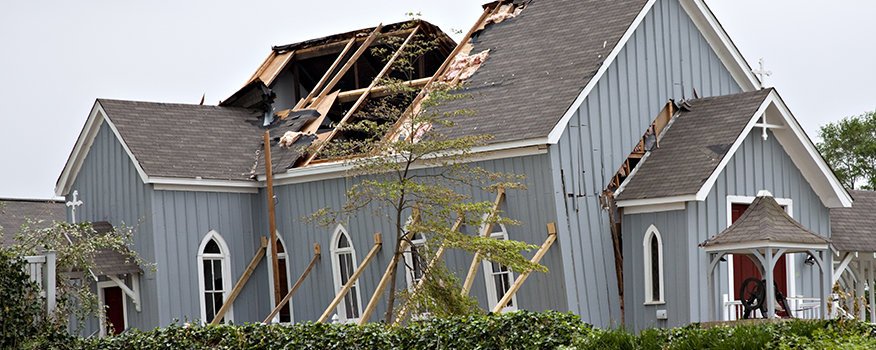
A commercial roof can look fine from the outside while water collects beneath its surface. There may be no ceiling stains, dripping water, or clear signs of trouble inside the building. Yet moisture may be sitting between the layers of the roof, where no one can easily see it.
This is one reason roof moisture problems can be hard to find. Water does not always enter a building right away. It can stay trapped beneath the roofing surface for weeks or even longer. During that time, it may affect insulation, roofing materials, and other parts of the roof.
For commercial property owners in Wichita, Kansas, this is a concern as colder weather approaches. Rain, snow, and changes in temperature can make existing roof problems harder to manage.
Finding moisture does not always mean the entire roof needs to be replaced. The right solution depends on where the water is, how much damage has occurred, and the condition of the roofing system.
Learning how commercial roof moisture damage happens can help building owners recognize possible problems and make informed decisions about roof repairs and maintenance.
Key Takeaways
- Trapped moisture is not always visible. Water can collect beneath a commercial roof without causing ceiling stains or an interior leak.
- Water can enter in several ways. Damaged membranes, loose flashing, drainage problems, and condensation may all lead to moisture buildup.
- Wet insulation can affect roof performance. Some materials lose insulating ability or strength after moisture exposure.
- Covering wet materials may create more problems. New coatings or spray foam roofing do not fix damaged materials beneath them.
- Professional inspections guide decisions. Testing can help determine whether repairs, restoration, or replacement are appropriate.
- Regular maintenance can help reduce risk. Clear drains, timely repairs, and routine inspections can reveal problems earlier.
How Water Gets Trapped Beneath a Commercial Roof
Most commercial roofs have several layers that work together to protect the building. Each layer serves a different purpose.
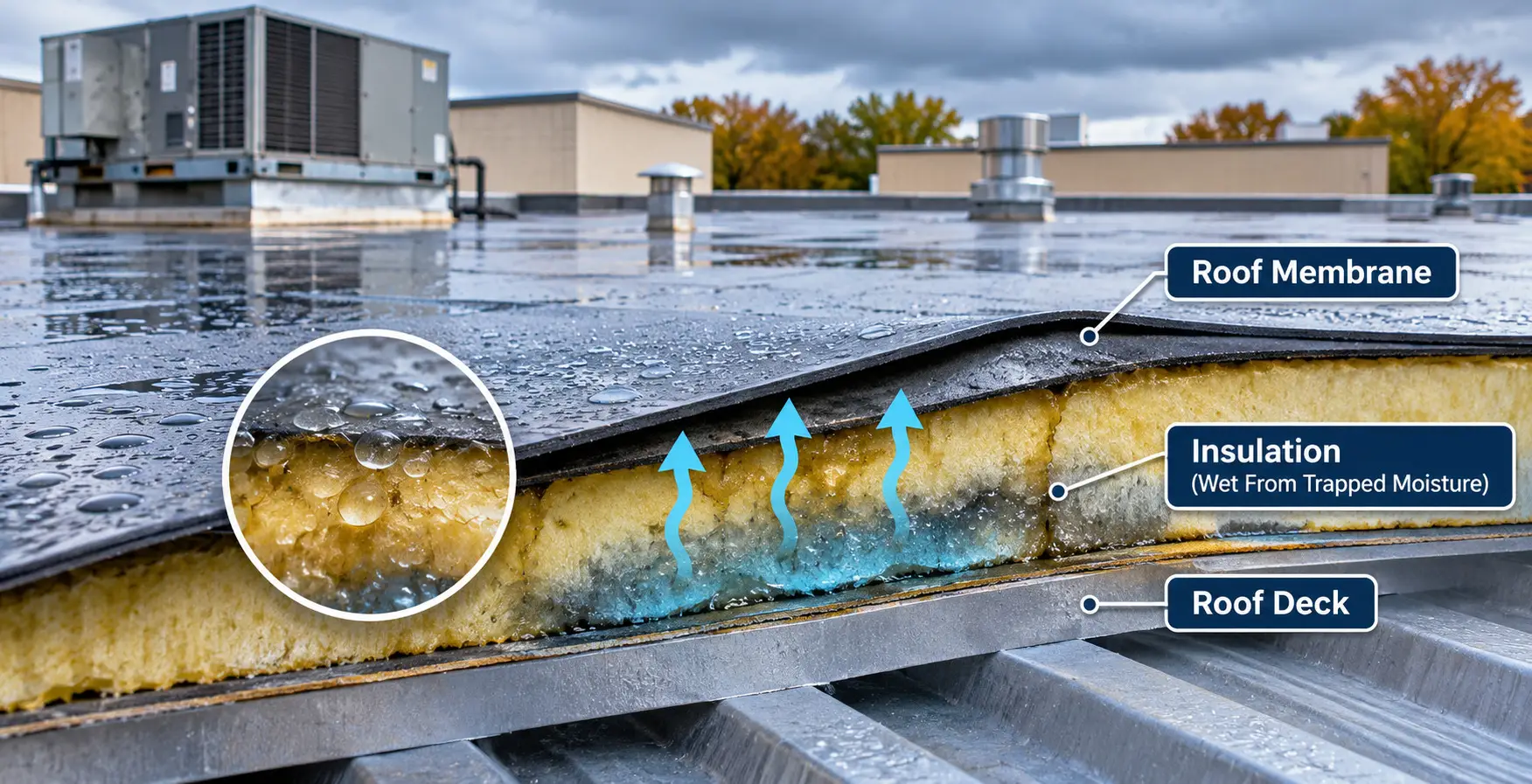
The top layer, called the roof membrane, helps keep rain and snow out. Beneath it is usually insulation that helps control heat moving into and out of the building. Some roofs also have a cover board or a layer that helps control water vapor. At the bottom is the roof deck, which supports the roofing system.
When these parts work as intended, they help keep the building dry and protected. Problems can begin when water gets past the outer membrane.
Water may collect between layers or soak into certain types of insulation. It may also move across the roof deck before reaching another part of the building.
Once water gets beneath the membrane, it may have a hard time drying out. Roofing materials are designed to keep water from entering. Those same materials can make it difficult for trapped moisture to escape.
This differs from rainwater sitting on top of a roof. Surface water is usually easy to see, while moisture beneath the roof can stay hidden for a long time. How serious the problem becomes depends on the amount of water, the materials involved, and whether more water continues to enter.
How Does Moisture Enter a Commercial Roofing System?
Water can enter a commercial roof in several ways. Some problems begin with damaged roofing materials. Others develop around rooftop equipment or when water cannot drain properly.
Damage to the Roof Membrane
Commercial roofs face years of sun, rain, wind, and changing temperatures. Over time, roofing materials may wear down. Workers walking on the roof or servicing equipment can sometimes damage the surface. Strong winds and flying debris may also cause punctures or tears. Even a small opening can allow rainwater to reach the layers below.
Problems Around Rooftop Equipment
Many commercial buildings have air conditioning units, vents, pipes, and other equipment installed on the roof. These areas need seals and flashing to keep water out. Flashing protects joints and places where the roof meets another surface. When flashing becomes loose, cracked, or damaged, water may enter around the equipment without being noticed.
Poor Roof Drainage
Most low-slope commercial roofs are built to move rainwater toward drains or gutters. Leaves, dirt, and debris can block those paths. Standing water does not always mean the roof is leaking, but it can place more stress on weak seams and damaged areas.
Moisture From Inside the Building
Not all roof moisture comes from rain. Warm indoor air can carry water vapor. If that air moves into a colder part of the roof, the vapor may turn into liquid water. This is called condensation. It depends on humidity, air movement, temperature, and roof design. Fixing an outside leak will not always solve a condensation problem.
Why Trapped Moisture May Not Cause Visible Roof Leaks
Many building owners expect a leaking roof to leave stains on the ceiling or cause water to drip inside. But water does not always travel straight down.
After entering the roofing system, moisture may move sideways between layers. It may spread through insulation or follow the roof deck before finding a way into the building.
Imagine a warehouse with a small opening near an air conditioning unit. During heavy rain, water enters through that opening. Instead of dripping onto the warehouse floor, it moves into insulation beneath the membrane. Workers may never notice anything wrong because the water has not reached an opening into the occupied space.
Ceiling materials can also hide early signs of moisture. Suspended ceilings, insulation, and enclosed spaces make water damage harder to see.
Weather affects when leaks appear. A roof may stay dry during light rain but leak during strong winds. Water may also collect beneath the surface during several storms before an interior stain appears. Even then, the stain may be far from the original opening.
This is why commercial roof leaks can be difficult to locate. A roof may look dry inside and outside while moisture remains trapped between its layers.
What Happens When Water Reaches Commercial Roofing Insulation?
One of the biggest concerns with trapped moisture is what it can do to roof insulation. Insulation helps slow heat movement through a building’s roof. During winter, it reduces heat loss. During summer, it limits heat entering the building.
Wet Insulation Can Lose Some of Its Effectiveness
Many insulation materials contain small spaces that slow heat movement. When water enters certain types, it can reduce their ability to resist heat flow. This may cause heating or cooling systems to work harder. The effect depends on the insulation type, how wet it becomes, and the building’s needs.
Not every insulation material reacts to water in the same way. Commercial roofs may use polyisocyanurate, polystyrene, or mineral wool. Some absorb more water than others. Some may dry more easily, while others may lose strength or change shape after long moisture exposure.
Moisture Can Affect the Roof’s Support
Roof insulation does more than control temperature. In many systems, it helps support materials installed above it. If insulation becomes wet or damaged, it may lose strength and affect the surface supporting the roof membrane.
The condition of commercial roofing insulation should be checked before repairs are chosen. Wet insulation does not always need to be removed. The decision depends on the material, moisture level, and damage found during inspection.
How Trapped Water Can Damage Other Roofing Materials
Insulation is not the only part of a roof affected by trapped moisture. Water may reach adhesives used to hold roofing layers together. If moisture affects these materials or the surface beneath them, the bond may weaken.
Trapped moisture can sometimes play a role in blisters or bubbles on the roof surface. But not every blister means water is trapped. Installation problems, heat, and other conditions can cause similar signs.
Moisture may also reach the roof deck. Steel decks can rust when wet for long periods. Wood components may begin to break down if they stay damp.
These problems do not happen in every wet roof. Still, they show why hidden moisture deserves attention. A small damaged area may be easier to repair than a roof with wet materials spread across a large section.
Why Installing New Roofing Materials Over Wet Areas Can Cause Problems
When a commercial roof begins to age, owners may look for ways to restore it instead of replacing the entire system. Roof coatings and other restoration methods can be useful when the existing roof is in good condition.
However, covering a wet roofing system does not make trapped water disappear. If insulation or other materials are already wet, adding another layer may make it harder for moisture to dry. The new surface may look good, but damaged materials can remain underneath.
A roof coating protects a suitable roofing surface. An elastomeric roof coating, for example, can create a flexible protective layer over certain commercial roofing materials. Coatings need a clean, dry, suitable surface to perform as intended. They cannot repair wet insulation hidden below.
The same concern applies to spray foam roofing. It can provide insulation and help form a protective roof when installed under suitable conditions. Installing it over wet or damaged materials may leave existing problems in place.
Before choosing a coating, spray foam system, or other restoration method, the existing roof should be inspected to make sure it can properly support the new materials.
How Professionals Find Moisture Beneath a Commercial Roof
Because trapped water is often hidden, finding it may require more than looking at the roof surface. Roofing professionals use different inspection methods to locate areas where moisture may be present.
The first step is usually a visual inspection of the membrane, seams, flashing, drains, and rooftop equipment. Past repair records and leak reports can also provide useful information.
Infrared Roof Inspections
Infrared cameras detect differences in surface temperature. Under the right conditions, wet areas may heat up or cool down differently than dry areas. These patterns can point to places needing closer inspection. Infrared cameras do not directly measure water, and weather or roofing materials can affect the results.
Electronic Moisture Testing
Some professionals use electronic equipment to look for signs of moisture beneath the surface. Results depend on the roof type and materials. Not every method works on every system.
Roof Core Samples
Sometimes a small sample is needed to confirm moisture. A professional carefully opens a small section to examine the layers below. This can show whether insulation is wet or other materials are affected. The opening must then be properly sealed and made watertight.
By combining methods, roofing professionals can better understand the roof’s condition and identify which areas may need repairs or restoration.
Repair, Restoration, or Replacement: What Happens Next?
Finding moisture beneath a commercial roof does not always mean the entire roof needs replacement. The next step depends on how much water is present, which materials are affected, and whether the source can be fixed.
When a Roof Repair May Be Enough
If water has entered only a small area, a localized repair may be possible. For example, damaged flashing around a rooftop unit may allow water into a limited section of insulation. A repair could involve removing damaged materials, replacing wet insulation where needed, fixing the flashing, and sealing the roof.
For owners searching for commercial roof repair Wichita KS, knowing how far the moisture has spread can help determine whether a smaller repair may be enough.
When Roof Restoration May Work
Restoration may be an option when most of the existing roofing system remains in good condition. After wet or damaged materials have been addressed, a suitable coating or restoration system may help protect the roof. The materials must be compatible with the existing system.
When Roof Replacement May Be Needed
If moisture has spread through large areas of insulation or seriously damaged other components, replacement may be necessary. Major deck damage or widespread material problems may make restoration unsuitable.
The decision should be based on the roof’s condition, building requirements, and the owner’s long-term plans.
How Wichita Building Owners Can Help Prevent Hidden Roof Moisture
Not every moisture problem can be prevented. However, regular maintenance can help building owners find trouble before it becomes harder to manage.
Professional roof inspections can reveal damaged membranes, loose flashing, blocked drains, and other visible problems. Inspections may be especially helpful after strong storms or when new leaks appear.
Keeping roof drainage systems clear also helps. Leaves, dirt, and debris can block drains and gutters. When water cannot drain properly, it may remain on the roof longer than intended.
Building owners should watch for ceiling stains, damp areas, and repeated leaks near rooftop equipment. These signs do not always come from the roof, but they should be investigated.
Records of past inspections and repairs can give roofing professionals a useful starting point. For Wichita buildings, checking known concerns before colder weather arrives can help owners plan needed maintenance.
Conclusion: Hidden Roof Moisture Deserves Attention
Water trapped beneath a commercial roofing system can remain hidden even when the roof looks dry and there are no visible leaks inside the building.
Over time, moisture may affect insulation, roofing materials, and other parts of the roof. It can also create problems when new coatings or roofing systems are installed over wet materials.
Finding trapped moisture does not always mean the entire roof needs replacement. Some roofs need repairs in certain areas. Others may be suitable for restoration after damaged materials are addressed. More serious problems may require a larger project.
The best place to start is by understanding the condition of the existing roof. If you are concerned about possible commercial roof moisture damage, having the roof evaluated can help you understand what work may be needed.
Concerned About Moisture Beneath Your Commercial Roof?
Trapped moisture isn’t always visible, but understanding your roof’s condition can help you make informed decisions about repairs or restoration. Solid Rock Commercial Roofing can help evaluate your roofing needs in Wichita, Kansas, and surrounding communities.
Request a Free Estimate or call (316) 227-2628 to set up your appointment with Solid Rock Commercial Roofing.
Frequently Asked Questions (FAQs)
Can a commercial roof have trapped moisture without leaking inside?
Yes. Water can collect between roofing layers or within insulation without reaching the building’s interior. A roof may look dry while moisture remains beneath the membrane.
How does water get trapped beneath a commercial roofing system?
Water may enter through damaged membranes, loose flashing, open seams, or rooftop equipment. Condensation may also form within the assembly. Once inside, moisture may not dry easily.
What happens when commercial roofing insulation gets wet?
Certain insulation materials may lose some ability to slow heat transfer. Some may also lose strength or change shape. Effects depend on the material and amount of water.
Does wet commercial roof insulation always need to be replaced?
Not always. The material, its condition, and the amount of moisture determine whether it can remain in place or needs replacement.
Can a roof coating be applied over trapped moisture?
A coating should not be used to hide unresolved moisture damage. Wet insulation and other affected materials should be evaluated before coating work begins.
How do professionals detect moisture beneath a commercial roof?
They may use visual inspections, infrared cameras, electronic moisture testing, and roof core samples. Different roof types call for different methods.
Does trapped moisture mean a commercial roof needs to be replaced?
No. Local repairs or restoration may be possible, depending on how much moisture is present and the condition of the roofing materials.
How can Wichita commercial property owners help prevent moisture damage?
Regular inspections, clear drains, timely repairs, and attention to interior warning signs can help owners identify possible problems.
This article is a collaboration between Solid Rock Corporation and OpenAI’s ChatGPT. Created on Nov 05, 2026, it combines easy-to-read information with Solid Rock’s expert oversight to ensure accuracy and relevance.
Recommended Reading
The NRCA Roofing Manual
National Roofing Contractors Association (NRCA)
A technical reference covering commercial roof assemblies, insulation, vapor control, and construction details. Useful for understanding how design and materials affect moisture management.
Understanding Vapor Barriers
Building Science Corporation — Joseph Lstiburek
Explains how water vapor moves through building assemblies and why moisture-control layers must be selected carefully. Provides background on condensation and drying potential.
Moisture Control Guidance for Building Design, Construction and Maintenance
U.S. Environmental Protection Agency (EPA)
Examines moisture sources, building-envelope design, and maintenance practices. Its building-science perspective complements the discussion of hidden roof moisture.