A commercial roof protects one of your most valuable investments—your building. It helps keep employees, customers, equipment, inventory, and daily operations safe from the weather. Because of this, replacing a commercial roof is one of the most important maintenance decisions a commercial property owner will make.
Unlike routine repairs, a roof replacement requires careful planning. The project affects your budget, your building operations, and your long-term property maintenance strategy.
One of the most common questions building owners ask is:
What is the best time of year to replace a commercial roof in Kansas?
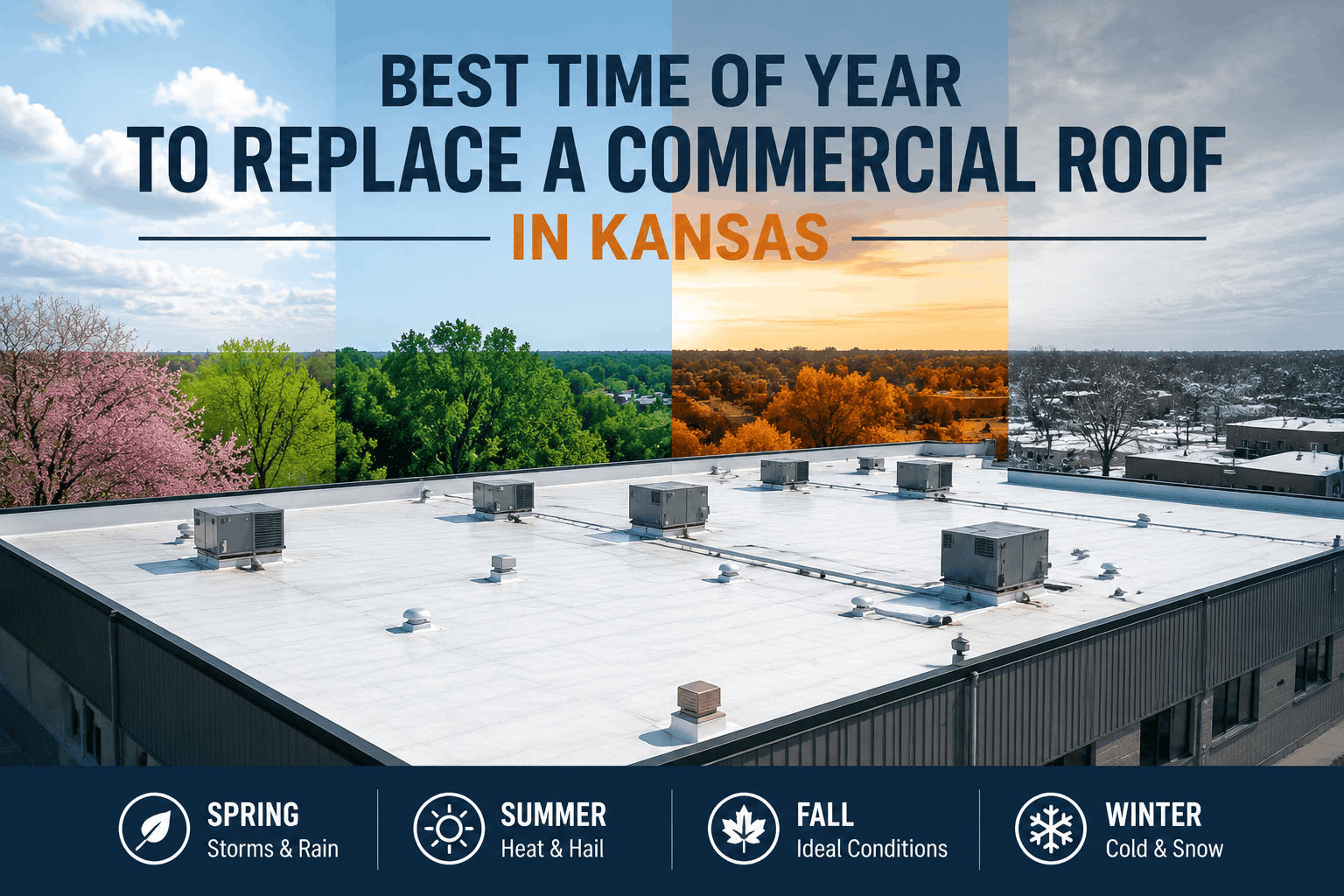
The answer is not always simple. Kansas weather changes throughout the year, and each season brings different opportunities and challenges. Spring often brings heavy rain and hail. Summer can bring extreme heat and severe storms. Winter creates freezing temperatures and snow. Fall is usually more predictable, but every building has different needs.
While many roofing professionals consider fall one of the best seasons for roof replacement, the right timing depends on more than the weather. The condition of your roof, your building’s operations, your budget, and contractor availability all play an important role.
Understanding these factors can help you make a smarter decision and avoid costly roofing problems in the future.
Key Takeaways
- Fall is often considered the best time for commercial roof replacement in Kansas because of moderate temperatures, fewer weather disruptions, and the opportunity to prepare for winter.
- There is no single “best” season for every building. The ideal timing depends on your roof’s condition, business operations, budget, and project goals.
- Spring can be a strong option for addressing damage discovered after winter and preparing a building before severe summer weather arrives.
- Summer offers longer workdays and extended dry periods, but extreme heat and seasonal storms can create challenges for roofing projects.
- Commercial roof replacement can still be completed during winter when conditions allow, especially if delaying the project could lead to additional water damage or operational disruptions.
- The condition of the roof matters more than the season. Frequent leaks, storm damage, rising repair costs, ponding water, and aging materials may indicate that replacement should not be postponed.
- Early planning provides more flexibility. Property owners who begin planning six to twelve months in advance often have more options for scheduling, budgeting, and contractor selection.
- Regular roof inspections help prevent emergency situations by identifying problems before they become costly repairs or major building issues.
- A roof coating may be an alternative to replacement when the existing roof is still structurally sound, but severely damaged roofs often require full replacement.
- Working with an experienced commercial roofing contractor can help property owners evaluate roof conditions, understand seasonal considerations, and choose the most practical time for replacement.
- Proactive roof replacement planning can reduce long-term costs, protect building assets, and help avoid disruptions caused by unexpected roof failures.
- Kansas property owners should evaluate roofing needs before severe weather strikes, rather than waiting for leaks or storm damage to force a decision.
Why Timing Matters for Commercial Roof Replacement
Replacing a commercial roof is a major project. Choosing the right time can help the project run more smoothly and reduce the chances of delays.
Weather is one of the biggest factors. Roofing crews need safe working conditions, and many roofing materials perform best when installed in certain temperature ranges. Rain, snow, ice, and extreme heat can all affect project schedules.
Timing also matters from a business standpoint. Many property owners prefer to plan roof replacements as part of their annual maintenance or capital improvement budgets. Planning ahead often gives owners more options and helps avoid costly emergency situations.
When a roof fails unexpectedly, there is usually less time to compare options, gather estimates, and schedule work. Property owners may feel pressured to make decisions quickly because leaks and water damage need immediate attention.
This is why regular roof inspections are important. They can help identify problems before they become emergencies. When issues are found early, owners have more time to evaluate solutions and choose the best schedule for a project.
If leaks keep returning, repair costs continue to rise, or storm damage is becoming a frequent problem, a commercial roof replacement may be a better long-term investment than continuing to pay for repairs year after year.
To understand why timing matters, it helps to first look at how Kansas weather affects commercial roofing systems throughout the year.
Understanding Kansas Weather and Commercial Roofing
Kansas weather can be tough on commercial roofs.
Throughout the year, roofs face changing temperatures, strong winds, heavy rain, hailstorms, snow, and ice. Over time, these conditions can wear down roofing materials and shorten the life of a roof.
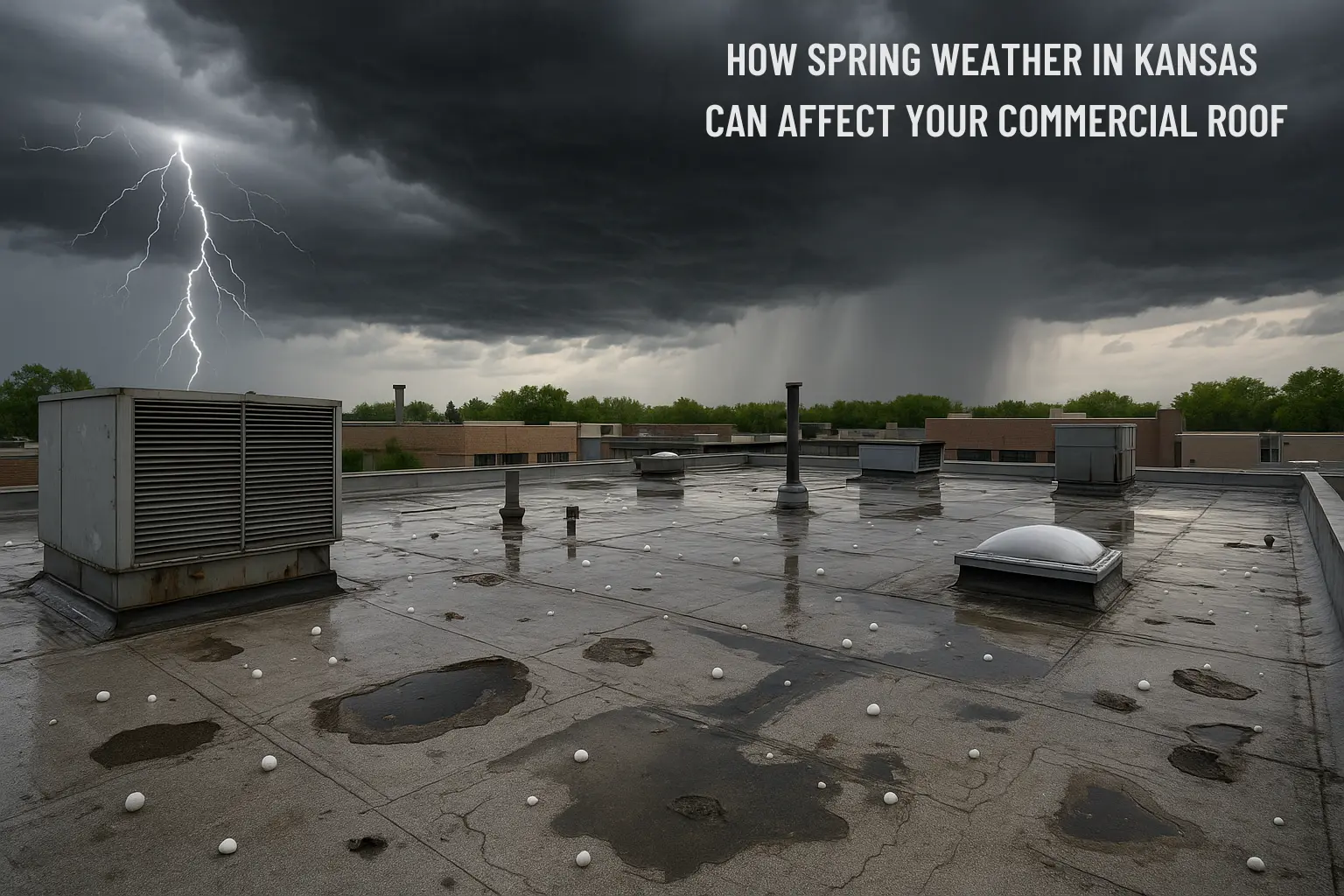
Spring often brings severe weather conditions. Thunderstorms, hail, and strong winds can damage roofing systems. Summer adds intense sunlight and high temperatures. Fall generally offers milder conditions, while winter introduces snow, ice, and freezing temperatures.
These seasonal changes affect both the roof itself and the timing of replacement projects.
For example, a roof that has survived years of hailstorms may begin showing signs of wear even if no major leak is present. Small problems can slowly become larger issues if they are not addressed.
Temperature changes can also affect roofing materials. As materials heat up and cool down, they expand and contract. Over many years, this movement can contribute to cracks, seam failures, and other forms of deterioration.
Because Kansas weather is often unpredictable, property owners should consider both current roof conditions and upcoming seasonal weather when planning a replacement project.
Fall: Often the Best Time for Commercial Roof Replacement
After reviewing Kansas weather patterns, it’s easier to understand why many property owners and roofing professionals prefer fall for major roofing projects.
Fall often provides a balance of moderate temperatures and more stable weather conditions. These factors can help projects move forward with fewer interruptions than during other parts of the year.
One reason fall is such a popular season for roof replacement is the weather. Temperatures are usually moderate. The days are cooler than those in summer but not as cold as those in winter. These conditions often create a comfortable environment for roofing crews and help projects move forward efficiently.
Fall also tends to bring fewer severe storms than spring and early summer. While weather delays are always possible, project schedules may be easier to maintain during this season.
Another advantage is preparing for winter.
Kansas winters can be hard on older roofs. Snow, ice, freezing temperatures, and winter storms can expose weaknesses that may already exist. Replacing a roof before winter arrives can help reduce the chance of leaks and weather-related damage during the colder months.
Many property owners also find that fall works well for budgeting purposes. By late summer or early fall, businesses often have a clearer picture of maintenance needs and available funds for capital improvement projects.
Imagine a warehouse owner in Wichita whose roof has required several repairs over the past few years. The roof is still functioning, but inspections show signs of aging and storm damage. Rather than waiting for a major leak to occur during winter, the owner schedules a replacement in October.
The project is completed before cold weather arrives, and the building enters winter with a new roofing system designed to provide reliable protection.
For many commercial buildings, this type of planning makes fall an attractive season for roof replacement.
Even though fall is often viewed as a favorable season, it is not the only time when a commercial roof can be replaced successfully. Spring also offers several advantages for Kansas property owners.
Spring Roof Replacement: A Popular Choice
Spring is another common time for commercial roofing projects.
After a long Kansas winter, many property owners schedule roof inspections to check for damage. Snow, ice, and freezing temperatures can reveal problems that may not have been visible earlier.
These inspections sometimes uncover issues such as damaged membranes, deteriorated flashing, or moisture problems. When significant issues are found, property owners may decide that replacement is the best solution.
Spring temperatures are generally mild, making it a comfortable season for roofing work. Completing a replacement in spring also means the building is better prepared for summer storms and hail season.
For example, a property manager responsible for an office building may discover that repair costs have steadily increased over several years. Instead of continuing to spend money on temporary fixes, the manager chooses to replace the roof during spring.
Spring can also be appealing to organizations that finalize maintenance budgets early in the year. Once funding is approved, projects can move forward before the busy summer season arrives.
The biggest challenge with spring projects is weather uncertainty.
Rainstorms, thunderstorms, hail, and strong winds can create delays. Roofing contractors often monitor forecasts closely and adjust schedules as needed.
Even with these challenges, spring remains a strong option for many commercial roof replacement projects throughout Kansas.
Property owners who miss the spring window often begin considering summer projects. Summer offers its own benefits, although it also introduces a different set of challenges.
Summer Roof Replacement: Benefits and Challenges
Summer is one of the busiest times of year for commercial roofing work.
One reason is the longer daylight hours. Roofing crews can often work longer days, which may help some projects move more quickly.
Summer can also be a convenient time for certain types of buildings. Schools, for example, often schedule construction projects during summer break when fewer people are using the facility.
Many property owners appreciate the fact that summer often provides extended periods of dry weather. This can help reduce interruptions caused by rain.
However, summer roofing projects also face challenges.
Kansas summers can be extremely hot. Roof surfaces can become much hotter than the air temperature, creating difficult working conditions for crews.
High temperatures may require adjustments to work schedules. Some crews begin work earlier in the morning to avoid the hottest part of the day.
Summer storms are another concern. Thunderstorms, high winds, and hail can still occur during the summer months and may affect project schedules.
Even with these challenges, summer remains a common choice for commercial roof replacement projects, especially for larger buildings that benefit from longer workdays.
While summer remains a busy roofing season, some buildings cannot wait until warmer weather. In those situations, winter replacement may still be a practical option.
Winter Roof Replacement: Is It Possible?
Many property owners assume roof replacement must wait until spring. In reality, commercial roof replacement can often be completed during winter when conditions allow.
Winter projects require careful planning. Contractors must consider temperature requirements, weather forecasts, and safety conditions before beginning work.
Still, there are situations where waiting may not be the best option.
Imagine a manufacturing facility that develops multiple leaks during December. Water is entering the building and threatening equipment and inventory. Inspections show that the roof has reached the end of its useful life and repairs are no longer effective.
In this case, waiting until spring could allow water damage to continue for months. Moving forward with replacement may be the safer and more cost-effective choice.
Property owners should remember that roof leaks rarely stay contained. Water can damage insulation, ceilings, walls, equipment, and inventory. It can also interrupt business operations.
For this reason, the condition of the roof often matters more than the season itself.
Factors That Matter More Than the Season
Up to this point, we’ve looked at how each season can affect a commercial roof replacement project. However, focusing only on the calendar can sometimes cause property owners to miss more important considerations.
In many cases, the condition of the roof and the needs of the building have a greater impact on scheduling than the season itself.
Before deciding when to replace a roof, property owners should evaluate the following factors.
Roof Condition
The current condition of the roof should be one of the first things considered.
Signs that replacement may be needed include:
- Frequent leaks
- Storm damage
- Ponding water
- Damaged membranes
- Aging roofing materials
- Rising repair costs
If these problems are becoming common, delaying replacement may lead to additional expenses.
Building Operations
Every building is different.
A warehouse may have different scheduling needs than a retail center, office building, healthcare facility, or manufacturing plant. Property owners often choose replacement dates that create the least disruption for employees, tenants, and customers.
Roofing System Type
Different roofing systems may have different installation requirements.
TPO, PVC, EPDM, modified bitumen, and coating systems each have their own considerations. A roofing contractor can help determine the best installation schedule based on the roofing system selected.
Contractor Availability
Planning ahead often provides more flexibility.
Projects scheduled months in advance often provide more options when it comes to materials, scheduling, and contractor availability. Waiting until a roof is failing can limit those choices.
How Far Ahead Should You Plan?
Most commercial roof replacements are easier and less stressful when planning begins early.
Waiting until a roof develops serious leaks can limit your options and create pressure to make quick decisions. Starting the process months in advance allows property owners to compare solutions, develop budgets, and schedule work at a convenient time.
Many building owners begin evaluating replacement options six to twelve months before the project is expected to begin. This approach provides enough time to gather information and coordinate the work around business operations.
The planning process often includes:
- Roof inspections
- Condition evaluations
- Budget planning
- Material selection
- Project scheduling
The more time available for planning, the easier it becomes to make informed decisions.
Warning Signs You Should Not Wait
Sometimes the roof condition is serious enough that waiting for a preferred season is not practical.
Several warning signs may indicate that replacement should be considered sooner rather than later.
One of the most common signs is recurring leaks. If the same problems continue appearing after multiple repairs, the roof may be nearing the end of its service life.
Property owners should also pay attention to rising maintenance costs. A roof that requires constant repairs may be costing more than it is worth.
Other warning signs include:
- Visible storm damage
- Interior water stains
- Wet insulation
- Mold concerns
- Large areas of deterioration
- Persistent ponding water
Addressing these issues early may help prevent larger and more expensive building problems.
Roof Replacement vs. Roof Coating
Not every roof requires complete replacement.
In some cases, a roof coating may be a good option. Properly installed commercial roof coatings can help extend the life of a roof that is still structurally sound.
Coatings may improve weather protection and help delay replacement costs.
However, coatings are not appropriate for every roof.
If a roof has major damage, saturated insulation, structural concerns, or extensive deterioration, replacement may be the better long-term solution.
A professional roof inspection can help determine which option makes the most sense for your building.
Choosing the Right Commercial Roofing Partner
Replacing a commercial roof is a major investment. Choosing the right contractor is an important part of the process.
Working with an experienced commercial roofing contractor in Wichita can help property owners understand their options and develop a replacement plan that fits their building’s needs.
A qualified contractor can evaluate roof conditions, identify potential concerns, explain available roofing systems, and recommend realistic project timelines.
They can also help property owners determine whether immediate replacement is necessary or whether a project can be scheduled for a later date without increasing risk.
The goal is not simply installing a new roof. The goal is protecting the building and supporting long-term property performance.
Conclusion
Choosing the right time to replace a commercial roof is about more than finding the perfect season. It involves understanding your roof’s condition, evaluating upcoming weather risks, and planning the project around your building’s needs.
For many Kansas property owners, fall provides favorable conditions for replacement. However, spring, summer, and even winter can be practical options, depending on the situation.
The most effective approach is to stay ahead of roofing problems rather than waiting for leaks, storm damage, or costly repairs to force a decision. Regular inspections and early planning give property owners more flexibility and help ensure that replacement projects can be scheduled at the most practical time.
If your commercial roof is showing signs of age, storm damage, recurring leaks, or increasing maintenance costs, now is a good time to evaluate your options.
Solid Rock Commercial Roofing helps commercial property owners throughout Wichita, Derby, Newton, Hutchinson, Andover, El Dorado, and surrounding Kansas communities determine the right solution for their buildings. Whether you need a professional assessment, are considering a commercial roof replacement, or want to explore commercial roof coatings, our team can help you make an informed decision based on your property’s needs.
To schedule a commercial roof evaluation, visit:
Or call:
(316) 227-2628
Taking action before minor roofing issues become major problems can help protect your building, your budget, and your business for years to come.
Frequently Asked Questions About Commercial Roof Replacement Timing in Kansas
What is the best time of year to replace a commercial roof in Kansas?
For many commercial property owners, fall is often considered the best time for roof replacement. Moderate temperatures and generally stable weather can help roofing projects move forward with fewer interruptions. However, the best timing ultimately depends on your roof’s condition, building needs, budget, and contractor availability.
Can a commercial roof be replaced during the winter?
Yes. Commercial roof replacement can often be completed during winter when weather conditions allow. While cold temperatures may require additional planning, waiting until spring is not always the best option if the roof is leaking or has significant damage.
Is spring a good time for commercial roof replacement?
Spring can be an excellent time for commercial roof replacement, especially if winter inspections reveal damage. Replacing a roof in the spring can help prepare a building for summer storms and reduce the risk of weather-related issues later in the year.
How does Kansas weather affect commercial roofing projects?
Kansas weather can impact project scheduling and roof performance. Severe thunderstorms, hail, high winds, summer heat, and winter freeze-thaw cycles all affect commercial roofing systems. Weather conditions are one reason why proper planning is important when scheduling a roof replacement.
How far in advance should I plan a commercial roof replacement?
Many property owners begin planning six to twelve months before a replacement project. Early planning allows time for inspections, budgeting, material selection, and scheduling, while also helping avoid emergency replacement situations.
What are the signs that my commercial roof may need replacement?
Common signs include recurring leaks, storm damage, ponding water, damaged roofing membranes, rising repair costs, interior water stains, and roofs that are nearing the end of their expected service life. A professional inspection can help determine whether replacement is necessary.
Should I repair my commercial roof or replace it?
The answer depends on the condition of the roof. Minor issues may be addressed with repairs, while extensive damage, ongoing leaks, or repeated repair costs may indicate that replacement is the more cost-effective long-term solution.
Can a roof coating delay the need for replacement?
In some cases, yes. Commercial roof coatings can help extend the life of a roofing system that is still structurally sound. However, roofs with significant damage, saturated insulation, or structural concerns may require full replacement instead.
How long does a commercial roof replacement project take?
Project timelines vary based on the size of the roof, the type of roofing system being installed, weather conditions, and building complexity. A commercial roofing contractor can provide a project timeline after evaluating the property.
Will a roof replacement disrupt business operations?
Most commercial roofing projects can be planned to minimize disruptions. Experienced contractors work with property owners to coordinate schedules and maintain safe building operations throughout the project whenever possible.
Does hail damage always require a roof replacement?
Not necessarily. Some hail damage can be repaired, while other situations may require replacement depending on the extent of the damage and the overall condition of the roof. A professional roof inspection is the best way to determine the appropriate solution.
How often should a commercial roof be inspected?
Most commercial roofs should be professionally inspected at least once a year and after major storm events. Regular inspections help identify potential issues early and can extend the life of the roofing system.
Why is fall often recommended for commercial roof replacement?
Fall typically offers moderate temperatures and fewer severe weather disruptions than spring or summer. Replacing a roof during the fall also allows property owners to address roofing concerns before winter weather arrives.
How do I choose the right commercial roofing contractor?
Look for a contractor with commercial roofing experience, knowledge of Kansas weather conditions, a strong safety program, and a clear process for inspections, project planning, and communication. Working with an experienced commercial roofing contractor in Wichita can help ensure your project is completed efficiently and professionally.
When should I schedule a commercial roof evaluation?
If your roof is aging, experiencing leaks, showing signs of storm damage, or requiring frequent repairs, it is a good time to schedule an evaluation. Early inspections provide more options and help property owners plan replacements before problems become emergencies.
This article is a collaboration between Solid Rock Corporation and OpenAI’s ChatGPT. Created on June 08, 2026, it combines easy-to-read information with Solid Rock’s expert oversight to ensure accuracy and relevance.
Recommended Reading
Commercial Roofing: Extend the Life of Your Roof Through Preventive Maintenance
This article explores how proactive inspections, maintenance planning, and early intervention can help commercial property owners maximize roof performance and avoid costly emergency replacements. It provides useful context for understanding how timing and maintenance decisions affect long-term roofing costs.
URL:
https://www.facilitiesnet.com/roofing/article/Extend-the-Life-of-Your-Roof-Through-Preventive-Maintenance–19632
International Institute of Building Enclosure Consultants (IIBEC)
IIBEC is a leading professional association focused on building enclosure systems, including roofing. Its technical resources, publications, and educational materials provide valuable insight into roof asset management, life-cycle planning, and best practices for commercial building owners and facility managers.
URL:
https://iibec.org/
National Institute of Building Sciences (NIBS)
NIBS publishes research and guidance on building resilience, risk management, and protection against severe weather events. These resources can help commercial property owners better understand how storms, hail, and wind affect roofing systems and long-term facility planning.