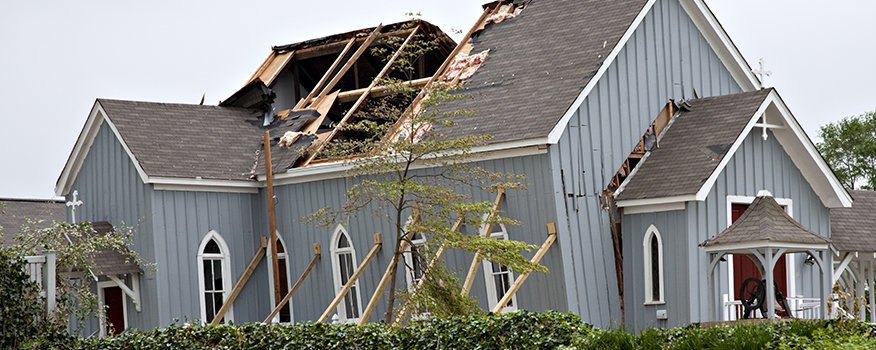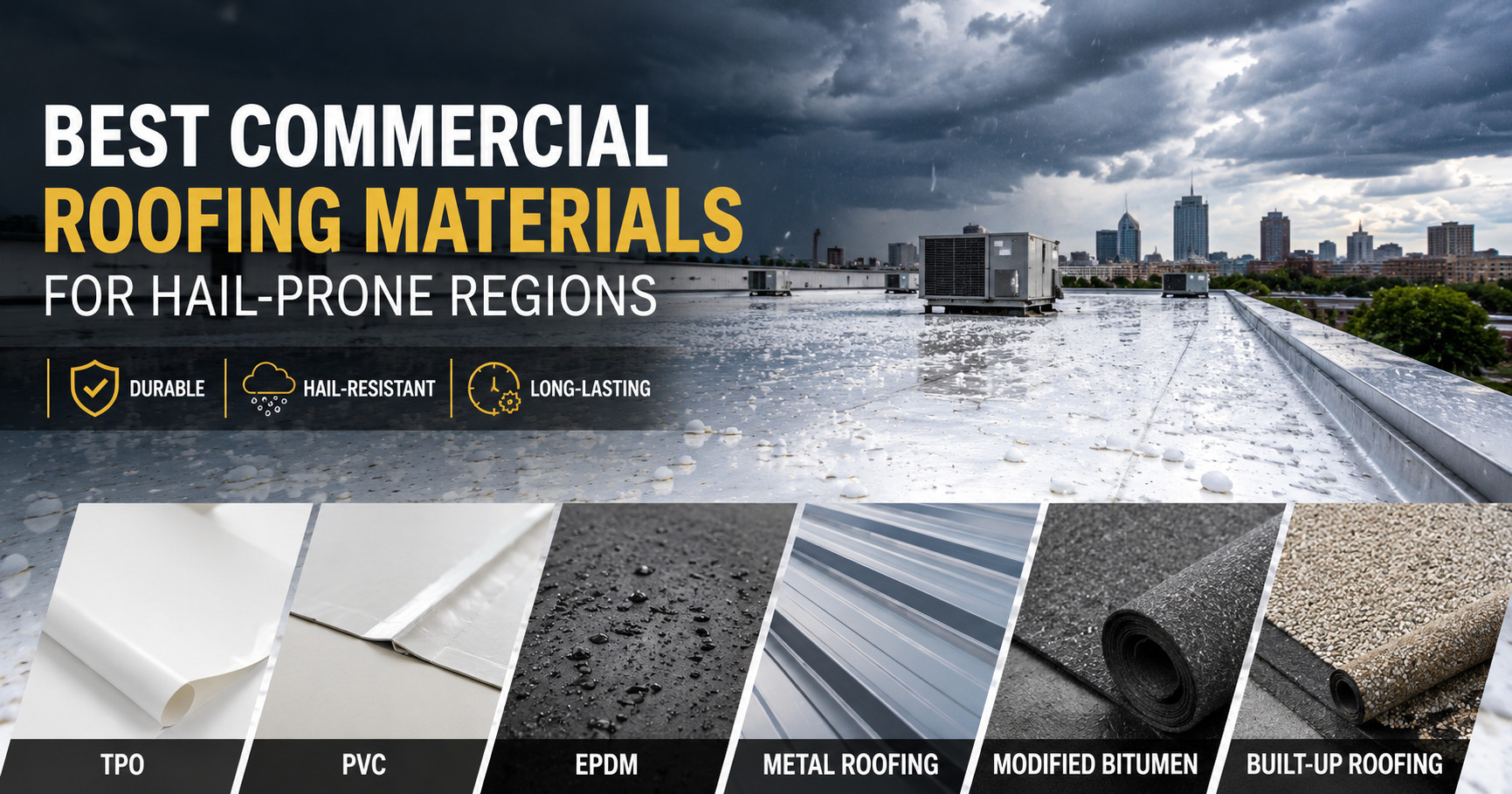
Kansas is known for severe weather. Throughout the year, commercial property owners face strong winds, heavy rain, and hailstorms that can cause costly roof damage. Among these weather threats, hail remains one of the most common and destructive challenges for commercial buildings.
A single storm can damage roofing materials, create leaks, and lead to expensive repairs. Over time, repeated hail events can shorten a roof’s lifespan and increase maintenance costs. For business owners, property managers, and facility managers, those costs can affect budgets, operations, and long-term property value.
Because hailstorms occur regularly across Wichita and many other Kansas communities, choosing the right commercial roofing material is an important business decision. The wrong roofing system may require frequent repairs after storms. The right system can help reduce damage, lower maintenance costs, and protect the building for many years.
No roofing material can completely prevent hail damage. However, some roofing systems are better at handling impacts than others. Understanding the strengths and limitations of each option helps property owners make informed decisions when investing in a commercial roof.
In this article, we’ll explain how hail affects commercial roofs, what makes a roofing material more resistant to hail, and which roofing systems are often the best choices for commercial buildings in hail-prone regions like Kansas.
Key Takeaways
- Hail is one of the biggest threats to commercial roofs in Kansas, and repeated storm exposure can lead to costly repairs, leaks, and a shorter roof lifespan.
- Not all hail damage is immediately visible. Cosmetic damage, functional damage, and hidden damage can all affect a roof’s long-term performance, making post-storm inspections important.
- Kansas commercial roofs must withstand more than hail. High winds, heavy rain, UV exposure, temperature swings, and freeze-thaw cycles all play a role in roofing performance.
- A roofing system’s hail resistance depends on several factors, including material flexibility, thickness, overall system design, and installation quality.
- TPO roofing offers a balance of affordability, energy efficiency, and weather resistance, making it a popular choice for many commercial buildings.
- PVC roofing provides strong durability and chemical resistance, making it a good option for certain industrial and commercial applications.
- EPDM roofing is valued for its flexibility and proven performance, helping it handle both hail impacts and temperature changes effectively.
- Metal roofing systems are known for exceptional longevity and weather resistance, though hail may sometimes cause cosmetic dents without affecting roof performance.
- Modified bitumen and built-up roofing (BUR) systems use multiple layers of protection, which can improve impact resistance and durability during severe weather events.
- Roof coatings can help extend the life of an existing roof, but they should not be viewed as a way to make a roof completely resistant to hail damage.
- The best commercial roofing material depends on the building’s needs, budget, maintenance goals, and long-term ownership plans. There is no single roofing system that is right for every property.
- Professional installation, routine inspections, and timely repairs are just as important as material selection when it comes to protecting a commercial roof in a hail-prone region.
- Working with an experienced commercial roofing contractor can help property owners choose the most appropriate roofing solution for Kansas weather conditions and long-term building performance.
Understanding How Hail Damages Commercial Roofs
Many people think hail damage only happens during very large storms. The truth is that roof damage can build up over time. A roof may survive one hailstorm with little visible damage, but repeated storms can slowly weaken roofing materials.
Hail forms inside strong thunderstorms. As water droplets are carried upward into freezing temperatures, layers of ice form around them. Eventually, the hailstones become too heavy and fall to the ground.
When hail hits a commercial roof, the force of the impact can damage roofing materials in several ways.
Cosmetic Damage
Cosmetic damage affects appearance without immediately causing leaks or water intrusion.
Examples include:
- Dents in metal roofing panels
- Marks on roofing membranes
- Surface damage to protective coatings
Although cosmetic damage may not seem serious at first, it should still be inspected by a roofing professional. What appears to be minor surface damage can sometimes hide more serious issues underneath.
Functional Damage
Functional damage affects the roof’s ability to keep water out of the building.
Examples include:
- Punctures in roofing membranes
- Cracked roofing materials
- Damaged seams
- Broken flashing
- Exposed insulation
This type of damage should be addressed as quickly as possible because it can lead to leaks, moisture intrusion, and costly repairs.
Addressing issues early with professional commercial roof repair services can help prevent larger and more expensive problems later.
Hidden Damage
Some hail damage is difficult to see.
For example, consider a warehouse in Wichita that experiences a severe hailstorm. The roof looks fine from the ground, and there are no immediate leaks. However, small cracks caused by hail allow water to enter the roofing system over several months. By the time the damage is discovered, insulation may be wet, energy costs may have increased, and repairs may cost much more than they would have immediately after the storm.
This is one reason roof inspections after major storms are so important. Finding problems early often helps building owners avoid larger repair bills in the future.
While hail is a major concern, it is only one part of the weather challenges commercial roofs face throughout Kansas.
Why Kansas Commercial Roofs Face Unique Challenges
Commercial roofing systems in Kansas must handle more than occasional storms. They are exposed to changing weather conditions throughout the year, often within the same week.
Commercial roofs must routinely withstand:
- Severe hailstorms
- High winds
- Heavy rain
- Hot summers
- Cold winters
- Strong UV exposure
- Temperature swings throughout the year
These conditions place constant stress on roofing materials.
For example, a roofing membrane may expand during a hot summer afternoon and contract overnight when temperatures drop. This repeated movement can gradually wear down roofing materials. When hail and wind are added to the equation, roofing systems face even greater challenges.
Kansas storms often bring hail, wind, and rain at the same time. Because of this, property owners should look for roofing systems that can perform well under a variety of weather conditions rather than focusing only on hail resistance.
The roofing systems that perform best in Kansas are usually those that can handle hail impacts while also standing up to wind, moisture, sunlight, and temperature changes.
What Makes a Roofing Material More Resistant to Hail?
Not all commercial roofing materials perform the same way during hailstorms.
Several factors affect how well a roofing system handles impacts and severe weather.
Flexibility
Some roofing materials absorb impacts better because they can bend slightly when struck by hail.
This ability helps reduce the likelihood of cracking or punctures. Materials that become brittle with age may be more likely to suffer damage during severe storms.
Thickness
Thicker roofing materials often provide greater protection against punctures and tears.
Roofing systems with multiple layers can spread impact forces across a larger area, helping reduce damage from hailstones.
Overall System Design
A commercial roof is made up of several components, including insulation, fasteners, seams, and flashing.
Each part plays a role in overall performance. A well-designed roofing system often performs better during severe weather than a poorly designed or poorly installed system.
Installation Quality
Installation quality matters just as much as the roofing material itself.
Working with an experienced commercial roofing contractor helps ensure the roof is installed correctly and prepared for Kansas weather conditions.
Even a high-quality roofing material may not perform as expected if installation mistakes occur.
With those factors in mind, let’s look at some of the commercial roofing materials commonly used on buildings in hail-prone regions.
TPO Roofing
Thermoplastic Polyolefin (TPO) is one of the most common commercial roofing materials used today.
It is frequently installed on:
- Warehouses
- Office buildings
- Retail centers
- Industrial facilities
One reason TPO is so popular is that it offers a balance between cost and performance.
How TPO Handles Hail
TPO membranes are flexible and can resist many types of weather-related damage.
Thicker TPO membranes generally provide better protection against hail impacts than thinner options.
The heat-welded seams used in TPO roofing systems also help create strong waterproof connections. These seams help prevent water intrusion and contribute to long-term performance.
Benefits of TPO Roofing
TPO offers several advantages:
- Competitive installation costs
- Energy-efficient reflective surfaces
- Strong seam performance
- Wide availability
The reflective surface can help reduce rooftop heat absorption during Kansas summers, which may lower cooling costs in some buildings.
For many property owners, TPO provides a practical combination of durability, performance, and value.
While TPO is often selected for its balance of cost and performance, some building owners choose PVC when durability and chemical resistance are higher priorities.
PVC Roofing
PVC roofing is another single-ply membrane system commonly used on commercial buildings.
Although it shares some similarities with TPO, PVC has several characteristics that make it attractive for certain applications.
How PVC Handles Hail
PVC remains flexible throughout its lifespan. This allows the material to absorb some of the force created by hail impacts.
Its welded seams also help maintain waterproof protection after years of exposure to severe weather.
Benefits of PVC Roofing
PVC roofing is known for:
- Long service life
- Strong weather resistance
- Chemical resistance
- Durability
These features make PVC a common choice for restaurants, manufacturing facilities, and buildings where exposure to chemicals or grease may occur.
Things to Consider
PVC roofing often costs more than TPO. However, many building owners view the additional investment as worthwhile because of the material’s durability and long-term performance.
Another single-ply option is EPDM, which has been used successfully on commercial buildings for decades.
EPDM Roofing
EPDM is often called rubber roofing.
It has been used successfully on commercial buildings for many years and remains a popular choice today.
How EPDM Handles Hail
One of EPDM’s greatest strengths is its ability to remain resilient in changing weather conditions.
The material can absorb impacts while maintaining performance in both hot and cold temperatures. This characteristic often helps EPDM perform well during hailstorms.
Kansas experiences both hot summers and cold winters, making this benefit particularly valuable.
Benefits of EPDM Roofing
Advantages include:
- Long history of proven performance
- Strong weather resistance
- Ability to handle temperature changes
- Flexibility during building movement
Many building owners appreciate EPDM because it has a long track record and continues to perform well on a wide variety of commercial buildings.
For property owners looking for maximum lifespan and weather resistance, metal roofing is another option to consider.
Metal Roofing Systems
Metal roofing is often one of the first materials people think about when discussing hail resistance.
Metal roofs are known for durability, strength, and long service life.
However, there are some common misunderstandings about how metal roofs respond to hail.
How Metal Roofs Handle Hail
Metal roofs can often continue functioning properly even when they show visible dents.
This means a roof may have cosmetic damage without suffering serious functional damage.
For example, two buildings may experience the same hailstorm. One building has a thinner metal roof, while the other has a heavier-gauge standing seam roof. The heavier system may show fewer dents and maintain better overall performance.
Building owners should understand that dents do not always mean a roof has failed. A professional inspection can help determine whether damage is cosmetic or affects performance.
Benefits of Metal Roofing
Metal roofing offers:
- Long lifespan
- Strong wind resistance
- Fire resistance
- Low maintenance requirements
These benefits make metal roofing attractive for many commercial property owners throughout Kansas.
Standing Seam Metal Roofing
Standing seam roofing is one of the most popular metal roofing systems for commercial buildings.
Its concealed fasteners help reduce potential leak points while improving durability.
Many building owners choose standing seam roofing because it combines long-term performance with a clean, professional appearance.
Although the initial investment may be higher than some other roofing systems, the long service life often makes it appealing for owners focused on long-term ownership.
For low-slope commercial buildings, modified bitumen is another roofing system known for durability and impact resistance.
Modified Bitumen Roofing
Modified bitumen roofing has been used on commercial buildings for many years.
It is especially common on low-slope roofs where durability and puncture resistance are important.
How Modified Bitumen Handles Hail
Modified bitumen systems use multiple layers of materials.
These layers help absorb impact energy and improve puncture resistance. Because of this design, modified bitumen often performs well during hailstorms.
The additional thickness provides another level of protection that many property owners value in severe weather regions.
Benefits of Modified Bitumen
Benefits include:
- Thick protective layers
- Good durability
- Strong puncture resistance
- Long history of commercial use
Modified bitumen is also known for handling foot traffic reasonably well, which can be helpful for buildings with rooftop equipment that requires regular maintenance.
Property owners who want a roofing system with a proven track record often consider modified bitumen.
Another multi-layer system commonly found on commercial properties is built-up roofing.
Built-Up Roofing (BUR)
Built-up roofing, often called BUR, has protected commercial buildings for more than a century.
Despite the introduction of newer roofing technologies, BUR remains a dependable option for many commercial properties.
How BUR Handles Hail
Because BUR contains several layers, it can distribute the force of hail impacts across the roofing system.
This layered construction can help reduce damage and improve durability during severe weather events.
Rather than relying on a single membrane for protection, BUR uses multiple layers that work together to protect the building.
Benefits of BUR
Advantages include:
- Strong waterproofing protection
- Multiple layers of defense
- Long service history
- Good durability
BUR remains a trusted option for many commercial property owners, especially those with low-slope roofs that require dependable protection from the elements.
Roof Coatings and Hail Protection
Roof coatings are not a separate roofing material, but they can play an important role in roof maintenance and restoration.
A roof coating adds an extra layer of protection to an existing roofing system.
Can Roof Coatings Stop Hail Damage?
No roof coating can make a roof completely resistant to hail damage.
However, coatings may help improve weather resistance and extend roof life under the right conditions.
A coating should be viewed as one part of a larger roof maintenance strategy rather than a guaranteed solution to storm damage.
When Roof Coatings Make Sense
A coating may be a good option when:
- The roof is still structurally sound
- The building owner wants to extend roof life
- A full replacement is not yet necessary
- The existing roofing system qualifies for restoration
A professional inspection can help determine whether a roof coating is a practical solution.
Comparing Commercial Roofing Materials
The table below provides a general comparison of common commercial roofing materials used in hail-prone regions.
| Roofing Material | Hail Resistance | Lifespan Potential | Maintenance Needs |
| TPO | Good | 20–30 years | Moderate |
| PVC | Good to Excellent | 20–30+ years | Moderate |
| EPDM | Good | 20–30 years | Moderate |
| Metal Roofing | Excellent | 40+ years | Low |
| Modified Bitumen | Good to Excellent | 20–30 years | Moderate |
| Built-Up Roofing | Good to Excellent | 20–30+ years | Moderate |
Actual performance depends on product quality, installation methods, maintenance, and weather conditions.
Choosing the Right Roofing Material
Every commercial building has different needs.
The best roofing material depends on factors such as:
- Building type
- Budget
- Long-term ownership plans
- Maintenance expectations
- Local weather conditions
For example, a warehouse owner may prioritize durability and long lifespan. A retail center may focus on balancing cost and performance. An industrial facility may need a roofing system with strong chemical resistance.
Building owners should avoid choosing a roofing system based only on upfront cost. A lower-cost roof may require more repairs over time, while a more durable system may provide better value throughout the life of the building.
Factors such as expected ownership length, maintenance budgets, operational needs, and future building plans can all influence the best roofing choice.
There is no one-size-fits-all solution.
In some situations, repairs and restoration can keep a roof performing well for many years. In other cases, aging roofs may require commercial roof replacement to provide reliable long-term protection.
Every commercial property has different requirements, making a professional roof evaluation an important step before selecting a roofing system.
Conclusion
Choosing the right commercial roofing material is one of the most important decisions a building owner can make in a hail-prone region like Kansas. While no roofing system is completely immune to storm damage, certain materials are better equipped to handle the repeated hail, wind, rain, and temperature changes that commercial properties experience throughout the year.
Single-ply systems such as TPO, PVC, and EPDM offer different combinations of affordability, durability, and weather resistance. Metal roofing provides exceptional longevity and strong protection against the elements, while modified bitumen and built-up roofing systems offer multiple protective layers that can help withstand repeated impacts. Roof coatings may also help extend the life of an existing roofing system when conditions are appropriate.
The best choice depends on your building’s design, budget, maintenance goals, and long-term plans for the property. A roofing system that works well for a warehouse may not be the best fit for a retail center, office building, or manufacturing facility. That is why a professional roof evaluation is an important first step before making any major roofing decision.
Understanding your roof’s current condition and long-term needs can help you make a more informed investment and avoid unexpected roofing expenses in the future.
If your commercial property has experienced hail damage, is showing signs of age, or you are planning for a future roofing project, Solid Rock Commercial Roofing can help you evaluate your options and determine the best solution for your building.
To schedule an appointment, visit https://solidrockcorp.com/contact-us/ or call (316) 227-2628 to speak with the team at Solid Rock Commercial Roofing. We proudly serve commercial property owners throughout Wichita, Derby, Newton, Hutchinson, Andover, El Dorado, and surrounding Kansas communities.
Frequently Asked Questions (FAQs)
What is the best commercial roofing material for hail-prone regions?
There is no single roofing material that is best for every commercial building. The right choice depends on factors such as building type, budget, maintenance goals, and long-term ownership plans. Metal roofing, modified bitumen, built-up roofing (BUR), TPO, PVC, and EPDM can all perform well in hail-prone regions when properly installed and maintained.
Can hail damage a commercial roof even if there are no leaks?
Yes. Hail can cause cosmetic damage, hidden damage, or functional damage that may not result in immediate leaks. Small cracks, punctures, or weakened roofing materials can allow moisture to enter the roofing system over time. This is why professional roof inspections are recommended after major hailstorms.
How do I know if my commercial roof has hail damage?
Signs of hail damage may include dents in metal panels, punctures in roofing membranes, damaged flashing, loose roofing materials, or visible impact marks. Some damage is difficult to identify without a professional inspection, especially on large commercial roofs.
Is metal roofing the most hail-resistant commercial roofing option?
Metal roofing is often considered one of the most durable commercial roofing options available. While hail can sometimes cause cosmetic dents, metal roofs frequently continue to perform well after storms. The level of hail resistance depends on factors such as metal thickness, roof design, and installation quality.
Does TPO roofing hold up well against hail?
TPO roofing can perform well in hail-prone regions when the system is properly designed and installed. Thicker TPO membranes generally offer better puncture resistance than thinner options. The welded seams used in TPO systems also help maintain waterproof protection during severe weather.
Is EPDM roofing a good choice for Kansas weather?
EPDM roofing is often a good choice for Kansas because it remains flexible in both hot and cold temperatures. Its ability to absorb impacts and handle temperature changes can make it a reliable option for commercial buildings exposed to frequent weather fluctuations.
How does modified bitumen roofing perform during hailstorms?
Modified bitumen roofing uses multiple layers of protection, which can help absorb impact energy and resist punctures. This layered construction often makes modified bitumen a strong option for low-slope commercial roofs in hail-prone areas.
Are roof coatings effective against hail damage?
Roof coatings can help improve weather resistance and extend the life of an existing roofing system. However, roof coatings do not make a roof hail-proof. Their effectiveness depends on the condition of the existing roof and the type of coating used.
How often should a commercial roof be inspected in Kansas?
Most commercial roofs should be professionally inspected at least once a year. Additional inspections are recommended after major hailstorms, high-wind events, or severe weather. Regular inspections can help identify problems early and reduce long-term repair costs.
When should a commercial roof be repaired instead of replaced?
A roof may be a good candidate for repair if the damage is limited and the roofing system still has useful service life remaining. However, extensive storm damage, repeated repair needs, or advanced roof aging may indicate that a full roof replacement is the better long-term investment.
How long do commercial roofing systems typically last?
The lifespan of a commercial roof varies by material, installation quality, maintenance, and weather exposure. In general:
- TPO: 20–30 years
- PVC: 20–30+ years
- EPDM: 20–30 years
- Modified Bitumen: 20–30 years
- Built-Up Roofing (BUR): 20–30+ years
- Metal Roofing: 40+ years
Actual performance may vary based on building conditions and maintenance practices.
How long do commercial roofing systems typically last?
Even high-quality roofing materials can underperform if they are installed incorrectly. Proper installation helps ensure that seams, flashing, fasteners, insulation, and drainage systems work together to provide reliable protection against hail, wind, rain, and other weather-related threats.
What should I do after a hailstorm impacts my commercial property?
After a hailstorm, schedule a professional roof inspection as soon as possible. Prompt inspections can identify damage before it leads to leaks, insulation problems, or structural issues. Early action often helps reduce repair costs and protects the long-term performance of the roofing system.
This article is a collaboration between Solid Rock Corporation and OpenAI’s ChatGPT. Created on May 01, 2026, it combines easy-to-read information with Solid Rock’s expert oversight to ensure accuracy and relevance.
Recommended Reading
Roofing Damage Investigations: Hail
This technical resource examines how hail affects various roofing systems and provides research-based guidance for evaluating hail damage on commercial roofs. It is particularly useful for building owners, consultants, and facility managers seeking a deeper understanding of roof performance after severe weather events.
URL:
https://www.ricowi.com/wp-content/uploads/2017/12/HailDamageInvestigationGuideline-2015.pdf
Roof Systems
FM Global’s roofing resources provide detailed information about roof system performance, risk management, weather resistance, and loss prevention. Industry professionals can use these materials to better understand how roofing design and construction influence long-term building protection.
URL:
https://www.fmglobal.com/research-and-resources/fm-global-data-sheets
Roof Wind Design Guide for Hurricane and Hail-Prone Regions
While focused on severe weather resilience, this guide offers valuable insights into roof system performance, weather-related vulnerabilities, and construction practices that can improve durability in regions exposed to hail and high winds. The information is relevant for commercial property owners and facility professionals evaluating roofing investments.
URL:
https://ibhs.org/public-policy/fortified/commercial/