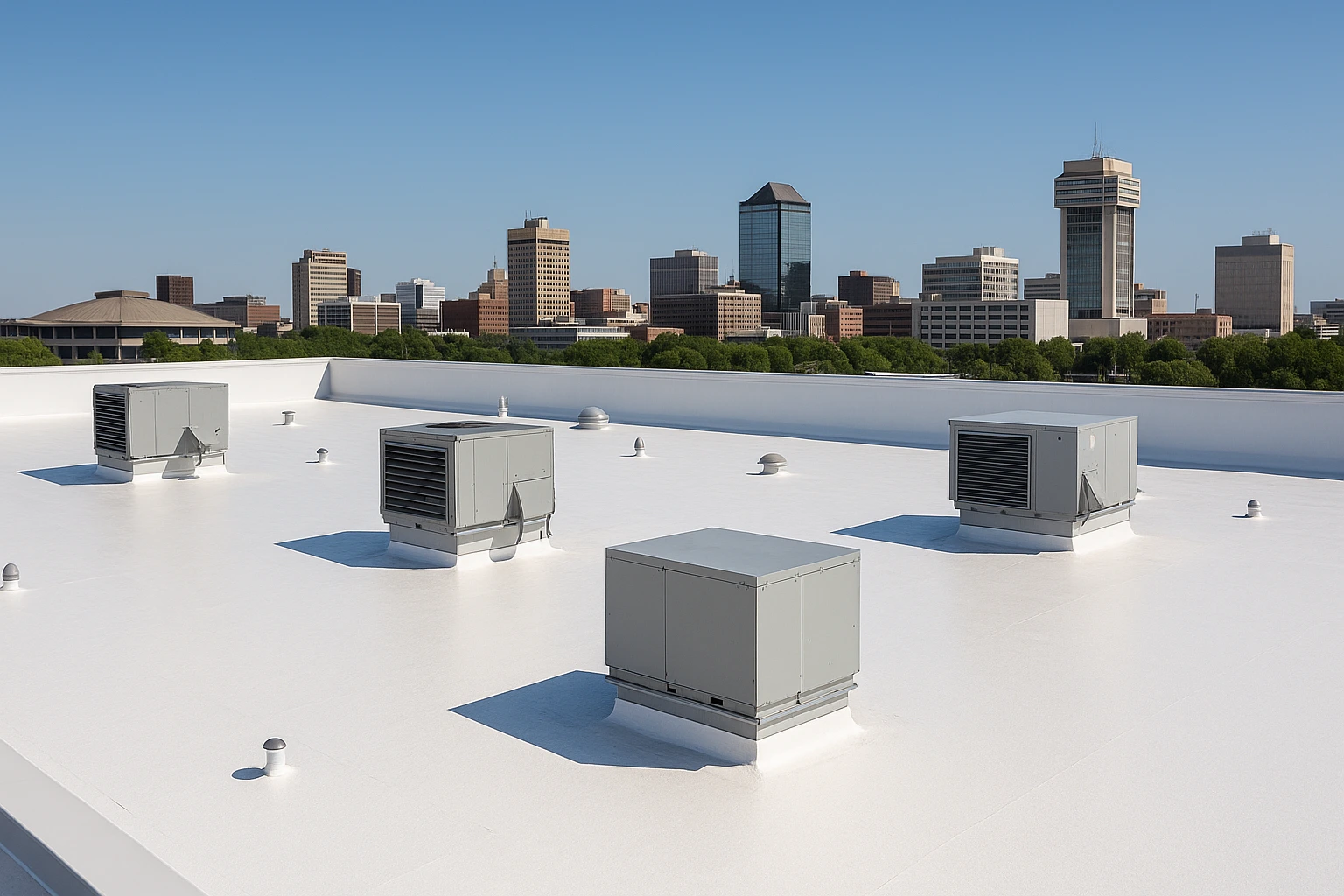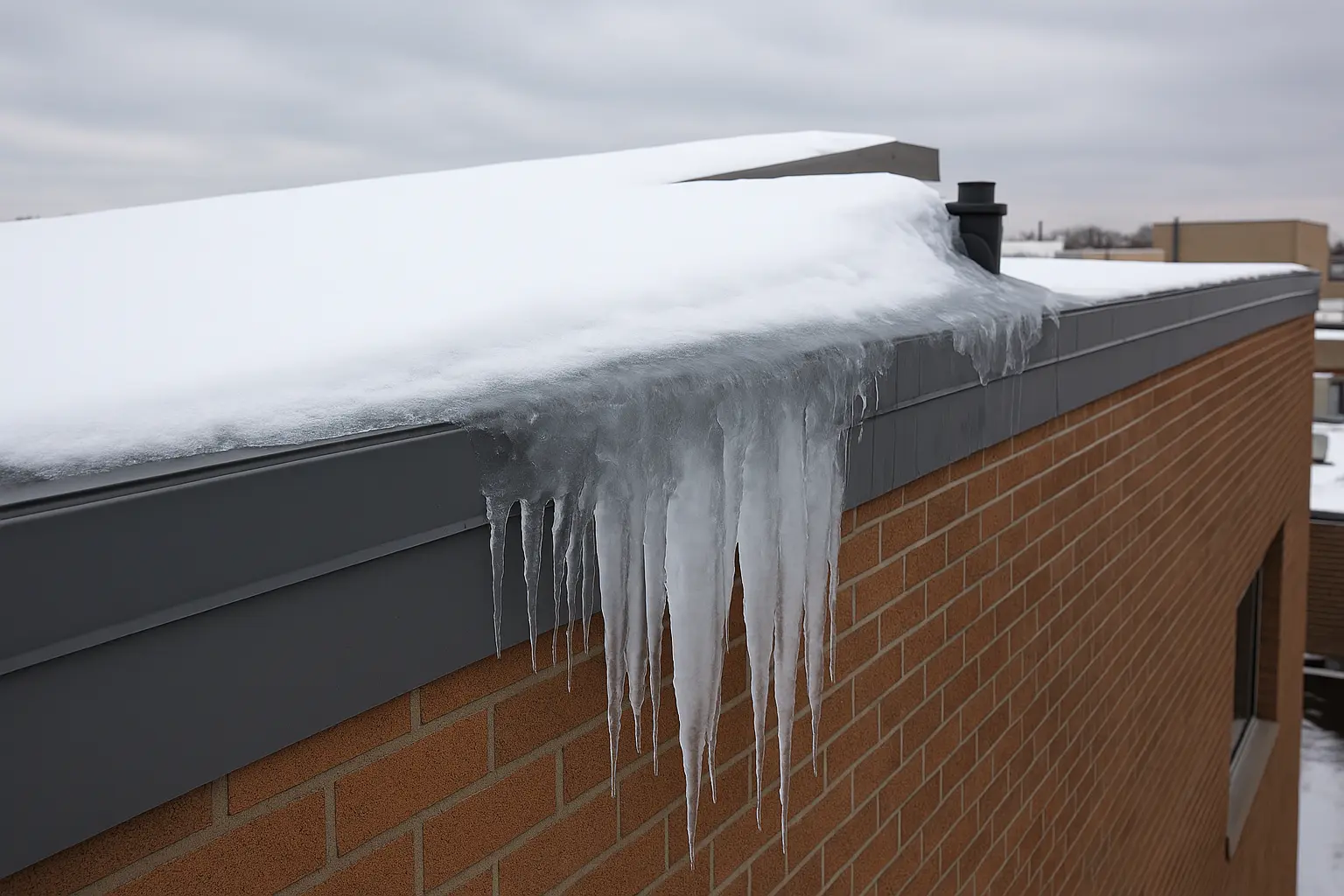
For Wichita business owners, the single biggest energy advantage of a Spray Polyurethane Foam (SPF) roof is its ability to create a completely seamless, high-performance insulation barrier that eliminates thermal bridging, stopping expensive heat from escaping through the fasteners and joints found in traditional roofing systems. By providing a continuous layer of high R-value insulation, spray foam ensures your building stays warmer in the winter and significantly reduces your monthly heating costs.
Key Takeaways: The Energy Advantages of Spray Foam Roofing
This article outlines why Spray Polyurethane Foam (SPF) is a superior choice for commercial energy efficiency in Wichita, especially during the cold winter months.
Core Energy Benefits
- Eliminates Thermal Bridging: Unlike traditional roofs that use thousands of metal fasteners, spray foam is self-adhering and seamless. This prevents heat from “bridging” or escaping through conductive metal screws.
- Industry-Leading R-Value: SPF provides an R-value of R-6.5 to R-7 per inch, significantly higher than standard insulation boards (R-5). This allows for better warmth with a thinner material layer.
- Airtight Seal: The liquid-applied foam expands into every crack, preventing “wind wash” and air infiltration caused by Wichita’s high winds, which often compromise the efficiency of seamed roofs.
Financial and Practical Impact
- Significant Savings: Upgrading to a spray foam roof can lower a building’s energy consumption by 30% to 50%.
- Rapid ROI: Most businesses see a return on their investment through energy savings alone within five to seven years.
- Prevents “Ghosting”: By creating a consistent thermal break, SPF prevents condensation on the roof deck, which stops the ceiling streaks and mold issues often caused by cold metal fasteners.
- Longevity: An SPF roof can last 50 years or more with simple re-coating every 15–20 years, making it a permanent roofing solution.
How Spray Foam Roofing Eliminates Thermal Bridging
Thermal bridging occurs when heat travels through highly conductive materials, like metal screws or plate fasteners, that bypass your roof’s insulation. Because a spray foam roof is applied as a liquid that expands into a solid, it eliminates thermal bridging by covering the entire roof deck in a single, gap-free layer without the need for thousands of metal fasteners.
In a traditional “mechanically attached” roof, you might have one metal screw every square foot. Each of those screws acts like a tiny straw, sucking the heat out of your building and sending it into the cold Kansas air. In a 20,000-square-foot building, that is 20,000 points of heat loss! Spray foam is “self-adhering,” meaning it sticks to the roof on its own. This creates a “monolithic” (one-piece) shield that keeps your heat exactly where you want it: inside your building.
How does the high R-value of spray foam compare to other roofing materials?
Spray Polyurethane Foam provides one of the highest R-values (insulation effectiveness) of any roofing material available, typically offering a rating of R-6.5 to R-7 per inch of thickness, which is significantly higher than traditional materials like fiberglass or EPS foam. This high R-value means you can achieve superior warmth and energy savings with a thinner layer of material.
For comparison, most standard roof insulation boards provide an R-value of about R-5 to R-5.5 per inch. Because spray foam is denser and more effective at stopping heat flow, it can lower your building’s energy consumption by up to 30% to 50% compared to an uninsulated or poorly insulated roof [Source: Spray Polyurethane Foam Alliance (SPFA) Energy Study: https://www.sprayfoam.org/energy-efficiency]. In a climate like Wichita, where winter temperatures frequently stay below freezing, that extra R-value translates directly into hundreds or even thousands of dollars saved on your utility bills every year.
Why is a seamless roof better for winter wind protection in Kansas?
A seamless spray foam roof is better for winter protection because it eliminates all joints and seams where cold Kansas winds can push air into your building, preventing “air infiltration” that often causes drafts and cold spots in traditional roofing systems. Most commercial roofs have miles of seams that are glued or welded together; if a single inch of that seam fails, the wind will find a way in.
Wichita is famous for its high winds, which can push cold air through even the smallest gaps in a roof’s edge or around rooftop units (like AC units). Because spray foam is sprayed as a liquid, it expands into every tiny crack and crevice, sealing the roof tightly against the wind. This creates an airtight seal that prevents “wind wash,” a problem where cold air moves through traditional insulation and robs it of its effectiveness. With spray foam, your building stays tight, quiet, and draft-free, no matter how hard the wind blows across the plains.
How does spray foam roofing help prevent “ghosting” and moisture issues?
Spray foam helps prevent “ghosting”—which are dark streaks on your ceiling caused by temperature differences—by providing a consistent temperature across the entire roof deck, which stops condensation from forming on the cold spots created by metal fasteners. When moisture from inside your building hits a cold metal screw, it turns into liquid water, which can lead to mold and unsightly stains.
Imagine a cold soda can on a hot day; it “sweats.” The same thing happens inside your roof if you have metal fasteners. Those cold spots attract moisture. Over time, that moisture can rot your ceiling tiles or cause mold to grow in your insulation. Because spray foam has no metal fasteners and provides a consistent “thermal break,” the underside of your roof stays at a steady temperature. This keeps your building’s air healthier and protects your interior finishes from moisture damage.
What is the typical return on investment (ROI) for a spray foam roof in Wichita?
The return on investment for a spray foam roof in Wichita is often reached in five to seven years through energy savings alone, making it one of the few building improvements that actually pays for itself over time. While the initial installation might cost more than a basic repair, the reduction in monthly heating and cooling costs is immediate and permanent.
Hypothetical ROI Example:
Consider a 15,000-square-foot retail store in Wichita with an old, leaky roof and high energy bills.
- Old Roof Heating Bill: $1,200 per month during winter.
- New SPF Roof Energy Savings: 30% reduction.
- Monthly Savings: $360.
- Winter Savings (5 months): $1,800 per year.
- Summer Savings (4 months): $1,200 per year (due to high reflectivity).
- Total Annual Savings: $3,000.
Over the 20-year lifespan of the roof, that business would save $60,000 in energy costs. When you add in the fact that you won’t have to pay for leak repairs or interior water damage, the spray foam roof becomes the most financially responsible choice for a long-term business owner.
Frequently Asked Questions (FAQs)
Can spray foam be applied during the winter in Wichita?
Generally, spray foam requires the roof surface temperature to be at least 50°F to 60°F to stick and expand properly. While it can be difficult to install during the dead of winter, Solid Rock Commercial Roofing can often find “weather windows” in late fall or early spring, or use specialized “cold-weather” foam formulas for certain applications. However, for the best results, it is usually recommended to plan your SPF installation during milder temperatures to ensure the strongest bond.
Is spray foam roofing strong enough to walk on?
Yes! Once the foam hardens, it is a very dense and durable material. In fact, it has a “compressive strength” of about 40 to 60 pounds per square inch (psi), which is much stronger than most traditional roof insulation boards. It can easily handle normal foot traffic for HVAC maintenance or roof inspections. It is also highly resistant to wind uplift, making it one of the safest roofs during a Kansas windstorm.
How long does a spray foam roof last?
A professionally installed spray foam roof can last 50 years or more if it is properly maintained. The foam itself does not break down; only the protective top coating (usually silicone) needs to be refreshed every 15 to 20 years. This “re-coating” process is much cheaper than a full roof replacement and essentially resets the warranty, making spray foam a “permanent” roofing solution for your building.
Does spray foam help with noise reduction?
Yes, because spray foam is a thick, dense, and seamless material, it is excellent at deadening outside noise. If your business is located near a busy Wichita highway or an airport, a spray foam roof can significantly quiet the interior of your building, making it a more comfortable environment for your employees and customers.
Conclusion & Call to Action: Invest in Winter Comfort
A spray foam roof is more than just a waterproof lid for your building; it is a high-tech energy shield. By eliminating thermal bridging, providing the highest R-value in the industry, and sealing out the harsh Wichita winds, spray foam transforms your commercial property into a model of efficiency and comfort. Don’t spend another winter watching your hard-earned profits escape through your roof.
Contact Solid Rock Commercial Roofing today to learn more about our Spray Polyurethane Foam roofing systems. Our Wichita-based team will provide a free energy assessment and show you how a seamless, high-performance roof can lower your bills and improve your building’s comfort for decades to come.
Call us now to schedule your consultation and start saving on your energy costs!