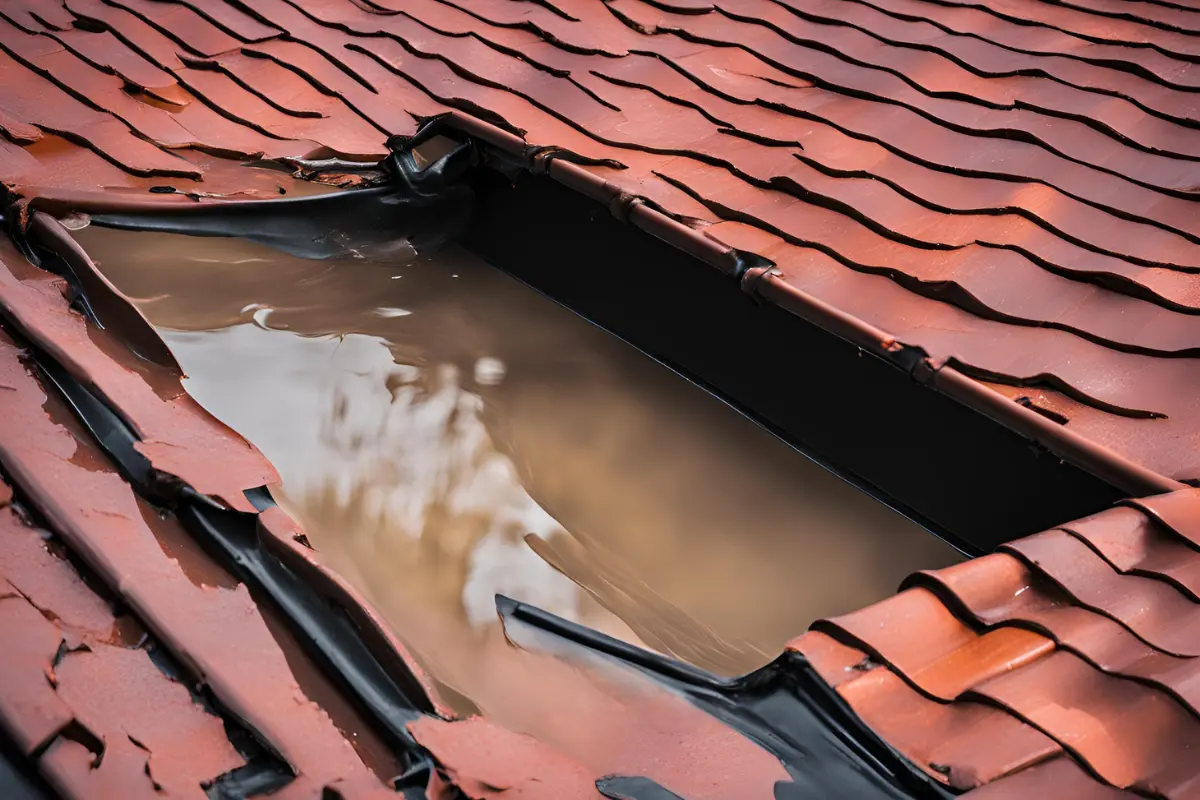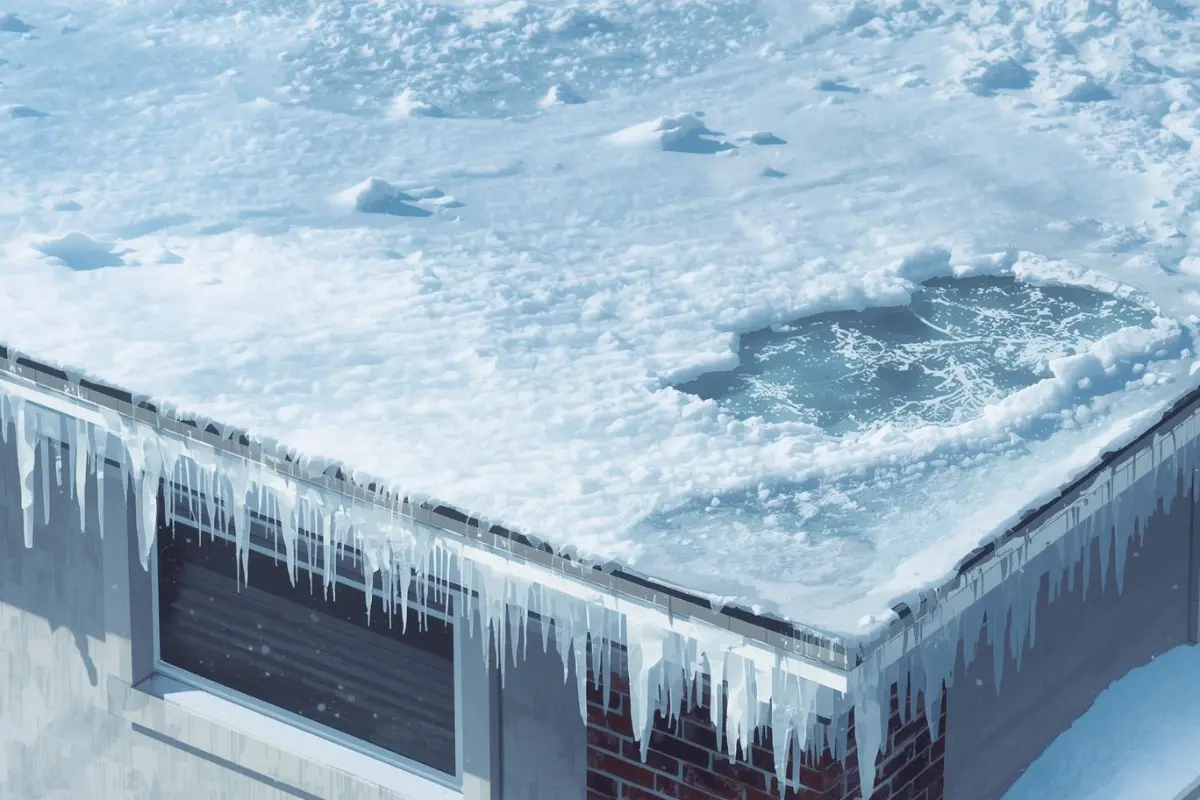
While many business owners worry about the heavy weight of snow on their buildings, the most dangerous winter threat to a Wichita commercial roof is actually the ice dam, which forms when heat escaping from your building melts snow that then refreezes into a solid barrier of ice. This ice barrier traps water on your roof, forcing it to back up under seams and into your building, causing massive damage to your interior and your structure.
Key Takeaways:
The article explains that commercial roof ice dams are a serious winter threat caused by building heat loss, leading to structural damage and costly repairs.
Understanding the Threat
- The Cause: Ice dams are formed when heat escapes from the building, melts the bottom layer of snow on the roof of the building, and that water refreezes at cold edges or drains.
- The Vicious Cycle: Once a dam forms, it traps more meltwater. This water can back up under the roof membrane or into the insulation, which then lets even more heat escape, making the dam grow faster.
Structural and Financial Risks
- Weight Load: Pooled water behind an ice dam can add massive weight to a roof. Just one inch of water over 10,000 square feet weighs approximately 52,000 pounds, risking structural collapse.
- Expansion Damage: As trapped water freezes and thaws, it expands by about 9%, acting like a crowbar that tears apart roof seams and flashings.
- Hidden Costs: Reactive repairs can cost 25 times more than proactive maintenance when considering ruined inventory, mold remediation, and emergency labor.
Prevention and Solutions
- Insulation is Key: High R-value insulation keeps the roof deck cold, preventing snow from melting from the bottom up.
- Proper Drainage: Keeping gutters and drains clear of debris is essential. Clogged drains are the most common starting point for ice dams.
- Safe Removal: Never use rock salt or snow rakes on a commercial flat roof, as they can corrode or puncture the membrane. Professional steam or mechanical removal is the only safe method.
- Proactive Strategy: Pre-winter inspections and post-storm checks are the best ways to identify vulnerabilities before they turn into indoor leaks.
How exactly do ice dams form on a flat commercial roof?
Ice dams form on flat roofs through a cycle of unnatural melting and refreezing, caused when heat leaks out of your building and melts the bottom layer of snow, even when the outside air is well below freezing. This melted water flows toward the colder edges of the roof or near the drains, where it hits freezing temperatures again and turns back into solid ice.
Because the edges of the roof and the drain pipes are often colder than the middle of the roof, the ice builds up in these spots first. This creates a literal wall of ice that stops water from leaving the roof. Once the water is trapped, it has nowhere to go but up and under your roof membrane or through small gaps in your flashing. This cycle can happen dozens of times during a single Wichita winter. Each time the water freezes, the ice dam gets thicker. This makes the ice much stronger and harder to remove, leading to a much higher risk for a major, expensive leak.
Why is heat loss the primary cause of ice damming?
Heat loss is the main cause of ice dams because poor insulation allows warm air to rise and heat up the roof deck from underneath, creating a “warm roof” that melts snow even in the middle of a blizzard. When your roof surface is warmer than the outside air, it interferes with the natural way snow should sit on a building.
In a perfectly insulated building, the roof stays cold. The snow stays frozen until the sun or warm air melts it naturally from the top down. However, if your insulation is thin, missing, or wet, your building’s expensive heat escapes. This heat melts the snow from the bottom up. This liquid water then flows until it finds a cold spot—usually at the roof’s edge or a drain—and refreezes into a dam. This is why high R-value insulation is your best defense. It keeps the heat inside your building where it belongs. It keeps your roof deck cold, which stops the ice dam cycle before it even has a chance to start.
What happens when an ice dam forms around my roof drains?
When an ice dam forms around your roof drains, it completely blocks the path for meltwater to exit the building, causing thousands of pounds of water to pool on your roof and creating a high risk for structural failure or massive leaks. Drains are often the first place to freeze because the metal drain assembly is exposed to the cold air inside the drain pipe.
Imagine a large warehouse roof in Wichita. A heavy snow falls, followed by several days of freezing temperatures. Because of heat loss, the snow in the center of the roof melts and flows toward the drains. However, the drains are frozen solid. The water backs up, forming a “lake” on top of your roof. For every inch of water that pools over a 10,000-square-foot area, you are adding about 52,000 pounds of extra weight to your structure [Source: Federal Emergency Management Agency (FEMA) Snow Load Safety: https://www.fema.gov/sites/default/files/2020-07/fema_p-957_snow_load_safety_guide.pdf]. This immense pressure can cause the roof deck to sag or even collapse. It also forces water through the seams of your roof membrane that were never designed to be underwater for long periods.
How do ice dams damage the seams and flashings of a commercial roof?
Ice dams damage roof seams and flashings through the immense force of expansion, as water seeps into tiny gaps and then freezes, acting like a powerful crowbar that rips the waterproof seals apart. Water is one of the few substances that expands when it freezes, increasing in volume by about 9%.
If your roof has a small, tight seam that is normally waterproof, it may not be able to handle “standing” water backed up by an ice dam. If that water gets into a microscopic crack and freezes tonight, it pushes the crack wider. Tomorrow, more water gets in, freezes again, and pushes it even further. By the time the ice dam finally melts in the spring, your small seam has been transformed into a gaping hole. Many business owners don’t realize they have a problem until the first big spring rain. Even though the leak shows up in April, the damage was actually caused by ice in January.
What are the hidden costs of ignoring ice dams on my property?
The hidden costs of ignoring ice dams include expensive interior mold remediation, ruined office equipment, and the high price of emergency structural repairs that far exceed the cost of simple preventative maintenance. When water is forced into your building by an ice dam, it often travels down walls and into the insulation, where it can stay hidden for weeks.
A Hypothetical Example of Ice Dam Costs
Consider two identical retail buildings in Wichita after a heavy winter storm.
- Building A (Proactive): The owner has a maintenance plan with Solid Rock Commercial Roofing. A crew clears the drains and uses professional methods to melt incipient ice dams.
- Cost: $600 for a maintenance visit.
- Building B (Reactive): The owner ignores the ice. An ice dam forms, causing water to back up and flood the electronics section of the store.
- Cost: $2,500 for emergency roof repair + $10,000 for ruined inventory + $3,000 for mold cleaning in the walls.
- Total Cost: $15,500.
The reactive owner spent over 25 times more than the proactive owner. This proves that preventing ice dams is one of the most cost-effective things a business can do.
How does moisture in my insulation make the ice dam problem worse?
Moisture in your insulation makes ice dams worse by destroying the insulation’s ability to hold in heat, which leads to even more heat escaping and melting snow at a faster rate. This creates a “vicious cycle” where the roof gets warmer as the insulation gets wetter.
When insulation gets wet from a small leak, it loses most of its R-value. Dry insulation is full of tiny air pockets that slow down heat. Water fills those air pockets and carries heat away quickly. This means the area of the roof with wet insulation becomes a “hot spot” that melts snow even faster than the rest of the roof. This creates more meltwater, which creates larger ice dams, which forces more water into the insulation. If you don’t break this cycle by replacing the wet insulation, your heating bills will continue to climb, and your ice dam problems will happen during every single snowstorm.
What role does the “Freeze-Thaw Cycle” play in Wichita roofing failure?
The “Freeze-Thaw Cycle” in Wichita causes roofing failure because the constant changing of temperatures makes the roof materials expand and contract, which wears out the glue and fasteners holding the roof together. In Kansas, it is common for the temperature to be 50 degrees during the day and 10 degrees at night.
When the sun hits a dark-colored roof, the surface can get very warm, causing the membrane to expand. When the sun goes down and the temperature drops, the membrane shrinks. This “breathing” of the roof puts a lot of stress on the seams and where the roof attaches to the building. When you add an ice dam into the mix, the ice can actually “grab” onto the membrane. As the roof expands and contracts, the heavy ice stays still, literally tearing the membrane away from the seams. This is why many winter leaks are found at the “flashings,” which are the metal pieces around chimneys, vents, and edges.
Can a “Cool Roof” coating prevent ice dams in the winter?
A “Cool Roof” coating is generally not a solution for ice dams because it is designed to reflect sunlight in the summer to lower cooling costs, but it does not add any insulation to keep heat inside during the winter. In fact, because cool roofs stay colder, they might actually allow ice to stay on the roof longer.
While white or reflective coatings are great for saving money in July, they don’t stop the heat from your building from reaching the snow in January. To stop ice dams, you must address the “Thermal Envelope” of the building, which is the layer of insulation that separates the warm inside from the cold outside. If your heat is leaking through the roof deck, a white coating on top won’t stop the snow from melting at the bottom. The only real solution is adding more rigid foam insulation or ensuring your current insulation is dry and working correctly.
Why are older Built-Up Roofs (BUR) more prone to ice dam damage?
Older Built-Up Roofs are more prone to damage because the multiple layers of asphalt and felt become brittle over time and can crack under the weight and pressure of heavy ice. Modern single-ply roofs like TPO are more flexible, but older gravel-surfaced roofs are stiff.
On a gravel-surfaced roof, the gravel can actually get trapped inside the ice dam. As the ice moves or expands, it grinds the gravel into the asphalt surface. This can scrape away the protective top layer of the roof. Also, because BUR roofs are made of many layers, water from an ice dam can get trapped between the layers. This makes the leak very hard to find because the water might enter the roof in one spot and come out of the ceiling fifty feet away. Keeping these older roofs clear of ice is critical to getting a few more years of life out of them.
Frequently Asked Questions (FAQs)
Can I use salt or chemicals to melt ice dams on my roof?
No, you should never use standard rock salt or harsh chemicals on a commercial roof, as they can severely damage and corrode the roofing membrane, metal flashings, and the environment. Rock salt is especially bad for EPDM and TPO roofs. It can cause the material to dry out and crack. If you must use a de-icer, only use products specifically designed for roofs (like calcium chloride “pucks” in some cases). However, it is always safer to have a professional contractor handle the ice removal. This ensures the membrane is not punctured by a shovel or chemically damaged by the wrong salt.
Does cleaning my gutters help prevent ice dams?
Yes, keeping your gutters and drains clear of leaves and debris is one of the best ways to prevent ice dams, because clogged drainage gives water a place to sit and freeze. If your gutters are full of autumn leaves, the water from melting snow has nowhere to go. It will freeze into a solid block of ice immediately. Cleaning your gutters every fall is a simple, low-cost way to ensure your roof can drain properly during the winter. It is much cheaper to pay for a gutter cleaning than to pay for an emergency ice removal.
Are there permanent solutions to stop ice dams from forming?
Yes, the most permanent solutions include upgrading your roof insulation to a higher R-value and installing heat cables around your drains and gutters. High R-value insulation stops the heat from escaping and melting the snow in the first place. Heat cables provide a warm path for water to flow. This ensures that even if an ice dam starts to form, the drain itself stays open so the water can escape. Solid Rock Commercial Roofing can evaluate your roof and recommend the best long-term fix for your specific building.
How can I tell if I have an ice dam if I can’t see the roof?
You can often spot an ice dam from the ground by looking for large icicles hanging from the roof’s edge or gutters, or by noticing water stains on your interior ceiling near the outside walls. If you see massive icicles, it usually means the melting and refreezing cycle is happening. Another sign is “ponding” water visible through windows on higher floors. If you suspect an ice dam, you should call a professional for an inspection before the water finds its way inside and ruins your inventory or equipment.
Does a snow rake work on a commercial flat roof?
A snow rake is generally not recommended for flat commercial roofs because it is very easy to accidentally snag a seam or puncture the membrane while trying to pull heavy snow off. Snow rakes are designed for sloped residential roofs with shingles. On a flat roof, you have to be much more careful. If the snow is so heavy that it is a safety risk, you should hire a professional crew that knows how to remove snow without damaging the delicate waterproof skin of your building.
How often should I have my commercial roof inspected in the winter?
You should have your roof inspected at least once before the first major snow and again after any record-breaking winter storm. A pre-winter inspection ensures your drains are clear and your seams are tight. An inspection after a major storm helps identify if any ice dams have formed or if the weight of the snow has caused any new damage. Regular check-ups are the best way to avoid a $10,000 emergency repair.
Conclusion & Call to Action: Don’t Let Ice Freeze Your Budget
Ice dams are a silent but devastating threat to Wichita commercial roofs. They aren’t just an “ice problem.” They are a symptom of heat loss and poor drainage that can lead to thousands of dollars in structural damage and ruined property. By the time you see a leak inside your office or warehouse, the damage to your roof’s seams and flashings has already been done. Proactive maintenance, clearing your drains, and ensuring you have proper insulation are the only ways to ensure your building survives the Kansas winter without a financial crisis.
Contact Solid Rock Commercial Roofing today for a professional winter roof assessment. Our Wichita team will check your insulation levels, clear your drainage systems, and identify any vulnerabilities that could lead to ice dams. We want to keep your business safe, dry, and profitable all season long.
Call us now to schedule your inspection and protect your roof from the hidden dangers of ice dams!