Wichita winters can change in a flash. One day it’s cold and snowy, and the next, the sun melts everything—just enough for water to gather on rooftops. Then, as temperatures drop again overnight, that water refreezes. These back-and-forth changes may seem normal, but they can create a big problem for commercial buildings: ice dams.
Ice dams are more than just frozen patches on your roof. They can lead to water leaks, damage ceilings and walls, and interrupt your business. At Solid Rock Commercial Roofing, we help companies in Wichita, Derby, Newton, Bell Aire, and nearby towns protect their roofs before winter causes damage.
In this article, we’ll explain what ice dams are, how they form, what damage they can do, and how your business can stop them before they start.
- Key Takeaways
- What Is an Ice Dam?
- Why Ice Dams Are Common in Kansas
- What Ice Dams Can Do to Your Building
- How to Prevent Ice Dams on Commercial Roofs
- Why Quick Fixes Aren’t Enough
- Why Choose Solid Rock Commercial Roofing
- Conclusion
- Frequently Asked Questions (FAQs)
- What exactly is an ice dam, and why should I worry about it on my commercial roof?
- Are ice dams only a problem for older buildings?
- Why are ice dams so common in Kansas?
- How can I tell if my building has an ice dam?
- What’s the best way to prevent ice dams before winter?
- Are heat cables or tape a good solution for ice dams?
- What kind of damage can an ice dam cause inside the building?
- How often should I have my commercial roof inspected in winter?
- What makes Solid Rock Commercial Roofing a good choice for winter protection?
- How can I schedule a roof inspection with Solid Rock?
Key Takeaways
- Ice Dams Are a Major Winter Risk for Commercial Buildings
Ice dams form when melting snow refreezes at the edges or drains of a roof, especially on flat or low-slope commercial roofs. This trapped water can lead to leaks, structural damage, and safety hazards. - Kansas Winters Create Perfect Conditions for Ice Dams
Frequent freeze-thaw cycles and temperature swings in Wichita and surrounding areas make commercial roofs particularly vulnerable during winter. - The Consequences Go Beyond the Roof
Ice dams can lead to damaged ceilings, insulation, and interior spaces, higher heating bills, and even slip-and-fall accidents—posing legal and financial risks for businesses. - Prevention Starts Before the Snow Falls
Key prevention strategies include professional roof inspections, improving insulation, clearing drains and gutters, applying protective coatings, and planning for safe snow removal. - Temporary Fixes Aren’t Enough
Short-term solutions like patching or heat tape may help briefly, but long-term protection requires addressing the root causes—especially insulation and drainage issues. - Solid Rock Commercial Roofing Offers Tailored Solutions
As a Wichita-based company, Solid Rock provides commercial roofing services designed for local conditions, with honest inspections, practical recommendations, and long-lasting repair options. - Act Early to Avoid Expensive Damage
A proactive winter maintenance plan can prevent ice dam formation and save your business from major disruptions and repair costs.
What Is an Ice Dam?
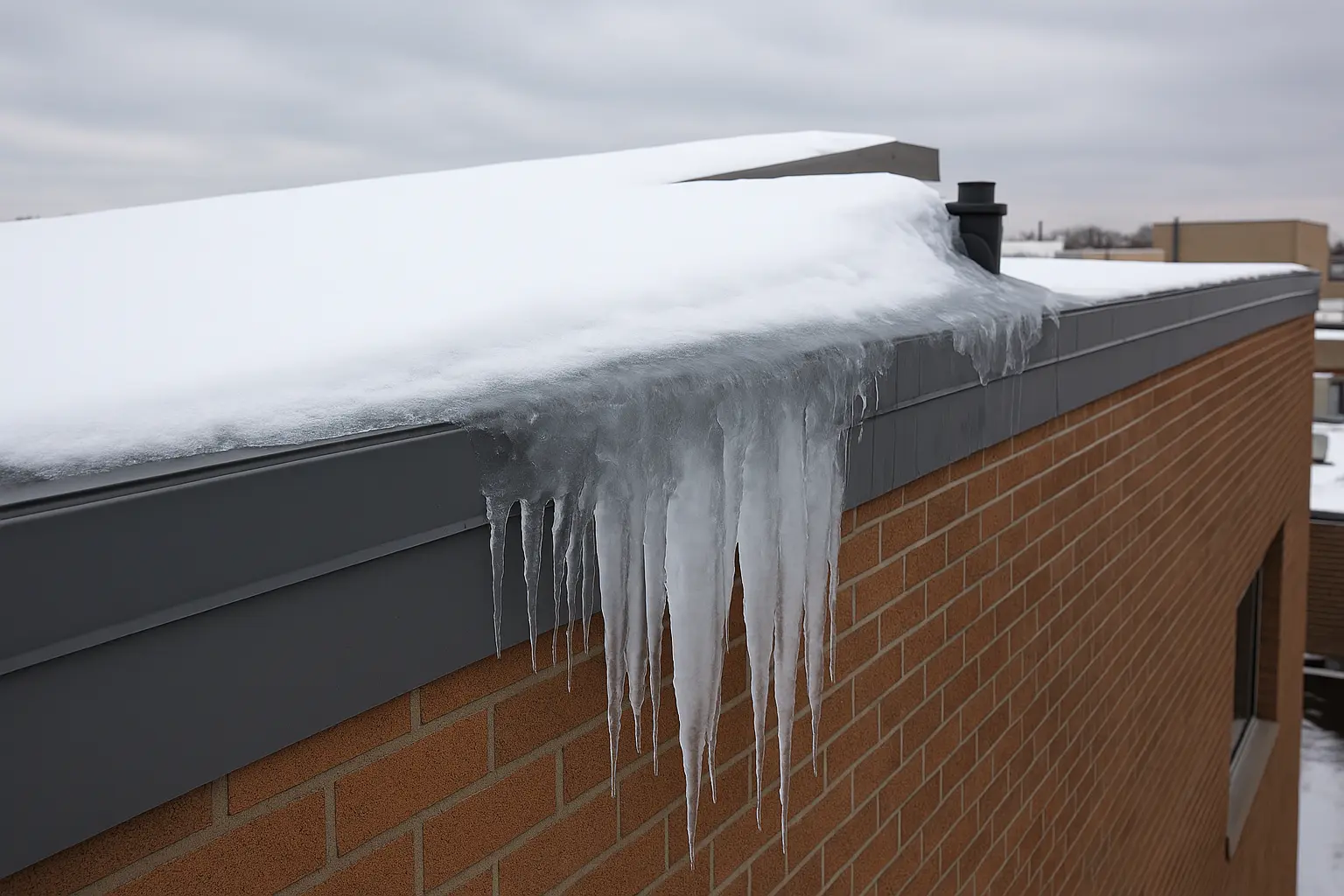
An ice dam is a thick ridge of ice that forms on a roof in winter. It usually starts when snow on the roof begins to melt during the day. The water runs toward the edge or into roof drains. But if those areas are colder—or already frozen—the water freezes again.
As more snow melts and more water flows down, that water gets stuck behind the frozen section. It has nowhere to go, so it builds up on the roof. Eventually, it can seep through tiny cracks or weak spots in the roof.
Commercial roofs—especially flat or low-slope ones—are more likely to get ice dams. Unlike sloped roofs that let water run off, flat roofs rely on drains. If these are clogged or frozen, water starts to pool—and then freeze.
Example: Picture a shopping center in Derby. After a snowstorm, the snow begins to melt the next day. The water reaches a frozen drain and refreezes overnight. The next day, more melting snow adds to the puddle, and the cycle continues. Soon, the weight of the ice and water starts pushing through the roof seams and leaks into the shops below.
Why Ice Dams Are Common in Kansas
Kansas winters are full of temperature swings. One day it’s 45°F, and the next, it drops to 10°F. These up-and-down changes are perfect for creating ice dams.
Here’s what happens:
- Snow melts from daytime warmth or heat escaping from the building.
- That melted water flows to colder areas on the roof—like the edges or near drains.
- Then it refreezes overnight, forming a block of ice.
- The next day, the process repeats—and the ice dam grows.
Poor insulation makes the problem worse. If heat leaks from the building into the roof, it warms the snow above and melts it faster. That water then moves toward colder sections and freezes again.
Flat roofs are especially at risk. Without a slope to drain water naturally, any blockage in the drainage system can quickly turn into an ice dam.
What Ice Dams Can Do to Your Building
Ice dams might start small, but the damage they cause can be costly.
1. Roof Damage
Trapped water puts pressure on roofing materials. Over time, this can cause cracks, loosen seams, and wear out your roof. If water finds its way in, the damage can spread fast.
2. Water Leaks Indoors
Once water gets through the roof, it can drip into offices, storage rooms, or hallways. It may ruin ceiling tiles, soak insulation, and damage walls and furniture. If left too long, mold can grow.
3. Safety Hazards
Leaks can reach the floor, creating slippery spots that can cause people to fall. These accidents can lead to injuries, lawsuits, or workers missing time.
4. High Heating Bills
Poor insulation means more heat escapes through the roof. Not only does this make ice dams worse, but it also forces your heating system to work harder—raising your energy costs.
How to Prevent Ice Dams on Commercial Roofs
The best way to handle ice dams is to stop them before they begin. Here are some steps to take before winter hits:
1. Schedule a Roof Inspection
Before the snow starts, have your roof checked by professionals. At Solid Rock, we inspect for weak spots, poor insulation, clogged drains, and other issues that lead to ice dams. We’ll suggest simple fixes that can prevent serious damage later.
2. Add or Improve Insulation
When a roof isn’t insulated well, heat from inside the building escapes, melts the snow, and helps ice dams form. Adding insulation helps keep the roof’s temperature more even, reducing the chance of melting and freezing cycles.
3. Clear Out Drains and Gutters
Leaves and dirt can block roof drains and scuppers. When water can’t escape, it pools and freezes. Cleaning these areas before winter ensures water has a clear path off your roof.
4. Install Heating Cables (if needed)
Some buildings install electric heat cables around drains or other problem areas. These cables help keep water flowing and prevent freezing. They’re a useful option in places with recurring ice dam problems.
5. Use Roof Coatings for Extra Protection
Roof coatings create a smooth, waterproof layer that helps protect against water buildup. They’re especially helpful on older roofs and can extend the life of your commercial roofing system.
6. Plan for Snow Removal
If snow piles up on the roof, it adds weight and increases meltwater. Having a professional snow removal plan keeps the load manageable and reduces the risk of ice forming.
7. Use Monitoring Tools
Thermal cameras and sensors can detect heat loss and pooling water. These tools help building managers spot issues early—before they cause expensive problems.
Why Quick Fixes Aren’t Enough
Some building owners try patching small leaks or using heat tape as a temporary fix. These solutions may help in the short term, but they don’t solve the root causes of ice dams.
A better approach is to invest in long-term solutions—like better insulation, improved drainage, and regular maintenance. These steps protect your roof, lower heating bills, and reduce future repair costs.
Example: A local manufacturer upgrades their roof insulation and applies a protective coating before winter. After a major snowstorm, nearby buildings experience leaks, downtime, and emergency repairs. But the manufacturer’s building stays dry and open for business.
Why Choose Solid Rock Commercial Roofing
At Solid Rock, we’re more than roofers—we’re part of the Wichita business community. We know how harsh Kansas winters can be, and we tailor our services to meet your needs.
Here’s what we offer:
- Expert commercial roofing services for flat and low-slope commercial buildings
- Honest inspections and clear recommendations
- Affordable options to fix problems before they grow
- Friendly, dependable service from local professionals
Businesses looking for a trusted roofing contractor in Wichita count on Solid Rock’s team for reliable, long-term solutions.
We don’t use one-size-fits-all solutions. We look at your roof, understand your business needs, and create a plan that works for you.
Conclusion
Ice dams don’t start with a crash or a warning—they build up slowly, then cause leaks, safety problems, and expensive repairs. But the good news is, you can stop them before they begin.
By acting early—getting a professional inspection, improving insulation, clearing drains, and protecting your roof—you can keep your building safe, dry, and open all winter long.
At Solid Rock Commercial Roofing, we’re ready to help. We know the local weather, and we understand the needs of Wichita-area businesses.
Don’t wait for the damage to show up. Let’s stop the problem before it starts.
Visit https://solidrockcorp.com/contact-us/
Or call (316) 227-2628 to schedule your winter roof inspection today.
Let’s protect your business, your building, and your peace of mind—together.
Frequently Asked Questions (FAQs)
What exactly is an ice dam, and why should I worry about it on my commercial roof?
An ice dam is a buildup of ice that forms when melting snow refreezes at the edges or drainage points of a roof. On flat or low-slope commercial roofs, ice dams block proper drainage, causing water to pool and seep into the building—leading to leaks, interior damage, and safety risks.
Are ice dams only a problem for older buildings?
No. While older buildings may have more insulation issues, any commercial property—new or old—can experience ice dams, especially if roof drains are blocked or snow removal is neglected. Even new buildings with flat roofs need regular winter maintenance.
Why are ice dams so common in Kansas?
Kansas winters often include frequent freeze-thaw cycles. Daytime warmth melts snow on roofs, and freezing nighttime temperatures cause that water to refreeze, creating ice dams. This cycle can repeat for days, making the problem worse.
How can I tell if my building has an ice dam?
Signs of an ice dam include visible ice near roof edges or drains, water stains on ceilings or walls, and leaks during or after a thaw. If your roof has standing water that isn’t draining, it may be due to ice buildup.
What’s the best way to prevent ice dams before winter?
Start with a professional roof inspection. Solid Rock Commercial Roofing checks insulation, drainage systems, and roof surfaces to identify problem areas. Keeping drains clear, adding insulation, and applying protective coatings also help prevent ice dams.
Are heat cables or tape a good solution for ice dams?
Heat cables can help in certain areas, such as around drains, but they’re not a full solution. They’re best used as part of a larger winter roof management plan that includes insulation and regular maintenance.
What kind of damage can an ice dam cause inside the building?
Ice dams can lead to ceiling leaks, mold growth, damaged drywall, soaked insulation, ruined inventory, and even electrical problems. Water entering through the roof can spread quickly and quietly.
How often should I have my commercial roof inspected in winter?
At a minimum, schedule a professional inspection before the winter season begins. If your building has a history of ice dams or drainage issues, additional mid-winter checkups may be helpful—especially after heavy snow or freeze-thaw events.
What makes Solid Rock Commercial Roofing a good choice for winter protection?
Solid Rock is based in Wichita and understands the specific weather challenges Kansas businesses face. We offer honest, detailed inspections, long-term roofing solutions, and personalized service for flat and low-slope commercial roofs.
How can I schedule a roof inspection with Solid Rock?
Simply visit https://solidrockcorp.com/contact-us/ or call (316) 227-2628 to set up your winter roof inspection. Our team will assess your roof and recommend the best steps to keep your building safe this season.
This article is a collaboration between Solid Rock Corporation and OpenAI’s ChatGPT. Created on December 17, 2025, it combines AI-generated draft material with Solid Rock’s expert revision and oversight to ensure accuracy and relevance.