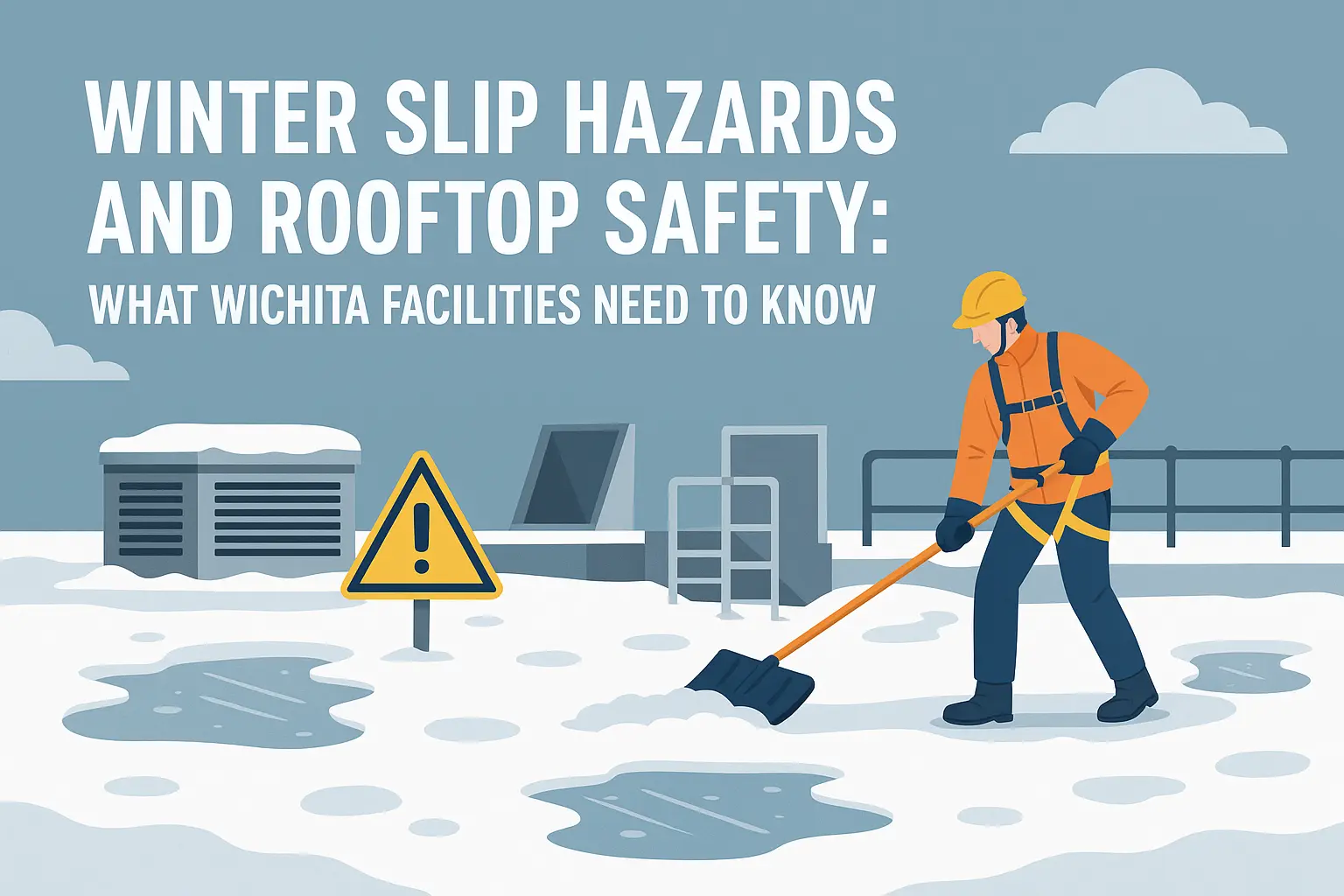
Winter in Wichita can bring freezing rain, snow, and cold winds. These conditions don’t just make the roads dangerous — they also create serious safety risks on commercial rooftops. If your building has HVAC systems, vents, or other equipment on the roof, someone will eventually need to go up there, even during winter.
Without the right planning, a snowy or icy roof can be a dangerous place. One wrong step on a slick surface could lead to injury or expensive damage. This article will help you understand how to prevent rooftop accidents in cold weather and show you how Solid Rock Commercial Roofing can help keep your roof safe.
Key Takeaways
- Winter Rooftops Are High-Risk Zones
Snow, ice, and frost on flat or low-slope roofs create hidden dangers that can lead to injuries and costly damage. - Preparation Is the First Line of Defense
Limit rooftop access to trained personnel, check weather conditions before each job, and always use proper winter gear and safety equipment. - Buddy Systems and Logs Improve Safety
Never allow solo rooftop work in winter. Use access logs to track entries and ensure accountability. - Roof Improvements Reduce Hazards
Walk pads, non-slip coatings, guardrails, heated hatches, and signage make winter rooftop access safer and more efficient. - Use the Right Tools for Snow and Ice Removal
Avoid metal shovels and salt. Use roof-safe de-icers and plastic tools to prevent membrane damage. - Keep Gutters and Drains Clear
Blocked drainage can lead to ice dams, leaks, and water intrusion. Maintain these areas before and after snowstorms. - Training and Communication Are Essential
Refresh winter safety training annually and clearly mark hazards and walking paths with weather-resistant signage. - Solid Rock Offers Expert Help
Solid Rock Commercial Roofing provides inspections, safety upgrades, and winter maintenance tailored to Wichita’s climate. - Act Early—Before the First Storm Hits
Planning ahead is the best way to protect your staff, prevent injuries, and extend the life of your roof. - Get Help When You Need It
Solid Rock is available to perform Winter Roof Safety Audits and make rooftop safety improvements for your facility.
Why Rooftops Get Risky in Winter
Flat and low-slope roofs are common on commercial buildings in Wichita. These types of roofs don’t easily shed snow or water. That means snow stays in place and can hide trip hazards like pipes, vents, or uneven surfaces. Ice can form near drains, ladders, and hatches — areas workers often use to move around.
When temperatures drop and then rise again, the freeze-thaw cycle can make things worse. Water melts during the day and refreezes at night, creating slick spots that aren’t always easy to see.
Example: A technician climbs onto a flat roof after a storm to check on a heating unit. They step on what looks like harmless snow, but there’s ice underneath. One slip, and they fall hard. It could mean an injury, lost work time, and a legal claim against the property owner.
That’s why winter rooftop safety isn’t just a good idea — it’s necessary.
Safe Rooftop Access Starts Before Anyone Climbs
The safest way to avoid winter accidents is by planning ahead. Here are simple steps every facility should take before anyone goes on the roof:
1. Only Trained People Should Go Up
Don’t let untrained staff access the roof. People going up need to understand the risks of snow, ice, and poor footing.
2. Check Conditions First
Before sending someone up, take a close look at the roof from the ground or through cameras. If it looks snowy or icy, delay the work or use extra safety steps.
3. Wear the Right Gear
Non-slip boots are a must. Winter clothes should be warm but still allow movement. Gloves and hats help, too.
4. Use Fall Protection
If your roof doesn’t have a tall barrier around the edge, fall protection gear is required. Safety harnesses and anchor points can prevent serious falls.
5. Inspect Ladders and Hatches
Snow or frost on ladders and hatches can make access risky. Always check and clear them before use.
6. Never Go Alone
Workers should use the buddy system. One person watches and helps while the other works. Also, keep a log of who went on the roof, when, and for what reason.
Making the Roof Safer to Walk On
Good safety habits help, but the roof itself can be improved to prevent accidents.
Add Walk Pads or Textured Surfaces
Installing non-slip walk paths gives workers a safer way to move around. These pads:
- Improve traction
- Show a clear route, even under light snow
- Protect the roof membrane from damage
Walk pads work on common roof types like TPO, EPDM, or modified bitumen.
Install Guardrails or Anchors
If your roof doesn’t have a 42-inch edge barrier, OSHA requires protection. Guardrails add a physical barrier, while anchor points let workers clip in with harnesses.
Upgrade Access Points
Heated or insulated hatches prevent freezing. Clear signs and glow-in-the-dark tape make access safer in low light. Lockable ladder cages keep entry points secure.
For more on these upgrades, visit Flat Roofing Repair and Maintenance in Wichita.
How to Remove Snow and Ice Without Damage
Rooftop snow and ice removal must be done carefully. Rushing or using the wrong tools can harm the roof.
Use Safe Tools
Avoid metal shovels — they can scrape or tear the roof. Instead:
- Use plastic snow rakes or soft-edged pushers
- Clear snow in light layers
- Don’t pile snow near drains or equipment
Pick the Right De-Icer
Don’t use rock salt — it can damage roof materials. Instead, choose:
- Calcium chloride (if roof-compatible)
- Liquid de-icers made for roofing surfaces
Apply de-icer near ladders, hatches, and walk paths.
Keep Gutters and Drains Clear
Blocked drains and gutters cause ice dams, which can lead to leaks. Clear leaves and debris before winter starts. After storms, make sure melting snow can drain properly.
Signs, Logs, and Team Safety Plans
Clear communication and simple safety routines go a long way.
Use Weather-Resistant Signs
Mark access points, walking paths, and edges. Signs help workers remember where it’s safe to walk and where fall risks are high.
Track Rooftop Access
Keep a log of everyone who goes up. Include the time, purpose, and any problems they saw. This helps with planning and shows you’re taking safety seriously.
Train Workers Every Winter
Give your team a yearly refresher before the first storm. Walk the roof (if safe) and explain updates or new rules. Show them how to use safety gear and point out changes in access points.
To get help with this kind of planning, check out our Commercial Roofing Contractor Services.
How Solid Rock Commercial Roofing Can Help
We work with commercial properties all over Wichita. Winter brings its own set of roofing challenges, and we’re here to help you stay ahead of problems.
Our Winter Roof Safety Audit
We look for:
- Weak seams and worn materials
- Drainage problems
- Slip hazards
- Safety gear and sign readiness
We Install Rooftop Safety Upgrades
Our team can install:
- Walk pads and slip-resistant coatings
- Guardrails and anchors
- Hatch covers and weatherproof signs
We match upgrades to your building’s needs and roof type.
Winter Maintenance Services
We also offer:
- Snow and ice clearing
- Post-storm inspections
- Gutter and drain cleaning
Learn about coatings that help protect your roof by visiting Spray-on Roof Coatings for Flat Roofs.
Conclusion: Don’t Wait for Winter Problems to Get Worse
Cold weather can make rooftops slippery, risky, and hard to manage. One patch of ice or a blocked drain might seem small — but it can lead to big problems like injuries, leaks, or damage to your building.
The best way to avoid trouble is to prepare early. That means:
- Training your team
- Upgrading rooftop safety
- Scheduling inspections
- Making snow and ice plans now — not later
Solid Rock Commercial Roofing can help with all of it. Our team knows Wichita’s winter conditions and can help make your rooftop safer for the season.
Schedule your Winter Roof Safety Audit today.
???? Call us at (316) 227-2628
???? Visit: https://solidrockcorp.com/contact-us/
Keep your building protected and your team safe — with help from Solid Rock Commercial Roofing.
Frequently Asked Questions (FAQs)
Why is winter rooftop safety such a big concern for commercial buildings?
Winter brings snow, ice, and freezing temperatures that make rooftops slippery and hard to navigate. On flat or low-slope roofs, snow doesn’t slide off—it stays in place, hiding trip hazards and increasing the risk of falls or injuries during routine maintenance.
Who should be allowed to access the roof in winter?
Only trained and authorized personnel should go on the roof in winter conditions. These individuals should understand how to identify and manage cold-weather risks like ice, frost, and hidden hazards.
What gear should workers wear for safe winter rooftop work?
Workers should wear non-slip boots, layered clothing that allows movement, gloves, hats, and—if necessary—fall protection harnesses. Safety equipment like anchor points and ropes should also be used when working near edges.
How can a commercial building make its roof safer in winter?
Upgrades such as non-slip walkway pads, guardrails, insulated hatches, and weather-resistant signage help reduce slip hazards and provide clear, safer routes across the roof.
Is rock salt safe to use on roofs?
No. Rock salt can damage roofing membranes and metal components. Instead, use roof-safe de-icing products like calcium chloride or liquid de-icers designed for roofing materials.
What are the most common causes of rooftop accidents in winter?
Slips due to hidden ice or snow, falls from unprotected edges, and blocked drains leading to ice buildup are among the most common causes. Many of these incidents are preventable with the right preparation and tools.
What maintenance should be done before winter?
Clean drains and gutters, inspect membranes for damage, and install any needed safety equipment like walk pads or signage. A Winter Roof Safety Audit is a good place to start.
What services does Solid Rock Commercial Roofing offer for winter safety?
We offer safety inspections, walk pad installation, fall protection systems, snow and ice removal, emergency maintenance, and seasonal planning tailored to Wichita’s weather.
How often should a rooftop be inspected in winter?
After any major storm or freeze-thaw event, the roof should be checked for ice buildup, snow accumulation, and drainage issues. Regular mid-season inspections are also recommended.
How do I schedule a Winter Roof Safety Audit with Solid Rock?
Call us at (316) 227-2628 or visit https://solidrockcorp.com/contact-us/ to book an inspection or service appointment.
This article is a collaboration between Solid Rock Corporation and OpenAI’s ChatGPT. Created on December 10, 2025, it combines AI-generated draft material with Solid Rock’s expert revision and oversight to ensure accuracy and relevance.