If your commercial building’s heating bills are surprisingly high this winter, the biggest culprit might be your roof’s insulation, because a failing or thin insulation system allows warm air to escape easily, forcing your furnace to run constantly just to keep the thermostat stable. This continuous heat loss is not just uncomfortable; it’s a silent financial drain that steals money from your budget every single day, proving that old insulation is one of the most expensive things a business can own.
- Key Takeaways: How Poor Insulation Steals Your Budget
- Financial and Efficiency Facts
- Protection and Maintenance
- What is R-value, and why is it the key to saving money this winter?
- How does heat loss through my roof actually work in the winter?
- Can damaged insulation actually cost me more than a simple leak?
- How do modern insulation systems offer a strong return on investment (ROI)?
- What is the connection between insulation and preventing ice damage on my roof?
- Frequently Asked Questions (FAQs)
- Conclusion & Call to Action: Insulate Against Waste
Key Takeaways: How Poor Insulation Steals Your Budget
The article emphasizes that inadequate or damaged commercial roof insulation is a major financial drain, primarily due to soaring heating costs and protection failures against harsh winter elements.
Financial and Efficiency Facts
- R-Value is the Metric: The R-value measures insulation’s ability to resist heat flow. A higher R-value is directly correlated with lower energy bills because it forces your furnace to run less often.
- Significant Heat Loss: Up to 25% or more of a commercial building’s total heat loss occurs through an under-insulated roof, making it a critical area for energy efficiency upgrades.
- Compounding Cost of Damage: Wet or damaged insulation loses almost all its R-value, creating a constant, multi-year energy drain that often costs several times more than the initial leak repair bill over the long term.
- Strong ROI: Investing in high R-value insulation is a smart financial move. The energy savings quickly pay back the initial cost, often providing over a decade of “free” energy savings afterward.
Protection and Maintenance
- Stops Ice Dams: Proper insulation is crucial for commercial roof maintenance and preventing ice dams by keeping the entire roof surface cold, stopping snow from melting prematurely and refreezing at the edges, which causes severe water backup damage.
- Moisture Survey is Key: If you re-roof, a moisture survey (using thermal imaging) is essential. If insulation is confirmed to be wet or compressed, it must be removed before the new roof is installed to avoid trapping moisture, mold, and structural rot.
- Compliance: Commercial roofs in Kansas must meet a minimum R-value dictated by the IECC (International Energy Conservation Code), typically requiring R-25 to R-30 or higher for full replacement projects.
What is R-value, and why is it the key to saving money this winter?
The R-value is a simple number that tells you how well your insulation resists heat flow, and the higher the R-value, the better the insulation is at stopping expensive heat from escaping through your roof in the cold Wichita winter. Think of R-value as the thickness and quality of a winter coat for your building: a thin jacket (low R-value) lets heat escape quickly, while a thick, high-quality parka (high R-value) traps the heat inside.
In commercial roofing, insulation materials like Polyiso boards have different R-values per inch of thickness. The higher the total R-value of your roof system (R-20 is better than R-10), the less work your HVAC system has to do. According to the U.S. Department of Energy, a significant amount of a building’s total heat loss—sometimes up to 25% or more—occurs through an under-insulated roof [Source: U.S. Department of Energy, Energy Efficiency Fact Sheets]. Investing in a higher R-value is investing in a guaranteed reduction in your energy expenses.
How does heat loss through my roof actually work in the winter?
Heat loss through your roof in the winter works through two main methods—conduction and convection—and without proper insulation, warm air is rapidly pulled from your comfortable interior to the freezing air outside. Heat always moves toward cold, following the easiest path it can find.
- Conduction: This is heat transfer through solid materials. If your roof deck is metal or concrete and it touches the warm air inside, that heat moves quickly through the deck to the cold membrane on top. Insulation places a massive thermal barrier in the way, slowing this transfer down.
- Convection: This involves the movement of air. If your roof system has small gaps, air leaks, or poor seals, warm air rises and escapes directly through those openings, taking vast amounts of your furnace’s expensive heat with it.
If your building has an old roof with thin, compressed, or missing insulation, that heat transfer is nearly instant. The furnace kicks on, pumps heat into the building, and the old roof allows a significant amount of that heat to escape within minutes, forcing the furnace to cycle on again almost immediately, running up your utility bill.
Can damaged insulation actually cost me more than a simple leak?
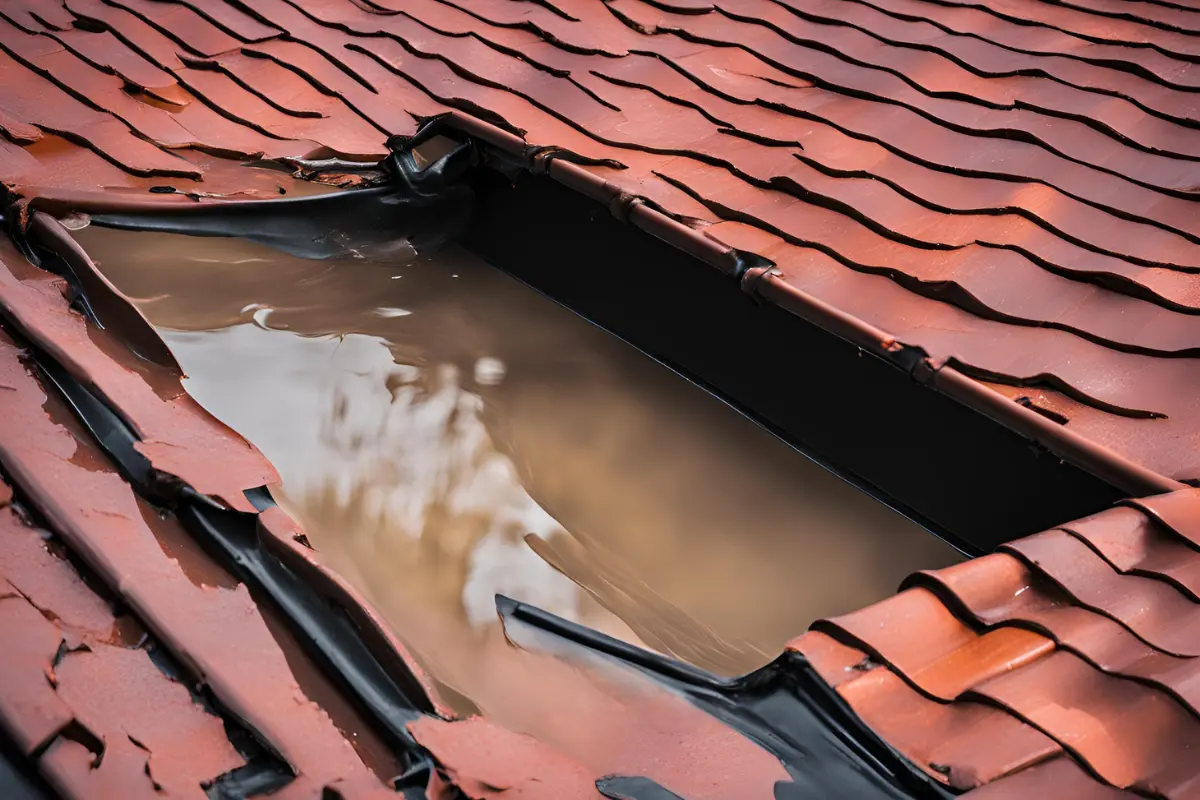
Yes, absolutely. Damaged or water-soaked roof insulation can cost you much more than a simple leak repair because it creates a constant, ongoing energy drain that compounds over years, unlike a one-time repair bill. While a leak is a sudden expense, bad insulation is a continuous one.
Here’s a hypothetical example of a compounding cost:
Imagine a small, undetected leak soaked a section of Polyiso insulation on a 15,000 square foot roof. The area is 1,000 square feet. The dry Polyiso had an R-value of 20, but the water-soaked section now performs at R-2. That small section is hemorrhaging heat.
- Immediate Repair Cost: $1,200 (to fix the leak).
- Hidden Energy Cost: Because the insulation is wet, the building now loses an extra $50 per month in heating costs from that one section alone.
- Cost Over One Winter: $50/month * 5 months = $250 in unnecessary heating costs.
- Cost Over 10 Years: $250/year * 10 years = $2,500 in wasted money.
In this case, the damaged insulation cost the business twice as much as the initial repair bill over ten years, proving that the ongoing expense of poor insulation is a major financial risk. The only way to stop this energy drain is to remove the wet, damaged material and install new, high-efficiency insulation.
How do modern insulation systems offer a strong return on investment (ROI)?
Modern commercial insulation systems offer a strong return on investment (ROI) because the money saved monthly on reduced energy consumption quickly adds up, eventually paying for the initial cost of the insulation upgrade. This is not an expense; it is a long-term asset that keeps giving back.
To calculate the ROI, you look at the energy savings versus the cost of the insulation upgrade. For instance, if a $50,000 insulation upgrade saves you $8,000 per year in heating and cooling costs, your simple payback period is just over six years ($50,000 / $8,000 = 6.25). Considering that quality commercial insulation can last 20 years or more, you are essentially getting 14 years of free energy savings after the system has paid for itself. This high ROI is a strong reason why property managers prioritize insulation upgrades during any major roof replacement project.
What is the connection between insulation and preventing ice damage on my roof?
Proper insulation is the key to preventing ice dam formation on your roof because it stops heat from escaping and melting the snow in the middle of your roof, which prevents that meltwater from running down and refreezing into a damaging ice barrier at the colder roof edges. This process is critical in the Wichita climate.
When a roof is poorly insulated, escaping heat melts the snow directly over the heated space. That liquid water then flows down the roof until it hits the unheated, cold overhang (or eave) and refreezes, creating a thick, solid wall of ice called an ice dam. This dam traps water behind it, forcing the backed-up water to seep under the roof membrane and into the building. By using high R-value insulation, you keep the entire roof deck cold and stop the unnatural melting, protecting your business from the costly water damage that ice dams cause.
Frequently Asked Questions (FAQs)
Does a roof coating count as insulation?
Not usually. A white, reflective roof coating helps save money by reflecting sunlight and keeping the building cool in the summer (reducing AC costs), but it does not typically add significant R-value or thermal resistance for the winter. Coatings are designed to manage heat on the outside (reflectivity), while insulation manages heat transfer from the inside (thermal resistance). For true winter savings, you must install proper rigid foam insulation boards beneath the membrane.
Should I remove my old roof insulation during a re-roofing project?
You should absolutely remove and replace your old insulation if a moisture survey (using thermal imaging or a moisture meter) confirms that the old material is wet, compressed, or otherwise compromised. Trapping wet insulation beneath a new, expensive roof system is a serious mistake, as the moisture will eventually lead to mold, structural rot, and rapid deterioration of your new membrane. If the insulation is dry and structurally sound, sometimes a new layer can be added on top, but only a professional assessment can determine this.
Can my roof insulation settle or compress over time?
Yes, many older commercial insulation materials can settle or compress over time, especially if they are subjected to heavy foot traffic or the weight of rooftop HVAC equipment. When insulation compresses, it loses thickness, and when it loses thickness, its R-value drops dramatically. A professional roof inspection can identify these “dead spots” where the insulation has failed due to compression, which are areas that will be leaking heat and costing you money all winter long.
Is there a minimum R-value required for new commercial roofs in Kansas?
Yes, commercial roofs in Kansas are governed by local building codes and the International Energy Conservation Code (IECC). This code dictates the minimum R-value required for new roof construction or full replacement projects in our climate zone (often requiring R-25 to R-30 or higher, depending on the specific assembly). Your contractor is required by law to install insulation that meets or exceeds these standards, ensuring your building is energy-efficient and compliant.
Conclusion & Call to Action: Insulate Against Waste
Your commercial roof is doing more than just keeping the rain out; it is your building’s biggest opportunity to save money on energy. If your current insulation is old, thin, or damaged by moisture, you are essentially paying for expensive heat to escape into the Wichita winter air, draining your budget every hour. Investing in a high R-value insulation system is the single most effective way to guarantee long-term energy savings and protect your roof from ice damage.
Contact Solid Rock Commercial Roofing today to schedule a professional thermal scan and roof assessment. Our local Wichita experts will accurately measure your current R-value and recommend an insulation upgrade that will provide maximum return on investment and secure your energy efficiency for decades.
Call us to stop your roof from stealing your budget this winter!