Introduction: The Hidden Cost of Waiting
For many commercial property owners, the roof is easy to forget about—until something goes wrong.
Unlike other parts of a building, you don’t see your roof every day. Tenants don’t interact with it, and there are rarely warning signs early on. Because of that, small problems can go unnoticed or seem easy to ignore. A minor leak during a storm might not feel urgent. A worn section of roofing might not seem serious. And when budgets are tight, repairs are often pushed to a later date.
At first, this can seem harmless.
But roofing problems do not stay small.
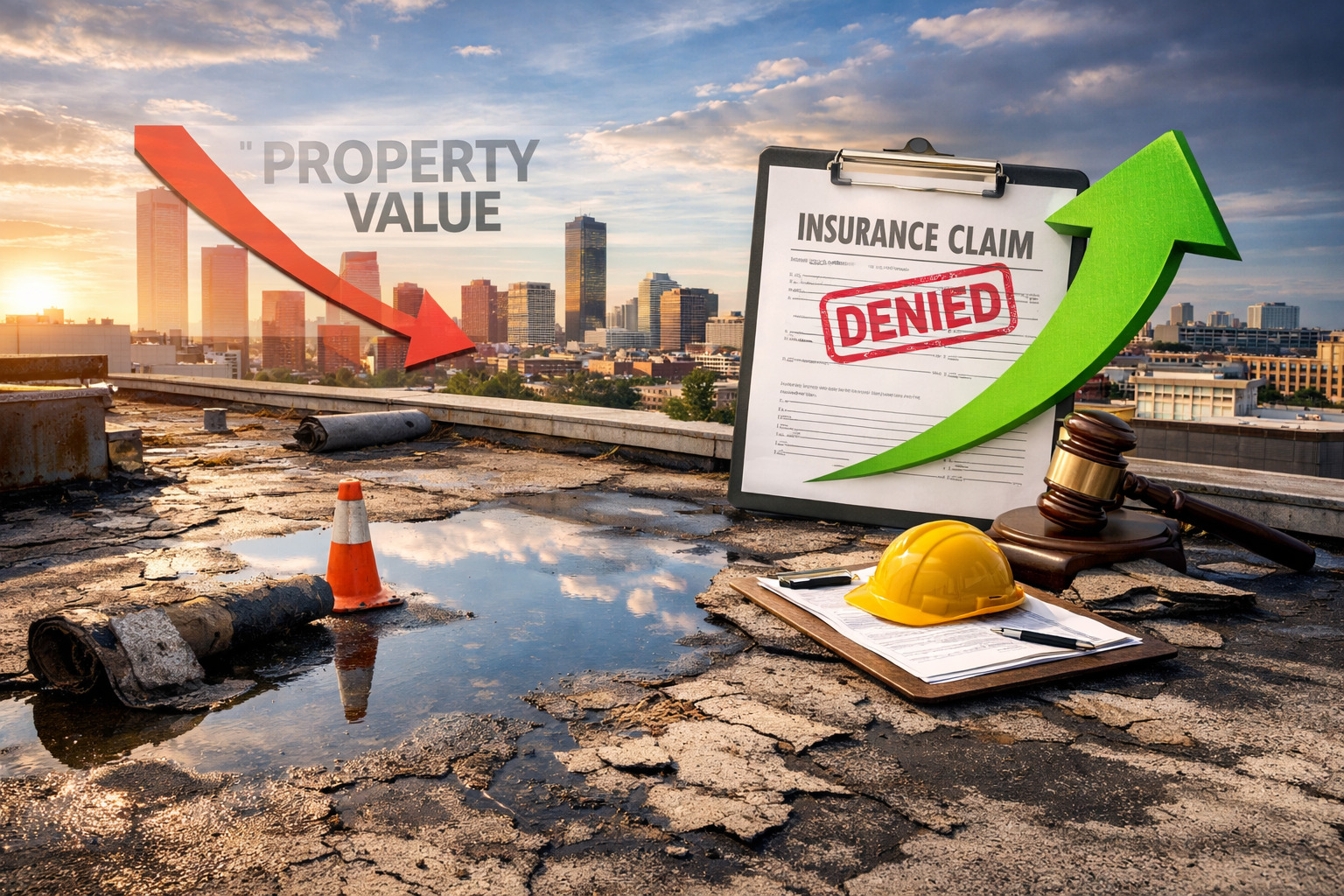
When maintenance is delayed, minor issues often grow into major damage. What starts as a simple fix can turn into a large and costly repair. Over time, this affects more than just the roof. It can lower your property’s value and create problems with your insurance.
Roof maintenance is not just about fixing damage—it is about protecting your building and your investment. Every delay increases risk, and that risk often shows up in ways that cost more later.
Key Takeaways
- Small roof problems don’t stay small.
Delaying repairs allows minor issues to grow into larger, more expensive damage over time. - Roof condition directly affects property value.
A well-maintained roof supports higher valuations, while visible damage or lack of records can lower your property’s worth. - Deferred maintenance creates problems during sales.
Buyers often use roofing issues to negotiate lower prices, request credits, or delay closing. - Insurance may not cover neglected damage.
Claims can be reduced or denied if the roof shows signs of long-term wear or lack of maintenance. - Costs add up quickly.
Deferred maintenance leads to higher repair costs, possible interior damage, lost tenant income, and increased insurance expenses. - Preventative maintenance saves money in the long run.
Regular inspections and early repairs help avoid major expenses and extend the life of your roof. - Documentation matters.
Keeping records of inspections and repairs helps with property value, buyer confidence, and smoother insurance claims. - Acting early gives you more control.
Addressing issues sooner allows you to plan repairs, manage costs, and avoid emergency situations.
Understanding Deferred Roof Maintenance
Deferred maintenance means putting off repairs or regular upkeep that should be handled sooner.
This can happen in several ways. A building owner might ignore a small leak because it only happens during heavy rain. Damage from a storm might not get fixed right away. Routine inspections may not happen at all. In some cases, an older roof is left in place even though it is near the end of its useful life.
While each of these choices may seem small on its own, the real issue is how quickly problems can grow.
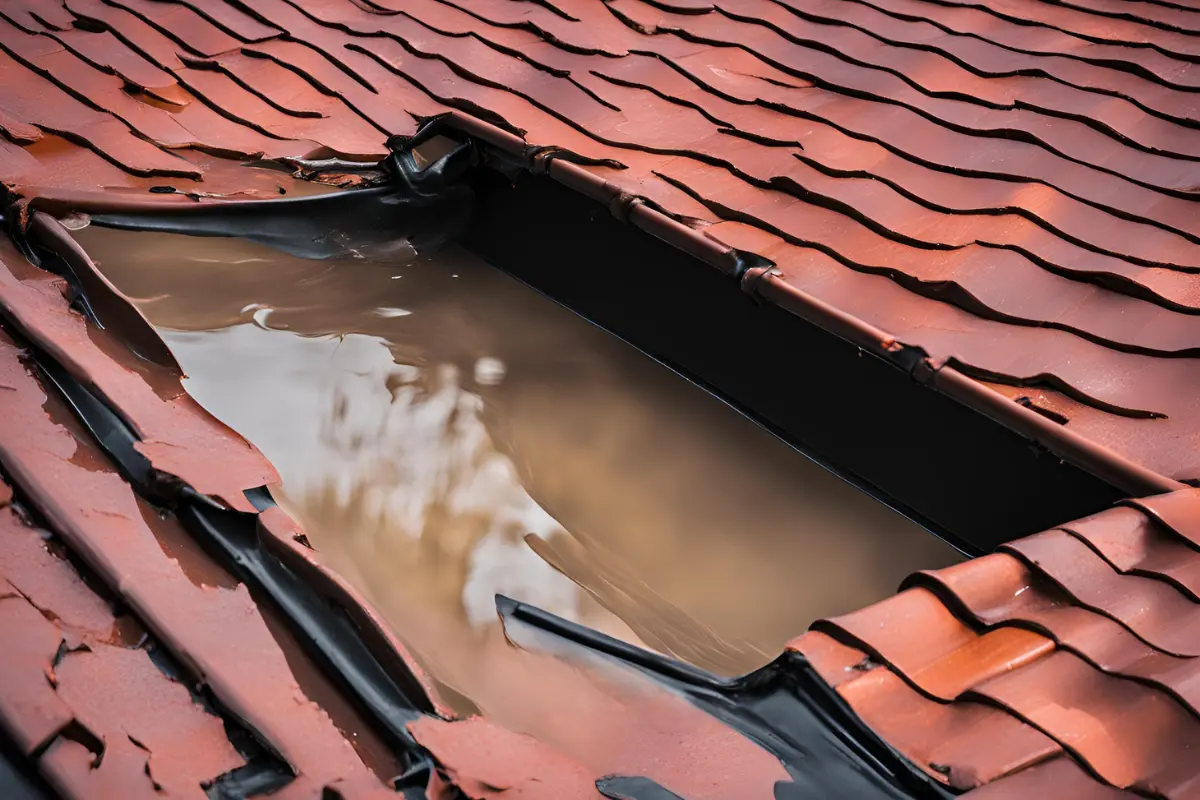
A commercial roof is made up of different parts that work together. When one part fails, it can affect the rest of the system. For example, a small crack or opening can let water in. That water can move under the surface and spread across a larger area.
Once moisture gets inside, the damage continues to build. Insulation becomes wet and loses its ability to control temperature, which can raise energy costs. Damp areas can lead to mold growth. Over time, even the structure of the building may be affected.
Consider a simple scenario. A property owner notices a small opening after a storm. It does not seem serious, so no action is taken. Over time, rainwater enters through that opening again and again. The damage spreads under the roof surface. By the time repairs are made, a much larger area is affected. What could have been a simple repair is now a much bigger project.
Deferred maintenance allows time to work against you.
Impact on Property Value
The condition of your roof has a direct effect on your property’s value.
When a commercial building is reviewed for sale or refinancing, the roof is always a major point of focus. Buyers, lenders, and appraisers want to know its condition and how long it is expected to last.
A well-maintained roof supports a stronger property value.
It shows that the building has been taken care of and that major repairs are less likely in the near future. When there are records of inspections and repairs, it builds trust and reduces uncertainty.
Deferred maintenance creates the opposite effect.
If the roof shows damage or wear, or if there are no maintenance records, it raises concerns. Appraisers may lower the value to account for repair costs. Buyers may assume there are hidden issues that have not yet been discovered.
This becomes especially important during a sale.
Buyers often use roof issues to negotiate. They may ask for a lower price or request money for repairs. Sometimes, they require funds to be set aside until the roof is fixed. In some cases, deals are delayed or canceled because of roofing concerns.
To put it simply, condition influences confidence.
Consider two similar buildings. One has a well-maintained roof with clear records. The other has visible wear and no records. Even if the buildings are alike in many ways, the second one is likely to sell for less because it carries more risk.
Roof condition also affects tenants.
Tenants expect a space that is safe and reliable. Leaks, stains, and uneven temperatures can cause frustration. Over time, this may lead to tenants leaving. Vacant space reduces income, which can lower the overall value of the property.
Insurance Implications of Deferred Maintenance
Insurance companies also look closely at roof condition.
The roof protects the building from weather and outside damage. Because of that, it plays a major role in how insurance coverage is written and priced.
A well-maintained roof is viewed as lower risk.
If inspections and repairs are done regularly—and documented—it shows that the property is being managed properly. This can lead to better coverage terms and fewer complications.
Deferred maintenance raises concerns for insurers.
Most insurance policies do not cover damage caused by neglect or long-term wear. If a problem has been ignored over time, the cost to fix it may not be covered.
This becomes clear when a claim is filed.
For example, a storm may damage a roof. At first, it may seem like the damage should be covered. However, if an inspection shows that the roof already had issues that were not repaired, the insurance company may reduce or deny the claim.
Even partial coverage can create problems.
If only part of the repair is covered, the remaining cost must be paid out of pocket. This can turn what seemed like a manageable situation into a much larger expense.
Insurance costs can also increase over time.
Buildings with poorly maintained roofs may face higher premiums or larger deductibles. In some cases, coverage may not be renewed until repairs are completed.
In the end, delaying maintenance can limit the protection you expect from your insurance policy.
The Compounding Financial Impact
The cost of deferred maintenance does not stay in one place—it builds over time.
At first, skipping a repair may seem like a way to save money. But as the problem grows, so do the costs.
Direct costs are the easiest to see.
A small repair can turn into a larger project. Instead of fixing one area, you may need to repair a large section of the roof. In more serious cases, full replacement may be required.
Indirect costs can be just as serious, even if they are less obvious at first.
Water damage can affect ceilings, walls, and floors. Equipment and inventory may be damaged. Businesses inside the building may need to pause operations, leading to lost income.
Tenant-related costs can also increase.
Leaks and damage can lead to complaints. Some tenants may choose to leave, creating vacancies and reducing revenue.
Insurance-related costs add another layer.
Higher premiums, reduced claim payouts, and out-of-pocket expenses all increase the total financial impact.
Over time, these combined issues can change how the property is viewed by buyers and lenders. A building with a history of problems may be seen as a higher risk.
Preventative Maintenance as a Value Strategy
Regular maintenance is the most effective way to avoid these problems.
Preventative maintenance focuses on finding and fixing issues early, before they grow. This keeps costs more predictable and helps protect the building.
Inspections are the starting point.
Scheduling regular inspections, along with checks after major storms, helps catch problems early. Working with a provider that offers commercial roof inspection services can help you stay informed about your roof’s condition and keep proper records.
Addressing problems early keeps repairs manageable.
Small issues are faster and less expensive to fix. They are also less likely to spread and cause larger damage.
Documentation plays an important role as well.
Keeping records of inspections and repairs shows that the property is well maintained. This can make a difference during a sale or when filing an insurance claim.
For older roofs, full replacement is not always the only option.
Using commercial roof coatings can extend the life of the roof and improve its performance. This can delay the need for a full replacement and reduce overall costs.
When issues are found early, commercial roof repair can address them before they become larger problems.
Preventative maintenance keeps you in control instead of reacting to emergencies.
Why Acting Now Matters
Delaying action makes roofing problems harder to manage.
The longer an issue is left alone, the more damage it can cause. Costs increase, and repair options become more limited.
Timing also matters for other reasons.
Material and labor costs can rise, making repairs more expensive over time. Insurance companies are also placing more focus on roof condition and maintenance history when setting coverage terms.
Taking action early gives you more control.
You can plan repairs, manage costs, and avoid unexpected disruptions. This is always easier than dealing with a major problem under pressure.
Conclusion: Protecting Value and Taking Action
Deferred roof maintenance may seem like a way to manage short-term costs, but it often leads to larger problems.
It can reduce property value, create challenges during sales, and lead to insurance issues. Over time, the total cost is usually much higher than the cost of early repairs.
A proactive approach helps protect your investment. Regular inspections, timely repairs, and clear records all help keep your property in good condition. Addressing issues early makes them easier and less expensive to manage.
If you are unsure about the condition of your commercial roof, now is the time to take a closer look. Small problems are easier to fix before they spread, and understanding your roof’s condition helps you make better decisions.
Visit https://solidrockcorp.com/contact-us/ or call (316) 227-2628 to set up your appointment with Solid Rock Commercial Roofing and protect your property’s value and insurance coverage.
Frequently Asked Questions (FAQs)
1. What is deferred roof maintenance?
Deferred roof maintenance means putting off repairs or regular upkeep that should be done sooner. This can include ignoring small leaks, delaying storm damage repairs, or skipping routine inspections.
2. Why is delaying roof maintenance a problem?
Delaying maintenance allows small issues to grow into larger ones. What could have been a simple repair can turn into major damage, leading to higher costs and more disruption.
3. How does roof condition affect property value?
The roof is a major part of a commercial building. If it is in good condition, it supports a higher property value. If it shows damage or neglect, buyers and appraisers may lower the value to account for repair costs.
4. Can deferred maintenance affect a building sale?
Yes. Roofing issues often come up during inspections. Buyers may ask for a lower price, request repair credits, or delay closing until the roof is addressed.
5. Will insurance cover roof damage if maintenance is delayed?
Not always. Many insurance policies do not cover damage caused by neglect or long-term wear. If a problem was not fixed in time, a claim may be reduced or denied.
6. How can deferred maintenance increase costs over time?
Costs increase in several ways. Repairs become more expensive, interior damage may occur, tenants may leave, and insurance costs can rise. These combined expenses can add up quickly.
7. How often should a commercial roof be inspected?
Most commercial roofs should be inspected at least twice a year and after major storms. Regular inspections help catch problems early before they become more serious.
8. What is the benefit of preventative roof maintenance?
Preventative maintenance helps find and fix issues early. This keeps repair costs lower, extends the life of the roof, and reduces the risk of major damage.
9. Are there options besides full roof replacement?
Yes. In some cases, repairs or roof coatings can extend the life of an existing roof. These options can improve performance and delay the need for full replacement.
10. What are signs that a commercial roof needs attention?
Common signs include leaks, water stains, visible damage, ponding water, and rising energy costs. If you notice any of these, it is a good idea to have the roof inspected.
11. Why is documentation important for roof maintenance?
Keeping records of inspections and repairs shows that the property has been maintained. This can help during a sale, support insurance claims, and build trust with buyers and lenders.
12. When should I schedule a roof inspection?
If it has been a while since your last inspection, or if your roof has experienced recent weather events, it is a good time to schedule one. Early action helps prevent larger problems later.
This article is a collaboration between Solid Rock Corporation and OpenAI’s ChatGPT. Created on April 14, 2026, it combines easy-to-read information with Solid Rock’s expert oversight to ensure accuracy and relevance.
External Links:
“Roof Condition Assessments: A Guide for Building Owners”
This resource from the National Institute of Building Sciences explains how roof condition assessments are conducted and why they matter for long-term asset management and capital planning.
URL:https://www.wbdg.org/resources/roofing-systems
“Commercial Property Insurance and the Importance of Maintenance”
Published by the Insurance Information Institute, this article outlines how insurers evaluate building conditions and why ongoing maintenance plays a critical role in claims and coverage decisions.
URL:https://www.iii.org/article/commercial-property-insurance
“The Impact of Deferred Maintenance on Facility Value”
This article from FacilitiesNet explores how postponed maintenance affects building performance, valuation, and lifecycle costs, offering a broader facilities management perspective.
URL:https://www.facilitiesnet.com/facilitiesmanagement/article/The-Cost-of-Deferred-Maintenance–18459