I. Introduction
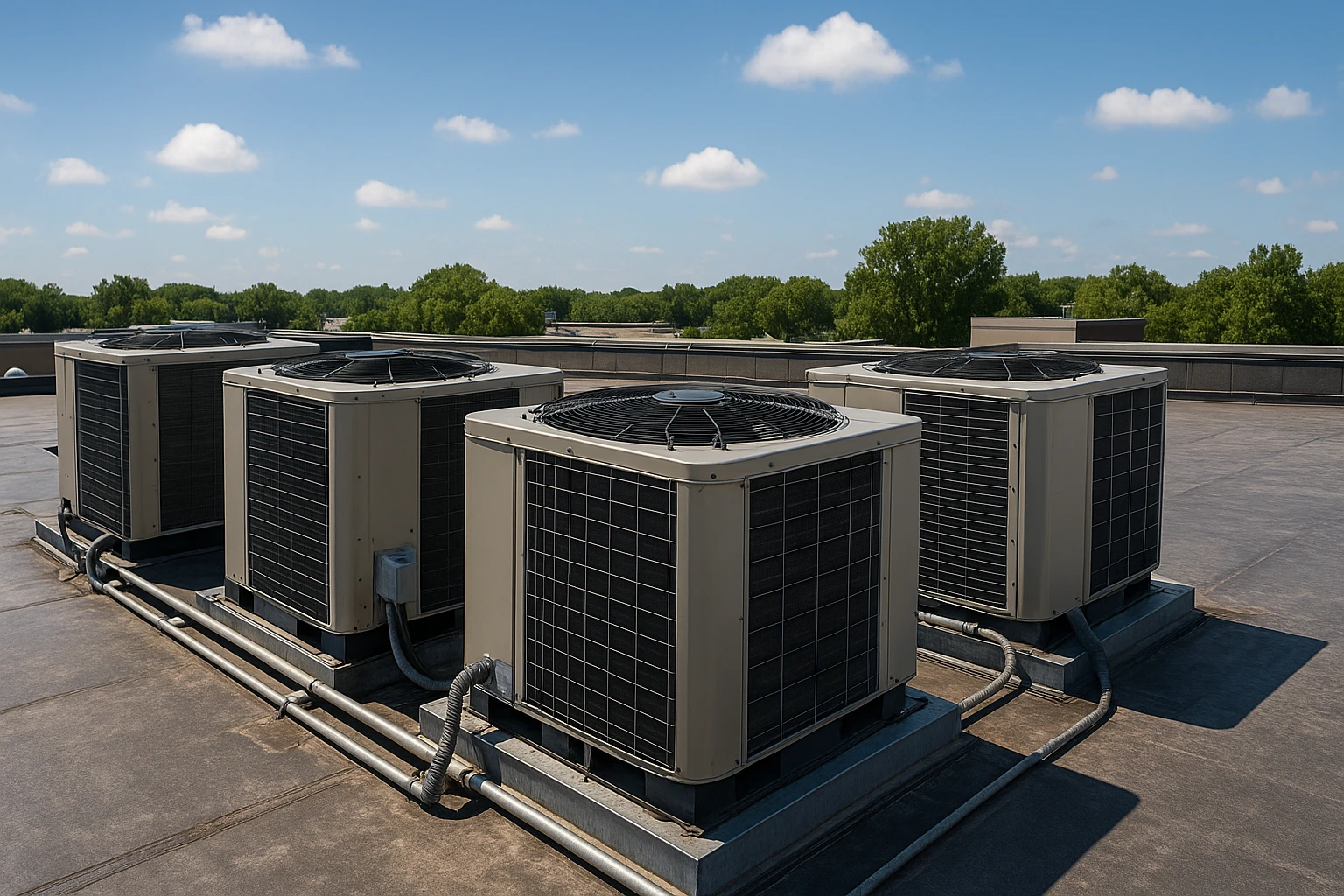
Kansas summers can get extremely hot. Cities like Wichita, Derby, Newton, and El Dorado often hit over 100°F. When that happens, rooftop HVAC systems work harder and run longer.
The more your HVAC system runs, the more water it produces from cooling the air. It also shakes slightly while working. On top of that, service workers need to walk across the roof to check it. Over time, these things can wear out your roof.
Roof damage doesn’t usually happen all at once. It builds up slowly. If you watch closely, you can spot small problems before they turn into expensive repairs.
This article explains how rooftop HVAC units can harm your roof—especially in summer—and how you can prevent that damage with regular care. Solid Rock Commercial Roofing is here to help.
Key Takeaways
- Rooftop HVAC units can quietly damage your roof over time, especially during hot Kansas summers when systems run more often and technicians make frequent visits.
- Common causes of damage include:
- Poor placement near drains or seams
- Condensation leaks from blocked or broken drain lines
- Foot traffic from HVAC technicians
- Vibration that loosens fasteners or flashings
- Extra heat and UV exposure around HVAC units
- Poor placement near drains or seams
- Summer conditions make everything worse due to heat expansion, stronger sunlight, and heavier rainfall.
- Warning signs to look for include:
- Pooling water near HVAC units
- Blisters or bubbles on the roof
- Rusted fasteners or brackets
- Interior ceiling stains or rising energy bills
- Pooling water near HVAC units
- Preventative steps you can take:
- Schedule a professional roof inspection
- Ensure proper drainage of condensation
- Install walk pads for safe technician access
- Reseal or replace worn flashing
- Coordinate with HVAC contractors to reduce damage
- Schedule a professional roof inspection
- Regular maintenance saves money, extends your roof’s life, prevents costly emergencies, and helps keep your warranty valid.
- Solid Rock Commercial Roofing offers expert inspections, honest advice, and long-term solutions tailored to Kansas weather and commercial roof types.
II. Why Rooftop HVAC Units Are Popular on Commercial Buildings
Most commercial buildings use rooftop HVAC systems. There are several reasons why:
- They save space inside the building.
- They’re easier for service workers to reach.
- They cool large areas more effectively.
But even though they’re helpful, these units can put stress on the roof if not properly cared for. Your roof is built to drain water, handle heat, and keep the inside dry. A heavy, vibrating, and water-producing HVAC unit can affect all of that.
III. How Rooftop HVAC Units Can Damage Your Roof
A. Poor Unit Placement
If an HVAC unit is placed too close to drains or seams, water might not flow off the roof properly. This leads to water pooling, which can cause leaks.
Example:
If a unit sits near a roof drain, rainwater and condensation can collect there. Over time, that water breaks down the roof material. Eventually, it can leak into the building.
B. Condensation and Water Leaks
Every time the HVAC runs, it produces moisture. That water should be drained safely. But if the drain lines are clogged or cracked, water can pool on the roof.
Standing water wears down the membrane and can lead to mold, rot, and damaged insulation.
C. Foot Traffic from Technicians
Technicians must walk on the roof to service HVAC units. Without designated walk paths, their shoes or tools can damage the roof surface.
Example:
A technician repeatedly walks across the same area. Eventually, that area becomes weak. During a summer storm, water finds a path through a small tear and leaks into an office below.
D. Vibration and Movement
HVAC systems vibrate when running. Over time, these small shakes can loosen fasteners, damage flashings, or break seals—especially around curbs or ductwork.
During summer, roofing materials expand from heat. The added movement can speed up wear and tear near vibrating units.
E. Extra Heat and Sunlight
HVAC units reflect heat and light onto nearby roofing material. This makes that part of the roof hotter than the rest. Over time, heat and sunlight dry out seals, weaken adhesives, and cause cracks.
IV. Why Summer Makes the Problem Worse
All of these issues get worse during summer. Here’s why:
- Materials expand and shrink more in high heat.
- Condensation increases as HVAC systems run longer.
- UV rays break down roofing surfaces and sealants faster.
- Storms hit harder during this season, testing every weak spot.
- Technician visits increase, adding foot traffic wear.
This makes summer the most important time to check your roof and make repairs.
V. Signs That Your Roof Might Be in Trouble
Here are signs your roof may be suffering from HVAC-related damage:
- Standing Water – Puddles near HVAC units or drains.
- Blisters or Bubbles – Raised areas that trap air or moisture.
- Rust or Corrosion – Especially on brackets or fasteners.
- Ceiling Stains – Water spots inside the building.
- Uneven Temperatures Indoors – Possibly from damaged insulation.
- Gaps in Flashing or Seals – Around the base of the HVAC unit.
- Spongy Roof Areas – May be due to trapped moisture.
- Rising Energy Bills – Your HVAC may be working harder than needed.
If you spot any of these problems, call a roofing expert right away.
VI. What You Can Do to Protect Your Roof This Summer
A. Schedule a Roof Inspection
A full inspection should include:
- Checking flashing and seals
- Looking for ponding water
- Examining areas around HVAC units
- Making sure fasteners are tight
- Inspecting condensate drain lines
Solid Rock Commercial Roofing can give you a detailed report and fix small problems before they get worse.
B. Fix Drainage and Condensate Lines
Make sure condensation is not pooling near the HVAC unit. Drain lines should be clear, intact, and directing water away from seams and low areas.
C. Add Walk Pads
Walk pads give technicians a clear path. This protects the roofing material under their feet and prevents accidental damage from tools or heavy steps.
D. Reseal Flashing
Check the flashing around HVAC curbs every year—especially before or during summer. If it looks cracked or dry, reseal or replace it.
E. Coordinate Roofing and HVAC Maintenance
Make sure your roofing contractor and HVAC company work together. When major HVAC work is done, follow it with a roof check to catch any damage right away.
VII. Why Regular Maintenance Saves Money
Maintaining your roof is cheaper than fixing a major leak or replacing an entire system. Here’s how it helps:
- Extends the life of your roof by 5 to 10 years
- Avoids emergency calls that cost more
- Prevents damage inside the building
- Lowers energy costs by protecting insulation
- Keeps warranties valid by meeting care requirements
Small upkeep jobs now can save you thousands later.
VIII. Why Choose Solid Rock Commercial Roofing
We Know Kansas Weather
We work in Wichita and nearby cities year-round. We understand what Kansas roofs go through—from summer heat to strong storms.
Commercial Roofing Is What We Do
We focus on flat and low-slope commercial roofs. We’re experienced with EPDM, TPO, metal, PVC, and modified bitumen systems—all commonly used with rooftop HVAC units.
Honest and Helpful Service
We explain things clearly. No tricks or sales pressure—just honest advice and repairs that fit your building and budget.
IX. Conclusion
Rooftop HVAC systems are important, but they can wear down your roof over time. Summer is when this damage builds up fastest—from heat, foot traffic, and moisture.
Don’t wait until you see a leak. Be proactive. Simple things like an inspection, better drainage, or adding walk pads can protect your roof and avoid costly repairs.
Solid Rock Commercial Roofing can help. We’re ready to inspect your roof, find small issues, and keep your building protected.
📞 Call (316) 227‑2628
🌐 Or visit solidrockcorp.com/contact-us
We’ll make sure your roof is ready to handle the heat—and whatever else this Kansas summer throws your way.
Frequently Asked Questions (FAQs)
How can an HVAC unit damage my commercial roof?
Rooftop HVAC units can cause roof damage through water leaks from condensation, heavy foot traffic from technicians, vibration that loosens components, and increased heat and UV exposure. These issues often grow worse during the summer.
What signs should I look for to know if my roof is being affected?
Watch for ponding water near the HVAC unit, blisters or bubbles in the roofing membrane, rusted hardware, indoor ceiling stains, and unusually high energy bills. These are signs your roof may be compromised.
Why is summer the most important time to check my roof?
Summer brings extreme heat, longer HVAC run times, frequent storms, and more technician visits. These factors speed up wear and increase the chance of leaks or damage to roofing materials.
What can I do to prevent HVAC-related roof damage?
Schedule a roof inspection, check and repair condensation drains, add walk pads for foot traffic, reinforce or reseal flashing, and coordinate roof checks after HVAC work.
How often should I have my roof inspected if I have rooftop HVAC equipment?
At least once a year, and ideally before or during summer. If your HVAC unit runs frequently or your building has had roof issues in the past, more frequent checks may be needed.
Can foot traffic from HVAC technicians really damage a roof?
Yes. Without walk pads or clear paths, repeated foot traffic can cause punctures, wear down protective layers, or weaken insulation—especially on single-ply or flat roofs.
What kind of roofs does Solid Rock Commercial Roofing work on?
We specialize in commercial flat and low-slope roofs, including TPO, EPDM, PVC, metal, and modified bitumen systems—all commonly used with rooftop HVAC setups.
How can I schedule a roof inspection with Solid Rock Commercial Roofing?
Call us at (316) 227‑2628 or fill out the form at solidrockcorp.com/contact-us to request an inspection. We’ll evaluate your roof and provide honest, expert recommendations.
This article is a collaboration between Solid Rock Corporation and OpenAI’s ChatGPT. Created on July 14, 2025, it combines AI-generated draft material with Solid Rock’s expert revision and oversight, ensuring accuracy and relevance while addressing any AI limitations.