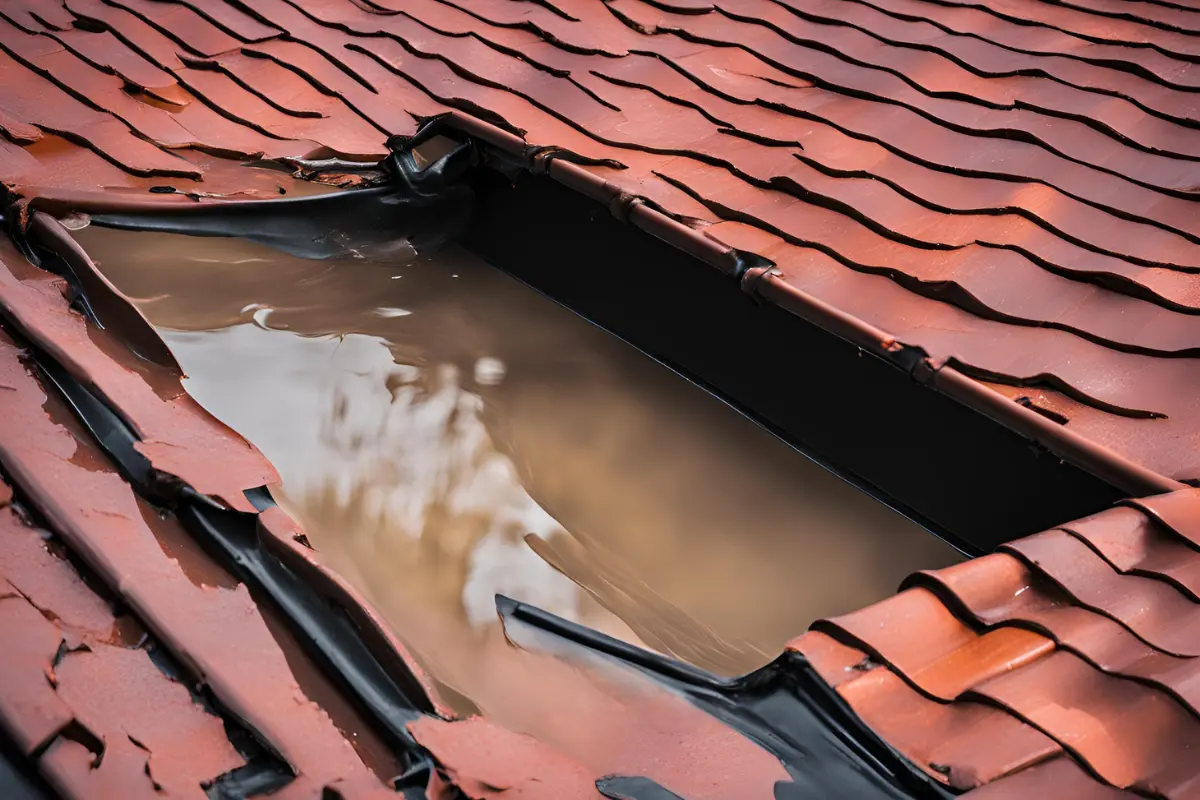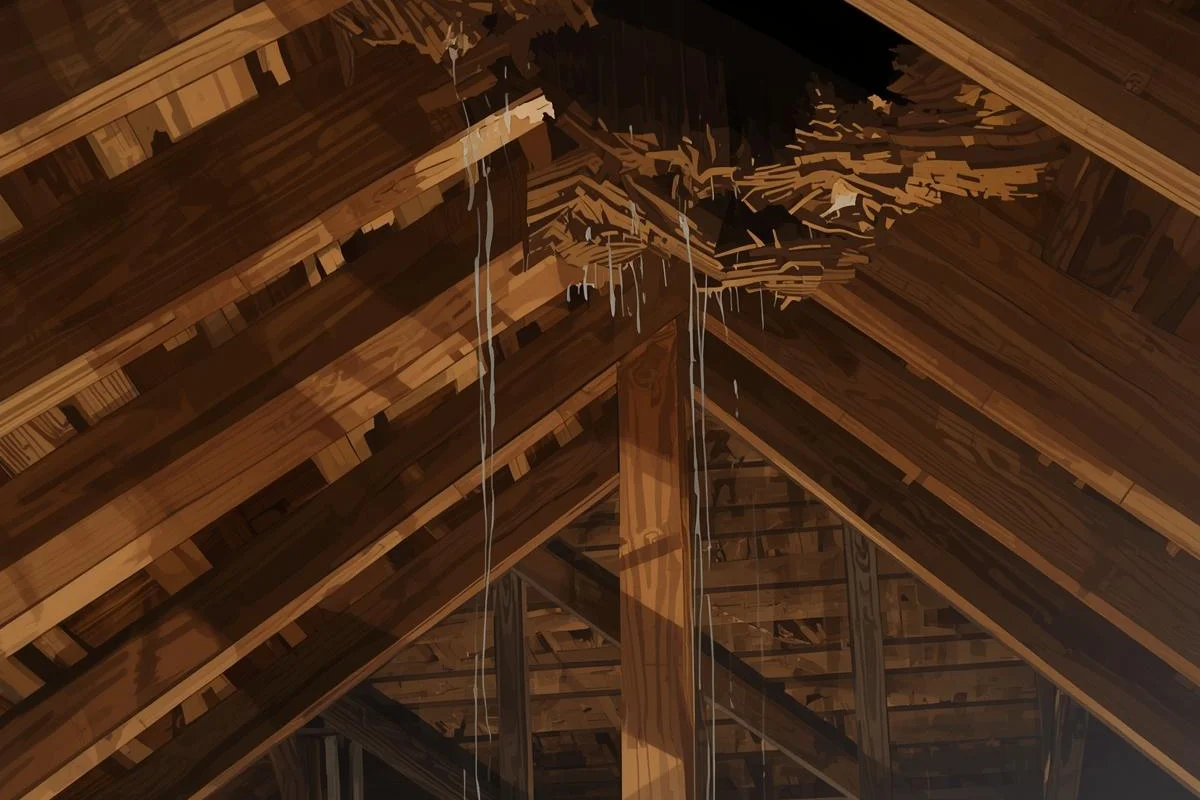
A hidden winter roof leak is a dangerous threat because moisture trapped beneath the membrane freezes and expands, causing it to soak into the wood or metal roof deck where it triggers wood rot or metal rust that destroys the building’s structural integrity. Because these leaks are often hidden by insulation, the damage can become catastrophic before you ever see a drop of water inside your building. For Wichita business owners, understanding that a “small” leak is actually a structural emergency is the first step in protecting your investment.
Key Takeaways: How Winter Leaks Destroy Commercial Roof Decks
Winter leaks on commercial roofs in Wichita are structural emergencies because trapped moisture and freezing temperatures work together to rot or rust the building’s “skeleton.”
Why Winter is More Destructive
- No Evaporation: Unlike summer, winter moisture doesn’t dry out; it sits against the deck in a cold “bath,” causing constant decay.
- The Freeze-Thaw Cycle: Water expands by 9% when it freezes, physically tearing apart wood pores and metal surfaces every night.
Impact on Metal and Wood Decks
- Metal Oxidation: Moisture turns steel into brittle rust, reducing a deck’s load-bearing capacity from 100 lbs per square foot to as little as 20 lbs.
- Hidden Wood Rot: Fungi (dry rot) eat the cellulose in plywood and OSB behind the insulation, often removing 50% of structural strength before a leak is ever seen inside.
Hidden Physical Dangers
- Weight Overload: Saturated insulation can weigh 10 to 20 times more than dry material (up to 10 lbs per square foot), risking collapse during heavy snowfalls.
- Fastener Failure: When the deck rots or rusts, screws lose their grip and “back out,” poking holes through the membrane from underneath.
Financial and Maintenance Realities
- Exponential Costs: Delaying a structural repair from winter to spring can increase the cost by nearly 2,700% (from a $1,500 patch to a $40,000 restoration).
- Detection Methods: Since winter leaks are “silent,” infrared moisture surveys and physical core cuts are the only reliable ways to find damage before it becomes catastrophic.
- Insurance Gaps: Most insurance policies do not cover “slow” damage like rot caused by lack of maintenance, leaving the building owner responsible for the full replacement cost.
Why are winter leaks more damaging to a roof deck than summer leaks?
Winter leaks are more damaging because the cold temperatures prevent the moisture from evaporating, allowing the water to sit against the roof deck for months while the freeze-thaw cycle physically tears the structural materials apart. In the summer, heat often helps dry out small amounts of moisture. In the winter, that water stays trapped in a dark, cold environment where it can do the most harm.
When water enters your roof system in December, it usually gets trapped in the insulation. Because it is cold outside, that water doesn’t turn into vapor and leave. Instead, it sinks to the lowest point: your roof deck. If your deck is made of wood (like plywood or OSB) or metal (like steel fluted decking), it is now sitting in a “bath” of cold water. Every time the temperature drops, that water turns to ice and expands, pushing into the pores of the wood or the microscopic scratches in the metal’s paint. This constant “attack” happens every night, slowly weakening the very foundation that holds your roof up.
How does moisture cause a metal roof deck to rust and fail?
Moisture causes a metal roof deck to fail through oxidation, which turns strong steel into brittle, flaky rust that eventually creates holes and allows the heavy roofing system to sag or even collapse. Once the protective coating on the metal deck is compromised by trapped water, the chemical reaction of rusting begins and cannot be easily stopped.
Steel roof decks are popular in Wichita warehouses and retail centers because they are incredibly strong. However, they rely on being kept dry. When a winter leak stays hidden in the insulation, the metal deck is constantly damp. Rust (iron oxide) takes up more space than the original metal, so as the deck rusts, it “heaves” and pushes against the insulation and membrane. Over time, the steel becomes as thin as a piece of paper. In a hypothetical situation, a rusted metal deck that was once rated to hold 100 pounds per square foot might only be able to hold 20 pounds. If a heavy Kansas snow falls on that weakened deck, the risk of a sudden, dangerous roof collapse becomes a very real possibility.
Why is wood rot from winter leaks so hard to detect?
Wood rot is hard to detect because the roofing membrane and insulation hide the decaying wood from view, allowing the fungi that cause rot to eat away at the deck’s strength without any visible signs on the ceiling. By the time you notice a “soft spot” when walking on the roof, the wood has likely already lost over 50% of its structural strength.
Wood-decaying fungi love the conditions found under a leaky winter roof: it is dark, damp, and the temperatures are often just warm enough (due to heat escaping from the building) for the fungi to grow. This process is called “dry rot,” even though it requires moisture to start. The fungi break down the cellulose and lignin that give wood its strength. If a 10,000-square-foot roof has a leak that goes unnoticed for three months, a significant portion of the plywood deck could become “spongy.” This makes it dangerous for maintenance workers to walk on the roof and makes it impossible for new roofing fasteners to grip the wood during a future repair.
What is the “hidden weight” danger of saturated roof insulation?
The hidden weight danger is that saturated insulation can weigh up to 10 to 20 times more than dry insulation, putting an immense, unplanned load on your roof deck that it was never designed to carry. Dry insulation is mostly air and is very light. When water replaces that air, it becomes a heavy “mud” trapped under your roof.
According to roofing industry studies, a single square foot of dry 2-inch thick Polyiso insulation weighs about 0.3 pounds. If that same square foot becomes fully saturated with water, it can weigh over 10 pounds [Source: RCI Interface Technical Journal: https://iibec.org/technical-publishing/interface-magazine/]. On a large commercial roof, this “hidden weight” can add up to thousands of extra pounds. When you combine this weight with a heavy Kansas snow load, you are testing the absolute limits of your building’s structure. This extra weight also causes the roof deck to “deflect” or bow downward, which creates a low spot where even more water will pool, making the problem even worse.
How do winter leaks lead to “fastener back-out” and membrane failure?
Winter leaks lead to fastener back-out because the moisture rots or rusts the material the screws are biting into, causing the fasteners to lose their grip and pop up through the roofing membrane. This creates even more holes in your roof, leading to a “domino effect” of failures.
In a traditional commercial roof, thousands of metal screws and plates hold everything down. These screws need a solid, dry deck to stay tight. If the deck turns to “mush” from wood rot or becomes “flaky” from metal rust, the screw has nothing to hold onto. As the building vibrates from the wind or HVAC units, the loose screw begins to work its way upward. Eventually, the sharp head of the screw will poke through the TPO or EPDM membrane from underneath. Now, you have a new leak caused by the old leak. This is why you cannot simply “patch” a roof that has a rotten deck; the fasteners for the patch won’t hold, and more screws will continue to fail.
What is the financial cost of delaying a structural roof repair?
The financial cost of delaying a structural repair is massive because waiting turns a simple $1,000 leak repair into a $50,000 structural restoration project that requires tearing off the entire roof and replacing the structural decking. You aren’t just paying for a new “skin” for your building; you are paying to rebuild the “skeleton.”
Hypothetical Cost Comparison:
- Scenario A: Fix the Leak in December:
- A small leak is found. 100 square feet of insulation is wet.
- Cost: $1,500 (Repair the membrane and replace a few boards of insulation).
- Result: The deck stays dry and strong.
- Scenario B: Wait until the Spring:
- The leak spreads. 2,000 square feet of insulation is soaked. The metal deck underneath has rusted through.
- Cost: $12,000 (Replace the metal decking) + $8,000 (New insulation) + $15,000 (New membrane) + $5,000 (Interior repairs).
- Total Cost: $40,000.
By waiting just a few months, the cost of the problem grew by nearly 2,700%. This is why commercial roofing experts always say that “the most expensive roof is the one you didn’t fix last year.”
How does a moisture survey help identify hidden structural damage?
A moisture survey identifies hidden damage by using infrared cameras or electronic sensors to “see” through the roof membrane and locate areas of wet insulation before the deck begins to rot or rust. This allows a contractor to perform “surgical” repairs, replacing only the damaged sections instead of the whole roof.
During a winter moisture survey, a technician from Solid Rock Commercial Roofing will walk your roof after the sun goes down. Because wet insulation holds onto heat longer than dry insulation, the infrared camera will show the wet areas as “glowing” hot spots on the screen. This is the only way to find leaks that haven’t started dripping into the building yet. By finding these “silent” leaks in January, we can stop the water from ever reaching your roof deck, saving you from the incredibly expensive structural repairs mentioned earlier.
Can a “recover” roof be installed over a deck with hidden damage?
No, you should never install a “recover” roof (a second layer of roofing) over a deck with hidden damage because the new roof will trap the existing moisture, accelerating the rot and rust while adding even more weight to an already weakened structure. This is a common “shortcut” that often leads to disaster.
Building codes in Kansas generally allow for two layers of roofing. However, the code also states that the underlying roof must be dry and structurally sound. If a contractor offers to save you money by “overlaying” a new roof without checking for wet insulation or deck damage, they are setting you up for failure. The trapped moisture will have nowhere to go but down. Within a few years, the fasteners for your new roof will fail, and you will be forced to pay for a total tear-off of both layers, which is significantly more expensive than doing the job right the first time.
Frequently Asked Questions (FAQs)
If my roof isn’t dripping, does that mean the deck is dry?
No, not at all. Commercial roof insulation can hold thousands of gallons of water before a single drop ever hits your floor. Because commercial buildings have thick layers of insulation and a vapor barrier on the deck, the water often stays trapped “in the sandwich” of the roof. Just because you don’t see a puddle on your desk doesn’t mean your metal deck isn’t rusting or your wood deck isn’t rotting right now.
How can I tell if my roof deck is already “soft” or damaged?
The most common sign of a damaged deck is a “spongy” or “bouncy” feeling when you walk on certain areas of the roof. If the roof feels firm in some spots but like you are walking on a trampoline in others, that is a major red flag. Another sign is “ponding water” that never goes away, which suggests the deck has sagged and created a permanent bowl. If you notice these signs, you should stay off the roof and call a professional immediately for a structural safety evaluation.
Does insurance cover the cost of replacing a rotten roof deck?
In most cases, no. Insurance typically covers “sudden and accidental” damage, like a tree falling or hail, but it does not cover “slow” damage caused by a lack of maintenance. If a leak goes unfixed for months and causes the deck to rot, the insurance adjuster will likely call that “wear and tear” or “neglect.” This means you will be responsible for the entire cost of the deck replacement. Fixing leaks immediately is the best way to ensure your insurance remains a safety net, not a denied claim.
What is a “core cut,” and why does my roofer want to do one?
A “core cut” is when a contractor removes a small, circular sample of your entire roof—all the way down to the deck—to physically inspect the condition of the insulation and the structural substrate. It is the most accurate way to verify the findings of an infrared scan. By looking at a core cut, we can see exactly how much rust is on the metal or if the wood is beginning to decay. We then immediately patch the hole with a permanent, waterproof seal.
Can a rusted metal deck be “painted” or saved?
If the rust is just “surface rust” (only on the top), it can sometimes be cleaned and coated with a rust-inhibiting primer. However, if the rust has begun to “pit” the metal or create “flaking,” the structural integrity is gone, and the metal must be replaced. Once steel has started to lose its thickness, it cannot be “saved” with paint. Replacing the metal sheets is the only way to ensure the roof is safe for workers and can support a snow load.
Are some roof decks more resistant to winter rot than others?
Yes, concrete and gypsum decks are more resistant to rot and rust than wood or metal, but they can still be damaged by the freeze-thaw cycle. Water can get into the pores of concrete and freeze, causing “spalling” (where the surface chips away). No matter what your deck is made of, water is an enemy that will eventually cause damage if it is allowed to stay trapped in your roof system.
Conclusion & Call to Action: Protect the Foundation of Your Building
A commercial roof is much more than the white membrane you see on top; it is a complex system that relies on a dry, strong structural deck to keep your building safe. Winter leaks are the ultimate “hidden enemy” because they attack that foundation from the inside out, turning a minor maintenance issue into a major structural crisis. Don’t let a “small” leak rot your building’s skeleton and destroy your holiday budget.
Contact Solid Rock Commercial Roofing today for a comprehensive winter moisture survey. Our Wichita team uses the latest infrared technology and core-sampling techniques to find hidden moisture before it destroys your roof deck. We will provide you with a clear plan to stop the damage, preserve your structural integrity, and save you from the staggering costs of a total deck replacement.
Call us now to schedule your inspection and ensure your building stays strong for decades to come!