For many commercial building owners, the roof is easy to ignore. It doesn’t greet customers, help sell products, or play a role in daily operations. When it’s doing its job, it stays out of sight and out of mind.
Yet the roof protects everything beneath it. People, equipment, inventory, offices, and work areas all rely on it. When a roof problem appears, it rarely stays contained. Leaks can interrupt work, damage property, and create stress that no owner wants to deal with.
That’s where commercial roof inspections come in.
If you have never scheduled one before, uncertainty is normal. Many owners aren’t sure what an inspection involves or what it might lead to. Some worry it will turn into pressure to replace the roof. Others assume it will disrupt business or take more time than they can spare.
This article explains what really happens during a first commercial roof inspection. You’ll learn why inspections matter, how the process works, what information you receive afterward, and how inspections help you plan instead of react.
Key Takeaways
- A commercial roof inspection helps you understand the condition of your roof before problems disrupt your business.
- Most roof issues start small and are not visible from the ground, which is why inspections are important even when there are no leaks.
- A first commercial roof inspection is non-invasive and does not interrupt daily operations or force repairs.
- Inspections are meant to provide information, not pressure, so you can make decisions on your own timeline.
- Common inspection findings often involve normal aging or minor wear, not emergencies.
- The inspection process includes a visual roof review, checks of edges and drainage areas, and sometimes a brief interior look for moisture signs.
- After the inspection, you receive a clear written summary that explains what was found and what should be monitored or planned for.
- Regular inspections help reduce the risk of costly emergency repairs and support better budgeting.
- Choosing an experienced local commercial roofing company makes inspections more useful and easier to understand.
- Scheduling your first inspection is a simple step that brings clarity and peace of mind about one of your building’s most important systems.
Why Your First Commercial Roof Inspection Matters
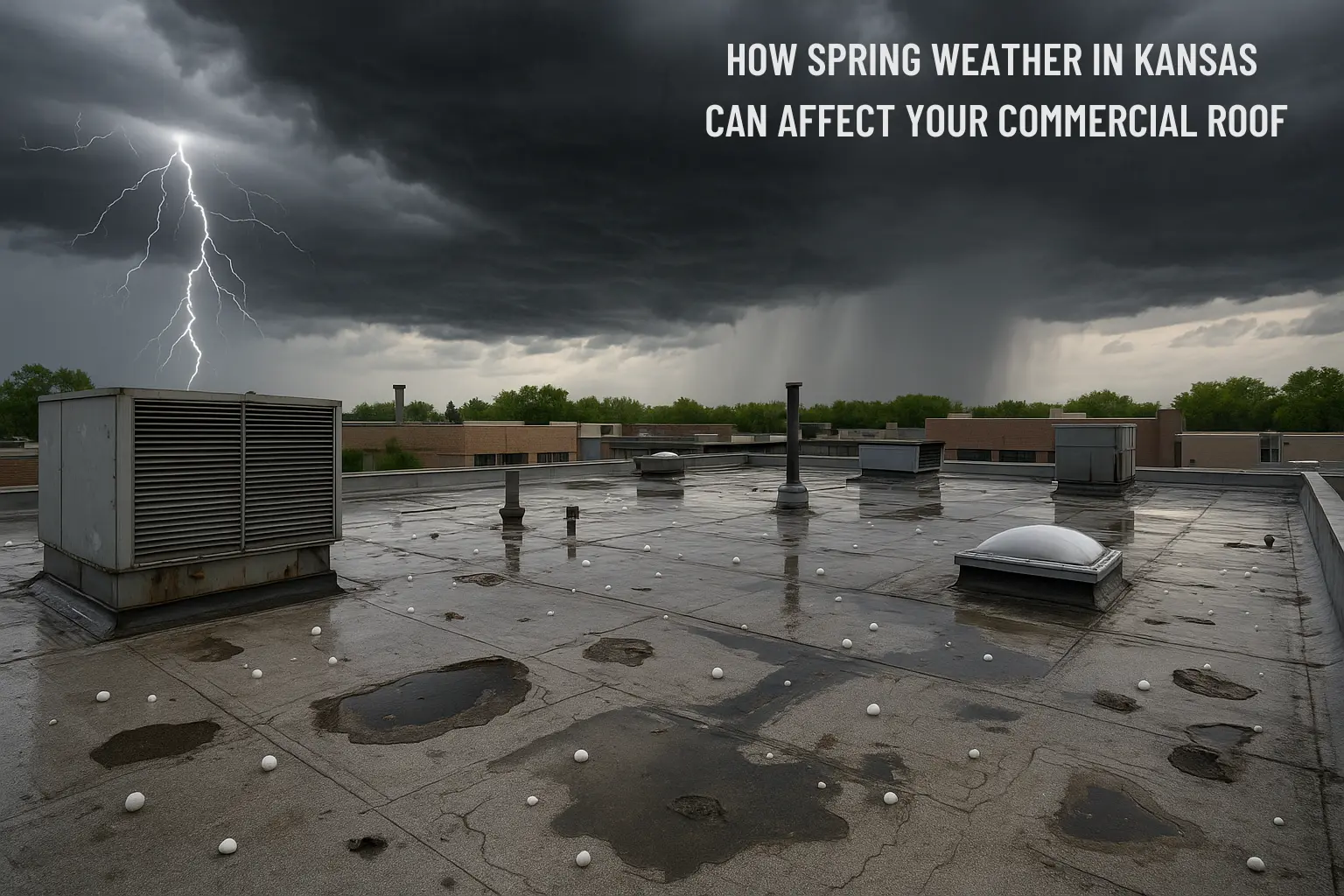
Commercial roofs are built to last, but they are always exposed to the elements. Sun, wind, rain, and temperature changes affect roofing materials year after year. In Kansas, hailstorms and strong winds add even more stress.
Many roofing problems begin slowly. Small weak points can form at seams, edges, or drainage areas without causing immediate leaks. From the ground, the roof may look fine. Inside the building, everything may seem normal.
The trouble is that these early issues often stay hidden. When water finally shows up inside, the problem has usually grown larger and harder to address.
A first commercial roof inspection helps catch issues before they reach that point. It gives you a clear picture of your roof’s condition and shows which areas should be watched more closely. Instead of guessing or waiting for trouble, you gain useful information that supports better decisions.
For example, consider a warehouse owner in Wichita who bought a building several years ago. The roof has never leaked, but storm season is approaching. Rather than hoping for the best, the owner schedules an inspection to understand what shape the roof is really in. The inspection provides clarity without forcing immediate repairs.
What a Commercial Roof Inspection Is—and What It Is Not
A commercial roof inspection is an evaluation. It is meant to provide information, not push a specific outcome.
During an inspection, the roof is visually reviewed and documented. Inspectors do not cut into the roof or remove materials. They do not shut down your building or interfere with daily work. The goal is to observe conditions and record what can be seen safely.
It’s just as important to understand what an inspection does not mean. An inspection does not automatically lead to repairs or replacement. It does not mean your roof is failing. In many cases, the results confirm that the roof is aging as expected and only needs monitoring or routine care.
A good inspection leaves you better informed, not overwhelmed.
When Should You Schedule Your First Commercial Roof Inspection?
There is no single right time that applies to every building, but certain situations make a first inspection especially useful.
New property ownership is one common reason. When roof records are missing or unclear, an inspection helps establish what condition the roof is in from the start. Severe weather is another reason. Even when storms don’t cause visible damage, they can still affect roofing systems.
Inspections are also helpful during budget planning. When you understand what your roof may need in the future, it becomes easier to plan expenses and avoid sudden surprises.
Imagine a small office building in Derby preparing its budget for the year ahead. Instead of guessing whether roof issues might arise, the owner schedules an inspection. The results help guide planning and bring peace of mind.
How to Prepare for Your First Commercial Roof Inspection
Many owners expect roof inspections to be complicated. In reality, preparation is minimal.
If you have information such as the roof’s age, repair history, or warranty paperwork, it can be helpful to share it. That said, many first inspections are completed with little background information and still provide clear results.
Most inspections do not require moving equipment, closing work areas, or pausing business activities. Inspectors focus on the roof and coordinate access to avoid disruption whenever possible.
For owners managing busy properties, this simple approach often makes scheduling much easier than expected.
What Happens During the Inspection
While every building is different, most first-time commercial roof inspections follow a similar flow.
The process usually starts with a brief conversation. The inspector may ask how the building is used, how old the roof is, and whether you’ve noticed any issues. This background helps focus the inspection on areas that matter most.
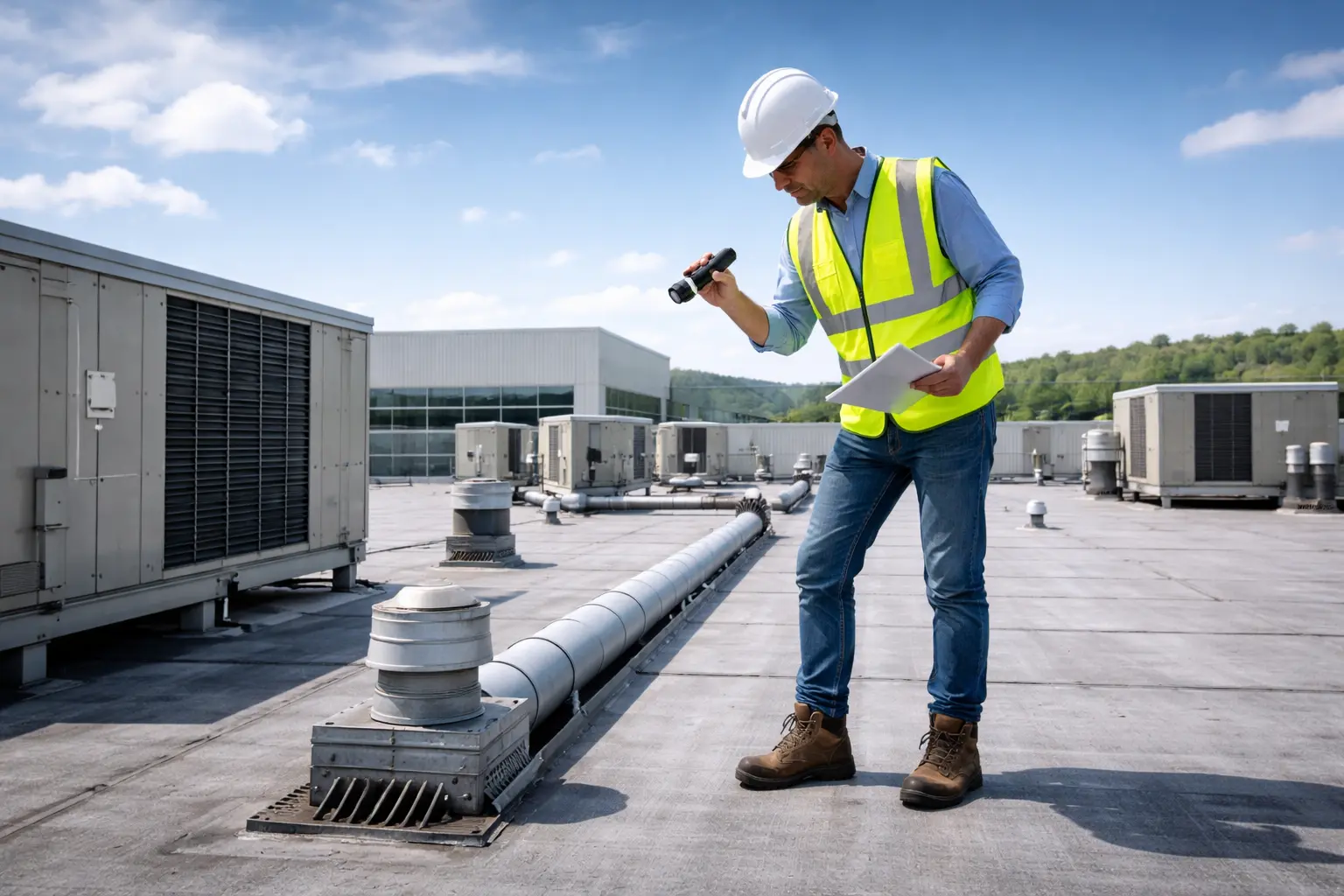
Once safe access to the roof is set up, the inspector performs a visual review of the roof surface. This includes looking at overall condition, signs of wear, and areas that stand out from the rest. The roof is not altered during this process.
Edges and transition areas receive close attention. These include spots where the roof meets walls, vents, or equipment. These locations often experience more movement and exposure over time.
The inspector also observes how water moves across the roof. Drainage paths, low spots, and areas where water may collect are noted. Even without leaks, drainage issues can affect roof performance over time.
In some cases, interior spaces may be briefly reviewed. Ceiling stains or other visible moisture signs can help connect exterior conditions with what’s happening inside the building.
For example, a retail building in Newton may show no active leaks, but older ceiling stains may line up with wear patterns found on the roof. That connection helps guide future monitoring.
What First-Time Inspections Commonly Reveal
Many owners worry that an inspection will uncover major problems. In reality, most first inspections reveal manageable conditions.
Normal aging, minor surface wear, and signs of weather exposure are common findings. These conditions often do not require immediate action. Instead, they help owners understand what to watch and when to plan next steps.
In some cases, inspection results show that commercial roof repair can address specific concerns without the need for larger projects. This understanding helps owners protect their building while keeping costs under control.
???? Learn more about commercial roof repair and when it may be appropriate.
What You’ll Receive After the Inspection
The inspection itself is only part of the value. The information you receive afterward supports better decisions.
Most inspections include a written summary that explains what was observed in clear language. Photos are often included to show specific areas and provide visual context.
A strong inspection report helps owners understand what matters now, what may need attention later, and what can simply be monitored. This clarity reduces stress and helps prevent rushed decisions.
How Commercial Roof Inspections Help Manage Costs
From a financial standpoint, inspections help owners stay ahead of problems. Catching issues early reduces the chance of emergency repairs, which often cost more and disrupt operations.
Inspections also support long-term planning. Knowing when commercial roof replacement may be needed allows owners to prepare instead of reacting under pressure.
???? Learn more about commercial roof replacement planning and how inspections support better timing.
For example, a manufacturing facility in Wichita may use inspection results to schedule maintenance during a slower production period, reducing future disruption.
Choosing a Commercial Roofing Partner You Can Trust
The value of an inspection depends on who performs it. Experience, communication, and local knowledge all matter.
A dependable commercial roofing partner understands regional weather, respects how your building is used, and explains findings clearly. Inspections are treated as part of an ongoing relationship rather than a one-time visit.
For some properties, inspections may show that commercial roof coatings could help extend roof service life under the right conditions.
???? Learn more about commercial roof coatings and how they fit into long-term roof planning.
Conclusion: Turning Information Into Confidence
For many commercial property owners, the biggest challenge with roof care is not the roof itself—it’s uncertainty. When you don’t know the condition of your roof, every storm or ceiling stain can raise concern about what might come next.
A first commercial roof inspection helps remove that uncertainty. It provides clear information about your roof today and guidance about what may need attention in the future. Instead of guessing or waiting for problems, you gain the ability to plan ahead with confidence.
Throughout this article, we’ve explained what happens during an inspection, how simple the process is, and what you can expect afterward. We’ve also shown how inspections often uncover manageable conditions and support better budgeting over time.
A professional inspection should feel helpful and straightforward. The goal is not to rush decisions, but to help you understand your building so you can make choices when the timing is right.
Schedule Your Commercial Roof Inspection
If you’re ready to take the next step, Solid Rock Commercial Roofing works with property owners throughout Wichita, Derby, Newton, and surrounding areas.
To schedule your first commercial roof inspection:
- Visit ???? https://solidrockcorp.com/contact-us/
- Or call ???? (316) 227-2628
A short conversation can bring clarity to one of the most important parts of your building.
Frequently Asked Questions
How long does a commercial roof inspection take?
Most commercial roof inspections take about one to two hours, depending on the size of the building and how easy the roof is to access. Larger or more complex buildings may take longer, but inspections are usually completed in a single visit.
Will a roof inspection interrupt my business operations?
In most cases, no. Commercial roof inspections are designed to be low impact. Inspectors work on the roof and do not need access to most interior areas. Daily operations usually continue without disruption.
Do I need to be present during the inspection?
You are welcome to be present, but it is not required. Many property owners choose to have a facility manager or point of contact available instead. Inspection findings are shared afterward in a written summary.
Does an inspection mean I have to repair or replace my roof?
No. A roof inspection does not require you to take action right away. The purpose is to provide information so you can decide what makes sense for your building and budget.
What if my roof isn’t leaking—do I still need an inspection?
Yes. Many roof issues develop before leaks appear. Inspections help identify early signs of wear so problems can be planned for rather than discovered during an emergency.
How often should commercial roofs be inspected?
Many commercial property owners schedule inspections once a year or after major storms. The right schedule depends on the building, roof age, and exposure to weather. An initial inspection helps determine what makes sense going forward.
What kind of report will I receive after the inspection?
You will typically receive a written summary that explains what was observed, often with photos for reference. The report focuses on clarity so you can understand the roof’s condition without technical experience.
Can an inspection help with budgeting and planning?
Yes. Inspection findings help owners plan ahead, set realistic budgets, and avoid surprise expenses. Knowing what may need attention in the future supports better decision-making.
Are roof inspections only for older buildings?
No. Even newer buildings can benefit from inspections, especially after storms or when ownership changes. Inspections help establish a baseline for the roof’s condition at any age.
How do I schedule my first commercial roof inspection?
You can schedule an inspection with Solid Rock Commercial Roofing by visiting
???? https://solidrockcorp.com/contact-us/
or calling ???? (316) 227-2628. A short conversation is usually all it takes to get started.
This article is a collaboration between Solid Rock Corporation and OpenAI’s ChatGPT. Created on February 5th, 2026, it combines easy-to-read information with Solid Rock’s expert oversight to ensure accuracy and relevance.