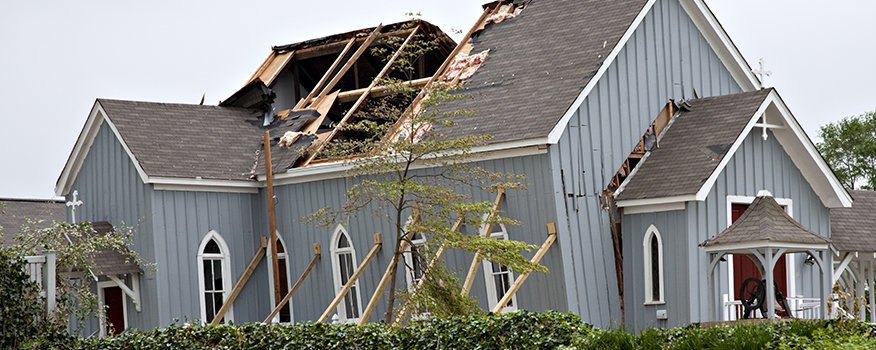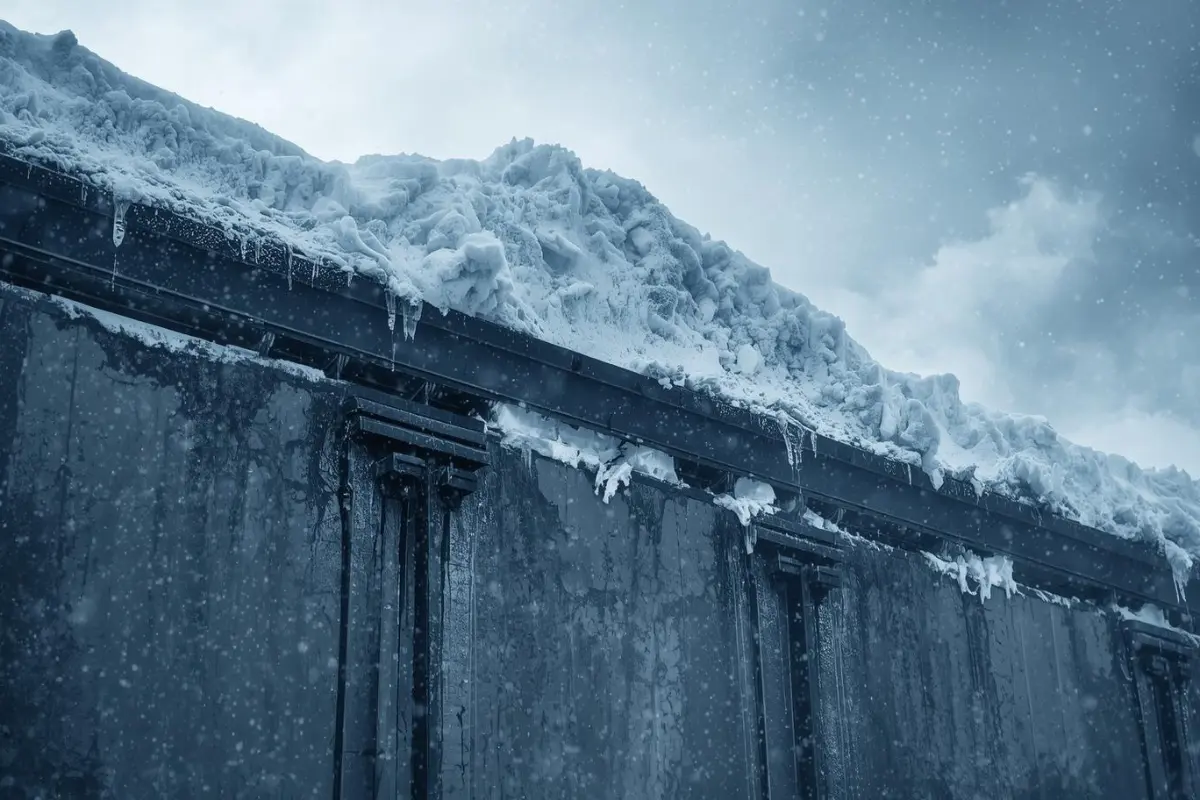
For Wichita business owners, a commercial roof has reached a catastrophic failure point when it can no longer protect the building’s interior, showing signs like widespread water ponding, shattered membranes, or structural sagging that indicate the roof system is beyond simple repair and requires immediate replacement. Ignoring these signs during the winter can lead to a total structural collapse or massive interior property loss when the heavy spring rains arrive.
Key Takeaways: Signs of Catastrophic Commercial Roof Failure
- Ponding is a Weight Warning: If water stands on your commercial roof for more than 48 hours, it often means the structure has sagged. Every inch of standing water on a 10,000-square-foot roof adds about 52,000 pounds of dangerous stress.
- Shattering is Irreversible: Once a roofing membrane becomes brittle enough to shatter like glass in the winter, it can no longer be patched or repaired; the material has reached the end of its chemical life.
- Recurring Leaks Mean Saturation: Frequent “pop-up” leaks in different areas suggest your insulation is soaked. This acts like a giant sponge, rotting your roof deck from the inside out and destroying your building’s energy efficiency.
- Smell and Mold are Red Flags: Musty odors or stained ceiling tiles indicate trapped moisture. This is a sign of a failed vapor barrier and can lead to serious health hazards for employees.
- Fastener Failure is a Safety Risk: “Bumps” appearing under your roof membrane mean screws are backing out because the deck is too soft to hold them. This puts the roof at high risk of blowing off during Wichita’s high-wind events.
- Repair vs. Replacement: Coatings and patches are for maintenance, not for failed structures. A roof showing these catastrophic signs usually requires a full tear-off to ensure the building remains safe and code-compliant.
Is widespread ponding water a sign of structural failure?
Widespread ponding water is a major sign of catastrophic failure because it indicates that the roof’s internal structure has sagged or the insulation has collapsed, creating deep “bowls” that trap thousands of pounds of water and ice on your building. This extra weight puts immense stress on your beams and can lead to a sudden roof collapse.
According to the National Roofing Contractors Association (NRCA), “ponding” is defined as water that remains on a roof for more than 48 hours after a storm [Source: NRCA Technical Manual: https://www.nrca.net/technical]. In a hypothetical example, an inch of water covering a 10,000-square-foot roof weighs approximately 52,000 pounds. If your roof has several areas of standing water that never seem to dry up, it means the “deck” underneath is no longer flat. This usually happens because the wood or metal underneath has rotted or rusted away, and the roof is now a safety hazard that needs to be addressed before the next heavy Kansas snow.
What does “membrane shattering” mean for my roof’s lifespan?
Membrane shattering occurs when older roofing materials, like TPO or EPDM, become so brittle from cold and age that they literally crack or shatter like glass when stepped on or moved by the wind, leaving your building completely exposed to the elements. This is a clear sign that the chemical life of your roof is over.
Most modern roofing membranes are designed to be flexible. However, after 15 to 20 years of exposure to the harsh Wichita sun and freezing winters, the oils and chemicals that keep the roof flexible evaporate. In a deep freeze, the material becomes stiff. If a maintenance worker walks on the roof or if a heavy branch falls, the membrane can shatter. Once a roof begins to shatter, “patching” is no longer an option because the material is too weak to hold a new weld or glue. At this point, the entire waterproof skin is failing and must be replaced.
Why are multiple recurring leaks a red flag for a total replacement?
Multiple recurring leaks are a red flag because they suggest that the entire roofing system has become “saturated,” meaning the insulation underneath is soaked and water is now traveling freely throughout the building’s structure. When leaks appear in five or six different places at once, it is rarely a simple hole; it is a systemic failure.
Consider a hypothetical retail store in Wichita. The owner finds a leak in the breakroom in December. They patch it. Two weeks later, a leak appears in the front lobby. Then another appears in the warehouse. This “pop-up” leak pattern happens because the insulation under the roof has become a giant sponge. Once insulation is wet, it loses its R-value and its strength. It also begins to rot the roof deck from the inside out. If you are playing “whack-a-mole” with new leaks every time it snows, your roof has reached its catastrophic limit.
Does a musty smell or mold inside mean the roof has failed?
A persistent musty smell or visible mold on interior ceiling tiles often means the roof has failed because it indicates that moisture has been trapped inside the roof assembly for a long time, creating a health hazard and proving that the roof’s vapor barrier is no longer working. This is often a “silent” sign of failure that happens long before a major drip starts.
In the tight environment of a commercial building, mold can grow quickly in damp insulation. Because the heat from your building rises, it warms the trapped water, creating a perfect greenhouse for fungi. If your employees are complaining of a strange smell or if you see dark stains on your walls that seem to be spreading, the roof system is likely compromised. This is a catastrophic failure because it involves more than just the roof; it now involves the air quality and safety of everyone inside the building.
How do “backed-out” fasteners signal a dangerous roof condition?
Backed-out fasteners signal danger because they show that the underlying roof deck has become so soft or damaged that it can no longer hold the screws, which then “pop” upward and create new holes in your roofing membrane. This is often called “fastener flutter,” and it means your roof is no longer securely attached to the building.
In a strong Wichita windstorm, your roof acts like a giant sail. The fasteners (the screws and plates) are the only things holding that sail down. If the metal deck has rusted or the wood deck has rotted, the screws lose their “bite.” As the roof moves in the wind, the screws work their way up. You can often see these as small “bumps” or “pimples” under the membrane. If you see dozens of these bumps, your roof is at risk of blowing off entirely during the next high-wind event. This is a catastrophic failure that requires a full tear-off to replace the damaged deck and install a new, secure roofing system.
Frequently Asked Questions (FAQs)
Can a catastrophic roof failure be fixed with a coating?
No. Roof coatings are only for roofs that are still in good structural shape. If your roof has wet insulation, a rotten deck, or shattered areas, a coating will actually make the problem worse by trapping the moisture inside. Applying a coating to a failed roof is like painting over a rotten piece of wood; it might look better for a week, but the structure is still failing underneath.
How long do I have to act once I see these signs?
You should act immediately. A catastrophic failure means the roof is no longer safe or reliable. Every time it snows or rains, you are risking a structural collapse or an electrical fire if water hits your power lines. In Wichita, where spring storms can bring several inches of rain in a few hours, waiting even a few weeks can be the difference between a planned replacement and an emergency disaster.
Does insurance pay for a roof that has reached catastrophic failure?
Usually, insurance only covers damage from a specific event, like a hail storm or a tornado. They often do not cover “catastrophic failure” that happens because the roof simply got too old or wasn’t maintained. However, if a recent storm made the failure worse, you might have a claim. It is best to have a professional from Solid Rock Commercial Roofing inspect the roof and provide a report for your insurance agent.
Is a full tear-off the only option for a failed roof?
Yes, if the insulation is wet or the deck is damaged, a full “tear-off” is the only safe and legal way to fix the problem. This involves removing everything down to the structural beams and building a brand-new, code-compliant roof. This ensures your building is safe, energy-efficient, and protected by a long-term warranty.
Conclusion & Call to Action: Don’t Wait for the Collapse
Recognizing the signs of catastrophic roof failure is the only way to protect your business from a total disaster. Widespread ponding, shattering membranes, and recurring leaks are your roof’s way of saying it can no longer do its job. In the harsh environment of Wichita, these problems will only get worse as the seasons change. Taking action now allows you to control the situation before it becomes an emergency that shuts down your business.
Contact Solid Rock Commercial Roofing today for a comprehensive catastrophic failure assessment. Our Wichita team will use infrared technology and physical inspections to determine exactly how much life is left in your roof. We provide honest answers and high-quality solutions to keep your building standing strong through any Kansas storm.Call us now to schedule your inspection and protect your investment before it’s too late!