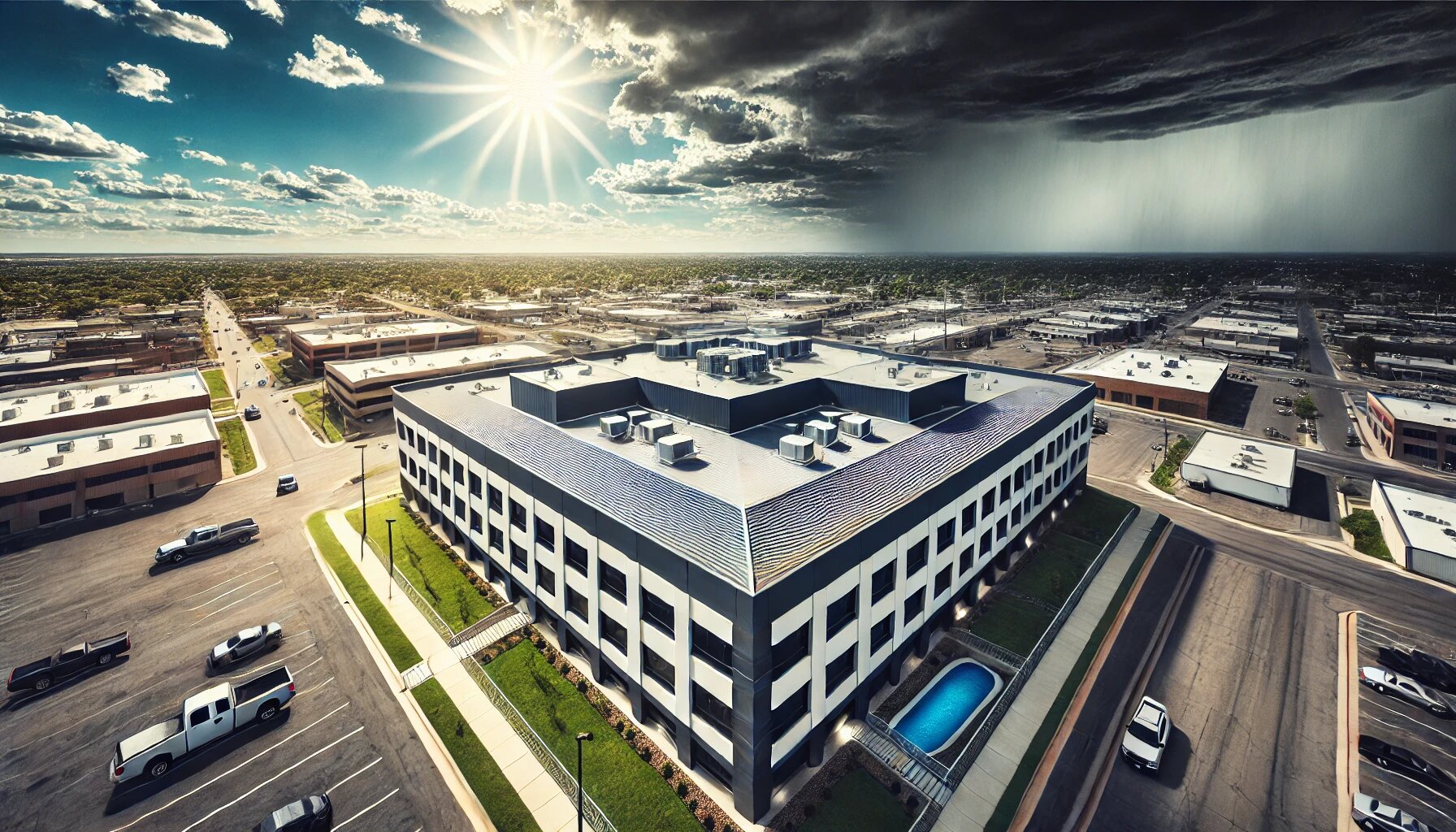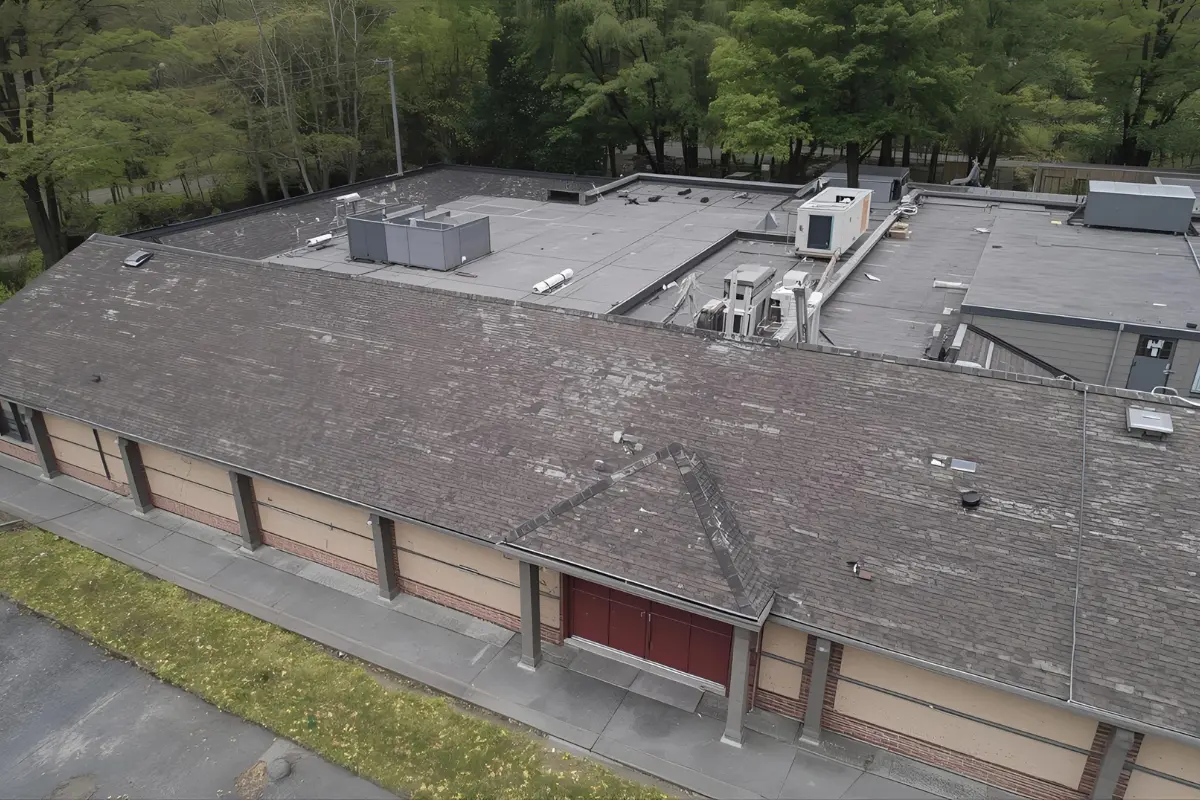
As a business owner in Wichita, the last thing you want to think about is your roof, especially after a long summer. It’s often “out of sight, out of mind” until a leak appears. However, fall is the most crucial time for a commercial roof inspection. A professional assessment now can prevent a small problem, created by the summer’s brutal heat and storms, from becoming a catastrophic failure when winter arrives.
Why Summer is a Silent Killer for Commercial Roofs ☀️
The Kansas summer is a triple threat to your commercial roofing system: extreme heat, intense UV radiation, and severe storms. These factors work together to accelerate the aging and deterioration of your roof, creating hidden weaknesses that a fall inspection can uncover.
- Thermal Shock and UV Degradation: A commercial roof can reach temperatures of 150°F or more on a hot summer day. When temperatures drop significantly overnight or a sudden thunderstorm rolls in, this rapid expansion and contraction of materials, known as thermal shock, puts immense stress on seams and flashing. Over time, this leads to cracking, blistering, and delamination. Meanwhile, relentless UV rays break down the chemical bonds in roofing materials, causing them to become brittle and lose their waterproofing ability.
- Storm-Related Damage: Wichita is no stranger to severe weather. High winds can lift and tear at seams, while hail can cause punctures or bruising to the membrane. Even if you don’t see a visible hole from the ground, hairline cracks and minor impacts can compromise the roof’s integrity, allowing water to seep in slowly. According to industry reports, 80% of commercial roof replacements are due to preventable issues like neglect and hidden damage.
The Fall Inspection Checklist: What a Pro Looks For ✅
A professional fall inspection goes far beyond a quick visual check. It’s a comprehensive assessment designed to identify and address the issues caused by summer stress before winter arrives.
- Inspection of Drains, Gutters, and Scuppers: One of the most common causes of roof failure is a clogged drainage system. A professional will clear out all drains and gutters of debris, preventing ponding water (standing water for more than 48 hours) which accelerates degradation and adds significant weight to your roof structure.
- Evaluation of All Penetrations and Flashing: The vast majority of commercial roof leaks occur at flashing and penetrations—areas around HVAC units, pipes, vents, and skylights. These areas are especially vulnerable to the constant thermal movement of summer. An inspection will ensure all seals are intact and re-seal them if necessary.
- Assessment of Membrane Condition: A roofer will walk the entire roof surface, checking for any signs of damage, including blistering, punctures, tears, or soft spots that may indicate saturated insulation beneath the surface.
- Moisture Detection: Using advanced tools like infrared technology, a professional can detect hidden moisture trapped in the insulation. Finding this moisture now is critical, as it loses its R-value when wet, forcing your HVAC system to work harder. In winter, this trapped water can freeze and expand, causing even greater damage.
Fall Inspection: The Most Cost-Effective Form of Roof Care ????
While the initial cost of a professional roof inspection may seem like an expense, it is, in reality, a powerful cost-saving measure.
- Preventing Costly Repairs: A small repair to a seam or flashing in the fall might cost a few hundred dollars. Ignoring it could lead to a massive leak in the winter, causing tens of thousands of dollars in interior damage, inventory loss, and mold remediation.
- Maintaining Your Warranty: Most commercial roof warranties require regular inspections and documented maintenance to remain valid. Skipping a fall inspection could void your warranty, leaving you to pay out of pocket for a major repair that would have otherwise been covered.
- Extending Roof Lifespan: A roof that receives regular maintenance can last significantly longer than one that doesn’t. Proactive care can add years to its life, delaying a costly full replacement for as long as possible.
FAQs: Your Questions About Fall Inspections Answered
How often should I have my commercial roof inspected?
A professional inspection should be performed at least twice a year—in the spring to check for winter damage, and in the fall to prepare for the upcoming cold and wet weather. You should also schedule an inspection after any major weather event, like a severe hailstorm or high wind event.
What are the signs I need a fall inspection?
Beyond a professional’s opinion, look for these signs:
- An unusual spike in your utility bills, which could indicate a loss of insulation.
- Puddles or ponding water on your roof.
- Debris around drains or in gutters.
- A recent heavy hailstorm or high wind event.
- Water stains on the ceiling inside your building.
Can a general handyman perform a sufficient roof inspection?
No. A general handyman is not trained to identify the subtle signs of membrane deterioration, compromised flashing, or underlying moisture. A certified roofing professional has the expertise, training, and specialized equipment to safely and accurately assess your roof’s condition and provide a detailed report.
Will a fall inspection save me money on my energy bills?
Yes. An inspection will identify damaged or compromised insulation. By repairing these issues, you will improve your building’s thermal envelope, which reduces the workload on your heating system and lowers your energy costs all winter long
Ready to protect your Wichita business with a solid roof? Contact Solid Rock Commercial Roofing today for a free consultation and let us help you find the perfect roofing solution.