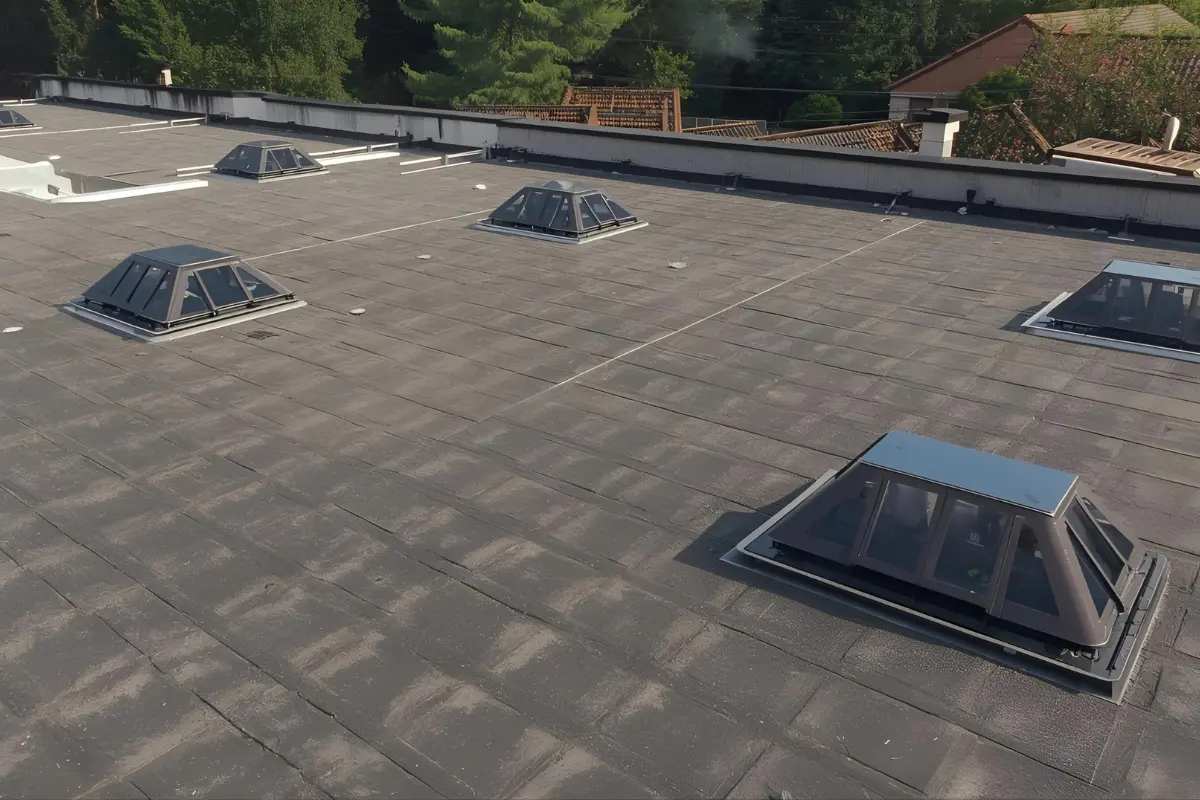
Clogged commercial roof drains cost Wichita businesses money by causing ponding water, which accelerates roof degradation, strains the building’s structure, and leads to costly internal and operational damage far beyond a simple repair bill. This issue, often overlooked, is a leading cause of premature roof failure and is a serious threat to a commercial property’s integrity.
The Vicious Cycle: From Clog to Catastrophe
A commercial roof’s drainage system—whether it relies on internal drains, perimeter scuppers, or gutters—is its most critical component for a reason. Its job is to efficiently remove rainwater and melted snow. When this system fails, water has nowhere to go but to pool on the roof surface, a condition known as ponding.
The problem begins with a seemingly small issue: a buildup of leaves, branches, dirt, or other wind-blown debris around a drain basket or in a downspout. What seems like a minor obstruction quickly becomes a major blockage, leading to a cascade of expensive problems.
1. Accelerated Roof Degradation
Most commercial roofing materials, including TPO, EPDM, and modified bitumen, are designed to be waterproof, not to withstand prolonged submersion. Ponding water acts as a magnifying glass for the sun’s UV rays, intensifying their effect and causing the roofing membrane to degrade at an accelerated rate. This leads to:
- Weakened Membranes: Standing water breaks down the chemical compounds in the membrane, making it brittle, prone to cracking, and susceptible to leaks.
- Warped Seams: The constant thermal stress from water heating and cooling puts immense strain on a roof’s seams and flashing, causing them to delaminate and fail.
- Mold and Algae Growth: Stagnant water is a perfect breeding ground for mold and algae, which can further damage the roof surface and create a slippery, dangerous environment for anyone on the roof.
2. Structural Stress and Sagging
Water is heavy. For every inch of water ponding on your roof, you’re adding 5.2 pounds of pressure per square foot to the building’s structure. On a 10,000-square-foot roof with just one inch of standing water, that’s an additional 52,000 pounds of weight!
- Increased Dead Load: This excessive weight, known as a dead load, can push your building’s structural integrity to its limit.
- Sagging and Deflection: Over time, the sustained weight can cause the roof deck and supporting joists to sag and deflect. This not only weakens the structure but also worsens the ponding problem, as the new depressions create a deeper area for water to collect. In extreme cases, a roof can even collapse under the sheer weight of a large volume of water.
3. Hidden Water Damage and Mold
Ponding water will eventually find a way in. A small leak from a clogged drain can saturate the underlying insulation, turning it into a sponge. Wet insulation loses its thermal efficiency (R-value), leading to higher energy bills, and it provides a breeding ground for mold, mildew, and other fungi.
- Costly Remediation: The cost of mold remediation is not cheap. According to industry reports, professional mold remediation can range from $3,500 to $9,000 for an average commercial project, with larger jobs costing significantly more.
- Inventory and Equipment Damage: A sudden leak from a burst ceiling due to water saturation can ruin inventory, damage sensitive computer equipment, and shut down business operations, costing far more than a simple repair. The average commercial water damage claim is estimated at a staggering $89,000. (Source: Chubb Claims)
Why Regular Drain Maintenance is the Solution
Preventing clogged drains is the most effective and cost-efficient way to protect your commercial roof and business from these hidden costs. A proactive approach is always more affordable than a reactive one.
- Cost Savings: While the price of a full roof replacement can be tens of thousands of dollars, regular drain and gutter cleaning is a small, recurring expense. For a few hundred dollars a year, you can prevent a problem that could cost you tens of thousands in the future.
- Preserving Your Warranty: Most manufacturer warranties are voided if the roof is not properly maintained. By regularly cleaning your drainage system and having a professional inspect your roof, you are protecting your warranty and ensuring it remains valid for its full term.
- Increased Lifespan: A roof that is properly drained and free of ponding water will last significantly longer. You can get the full lifespan out of your roofing system, deferring a major capital expense for years.
FAQs: Your Questions About Commercial Roof Drains Answered
How often should my commercial roof drains be cleaned?
We recommend a professional drain cleaning and roof inspection at least twice a year in Wichita. The best times are in the spring, to clear winter debris, and in the fall, to remove leaves and prepare for the winter. Additional cleaning may be needed after a severe storm.
What are the different types of commercial roof drains?
Common types include internal drains (often with a dome strainer and a drain pipe that runs through the building), scuppers (openings at the edge of the roof that direct water to an exterior downspout), and gutters (channels along the edge that collect and direct water).
Can I clean the roof drains myself?
While removing visible debris from the drain basket is helpful, we do not recommend a full DIY approach. A professional has the proper safety equipment and the expertise to identify deeper blockages and underlying roof issues that you might miss. Using sharp tools to clear a clog can also puncture the roofing membrane, creating an immediate leak.
Will my insurance pay for damage from a clogged drain?
Most commercial property insurance policies will not cover damage caused by gradual deterioration or a lack of maintenance. If it is determined that the leak was a result of a neglected, clogged drain, your claim will likely be denied, and you will be responsible for all costs.
Conclusion: Don’t Wait for the Puddle to Turn into a Leak
For a business owner in Wichita, ignoring a clogged commercial roof drain is a financial gamble. What begins as a small puddle can quickly lead to accelerated roof degradation, structural stress, and costly interior damage.
At Solid Rock Commercial Roofing, we are your local experts dedicated to the health and longevity of your commercial roof. Our professional maintenance programs are designed to prevent the very problems that cost businesses the most money. Don’t let a small clog turn into a major crisis. Contact us today to schedule a comprehensive roof and drainage system inspection and protect your business from the ground up.