- Key Takeaways
- Understanding the Difference Between a Retrofit and a Tear-Off
- When a Metal Roof Retrofit Makes Sense
- When a Full Tear-Off Makes More Sense
- Looking Beyond the Initial Price
- Why Professional Roof Inspections Matter
- Conclusion
- FAQs
- What is a metal roof retrofit?
- How is a roof retrofit different from a full tear-off?
- Is a metal roof retrofit less expensive than a tear-off?
- How do I know if my commercial roof qualifies for a retrofit?
- When is a full tear-off necessary?
- Can a retrofit improve energy efficiency?
- Will a retrofit disrupt business operations?
- How long does a commercial roof retrofit last?
- Are metal roof retrofits good for warehouses and industrial buildings?
- Can a retrofit fix leaks permanently?
- Do commercial roof retrofits require maintenance?
- How long does a commercial roof tear-off take?
- Can multiple roofing layers create problems?
- What types of buildings benefit most from roof retrofits?
- Who should I contact for a commercial roof evaluation?
- Recommended Reading
- Retrofit Roofing Systems: Benefits and Considerations for Commercial Buildings
- Recover or Replace? Making the Right Roofing Decision
- Roof Recover vs. Roof Replacement: What Facility Managers Need to Know
When a commercial roof starts leaking, the problem can quickly become expensive.
For owners of warehouses, factories, office buildings, schools, retail centers, and other large buildings, roof problems affect much more than the structure itself. Leaks can damage inventory, equipment, insulation, ceilings, and daily business operations. In some cases, water intrusion may even force temporary shutdowns or create safety concerns for employees and tenants.
That is why choosing the right roofing solution matters.
Many commercial property owners eventually face a difficult decision:
Should the roof be retrofitted, or should the old roof be completely torn off and replaced?
At first, a full replacement may seem like the safest option. If the roof is leaking or showing signs of age, many owners assume the entire system must be removed and rebuilt from scratch. However, that is not always necessary.
Modern retrofit systems now give commercial building owners another option. Instead of removing the old roof completely, contractors can install a new roofing system over the existing structure. In many cases, this approach lowers costs, shortens construction timelines, and reduces disruptions inside the building.
Still, a retrofit is not the right solution for every property. Some roofs have hidden structural damage or severe moisture problems that make a full tear-off the better long-term choice.
The best decision depends on the roof’s condition, the building’s operational needs, and the owner’s long-term plans.
Imagine a large warehouse in Wichita that has operated for more than twenty years. After several strong storms, leaks begin appearing throughout the building. Employees place buckets beneath ceiling drips while management worries about inventory damage and interruptions to shipping schedules.
One contractor recommends installing a retrofit system over the current roof. Another contractor recommends removing the entire roof and starting over.
Both options may solve the leak problem, but they involve very different costs, timelines, and long-term outcomes.
Understanding the difference between a retrofit and a tear-off can help building owners make a more informed decision.
Key Takeaways
- A metal roof retrofit installs a new roofing system over the existing roof, while a tear-off removes the old roof completely before replacement.
- Retrofits often cost less upfront because they reduce demolition labor, disposal costs, and project timelines.
- A retrofit may be a good option when the existing roof structure is still in solid condition and moisture damage is limited.
- Full tear-offs are usually necessary when a roof has severe structural damage, widespread moisture intrusion, or multiple existing roofing layers.
- Large commercial buildings often choose retrofits to reduce operational downtime and limit disruptions during construction.
- Many retrofit systems improve energy efficiency by adding insulation and reflective roofing materials.
- Commercial property owners should look beyond the initial price and consider long-term maintenance, energy savings, and roof lifespan.
- Professional roof inspections are important because surface leaks do not always reveal hidden structural or moisture problems.
- Kansas weather conditions, including hail, wind, heavy rain, and temperature swings, can affect the lifespan and performance of commercial roofing systems.
- The best roofing solution depends on the building’s condition, operational needs, budget, and long-term ownership goals.
- Solid Rock Commercial Roofing can help commercial property owners determine whether a retrofit or tear-off makes the most sense for their building.
Understanding the Difference Between a Retrofit and a Tear-Off
Both retrofit systems and tear-offs solve roofing problems, but they do so in very different ways.
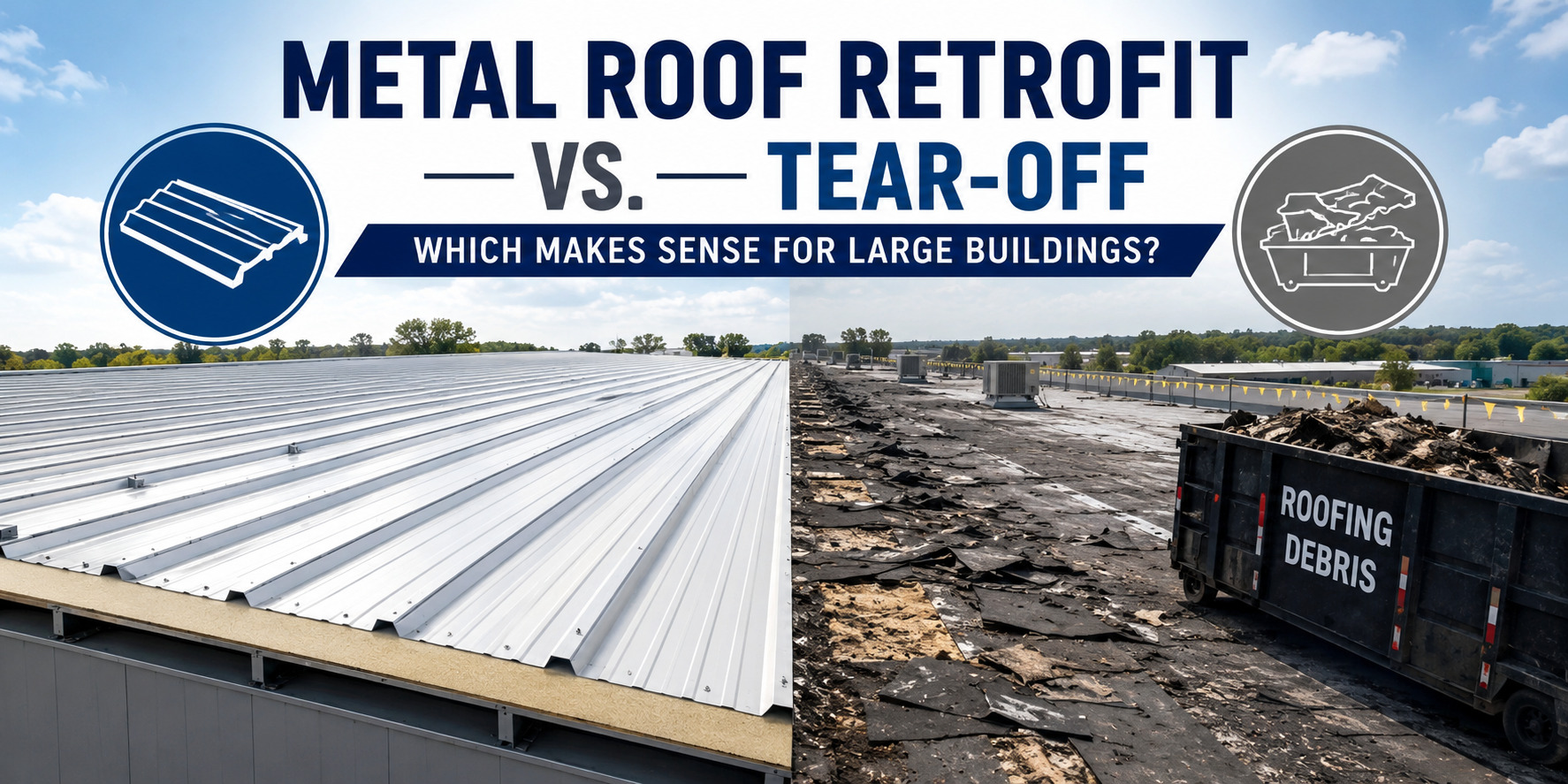
A retrofit keeps much of the current roof in place and installs a new roofing system above it. A tear-off removes the old roof completely before a new system is installed.
That difference affects project cost, installation time, business disruption, and future maintenance.
What Is a Metal Roof Retrofit?
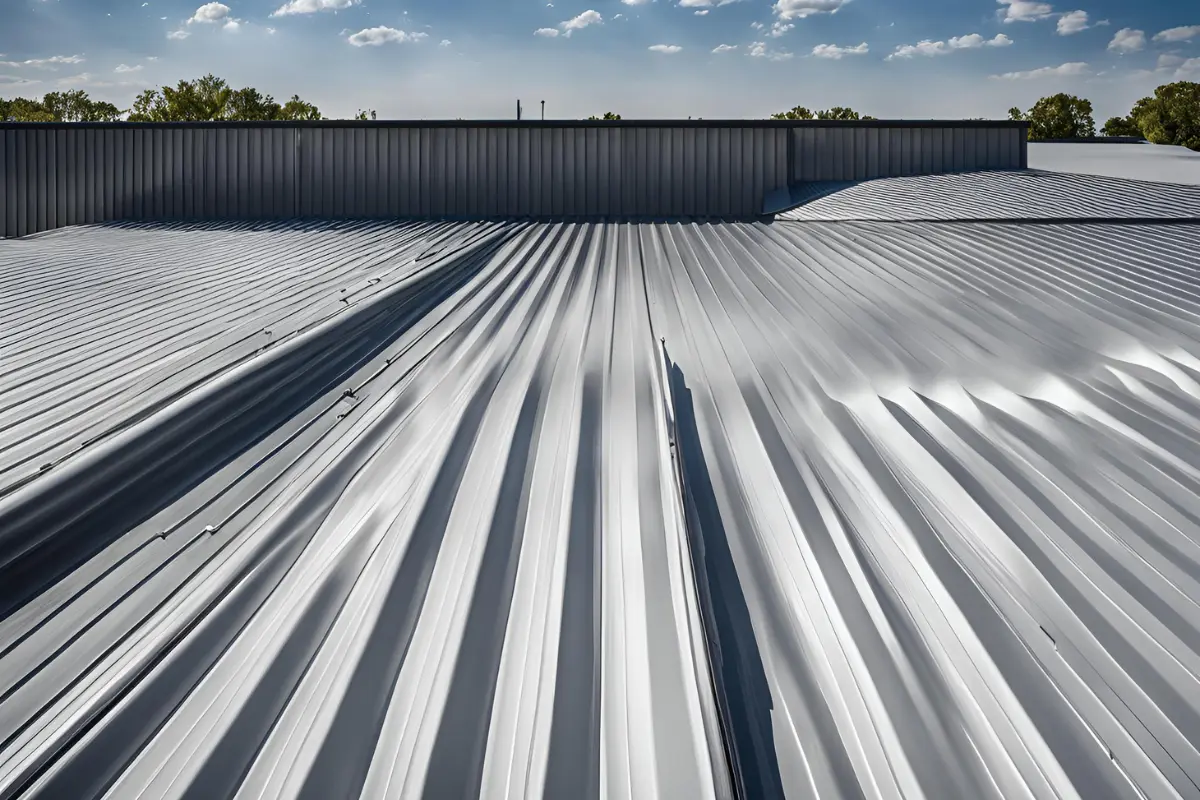
A metal roof retrofit is a roofing system installed over an existing roof.
Instead of removing the current roof, contractors build a new roofing system above it. This usually includes framing systems, insulation, waterproofing materials, and new metal panels.
Many retrofit projects involve upgrading to modern commercial metal roofing systems built for long-term durability and weather protection.
A retrofit system may include:
- Structural framing systems
- Additional insulation
- New metal roof panels
- Waterproofing materials
- Drainage improvements
The goal is not simply to cover the old roof. A properly designed retrofit creates a new roofing system while using the current roof as a stable base.
This approach often works well for large commercial buildings that still have strong structural support beneath the roof surface.
For example, a manufacturing plant may develop leaks around seams and fasteners after years of exposure to wind, rain, and temperature changes. Even though the roof leaks, the structure underneath may still be solid. In that situation, a retrofit may restore roof performance without the cost and disruption of tearing off the entire system.
What Is a Full Tear-Off?
A full tear-off is a complete roof replacement.
During this process, contractors remove the existing roofing system down to the roof deck. Once the roof is removed, the deck is inspected for damage before a new roofing system is installed.
A tear-off project usually includes:
- Removing old roofing materials
- Hauling away debris
- Inspecting the roof deck
- Repairing damaged areas
- Installing a completely new roofing system
This process allows contractors to inspect the roof structure closely and repair hidden damage before the new roof is installed.
A tear-off is often necessary when moisture, corrosion, or structural problems exist beneath the surface.
However, tear-offs are usually more disruptive than retrofits. They often require longer project timelines and higher labor costs because they involve demolition, debris removal, and possible structural repairs.
For occupied commercial buildings, this can create additional operational challenges during construction.
When a Metal Roof Retrofit Makes Sense
For many large commercial buildings, a retrofit can provide a strong balance between cost, performance, and reduced disruption.
Retrofits have become more common because they can extend roof life without requiring full demolition.
When the Roof Structure Is Still in Good Shape
One of the biggest factors in choosing a retrofit is the condition of the current roof structure.
A leaking roof does not always mean the entire roofing system has failed.
Many commercial roofs begin leaking because of worn seams, loose fasteners, or aging materials while the structure underneath remains stable.
A roof may still qualify for a retrofit if it has:
- Minor or moderate leaks
- Surface rust
- Aging fasteners
- Cosmetic wear
- Limited damage
This is why roof inspections matter so much. Surface leaks do not always show the full condition of the roof.
In some cases, recurring leaks may first be handled through targeted commercial roof repair before deciding if a retrofit or tear-off is necessary.
Imagine a warehouse that has experienced leaks during heavy rainstorms for several years. The owner assumes the roof must be completely replaced. After inspection, contractors discover the roof deck is still strong, and most of the problems are limited to aging panels and fasteners.
Instead of paying for a full tear-off, the owner chooses a retrofit system that restores performance while lowering project costs.
When Business Disruption Must Stay Low
Large commercial buildings often operate with very little downtime.
Warehouses ship products throughout the day. Manufacturing plants run production lines for long hours. Retail centers depend on steady customer traffic. Schools and healthcare facilities may also need to remain open during roofing projects.
Because of this, construction disruptions can become a major concern.
Retrofit systems help reduce disruption because the current roof remains in place during much of the installation process. This gives the building extra protection while crews install the new roofing system above it.
A retrofit may help reduce:
- Interior exposure to weather
- Construction debris
- Noise levels
- Interruptions to daily operations
For example, a distribution center storing valuable inventory may not want large sections of the roof exposed during a lengthy tear-off process. A retrofit may allow the facility to continue operating with fewer interruptions and less risk to the interior.
This is one reason many commercial property owners prefer retrofits when the roof structure still qualifies for one.
When Energy Efficiency Is Important
Energy costs are a major concern for many commercial buildings.
Heating and cooling large spaces can become expensive, especially during hot Kansas summers and cold winters.
Many retrofit systems include added insulation and reflective roofing materials that improve energy performance.
These upgrades may help:
- Lower cooling costs
- Improve indoor comfort
- Reduce strain on HVAC systems
- Improve insulation performance
Over time, these improvements may help lower operating expenses for the building.
Some property owners also explore commercial roof coatings as part of a broader plan to improve roof performance and energy efficiency.
For buildings with large roof surfaces, even moderate energy savings can add up over time.
When Budget Is a Major Concern
Cost plays a large role in commercial roofing decisions.
Retrofits often cost less upfront than tear-offs because they reduce several major project expenses.
These savings may include:
- Less demolition labor
- Lower disposal costs
- Reduced hauling expenses
- Shorter installation timelines
For owners managing large facilities or multiple commercial properties, these savings can become substantial.
Still, lower upfront cost should not be the only reason to choose a retrofit. The existing roof must remain structurally sound enough to support the system properly.
Trying to retrofit over major hidden damage can create larger problems later.
When Reducing Waste Matters
A complete tear-off can create a large amount of construction waste.
Old roofing materials are often sent to landfills after removal.
Retrofits reduce this waste because much of the original roofing system stays in place.
For companies focused on sustainability goals or waste reduction, this can be an added benefit.
When a Full Tear-Off Makes More Sense
Although retrofits work well for many buildings, they are not always the best option.
Some roofs have hidden problems that make a full replacement the safer and smarter long-term solution.
When the Roof Has Structural Damage
If the roof structure has serious damage, a retrofit may not solve the problem.
Warning signs may include:
- Structural sagging
- Heavy rust or corrosion
- Damaged roof decking
- Long-term water damage
- Widespread leaks
A retrofit cannot repair major structural problems hidden beneath the roof surface.
For example, an older industrial building may have years of trapped moisture under the roof. Over time, this moisture can weaken decking and structural supports.
Even if the roof surface appears repairable, the structure underneath may no longer be strong enough.
In this situation, a tear-off allows contractors to remove damaged materials and repair the structure before installing a new roof.
When Moisture Damage Is Severe
Water damage can spread through a roofing system over time.
Moisture trapped inside the roof may lead to:
- Wet insulation
- Mold concerns
- Corrosion
- Interior damage
- Reduced insulation performance
When moisture damage becomes widespread, installing a retrofit over the roof may leave major problems hidden underneath.
A tear-off allows contractors to remove damaged materials completely and rebuild the roofing system properly.
When the Building Already Has Multiple Roof Layers
Some older commercial buildings already have several roofing layers installed over time.
At a certain point, adding another layer may create too much weight for the structure.
Too many roofing layers can also trap moisture and hide damage beneath the surface.
In these situations, building codes may require a full tear-off before another roof can be installed.
When the Owner Plans to Keep the Building Long-Term
Some property owners plan to keep their buildings for many years.
For these owners, a complete tear-off may provide greater long-term confidence because it allows the entire roofing system to be rebuilt from the deck upward.
Although the upfront cost is usually higher, a tear-off may provide better long-term reliability for buildings expected to remain in service for decades.
Looking Beyond the Initial Price
Many building owners focus heavily on the first project estimate they receive.
However, the lowest upfront price does not always create the best long-term value.
Roofing decisions should also include:
- Future maintenance costs
- Expected roof lifespan
- Energy savings
- Business disruption
- Repair risks
For example, a retrofit may save money upfront and reduce downtime for a busy warehouse.
On the other hand, a tear-off may prevent structural problems that could become much more expensive later.
The best decision usually comes from looking at the total long-term cost of the roof, not just the installation price.
Why Professional Roof Inspections Matter
Every commercial roof is different.
The size of the building, roof design, drainage system, weather exposure, and roof condition all affect which option makes the most sense.
That is why professional inspections are important before making a major roofing decision.
An experienced commercial roofing contractor can review:
- Structural condition
- Moisture intrusion
- Roof decking
- Fasteners
- Drainage systems
- Insulation condition
- Building code requirements
This becomes especially important in Kansas, where commercial roofs face hailstorms, strong winds, heavy rain, and major temperature swings throughout the year.
Choosing the wrong roofing approach can lead to repeated leaks, higher maintenance costs, and shorter roof life.
A detailed inspection helps building owners choose the right solution for their property and long-term plans.
Conclusion
Choosing between a metal roof retrofit and a full tear-off is a major decision for any commercial building owner. The right choice depends on the condition of the existing roof, the building’s operational needs, and the owner’s long-term goals.
For some properties, a retrofit offers a practical way to improve roof performance while reducing downtime, lowering construction waste, and extending the life of the roofing system. If the structure underneath the roof is still in good condition, a retrofit can provide strong long-term value without the disruption of full demolition.
For other buildings, a complete tear-off is the better option. Roofs with major structural damage, severe moisture problems, or multiple roofing layers often need a full replacement to solve underlying issues properly. Although a tear-off usually costs more upfront, it may provide greater long-term reliability for buildings expected to remain in service for many years.
Every commercial roof is different, which is why a professional inspection matters before making a final decision. A detailed evaluation can help identify hidden damage, estimate long-term costs, and determine which roofing solution makes the most sense for your property.
If your commercial building is dealing with leaks, storm damage, aging materials, or rising maintenance costs, Solid Rock Commercial Roofing can help you evaluate the best path forward.
Visit https://solidrockcorp.com/contact-us/ or call (316) 227-2628 to schedule your commercial roofing consultation today.
FAQs
What is a metal roof retrofit?
A metal roof retrofit is a roofing system installed over an existing commercial roof. Instead of removing the old roof completely, contractors add new framing, insulation, and metal panels above the current roof structure.
How is a roof retrofit different from a full tear-off?
A retrofit keeps much of the existing roof in place, while a tear-off removes the old roofing system completely before installing a new one. Tear-offs are usually more labor-intensive and disruptive than retrofits.
Is a metal roof retrofit less expensive than a tear-off?
In many cases, yes. Retrofits often cost less upfront because they reduce demolition labor, disposal fees, and installation time. However, the right choice depends on the condition of the existing roof.
How do I know if my commercial roof qualifies for a retrofit?
A professional roof inspection is the best way to determine this. Roofs with limited moisture damage and strong structural support are often good candidates for retrofits.
When is a full tear-off necessary?
A tear-off may be necessary if the roof has:
- Severe structural damage
- Widespread moisture intrusion
- Multiple existing roofing layers
- Damaged roof decking
- Major corrosion problems
In these situations, rebuilding the roofing system from the deck upward may be the safer long-term solution.
Can a retrofit improve energy efficiency?
Yes. Many retrofit systems include added insulation and reflective roofing materials that can help reduce heating and cooling costs for large commercial buildings.
Will a retrofit disrupt business operations?
Retrofits are often less disruptive than tear-offs because the existing roof remains in place during much of the installation process. This can help protect inventory, equipment, and interior spaces while work is being completed.
How long does a commercial roof retrofit last?
The lifespan depends on the roofing materials used, weather conditions, maintenance, and installation quality. Many professionally installed retrofit systems can provide decades of performance when properly maintained.
Are metal roof retrofits good for warehouses and industrial buildings?
Yes. Retrofits are commonly used on warehouses, manufacturing facilities, distribution centers, and other large commercial buildings because they can reduce downtime and installation disruptions.
Can a retrofit fix leaks permanently?
A properly designed retrofit system can address many common leak issues. However, the existing roof structure must first be evaluated to make sure there is no major hidden damage underneath.
Do commercial roof retrofits require maintenance?
Yes. Like any roofing system, retrofit roofs should receive regular inspections and maintenance to help extend roof life and catch small issues before they become larger problems.
How long does a commercial roof tear-off take?
Project timelines depend on building size, weather conditions, roof complexity, and structural repairs. Tear-offs generally take longer than retrofits because the old roof must be removed before the new system is installed.
Can multiple roofing layers create problems?
Yes. Too many roofing layers can add excess weight, trap moisture, and hide damage beneath the surface. Some building codes also limit how many roofing layers are allowed.
What types of buildings benefit most from roof retrofits?
Retrofits are often a good fit for:
- Warehouses
- Manufacturing plants
- Distribution centers
- Schools
- Retail centers
- Office buildings
especially when minimizing operational downtime is important.
Who should I contact for a commercial roof evaluation?
Solid Rock Commercial Roofing provides commercial roof inspections, retrofits, repairs, and replacement services for buildings in Wichita and surrounding areas.
Visit https://solidrockcorp.com/contact-us/ or call (316) 227-2628 to schedule a consultation.
This article is a collaboration between Solid Rock Corporation and OpenAI’s ChatGPT. Created on May 26, 2026, it combines easy-to-read information with Solid Rock’s expert oversight to ensure accuracy and relevance.
Recommended Reading
Retrofit Roofing Systems: Benefits and Considerations for Commercial Buildings
This article explores how retrofit roofing systems can improve energy performance, reduce disruption, and extend roof life for commercial facilities. It also discusses lifecycle costs and operational considerations that facility managers should evaluate before choosing a roofing strategy.
URL:https://www.facilitiesnet.com/roofing/article/Retrofit-Roofing-Systems-Can-Offer-Multiple-Benefits–19468
Recover or Replace? Making the Right Roofing Decision
This resource examines the factors commercial property owners should weigh when deciding between recovering an existing roof or performing a full replacement. It provides useful insight into moisture issues, structural concerns, and long-term cost planning for large facilities.
URL:https://www.buildings.com/building-systems-om/roofing/article/10192355/recover-or-replace
Roof Recover vs. Roof Replacement: What Facility Managers Need to Know
This article provides a detailed look at the technical and financial differences between roof recover systems and complete roof replacement projects. It is particularly valuable for facility managers and commercial building owners evaluating lifecycle performance and code compliance considerations.
URL:https://www.constructionspecifier.com/roof-recover-vs-roof-replacement-what-facility-managers-need-to-know/