that create fewer installation disruptions.
A professionaChoosing the right roofing system for a commercial building is a major decision. A commercial roof does much more than keep rain out of a building. It also affects energy costs, maintenance budgets, repair schedules, and the long-term value of the property.
For owners of warehouses, office buildings, retail stores, schools, manufacturing plants, and other commercial properties, the roof must handle years of weather exposure and daily wear. In Kansas, that includes strong winds, hailstorms, heavy rain, summer heat, and freezing winter temperatures.
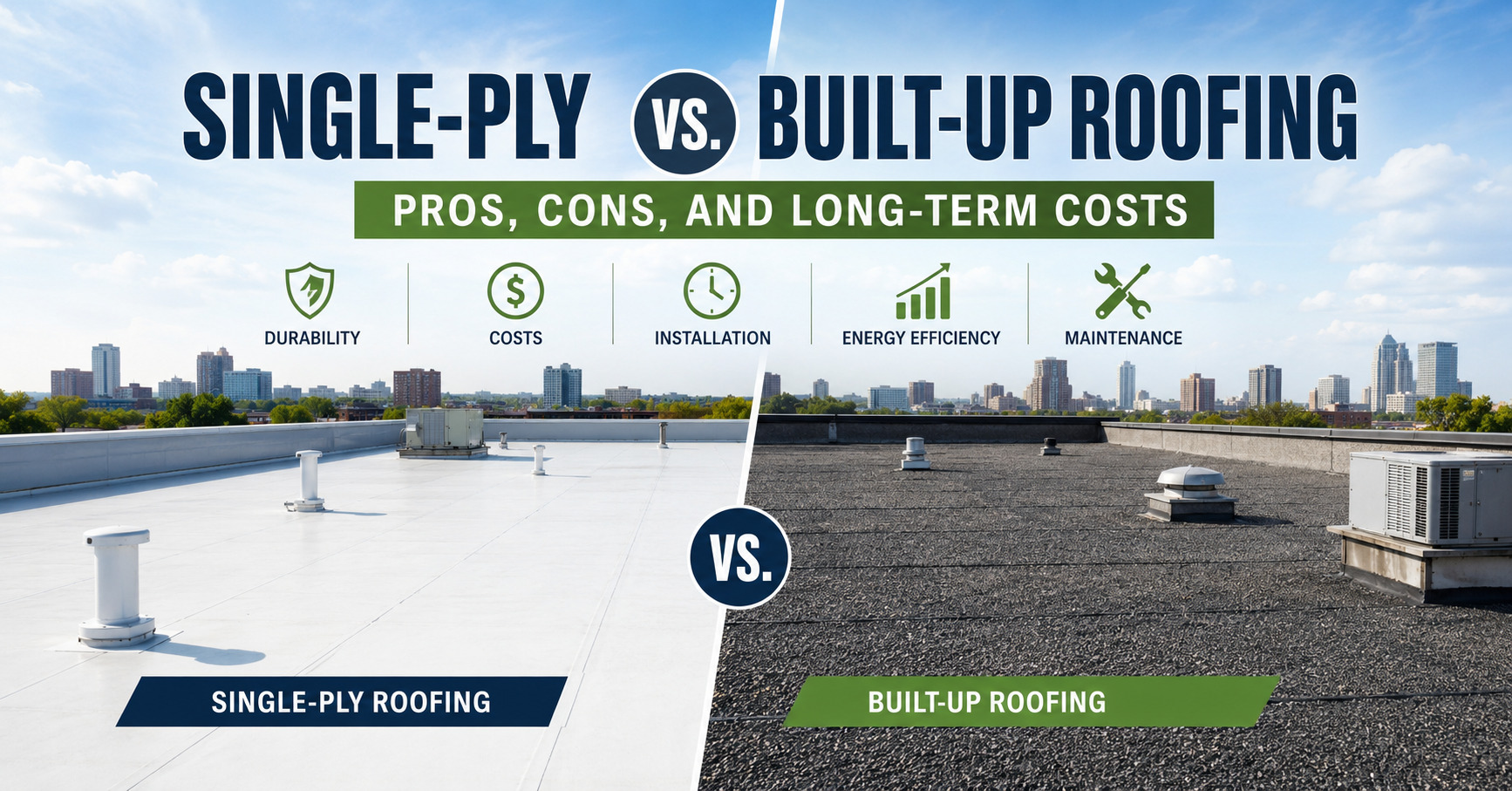
Two of the most common roofing systems used on flat and low-slope commercial buildings are single-ply roofing and built-up roofing, also known as BUR roofing. Both systems are widely used across the commercial roofing industry, but they are built differently and offer different advantages.
Some property owners focus on lower installation costs. Others care more about durability, energy savings, or long-term maintenance expenses. The right roofing system depends on the building, the budget, and the owner’s long-term goals.
This guide explains how single-ply roofing and built-up roofing compare in areas such as installation, durability, maintenance, energy efficiency, and long-term costs. By understanding the strengths and weaknesses of each system, commercial property owners can make a more informed roofing decision.
Key Takeaways
- Single-ply roofing and built-up roofing (BUR) are two of the most common roofing systems used on commercial flat and low-slope buildings.
- Single-ply roofing systems, such as TPO, PVC, and EPDM, are known for faster installation, energy efficiency, and lightweight performance.
- BUR roofing systems use multiple protective layers, making them highly durable and resistant to foot traffic and punctures.
- TPO and PVC roofing membranes can help reduce cooling costs because their reflective surfaces reduce rooftop heat buildup.
- BUR roofing systems may be a better fit for buildings with heavy rooftop equipment or frequent maintenance traffic.
- Single-ply roofing projects are often completed faster, which can help reduce disruption for occupied commercial buildings.
- Both roofing systems can last 20 to 30 years or longer when properly installed and maintained.
- Long-term roofing costs include more than installation pricing. Maintenance, repairs, energy savings, and roof lifespan all affect total ownership costs.
- Regular roof inspections and maintenance help extend roof life and reduce the risk of expensive repairs.
- The best roofing system depends on the building’s design, usage, maintenance goals, budget, and long-term operational needs.
- Professional installation is critical for both roofing systems. Poor workmanship can shorten roof lifespan and increase repair costs.
- Commercial property owners should work with an experienced roofing contractor to evaluate roofing options and determine the best solution for their facility.
What Is Single-Ply Roofing?
Single-ply roofing is a commercial roofing system made from one waterproof membrane layer. These systems are commonly installed on flat and low-slope roofs because they are lightweight, flexible, and faster to install than many multi-layer roofing systems.
Single-ply roofing has become one of the most popular roofing choices for commercial buildings in the United States. Many building owners choose it because it offers a good balance between performance, installation speed, and energy efficiency.
The three main types of single-ply roofing systems are TPO, PVC, and EPDM.
TPO Roofing
TPO stands for Thermoplastic Polyolefin. TPO roofing is known for its bright white surface, which reflects sunlight and helps reduce heat buildup on the roof.
Because of its reflective surface, TPO roofing may help lower cooling costs during hot summer months. This can be especially helpful for large commercial buildings that use significant amounts of air conditioning.
TPO roofing also uses heat-welded seams. When installed correctly, these seams help create a strong waterproof barrier.
Property owners researching commercial roofing systems often choose TPO because it offers energy efficiency along with dependable performance.
PVC Roofing
PVC roofing is similar to TPO in several ways, but it also provides added protection against chemicals, grease, and oils.
Because of this, PVC roofing is commonly installed on:
- Restaurants
- Manufacturing facilities
- Industrial buildings
- Commercial kitchens
PVC roofing membranes are also known for strong seam strength and long-term flexibility.
EPDM Roofing
EPDM roofing is a rubber roofing membrane that has been used on commercial buildings for decades. EPDM is known for its flexibility and weather resistance.
This roofing system performs well during temperature changes, making it a good choice for climates with both hot summers and cold winters.
Why Building Owners Choose Single-Ply Roofing
Many commercial property owners choose single-ply roofing because installation is often faster than with built-up roofing systems. Since these systems use fewer layers, roofing crews can usually complete projects more quickly.
For example, a warehouse operating seven days a week may want a roofing system that reduces business disruption during installation. In many cases, single-ply roofing can help shorten project timelines.
When properly installed and maintained, many single-ply roofing systems can last between 20 and 30 years.
What Is Built-Up Roofing (BUR)?
Built-up roofing, often called BUR roofing, is one of the oldest commercial roofing systems still used today. Unlike single-ply roofing, BUR systems are made from several layers of materials stacked together to create a thick waterproof surface.
A traditional BUR system usually includes:
- Layers of asphalt or bitumen
- Reinforcing fabric layers
- A protective top surface made from gravel or coating materials
Because BUR systems use multiple layers, they are often thicker and heavier than single-ply roofing systems.
Why BUR Roofing Is Known for Durability
One of the biggest advantages of BUR roofing is durability. The multiple layers help create extra protection against water intrusion and physical damage.
This added thickness can help BUR roofing resist:
- Foot traffic
- Equipment movement
- Minor punctures
- Surface wear
For example, a manufacturing facility with workers frequently servicing rooftop equipment may benefit from the stronger surface protection that BUR roofing provides.
Waterproofing Benefits
BUR roofing systems are also known for their backup waterproofing protection. Since the system includes several layers, damage to one area may not immediately cause a leak inside the building.
Many facility managers value this added protection because roof leaks can damage inventory, equipment, ceilings, insulation, and flooring.
BUR Installation Considerations
Although BUR roofing offers strong durability, installation usually takes longer than single-ply roofing installation. Roofing crews must apply several layers to complete the system.
BUR installation may also create stronger odors because of the asphalt-based materials used during construction. This can be important for occupied office buildings, schools, healthcare facilities, and retail stores.
With proper installation and regular maintenance, BUR roofing systems can also last 20 to 30 years or more.
Installation Differences Between Single-Ply and BUR Roofing
Installation methods are one of the biggest differences between these roofing systems.
Single-ply roofing is usually faster to install because it uses fewer materials and fewer layers. Large membrane sheets allow roofing crews to cover large roof areas quickly.
This may help reduce:
- Labor costs
- Project timelines
- Business disruption
For occupied commercial buildings, shorter installation schedules may help reduce interruptions for employees, customers, tenants, and visitors.
Single-ply systems also tend to create fewer odors during installation compared to BUR systems.
BUR roofing installation takes more time because crews must build the roof layer by layer. This process requires more labor, planning, and coordination.
Weather can also affect BUR installation more heavily. Rain, cold temperatures, or changing weather conditions may slow the installation process.
Commercial roofs with many rooftop units, drains, skylights, and vents may require additional installation work regardless of roofing type.
Property owners planning a commercial roof replacement should think about how installation timelines may affect building operations and daily business activity.
No matter which roofing system is chosen, installation quality is extremely important. Even a high-quality roof can fail early if it is not installed correctly.
Durability and Roof Performance
Commercial roofs deal with years of weather exposure and daily stress. In Kansas, roofs must handle:
- Hailstorms
- Heavy rain
- High winds
- Strong sunlight
- Freeze-thaw cycles
- Temperature swings
Both single-ply and BUR roofing systems offer good long-term performance, but they perform differently in certain situations.
Single-Ply Roofing Durability
Single-ply roofing systems are designed to remain flexible during temperature changes. Materials such as TPO and PVC can expand and contract without cracking easily.
Heat-welded seams on TPO and PVC systems also help improve waterproofing strength.
However, because single-ply systems use one membrane layer, they can be more vulnerable to punctures in high-traffic areas.
For example, maintenance workers servicing rooftop HVAC systems may accidentally damage the membrane if tools or sharp equipment contact the roof surface.
To help protect these areas, roofing contractors often install walkway pads around rooftop equipment.
BUR Roofing Durability
BUR roofing systems are generally thicker than single-ply systems. The layered construction helps improve puncture resistance and overall toughness.
Buildings with heavy rooftop traffic may benefit from this added durability.
BUR systems also provide multiple layers of waterproofing protection. If one layer becomes damaged, the remaining layers may continue protecting the building.
Roof Maintenance Matters
No commercial roofing system is maintenance-free.
Both roofing types should receive:
- Regular roof inspections
- Drain cleaning
- Flashing checks
- Storm damage inspections
- Small repairs when needed
Regular maintenance can help extend roof life and reduce the risk of expensive repairs later.
Energy Efficiency and Sustainability
Energy efficiency has become more important for commercial building owners over the last several years. Heating and cooling costs can have a major effect on building operating expenses.
Many single-ply roofing systems are designed to reflect sunlight and reduce rooftop heat buildup.
Reflective Roofing Benefits
TPO and PVC roofing membranes often use bright white surfaces that reflect solar heat instead of absorbing it.
This may help:
- Lower cooling costs
- Reduce rooftop temperatures
- Improve indoor comfort
- Reduce strain on HVAC systems
Large warehouses and retail buildings may see noticeable energy savings during hot summer months.
BUR Roofing and Energy Efficiency
BUR roofing systems can also support energy efficiency goals when paired with reflective coatings and proper insulation.
Traditional gravel-surfaced BUR roofs may absorb more heat than reflective single-ply roofing systems, but upgraded coating systems can help improve performance.
Building owners interested in extending roof life and improving reflectivity may also explore commercial roof coatings as part of a roof maintenance plan.
Insulation Plays a Major Role
Roof insulation also affects energy performance. A well-insulated roof system can help buildings stay cooler in summer and warmer in winter.
Kansas weather places heavy demands on commercial roofs throughout the year. Roofing systems must perform during heat waves, storms, freezing temperatures, and severe weather conditions.
Choosing the right roofing system for the local climate can improve both performance and long-term value.
Long-Term Cost Comparison
Many building owners focus heavily on upfront roofing costs. While installation price matters, long-term ownership costs often provide a clearer picture of the roof’s true value.
Initial Installation Costs
Single-ply roofing systems often cost less to install because they require fewer materials and less labor time.
BUR roofing systems may cost more upfront because they involve multiple layers and more labor-intensive installation.
However, installation cost is only one part of the total financial picture.
Long-Term Maintenance Costs
Over the life of a commercial roof, owners may pay for:
- Roof inspections
- Repairs
- Storm damage restoration
- Surface maintenance
- Drainage work
- Roof replacement planning
Single-ply systems may require seam inspections and membrane repairs over time.
BUR systems may require coating updates, gravel maintenance, or layered repairs depending on roof condition.
Energy Savings and Operating Costs
Reflective roofing systems may help lower cooling costs year after year. These savings can help offset installation costs over time.
For example, a large warehouse with high summer cooling expenses may benefit from the reflective surface of a TPO roofing system.
Roof Lifespan and Budget Planning
Commercial property owners often plan roofing expenses years in advance. Understanding expected roof lifespan and maintenance needs can help improve long-term budgeting.
A roofing system with lower upfront costs may not always be the least expensive option over 25 years. Repair frequency, maintenance costs, and energy savings all affect long-term value.
This is why many facility managers compare roofing systems using lifecycle cost analysis instead of looking only at installation pricing.
Which Roofing System Is Right for Your Building?
There is no single roofing system that works best for every commercial property.
The right choice depends on:
- Building type
- Roof traffic
- Budget goals
- Energy priorities
- Maintenance expectations
- Installation timelines
For example, a large distribution center may prioritize energy efficiency and faster installation. A manufacturing facility with frequent rooftop traffic may care more about puncture resistance and long-term durability.
Building occupancy also matters. Office buildings, schools, and healthcare facilities may prefer roofing systemsl roof inspection can help property owners determine which roofing system best fits the building’s needs.
An experienced commercial roofing contractor can evaluate:
- Existing roof conditions
- Drainage performance
- Insulation needs
- Roof traffic patterns
- Weather exposure
- Budget priorities
The best roofing decisions are based on the building’s specific use and long-term goals.
Why Professional Installation Matters
Even high-quality roofing materials can fail if installation is done incorrectly.
Problems such as:
- Poor seam installation
- Flashing mistakes
- Drainage issues
- Improper surface preparation
can shorten roof life and increase repair costs.
Experienced commercial roofing contractors understand how weather conditions, roofing materials, and installation methods affect long-term roof performance.
Routine maintenance is also important after installation. Regular inspections can help identify small roofing issues before they become major leaks or expensive structural damage.
For commercial property owners, roofing should be treated as a long-term investment that requires proper installation and ongoing maintenance.
Conclusion
Choosing between single-ply roofing and built-up roofing is an important decision for any commercial property owner. Both systems offer strong advantages, but the right choice depends on how the building is used, the local weather conditions, long-term maintenance goals, and budget priorities.
Single-ply roofing systems are often selected for their faster installation, energy efficiency, and reflective surfaces that can help reduce cooling costs. These systems are commonly used on warehouses, office buildings, and retail properties where minimizing installation time and improving energy performance are important.
Built-up roofing systems continue to be a trusted choice for buildings that need strong durability and added protection against rooftop traffic and wear. Their layered construction can provide excellent waterproofing support and long-term performance for industrial and high-traffic facilities.
No roofing system is perfect for every building. The best results come from choosing a roofing solution that matches the building’s specific needs and long-term plans. Professional installation and regular maintenance also play a major role in how long a commercial roof lasts and how well it performs over time.
If you are planning a roof replacement or comparing commercial roofing systems for your property, Solid Rock Commercial Roofing can help. Our team works with commercial property owners across Wichita and surrounding Kansas communities to provide reliable roofing solutions built for long-term performance.
To schedule your consultation, visit https://solidrockcorp.com/contact-us/ or call (316) 227-2628 today.
Frequently Asked Questions (FAQs)
What is the difference between single-ply roofing and built-up roofing?
Single-ply roofing uses one waterproof membrane layer, while built-up roofing (BUR) uses several layers of asphalt, reinforcing fabrics, and protective materials. Single-ply systems are usually lighter and faster to install, while BUR systems are thicker and known for strong durability.
Which roofing system lasts longer: single-ply or BUR?
Both roofing systems can last 20 to 30 years or more when properly installed and maintained. Roof lifespan depends on factors such as weather exposure, maintenance, installation quality, and rooftop traffic.
Is single-ply roofing more energy efficient than BUR roofing?
Single-ply roofing systems like TPO and PVC are often more energy efficient because their reflective surfaces help reduce heat buildup on the roof. BUR systems can also improve energy efficiency when paired with reflective coatings and proper insulation.
Which roofing system is better for buildings with heavy rooftop traffic?
BUR roofing systems are often better for buildings with heavy rooftop traffic because their multi-layer construction provides added puncture resistance and durability.
Is single-ply roofing less expensive than BUR roofing?
Single-ply roofing systems often have lower upfront installation costs because they require fewer materials and less labor time. However, long-term costs depend on maintenance needs, repairs, energy savings, and roof lifespan.
What types of buildings commonly use single-ply roofing?
Single-ply roofing is commonly used on:
- Warehouses
- Office buildings
- Retail centers
- Schools
- Distribution facilities
These systems are popular because of their energy efficiency and faster installation process.
What types of buildings commonly use BUR roofing?
BUR roofing is often used on:
- Industrial facilities
- Manufacturing buildings
- Older commercial buildings
- Buildings with frequent rooftop maintenance traffic
Its layered design makes it a strong option for durability and waterproofing protection.
How often should commercial roofs be inspected?
Most commercial roofs should be professionally inspected at least twice a year, usually in the spring and fall. Roof inspections are also recommended after major storms or hail events.
Can roof coatings be used on single-ply or BUR roofing systems?
Yes. Certain commercial roof coatings can help extend roof life, improve reflectivity, and improve energy efficiency for both single-ply and BUR roofing systems, depending on the roof’s condition.
What causes commercial roof leaks?
Commercial roof leaks can happen because of:
Commercial roof leaks can happen because of:
- Damaged seams
- Punctures
- Flashing failures
- Poor drainage
- Storm damage
- Aging roofing materials
Regular maintenance and inspections can help identify small problems before they become larger leaks.
Why is professional commercial roof installation important?
Even high-quality roofing materials can fail if they are not installed correctly. Professional installation helps ensure proper seam strength, waterproofing performance, drainage, and long-term roof durability.
How do I choose the best roofing system for my commercial building?
The best roofing system depends on several factors, including:
- Building type
- Budget
- Energy goals
- Roof traffic
- Maintenance expectations
- Long-term ownership plans
A professional commercial roof inspection can help determine which system is the best fit for your property.
This article is a collaboration between Solid Rock Corporation and OpenAI’s ChatGPT. Created on May 19, 2026, it combines easy-to-read information with Solid Rock’s expert oversight to ensure accuracy and relevance.
Recommended Reading
The NRCA Roofing Manual: Membrane Roof Systems
The National Roofing Contractors Association (NRCA) provides detailed technical guidance on membrane roofing systems, including TPO, PVC, EPDM, and built-up roofing assemblies. This resource is valuable for facility managers and commercial property professionals who want a deeper understanding of system design, performance expectations, and maintenance considerations.
URL: https://www.nrca.net/
Cool Roofs and Energy Efficiency – U.S. Department of Energy
This article from the U.S. Department of Energy explains how reflective roofing systems can reduce rooftop temperatures, improve building efficiency, and lower cooling costs. It provides useful insights for commercial building owners evaluating energy-saving benefits tied to roofing system selection.
URL:https://www.energy.gov/energysaver/cool-roofs
Low-Slope Roofing Materials Guide – Buildings.com
Buildings.com offers a practical overview of common low-slope commercial roofing systems, including single-ply and built-up roofing. The article explores durability, maintenance requirements, and lifecycle considerations that can help property owners and facility managers compare roofing options more effectively.
URL:https://www.buildings.com/architecture/article/10192310/understanding-low-slope-roofing-options