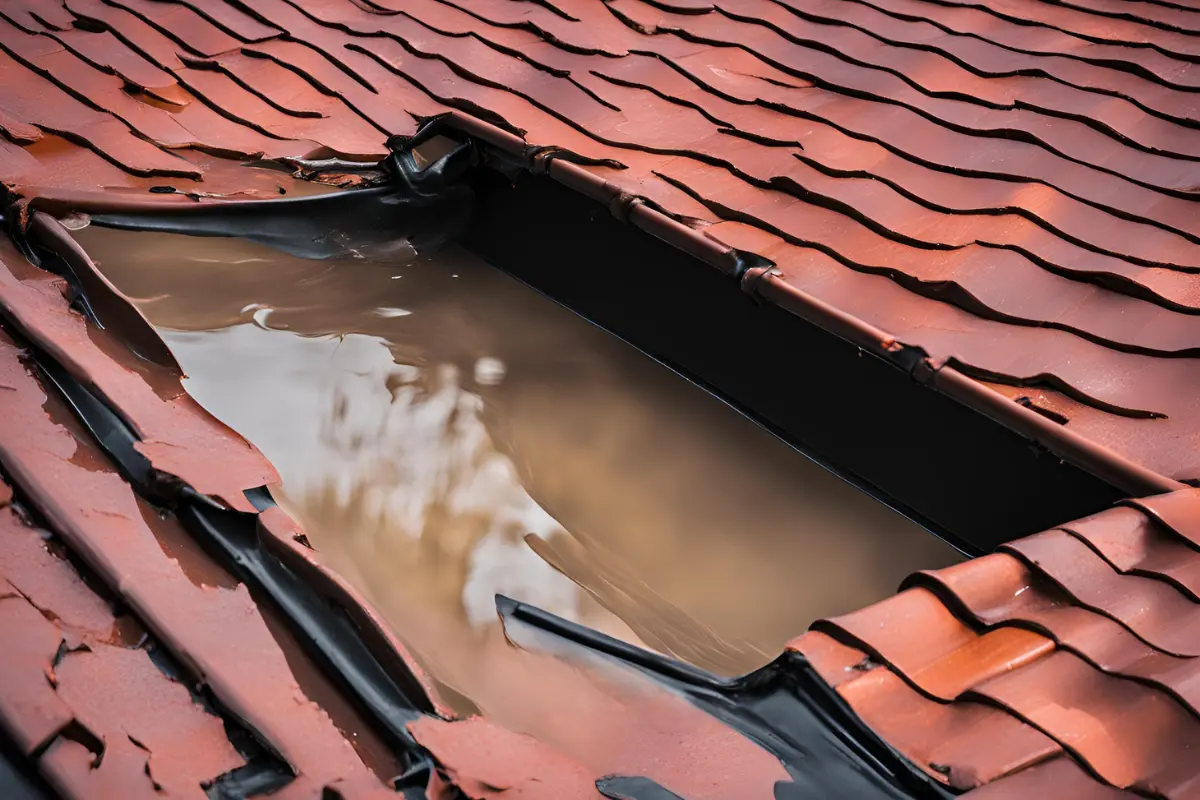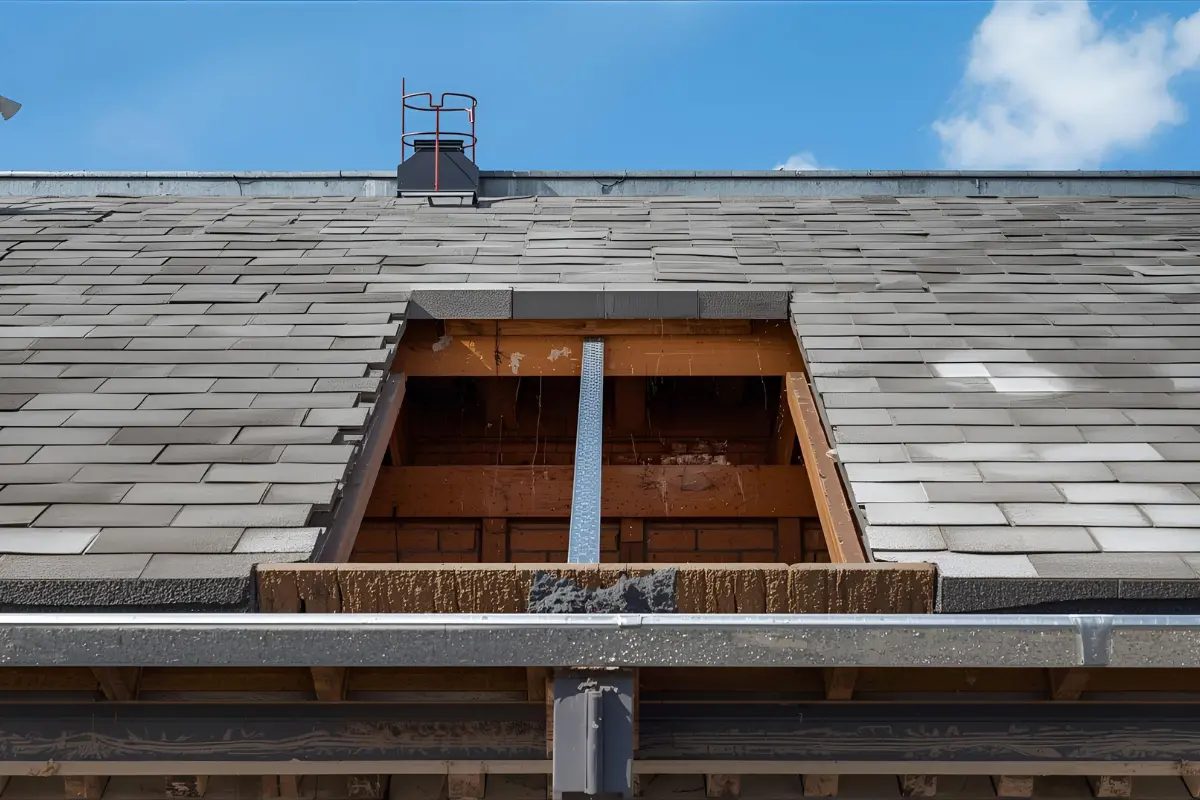
For commercial property owners in Wichita, the onset of fall brings brilliant foliage and cooler temperatures. However, it also presents a significant threat to the lifeblood of their roofing system: the drainage. Clogged commercial roof drains, scuppers, and gutters are not just minor maintenance issues; they are the silent enemy that actively works to destroy your roof from the inside out.
The inevitable debris from autumn—leaves, twigs, seed pods, and dirt—quickly accumulates, turning a clear drainpipe into a bottleneck. This simple clog is the catalyst for ponding water, a condition that transforms your commercial roof from a protective barrier into a structural liability.
At Solid Rock Commercial Roofing, we stress that proactive drain maintenance is the single most important action you can take this fall to prevent accelerated roof degradation and the catastrophic costs that follow.
Ponding Water: A Vicious Cycle of Destruction
A flat or low-slope commercial roof is designed to shed water, not hold it. Ponding water is defined by the roofing industry as water that remains on the roof surface for more than 48 hours after precipitation ends. Once this occurs, a devastating cycle of failure begins.
1. Structural Overload and Collapse Risk
The most immediate danger of ponding water is the sheer weight it adds to your building’s structure.
- Weight Calculation: One inch of water covering one square foot of roof surface weighs approximately 5.2 pounds.
- Real-World Impact: Consider a relatively small ponding area of just 20 feet by 20 feet (400 sq ft) with an average depth of 3 inches. This small pool adds over 6,240 pounds of weight to that section of the roof!
Over time, this sustained weight exceeds the design load of the roof deck, causing structural deflection (sagging). This deflection creates even deeper depressions, allowing more water to pool, which adds more weight, creating an even deeper sag—a vicious, compounding effect that significantly increases the risk of a roof collapse, especially under the added load of winter snow.
2. Accelerated Material Degradation and Voided Warranties
Roofing materials like TPO, EPDM, and modified bitumen are waterproof, but they are not designed for constant submersion. Ponding water accelerates their functional aging process dramatically.
- UV Intensification: Standing water acts as a magnifying glass, concentrating the sun’s UV rays and intensifying their damaging effect on the membrane below. Research indicates that ponding areas experience 40-60% faster deterioration than properly draining sections.
- Adhesive and Seam Failure: The constant exposure to water compromises the integrity of adhesives and sealants. Water forces its way through the slightest imperfection via hydrostatic pressure, causing seams to delaminate, flashing to separate, and the roof system to fail prematurely.
- Warranty Exclusion: This is a crucial financial risk. A review of major manufacturer warranties reveals that 85% contain specific ponding water exclusions. If a leak occurs in a ponding area, the manufacturer is likely to deny the insurance claim, leaving the business owner responsible for the full cost of repair or replacement.
3. Hidden Damage and Massive Financial Loss
Clogged drains lead to leaks that saturate the insulation, creating a series of expensive, hidden problems.
- Energy Loss: Saturated insulation loses its thermal efficiency (R-value). Wet insulation becomes a thermal bridge, forcing your HVAC system to work much harder to heat and cool the building. Energy studies suggest that buildings with significant roof ponding can experience 15-25% higher HVAC costs.
- Mold and Mildew: Stagnant water creates an ideal environment for biological growth. Once water infiltrates the roof assembly, mold can develop within 24 to 48 hours, leading to costly and hazardous mold remediation.
- Catastrophic Claims: The cost of fixing a simple clog pales in comparison to the resulting water damage. On average, water damage claims for commercial buildings are notoriously high. Some statistics estimate the mean loss of commercial water damage claims to be around $89,000 for large facilities, highlighting that the repair bill is only a fraction of the total expense.
The Fall Fix: Protecting Your Investment Now
For Wichita businesses, fall is the last-chance window to prepare for the inevitable moisture and freezing temperatures of winter. This is when debris accumulation is at its peak, making an inspection and drain clearing a non-negotiable task.
Your Fall Drain Maintenance Checklist:
- Clear All Debris: Inspect and remove all leaves, dirt, and branches from drain baskets, gutters, and scuppers.
- Test Water Flow: Ensure the water is running freely down the drainpipes, checking for any partial clogs deeper in the system that a hose or auger may be needed to clear.
- Inspect Drain Flashings: Check that the membrane material around the drain is securely fastened and free of cracks or gaps caused by thermal expansion over the summer.
- Schedule Professional Service: Engage a contractor like Solid Rock Commercial Roofing to perform a comprehensive fall inspection. We use specialized tools and expertise to identify potential ponding areas and make proactive repairs before winter weather turns small issues into six-figure disasters.
FAQs: The Truth About Commercial Roof Drainage
How can I tell if my roof has a ponding problem?
If you see visible pools of water on your roof 48 hours after it has stopped raining, you have a ponding problem. The water is not draining properly. Other signs include visible debris around drain openings, excessive bird activity (attracted by standing water), and, eventually, water stains on your interior ceilings.
How often should I have the drains and gutters cleaned?
We strongly recommend a professional drain cleaning and maintenance inspection at least twice a year—in the late fall (to clear summer and fall debris before winter snows) and in the early spring (to clear winter debris and check for freeze damage).
Can my insurance company deny a leak claim if it’s due to a clogged drain?
Yes, they can and often do. Standard commercial property insurance policies cover sudden and accidental damage (like a storm-related puncture) but exclude damage from gradual deterioration or lack of maintenance. If the claim adjuster determines the leak was caused by a long-neglected, clogged drain, the claim is likely to be denied.
Will simply clearing the debris fix the ponding water issue?
Clearing the debris will fix ponding caused by a clog. However, if the ponding persists after the drainage system is clear, the problem may be structural (deck deflection) or installation-related (inadequate slope). In this case, a roofer may recommend installing tapered insulation or additional drains to achieve positive drainage.
Conclusion: Act Now to Protect Your Business
For your Wichita commercial property, the integrity of your drainage system is synonymous with the longevity of your roof. The silent threat of clogged drains and the subsequent ponding water is the single most destructive yet preventable issue a business owner faces.
Don’t let autumn debris become the catalyst for a costly winter crisis that voids your warranty and halts your operations. Proactive maintenance is not an expense—it is the best investment you can make to protect your structural assets and your bottom line.Ready to protect your Wichita business with a solid roof? Contact Solid Rock Commercial Roofing today for a free consultation and let us help you find the perfect roofing solution.