I. Introduction
Fall has arrived in Wichita. The air is cooler, leaves are changing, and winter is on the way.
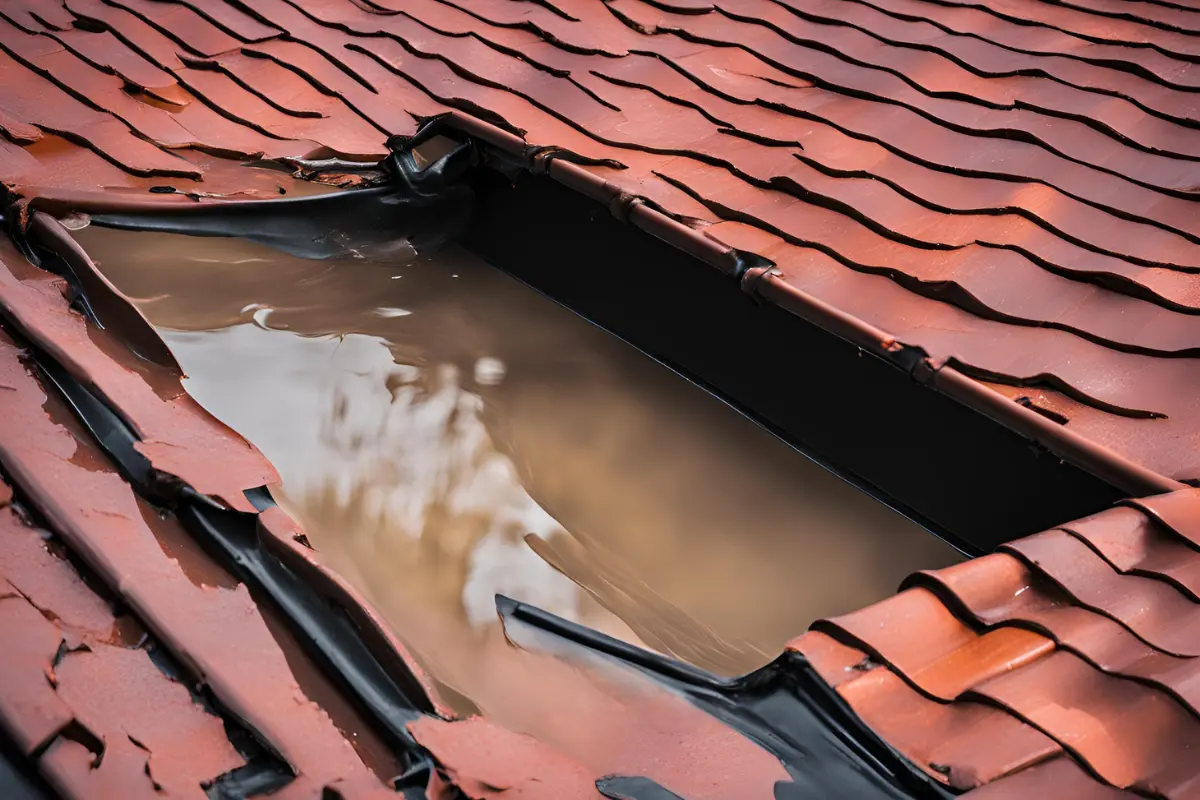
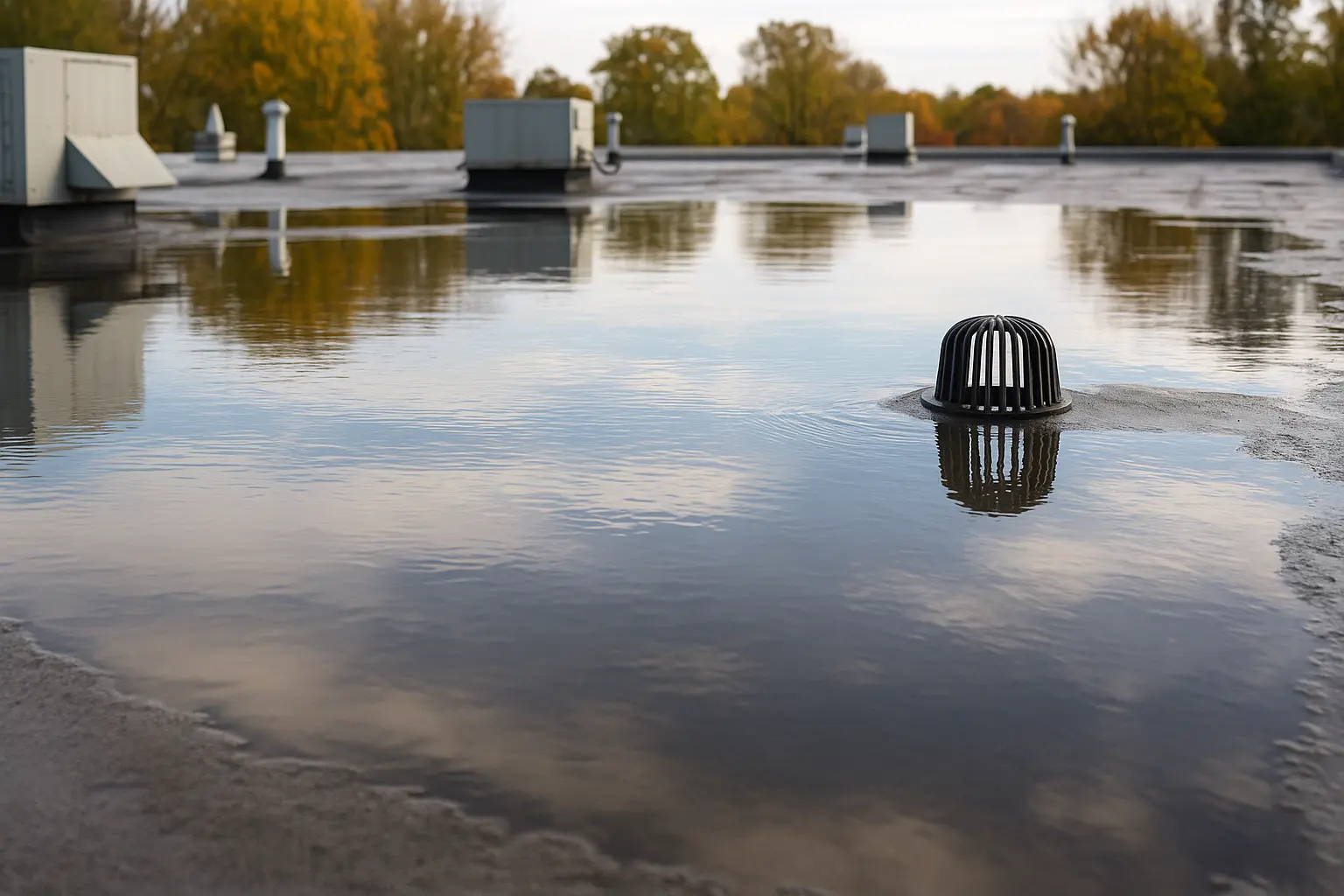
If your building has a flat or low-slope roof, now is the time to look up—especially after it rains. If water collects in pools and doesn’t drain after two days, that’s called ponding water, and it can become a big problem once freezing temperatures set in.
What looks like a harmless puddle now can cause serious damage later. Frozen water expands and can tear apart roofing materials, leading to costly leaks and repairs.
Taking care of ponding water in the fall helps protect your building through winter. Solid Rock Commercial Roofing explains why fall is the smart time to act—and how we can help.
Key Takeaways
- Ponding water is water that remains on a flat or low-slope roof for more than 48 hours after rainfall. It signals poor drainage and potential roof issues.
- Freezing temperatures make ponding water dangerous by expanding ice that can crack membranes, pull apart flashing, and block drains.
- Fall is the ideal season to inspect and fix ponding water problems—before winter weather makes repairs harder, slower, and more expensive.
- Waiting can lead to serious costs, including interior damage, mold growth, business disruption, and denied insurance claims.
- Wichita’s rapid freeze–thaw cycles and flat roof designs make local buildings especially vulnerable to winter roof failures.
- Solid Rock Commercial Roofing offers proven solutions, including drainage corrections, slope adjustments, waterproof coatings, and full roof assessments.
- Scheduling a fall inspection helps prevent roof leaks and winter emergencies—saving building owners thousands in potential damage.
- Visit solidrockcorp.com/contact-us or call (316) 227‑2628 to set up your inspection with Solid Rock Commercial Roofing.
II. What Is Ponding Water?
Ponding water is rainwater that stays on your roof for more than 48 hours. This usually happens on flat or slightly sloped roofs, especially when:
- The roof sags
- Drains are blocked
- Gutters aren’t working properly
- The original design didn’t allow for proper drainage
Picture a strip mall in Derby. After a fall rain, puddles form in the same spots on the roof and stay for days. That’s ponding. It means something needs to be fixed—before it causes bigger trouble.
Ponding water slowly wears down roofing materials, but the real risk comes when that water freezes.
III. Why Frozen Ponding Water Is Dangerous
Water expands by about 9% when it turns to ice [High Confidence; Source: NOAA]. That expansion creates pressure. If the water is sitting on your roof, that pressure pushes into the roof membrane, seams, flashing, and any weak areas.
When ponding water freezes, it can:
- Crack or split the roof membrane
- Pull apart flashing and seams
- Clog drains with ice
- Cause repeated damage during freeze-thaw cycles
Imagine a warehouse in Wichita. A shallow puddle sits near a vent all fall. One night, it freezes. That pressure causes a small crack in the membrane. The next day, the ice melts, and water leaks into the insulation. Weeks later, you’ve got ceiling stains, soggy walls, and an unexpected repair bill.
IV. Why Fall Is the Right Time to Take Action
Fall offers the best chance to solve ponding issues before the cold arrives. Here’s why:
- The weather is cooler and dry, which is safer for roofing crews
- Repairs can be planned and completed before snow and ice make the roof slippery or dangerous
- Emergency calls haven’t yet filled up contractors’ winter schedules
Solid Rock offers several reliable solutions, including:
- Adding tapered insulation to improve roof slope
- Resloping problem areas
- Repairing or unclogging roof drains and scuppers
- Applying waterproof coatings to vulnerable areas
These steps are easier and less expensive in the fall. Once winter sets in, access becomes harder and repair times get longer.
V. Waiting Can Cost You More
Many building owners delay fixing ponding water because it doesn’t seem urgent. But ignoring it can lead to much higher costs.
Here’s what can happen if you wait:
- Interior water damage
- Business interruptions
- Mold growth
- Expensive winter repairs
- Denied insurance claims due to lack of maintenance
Take the example of a Newton office building. The owner puts off repairs in October. In January, a hard freeze splits the roof membrane. Water leaks inside. Now, repairs cost over $15,000—and tenants can’t use the space for several days.
Fixing it in the fall would’ve cost far less—and avoided the mess.
VI. Why Wichita Roofs Are at Risk
Wichita weather can change quickly. It might be 70°F during the day and below freezing at night. This back-and-forth causes roofing materials to expand and contract, especially if water is trapped on the surface.
Many commercial roofs in the area use single-ply systems like EPDM or TPO. These materials are durable but can fail if ponding water freezes repeatedly. Flat roofs also tend to collect snow, and if the drains are blocked, that snowmelt adds to the ponding.
Ice storms are also a risk in this region, making roof drainage even more important.
VII. How Solid Rock Handles Ponding Water Problems
Solid Rock Commercial Roofing uses a step-by-step process to find and fix ponding water issues before they become winter emergencies. Our process includes:
- On-site inspection – We walk the roof and note where water collects
- Moisture scanning – We use tools to detect wet spots under the roof surface
- Slope and drainage review – We check how well your roof moves water
- Repair recommendations – We tailor fixes to your roof’s structure and budget
- Follow-up check – After repairs, we confirm everything is draining as it should
We’ve helped commercial property owners in Wichita, Derby, and Newton protect their buildings for years. Our team is local, experienced, and ready for the challenges of Kansas weather.
VIII. Don’t Wait for the Cold to Catch You Off Guard
Once winter weather hits, your options shrink. Snow, ice, and freezing temps make roof work slower, more dangerous, and more expensive. Some materials can’t be installed when it’s too cold.
By acting now, you avoid:
- Long wait times for emergency repairs
- Slippery work conditions
- Extra fees for cold-weather labor
- Potential water damage from the first freeze
Fall gives you time—but that time runs out fast.
IX. Conclusion
Ponding water may seem like a small issue. But when winter comes, it can cause real damage to your roof and your business.
Fall is the smart season to deal with it. The weather is mild. Repairs are easier. And you’ll avoid costly surprises once freezing temperatures arrive.
Protect your building now—before the damage begins.
Call Solid Rock Commercial Roofing at (316) 227-2628 or visit our Contact Us page to schedule your fall roof inspection.
Want to know more about how we help? Read about our commercial roof repair services or see how we handle flat roof drainage solutions.
We’ll help you take care of ponding water now, so your roof stays strong all winter long.
Solid Rock Commercial Roofing – built on integrity. Proven by performance.
FAQs About Ponding Water and Winter Roof Risks
What is ponding water on a roof?
Ponding water is rainwater that remains on a flat or low-slope roof for more than 48 hours after a storm. It often occurs due to poor drainage, sagging, or clogged roof drains.
Why is ponding water a problem in the winter?
When water freezes, it expands. This expansion can crack roofing membranes, damage seams, block drains with ice, and cause leaks—especially during freeze-thaw cycles common in Kansas winters.
What types of roofs are most affected by ponding water?
Flat or low-slope commercial roofs, especially those with aging drainage systems or poor design, are most affected. Common materials like EPDM or TPO are durable but still vulnerable to ponding and ice damage.
What are the signs that my roof has a ponding problem?
Look for puddles that stay in the same areas after rain, water stains on ceilings, sagging roof sections, or vegetation/mold growth on the roof.
Why should I fix ponding water before winter?
Fall offers safe working conditions, better contractor availability, and fewer weather delays. Fixing ponding before freezing weather arrives can prevent major damage and save money on emergency repairs.
What services does Solid Rock Commercial Roofing provide for ponding issues?
Solid Rock offers inspections, moisture scanning, slope adjustments, tapered insulation, drain repairs, and protective coatings—all customized for your roof’s needs.
How much does it cost to fix ponding water?
Costs vary based on roof size and repair type, but preventive maintenance in the fall is far more affordable than emergency winter repairs or interior water damage.
How do I schedule a fall roof inspection?
You can call Solid Rock Commercial Roofing at (316) 227‑2628 or fill out our online form at solidrockcorp.com/contact-us to schedule an appointment.
This article is a collaboration between Solid Rock Corporation and OpenAI’s ChatGPT. Created on October 6, 2025, it combines AI-generated draft material with Solid Rock’s expert review to ensure accuracy and usefulness.