Buying a commercial building is a big decision. Before you close, you will likely look at many parts of the property. You may check the location, parking, square footage, heating and cooling systems, electrical systems, and interior condition.
The roof deserves attention, too.
A commercial roof can be hard to judge during a normal property tour. If you walk through the building on a dry day, you may not see any signs of a roof problem. The ceilings may be dry and clean, and there may be no active leaks.
But that does not tell you the full history or condition of the roof.
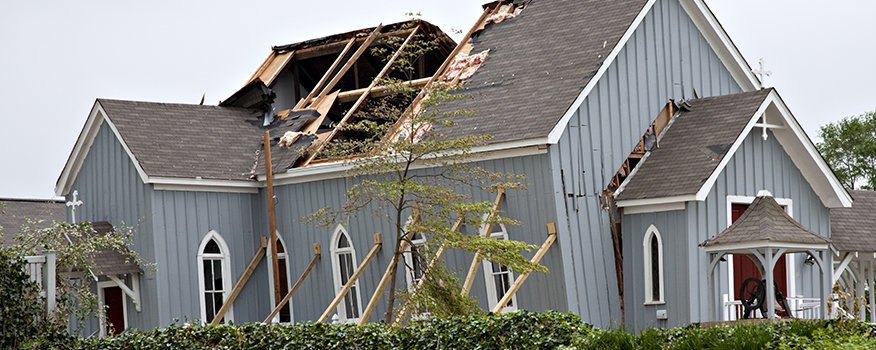
The roof may have leaked in the past. Some areas may have been repaired several times. Water may collect on parts of the roof after heavy rain. Flashing around an HVAC unit may need work. The roof may also be reaching a point where repairs, restoration, or replacement should be planned.
If you are buying commercial property in Wichita, learning about the roof before closing can help you better understand the building you may soon own.
This article is not legal, financial, or real estate advice. A roof evaluation is also not a replacement for a full commercial property inspection. Instead, it can give you more information about one of the major systems that protects the building.
Key Takeaways
- Check the roof before closing on a commercial property. A dry interior or clean ceiling does not tell you everything about the roof’s condition. Past leaks, repairs, drainage problems, and worn materials may not be easy to see during a normal property tour.
- Learn what roofing system is installed. Knowing the roof type, approximate age, and history of major roofing work can help you better understand its current and future maintenance needs.
- Ask about previous leaks and repairs. A single repair may not be a major concern, but repeated work in the same area can be a reason to have that location examined more closely.
- Request available roofing records. Repair invoices, inspection reports, maintenance records, installation documents, and warranty information can help explain what has happened to the roof over time.
- Pay attention to drainage and rooftop equipment. Drains, gutters, scuppers, HVAC units, vents, pipes, and other roof penetrations are all areas that may need closer examination.
- A roofing problem does not always require a complete replacement. Depending on the roof and its condition, the appropriate work may involve maintenance, repairs, a roof coating, restoration, spray foam roofing, or replacement.
- Try to identify near-term roofing needs before taking ownership. A roof evaluation and estimate can help clarify what work appears necessary now or may need to be planned for soon.
- Use roof-specific findings as one part of your property due diligence. A commercial roofing evaluation can provide useful information about the roof, but it does not replace a full property inspection or legal, financial, or real estate advice.
Why the Commercial Roof Deserves Attention Before Closing
When you buy a commercial building, you are also buying the roofing system that comes with it.
That roof protects the structure and everything below it. Depending on the building, that may include offices, employees, tenants, inventory, machinery, products, or customer areas.
Roof problems are not always easy to spot from inside.
For example, imagine that you are touring a warehouse on a sunny afternoon. The floor is dry. You see no water stains. Nothing inside suggests there is a roof problem.
On the roof, however, the situation could be different.
There might be several old patches around an HVAC unit. There could be damaged flashing along one area. You might also see signs that water often sits in a low spot after rain.
None of these findings automatically means the roof is failing or needs immediate replacement. But they are things you would probably want to know before you become responsible for the property.
The opposite can also be true. An older roof may look weathered but still be in usable condition with proper maintenance and repairs.
Instead of asking only, “Is this a good roof or a bad roof?” it is often more helpful to ask, “What condition is this roof in, and what work might it need?”
A commercial property roof inspection can help answer those questions.
Start With the Roof’s Current Condition
A commercial roof should be looked at as a complete system. One clean area does not mean the whole roof is in good condition. In the same way, one damaged area does not mean the entire roof is failing.
A commercial roofer can examine different parts of the system to get a better idea of its condition.
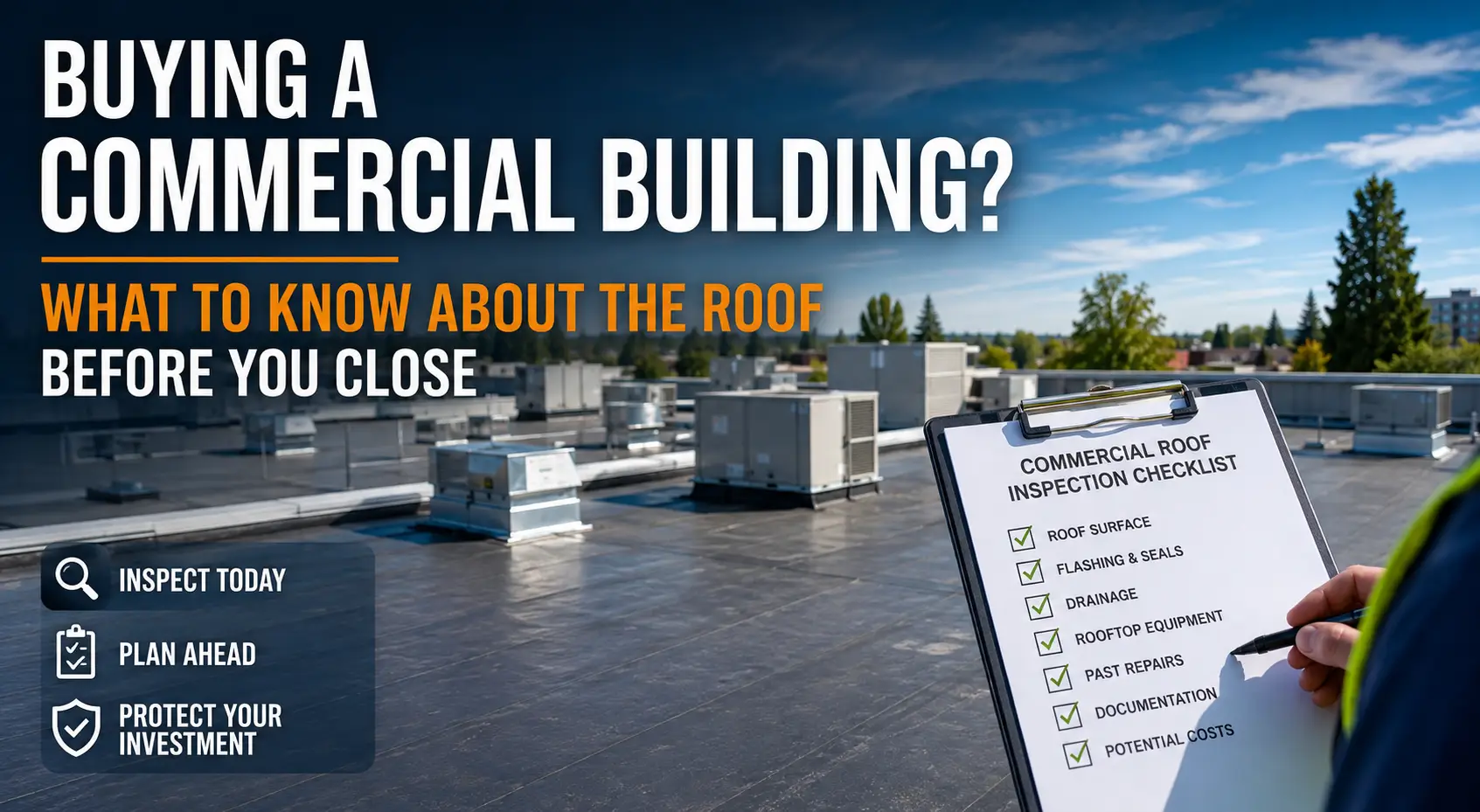
This may include the main roof surface, seams, edges, flashing, drains, and areas where pipes or equipment pass through the roof. The roofer can also look for cracks, splits, punctures, damaged materials, old patches, and signs of standing water.
Previous repairs can provide useful information as well.
A patched area is not always a warning that something is seriously wrong. Commercial roofs need repairs from time to time. Weather, foot traffic, rooftop equipment, and normal aging can all lead to maintenance needs.
A pattern of repairs in one location may deserve more attention.
Suppose the area around one HVAC unit has been patched four times. You may want to know why that spot needed so much work. Was the source of the problem found and fixed? Is there still a problem with the flashing? Is the equipment itself causing trouble for the roofing around it?
These questions are more useful than simply counting the number of patches.
Roof age also needs context. An older roof does not always need immediate replacement. A newer-looking roof is not always free from problems.
The goal is to understand the roof’s current condition and what that condition may mean for you as the next owner.
Find Out What Kind of Roof Is on the Building
Commercial buildings can have several types of roofing systems.
The building you are looking at might have a single-ply membrane, built-up roofing, modified bitumen, metal roofing, spray polyurethane foam, or a coated roofing system.
Some properties are more complicated.
A building may have been expanded over the years. One section could have one roofing system while an addition has another. Parts of the roof may have been replaced at different times. A roof coating may have been added years after the original installation.
Ask what is known about the roof.
When was it installed? Is it the original roof? Has all or part of it been replaced? Has another roofing system been installed over an older one? Has a roof coating been applied?
You do not need to know every technical detail about commercial roofing. A roofing contractor can explain the system and its condition in plain language.
What matters is knowing what you are buying.
The type of roof can affect the repairs and maintenance it may need. It can also affect which options might be available if larger roofing work becomes necessary.
Learn About Past Leaks, Repairs, and Maintenance
A roof inspection tells you what can be seen now. The roof’s history can tell you what has happened over time.
Ask the seller or property representative about past leaks and roofing work.
Has the roof leaked before? Where did the leaks happen? Were they repaired? Have the same areas caused problems more than once? Has the roof received regular maintenance? Was any part of the roof replaced after a storm?
The answers can help you spot patterns.
Think about two buildings that have each had three roof repairs.
At the first building, the three repairs happened in different places over many years. Each involved a separate, minor problem that was repaired.
At the second building, all three service calls were for a leak in the same area.
Both owners could say, “The roof has been repaired three times.” But those repair histories tell very different stories.
Repeated trouble in one location does not always mean a major roofing project is needed. It does give you a reason to have that area checked more closely.
If you want to learn more about commercial roof care and common roofing concerns, Solid Rock Commercial Roofing’s commercial roofing resources and articles provide more information for building owners.
Ask for Roofing Records and Other Documents
Questions are helpful, but written records can fill in more of the roof’s history.
Ask what roofing documents are available for the property.
These might include repair invoices, maintenance reports, past inspection reports, installation records, warranty documents, roof plans, product information, or records from storm-related work.
An invoice may show when a repair was made and what area was repaired. An installation record may help show the age and type of the roofing system. Past inspection reports may show how the roof’s condition has changed over time.
These documents still need to be considered along with the roof’s current condition.
For example, an invoice showing that a leak was repaired eight years ago does not tell you how that area looks now. A warranty document does not prove that the roof has no problems today. It also does not mean that every future repair will be covered.
Sometimes very few roofing records are available. This can happen when a building has changed owners or property managers several times.
Missing records do not prove that the roof has problems. They simply mean you have less information about its past. In that situation, looking carefully at its current condition becomes even more useful.
Pay Attention to Roof Drainage
Water needs a clear path off a commercial roof.
Many commercial buildings have low-slope roofs. They may use drains, scuppers, gutters, or downspouts to move rainwater away from the roof and building.
Problems can develop when water cannot move as intended.
A drain might be blocked by leaves or other debris. A low area may hold water after rain. Gutters or downspouts may need attention. In some cases, you may see stains, dirt lines, or other signs that water often sits in the same place.
Imagine a large warehouse roof. Most of it appears to be in fair condition. One section, however, has a low spot near a drain. After a heavy rain, water stays in that area much longer than it does on the rest of the roof.
There may not be a leak inside the building yet. Still, a buyer should know about the drainage issue.
The needed work could be fairly limited, or it could be part of a larger roofing concern. That depends on the roof and the cause of the problem.
For commercial buildings in Wichita and nearby Kansas communities, it makes sense to look closely at how the roof handles rainwater before taking ownership.
Check the Areas Around Rooftop Equipment
A commercial roof is often home to much more than roofing material.
HVAC units, vents, pipes, exhaust fans, skylights, conduit, and communications equipment may all be located on the roof. Some pass through the roofing system. Others sit on raised curbs.
These areas deserve a close look because the roofing system must remain properly sealed around them.
A roofer may examine flashing, curbs, sealants, and patches around the equipment. Areas that receive regular foot traffic may also need attention because service workers often walk the same paths to reach HVAC units and other equipment.
Changes to rooftop equipment can matter as well.
Suppose an old HVAC unit was removed and replaced with a different model. Work may have been needed around the curb and surrounding roofing material. If a piece of equipment was removed completely, the opening or old penetration would need to be properly addressed.
Ask about recent changes to rooftop equipment when possible.
You are not only trying to learn about the roof as it was first installed. You are also trying to understand what has happened to it during the life of the building.
Ask About Storm Damage and Past Storm Repairs
Kansas commercial buildings can face strong storms, wind, hail, and heavy rain. If you are looking at a building in Wichita or the surrounding area, ask if there is a known history of storm-related roof repairs.
Past storm work may include repairs to roofing materials, flashing, metal components, or rooftop equipment.
Records from that work can help explain why certain sections of the roof look different or why repairs were made.
At the same time, avoid assuming that every worn or damaged area was caused by a storm. Roofs age. Materials wear down. Foot traffic and equipment work can also cause damage.
A commercial roofer can look at visible conditions and explain which areas may need repairs or closer attention.
The main goal is to learn as much as you reasonably can about the roof’s condition and history before you become responsible for it.
A Roof Problem Does Not Always Mean Roof Replacement
Finding a roof problem before closing may sound expensive. But there is a big difference between a roof that needs a repair and one that needs complete replacement.
One building may need flashing repaired around a vent. Another may need better drainage and some maintenance. A third may have an older roof that could be a candidate for restoration.
Other roofs may have enough damage or wear that larger work needs to be planned.
Depending on the roof and its condition, possible options may include repairs, maintenance, roof coating, elastomeric roof coating, spray foam roofing, or full replacement.
For example, some existing roofs may be candidates for an elastomeric coating. A coating can be part of a roof restoration plan when the existing system and conditions are suitable. You can read more about Solid Rock’s commercial roof coating options.
Spray foam roofing may also be an option for some commercial properties.
Neither roof coatings nor spray foam roofing should be treated as the right choice for every building. The existing roofing materials, moisture, drainage, roof condition, and other factors need to be checked before a roofing contractor recommends a system.
For a buyer, the useful question is not only, “Does the roof have a problem?”
You should also ask what kind of work the problem may require.
That gives you a better idea of the roofing needs you may be taking on.
Try to Understand Near-Term Roofing Costs
No roofer can tell you exactly what a commercial roof will cost to maintain years into the future. Storms happen. Materials age. Equipment gets replaced. New problems can develop.
You can still try to identify work that appears necessary now or may be needed soon.
For example, an inspection might find an active leak that should be repaired. Flashing may need work. A drain may need to be corrected. The roof may need maintenance or restoration. In other cases, it may make sense to start planning for a larger roofing project.
Think about two similar commercial buildings.
The first has an older roof with a few maintenance needs. Some small areas need work, but the roof appears to remain usable based on its current condition.
The second has several recurring leaks, many patches, worn flashing, and poor drainage in more than one area.
The two buildings may have similar square footage and asking prices, but their roofing needs are very different.
That information does not tell you which property to buy. Roofing is only one part of a commercial real estate decision. It does help you understand what roofing work you could be responsible for after closing.
A roofing estimate can also provide an expected cost for specific work that has been identified.
Questions about the purchase itself, financing, contracts, negotiations, taxes, or investment decisions should be discussed with the proper real estate, legal, financial, and other professionals.
Questions to Ask About the Roof Before Closing
You do not need a long list of technical roofing questions. A few clear questions can help you learn a great deal about the building.
Start with the basics. Ask what kind of roof is installed and how old it is. Find out when the last major roofing project was completed.
Then ask about problems. Are there any active leaks? Where have leaks happened in the past? Has the same location been repaired more than once? Are there known drainage problems or areas where water sits after rain?
Ask about past work as well. Has a roof coating been installed? Have there been storm-related repairs? Have HVAC units or other pieces of rooftop equipment been replaced or removed?
Finally, ask for records. Repair invoices, inspection reports, maintenance records, warranties, and installation documents can all help explain the roof’s history.
You may not get an answer to every question.
If the property has changed owners several times, some information may have been lost. That makes a current roof evaluation even more helpful because you have fewer records to rely on.
What a Commercial Roofing Contractor Can Tell You
A general commercial property inspection can cover many parts of a building. A commercial roofing contractor can focus more closely on the roof itself.
The contractor can identify the type of roofing system and examine visible conditions. This may include the roof surface, seams, flashing, penetrations, drainage areas, old repairs, and areas around rooftop equipment.
If problems are found, the contractor can explain what kind of roofing work may be appropriate. That could include maintenance, repairs, restoration, coating, or replacement. An estimate can also help you understand the expected cost of specific work.
A roof evaluation does not replace a full commercial building inspection. It also does not replace legal, financial, or real estate advice.
It simply gives you more information about the roof you may soon own.
When possible, have the roof looked at early enough in your due diligence period to review the findings and ask questions. If roofing records are available, sharing them with the contractor may also help explain past problem areas.
Conclusion: Know More About the Roof Before It Becomes Yours
A commercial property can look great from the street and still have roofing needs that are difficult to see during a normal tour.
Before closing, learn what you can about the roof’s current condition and history. Find out what type of roofing system is installed. Ask about past leaks, repairs, maintenance, drainage problems, storm work, and changes to rooftop equipment. Request available records and have problem areas examined more closely.
Most of all, remember that finding a roof problem does not always mean the building needs a complete roof replacement. Some roofs may need maintenance or focused repairs. Others may be candidates for restoration or a roof coating. In some cases, larger roofing work may need to be planned.
The purpose of checking the roof before closing is not to decide whether you should buy the building. It is to help you understand one of the major systems you will be responsible for if you do.
The more you know about the roof before the purchase, the fewer questions you may have about its immediate needs once the property is yours.
Considering a commercial property and want a better understanding of its roofing needs? Solid Rock Commercial Roofing can evaluate the roof and provide a free estimate for identified roofing work.
Visit Solid Rock Commercial Roofing or call (316) 227-2628 to set up your appointment.
Frequently Asked Questions
Should I have the roof inspected before buying a commercial building?
A roof evaluation can help you understand the condition of the roofing system before you become responsible for it. It may identify visible repair needs, drainage concerns, previous roofing work, or areas that deserve closer attention.
What should I look for when checking a commercial roof before closing?
Important areas include the roof surface, seams, flashing, edges, drains, penetrations, rooftop equipment, previous repairs, and signs of standing water. The roof’s repair and maintenance history can also provide useful information.
What roofing records should I ask the seller for?
Ask for any available repair invoices, maintenance records, previous inspection reports, installation documents, warranty information, roof plans, and records of storm-related roofing work. These documents can help explain the roof’s age and history.
Is an older commercial roof automatically a problem?
No. Age is only one part of the roof’s condition. An older roof may remain usable with proper maintenance and repairs, while a newer roof can still have problems. The current condition of the roofing system provides more useful information than age alone.
Do previous roof repairs mean the roof needs to be replaced?
Not necessarily. Repairs are common during the life of many commercial roofing systems. Repeated repairs in the same location may deserve closer examination, but the need for replacement depends on the condition of the roof as a whole.
Why is drainage important on a commercial roof?
Low-slope commercial roofs need to move rainwater toward drains, scuppers, gutters, or other drainage points. Blocked drainage or low areas can cause water to remain on parts of the roof. Looking for signs of recurring ponding water can help identify areas that may need attention.
Why should rooftop HVAC equipment be checked during a roof evaluation?
HVAC units and other rooftop equipment often sit on curbs or require penetrations through the roofing system. Flashing, sealants, previous repairs, and roofing materials around these areas can develop problems over time, especially when equipment has been replaced or modified.
Can a commercial roof be restored instead of replaced?
Some roofs may be suitable for restoration, including certain roof coating or spray foam roofing applications. Other roofs may require repairs or full replacement. The existing roofing system, moisture, drainage, deterioration, and overall condition need to be examined before an appropriate approach can be identified.
Can a roofing contractor tell me how much roof work may cost after I buy the building?
A commercial roofing contractor can provide an estimate for specific roofing work identified during an evaluation. Future roofing costs cannot be predicted with certainty because weather, aging, equipment changes, and other conditions can affect the roof over time.
Does a commercial roof evaluation replace a property inspection?
No. A roof evaluation focuses on the roofing system and related components. It should be treated as one part of the broader due diligence performed when evaluating a commercial property.
This article is a collaboration between Solid Rock Corporation and OpenAI’s ChatGPT. Created on Aug 26, 2026, it combines easy-to-read information with Solid Rock’s expert oversight to ensure accuracy and relevance.
Recommended Reading
For commercial property buyers, facility professionals, and others who want more technical background, the following independent resources provide useful information beyond the scope of this article.
1. Whole Building Design Guide — Building Envelope Design Guide: Roofing Systems
The National Institute of Building Sciences’ Whole Building Design Guide provides technical information about roofing as part of the commercial building envelope. It is a useful resource for professionals who want a deeper understanding of roof system design, materials, drainage, insulation, and performance considerations.
Source: Whole Building Design Guide, National Institute of Building Sciences
URL: https://www.wbdg.org/guides-specifications/building-envelope-design-guide/roofing-systems
2. ENERGY STAR — Roof Products
ENERGY STAR provides information about roof products and the role roof surfaces can play in building energy performance. This resource offers useful background for property owners and facility professionals who are evaluating roofing materials alongside broader building performance goals.
Source: ENERGY STAR, U.S. Environmental Protection Agency
URL: https://www.energystar.gov/products/roof_products
3. Cool Roofs
The U.S. Department of Energy’s Energy Saver program explains how cool roofs work, the types of roof surfaces that may provide higher solar reflectance, and factors building owners should examine when evaluating them. It provides a useful building-performance perspective for professionals considering future roofing work as part of property ownership or facility planning.
Source: U.S. Department of Energy
URL: https://www.energy.gov/energysaver/cool-roofs