Let’s be honest – when most business owners think about roofing, “sustainability” isn’t usually the first thing on their minds. You’re probably more worried about leaks, costs, and whether your roof will survive the next Kansas storm. But here’s the thing: sustainable roofing isn’t just about feeling good about the environment (though that’s nice too). It’s also about saving serious money on your energy bills and getting a roof that actually lasts longer.
At Solid Rock Commercial Roofing, we’ve been helping Wichita businesses discover that going green with their roofs is one of the smartest investments they can make. After years of seeing the results firsthand, I wanted to share what we’ve learned about sustainable roofing options that actually make sense for our Kansas climate.
Why Your Wallet Will Thank You for Going Green
Before we dive into the technical stuff, let me tell you why sustainable roofing has become such a game-changer for local businesses:
Your energy bills will drop – sometimes dramatically. We’ve had clients see their cooling costs cut by 30% or more just by switching to a reflective roof. In Wichita’s brutal summers, that adds up fast.
Your roof will last longer. When your roof isn’t baking at 150+ degrees all summer, the materials don’t break down as quickly. We’re talking years of extra life from your investment.
Your building stays more comfortable. Ever walked into a building on a hot day and felt like you hit a wall of heat? A cooler roof means your HVAC system isn’t working overtime, and your employees aren’t miserable.
You’re doing something good for Wichita. When enough buildings have reflective roofs, it actually helps cool down the whole area. Less urban heat island effect means a more comfortable city for everyone.
The bonus? There are often rebates and tax incentives available, and if you’re going for LEED certification, these roofing choices can help you rack up points.
Three Sustainable Options That Actually Work in Kansas
Cool Roof Coatings: The Quick Win
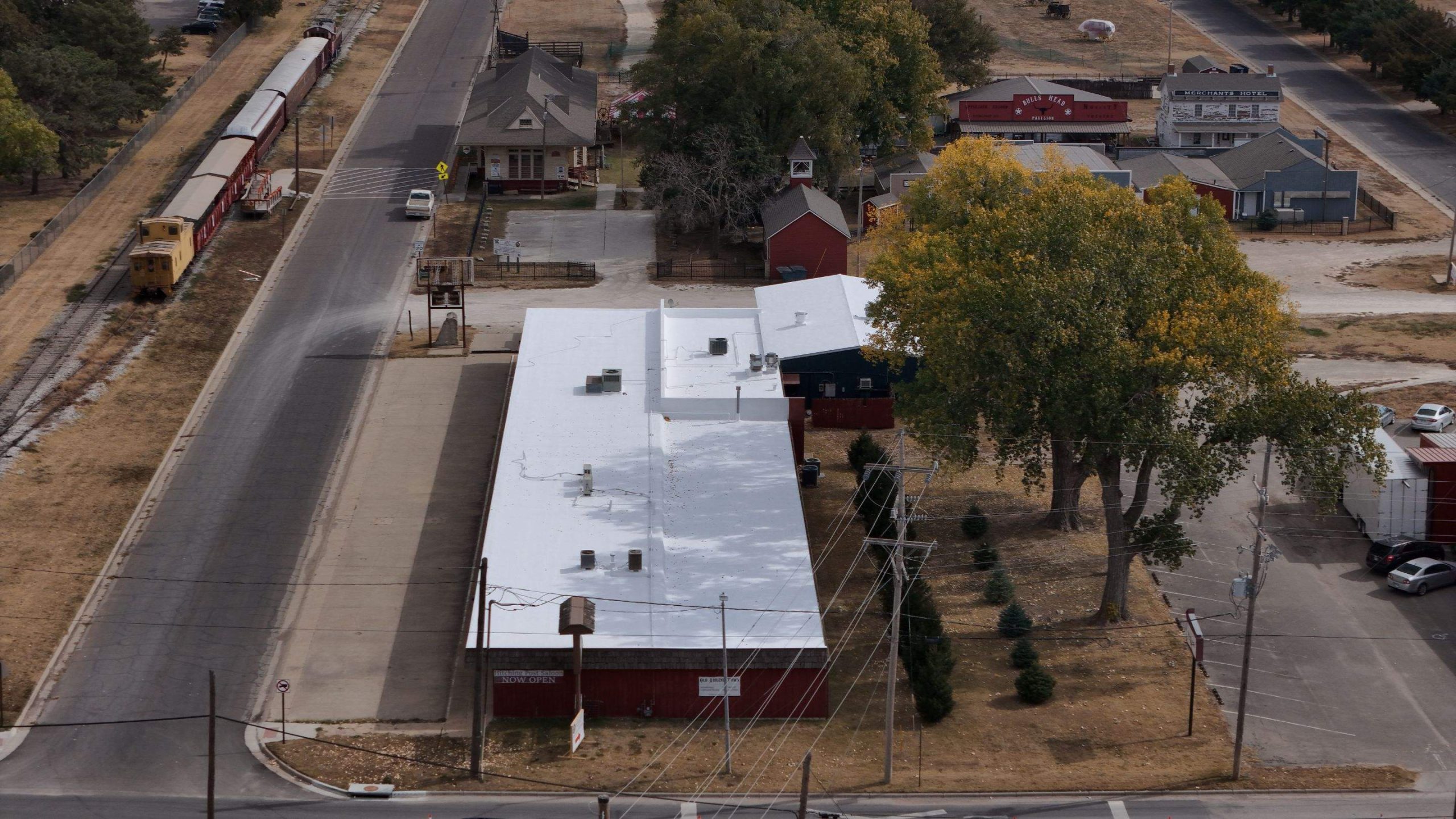
This is probably the easiest sustainable upgrade you can make. Cool roof coatings are basically specialized paints that reflect sunlight instead of absorbing it. We can often apply them right over your existing roof if it’s in decent shape.
Here’s what blew my mind when I first started working with these: a regular dark roof can hit 150°F on a summer afternoon. The same roof with a cool coating? It might only reach 100°F. That 50-degree difference is huge when you’re trying to keep your building cool.
The best part is the math actually works. We’ve seen buildings reduce their peak cooling demand by 10-15%, and some of our clients have told us their energy bills dropped noticeably within the first month.
These coatings typically last 10-20 years before needing a refresh, and they can extend your underlying roof’s life significantly. We’ve applied them to modified bitumen, metal roofs, and even some membrane systems with great results.
Real talk: Not every roof is a good candidate. If your roof is already falling apart, coating it won’t fix the underlying problems. But if it’s structurally sound and just showing its age, this can be a great option.
TPO and PVC Membranes: Built to Be Green
If you need a new roof anyway, TPO (thermoplastic polyolefin) and PVC membranes are worth serious consideration. These aren’t just sustainable because someone decided to market them that way – they’re inherently designed to be energy-efficient.
Both materials come in white or light colors that naturally reflect heat. No special coatings needed – they’re cool roofs right out of the box. They’re also surprisingly tough. The seams are heat-welded together, creating one continuous barrier that can handle whatever Kansas weather throws at it.
The sustainability angle is interesting too. Both TPO and PVC are thermoplastics, which means they can theoretically be melted down and reused when they reach the end of their life. The roofing industry is still working on building better recycling infrastructure, but it’s getting there. PVC roofing has been recycled since 1999, and the programs keep expanding.
These membranes typically last 20-30 years with minimal maintenance, and their energy performance stays consistent throughout their lifetime.
Spray Foam: The Insulation Powerhouse
Spray polyurethane foam (SPF) is probably the most misunderstood sustainable roofing option out there. People hear “foam” and think it can’t be environmentally friendly, but the performance numbers tell a different story.
SPF has incredible insulation properties – we’re talking R-6 to R-7.5 per inch. But the real magic happens because it creates a seamless air barrier. Air leaks are huge energy wasters, and SPF eliminates them completely.
I’ve seen buildings reduce their energy usage by 30-50% after an SPF application, especially older buildings that had poor insulation to begin with. The EPA estimates that adding insulation and sealing air leaks can save about 15% on heating and cooling costs, but in commercial buildings with SPF, we often see much better results.
Another big advantage: we can usually spray SPF right over your existing roof if it’s structurally sound. No tear-off means no waste going to the landfill and lower installation costs.
SPF systems can last 30-50 years with proper maintenance, which mainly involves recoating the surface every 10-15 years. That’s a lot less waste than replacing your entire roof every 15-20 years.
Making the Right Choice for Your Building
Every building is different, and what works great for one might not be the best fit for another. When we evaluate a property, we look at the existing roof condition, the building’s energy usage patterns, budget constraints, and long-term goals.
Sometimes a cool coating is the perfect solution – quick, cost-effective, and immediate results. Other times, investing in a complete SPF system makes more sense for the long-term energy savings. And for many buildings, TPO or PVC membranes hit the sweet spot of performance, durability, and cost.
The key is getting an honest assessment from someone who understands both the technical side and the business side. We’ve found that the most successful sustainable roofing projects happen when building owners understand their options and can make informed decisions based on their specific situation.
The Bottom Line
Sustainable roofing isn’t just a feel-good buzzword anymore – it’s become a smart business decision. The technology has matured, the cost savings are real, and the performance benefits speak for themselves.
If you’re dealing with high energy bills, an aging roof, or just want to explore your options, it’s worth having a conversation. At Solid Rock Commercial Roofing, we’ve seen too many businesses transform their operations with the right sustainable roofing choice to keep it to ourselves.
Ready to see what sustainable roofing could do for your Wichita property? Give us a call and let’s take a look at what makes sense for your building.