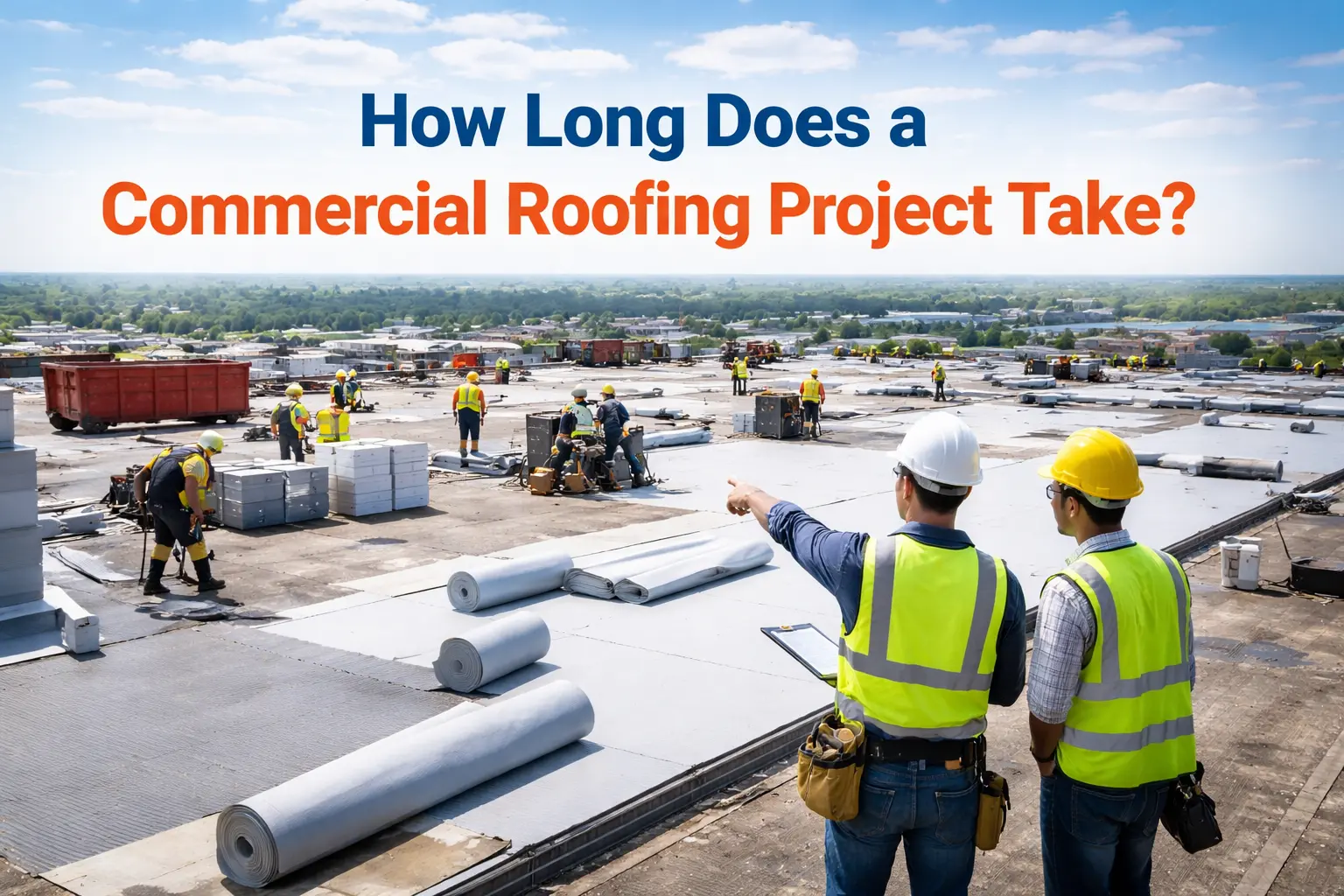
If you own or manage a commercial building in Wichita, Derby, Newton, or nearby Kansas communities, you have probably asked yourself this:
“How long will this roofing project take?”
It sounds like a simple question. But for most building owners, it carries a lot of weight.
A roofing project does not just affect the roof. It affects your tenants, employees, customers, and daily operations. You may be wondering about noise, safety, parking access, or weather delays. You may also be thinking about how to explain the project to tenants or how to keep business running during construction.
These concerns are completely normal.
In fact, many property owners delay roof work not because of cost, but because they are unsure how long it will disrupt their building.
The good news is this: commercial roofing projects are usually more structured and predictable than people expect. When they are planned properly, they follow a clear process from start to finish.
In this guide, we will walk through:
- How long most commercial roofing projects take
- What factors affect the timeline
- How Kansas weather plays a role
- What happens during each stage of the project
- How to reduce delays and avoid surprises
By the end, you will have a clear picture of what to expect — and how to plan with confidence.
Key Takeaways
- Most commercial roofing projects take days or weeks — not months. Small repairs may take one day, while full replacements often take one to four weeks depending on building size and layout.
- The total timeline includes more than installation. Inspection, insurance approval, permits, material ordering, and final inspections all play a role.
- Roof size and design affect how long the work takes. Buildings with multiple levels, skylights, and HVAC units require more detailed work.
- The type of roofing system matters. Full tear-offs usually take longer than coating systems when the roof structure is still in good condition.
- Kansas weather can impact scheduling. Rain, wind, hail, extreme heat, and cold temperatures may pause work for safety and quality reasons. [High Confidence – NOAA]
- Active businesses may require phased scheduling. Roofing can often be completed in sections to reduce disruption.
- Hidden damage is possible once tear-off begins, but clear communication keeps the project organized.
- A structured roofing project follows clear phases: inspection, planning, permits and materials, preparation, installation, and final inspection.
- Realistic timelines protect your investment. Extremely fast promises can increase the risk of problems later.
- The best way to reduce stress is to start with a professional inspection and a written timeline estimate.
The Short Answer: Most Projects Take Days or Weeks
Many people imagine that a commercial roof replacement will drag on for months. That is rarely the case.
Here are typical time ranges for commercial roofing projects:
- Small commercial repairs often take 1 day
- Larger repair projects usually take 2 to 5 days
- Roof coating systems often take 3 to 7 days
- Full roof replacement generally takes 1 to 4 weeks, depending on building size and layout
For example, a simple 15,000-square-foot warehouse with minimal rooftop equipment may take about 1 to 2 weeks to replace.
A 40,000-square-foot facility with multiple roof levels and large HVAC systems may take closer to 3 to 4 weeks.
If you are researching a commercial roof replacement timeline, remember that every building is different. The only way to get an accurate estimate is through a professional inspection.
It also helps to understand the difference between calendar time and active work time. A project may span several weeks on the calendar, but crews are not working nonstop during that entire period. There are planning steps, inspections, and scheduling phases before and after installation.
Once you understand that structure, the timeline feels much more manageable.
Why Roofing Timelines Feel Stressful
Roofing projects often feel stressful because of uncertainty.
You may be asking:
- What if it rains during the project?
- What if hidden damage is found?
- What if tenants complain about noise?
- What if the work takes longer than expected?
When these questions remain unanswered, the timeline feels unpredictable.
Working with an experienced Wichita commercial roofing contractor helps reduce that uncertainty. Clear communication and realistic scheduling remove much of the guesswork.
When you know what will happen next, the project feels controlled instead of overwhelming.
What Factors Affect the Timeline?
Several key factors determine how long a commercial roofing project takes. Understanding these factors helps set realistic expectations.
Roof Size and Design
Larger roofs require more labor. But size alone does not determine the timeline.
Roof design can have an even greater impact.
Imagine two buildings that are both 25,000 square feet:
- One is a simple flat warehouse.
- The other has skylights, multiple elevations, and several HVAC units.
The second building will take longer. Each skylight and rooftop unit requires detailed flashing work to prevent leaks. That extra time protects the building long term.
Careful detail work adds time up front, but it reduces future problems.
Type of Roofing System
Different roofing systems require different installation steps.
Common commercial systems in Kansas include:
- TPO membrane systems
- EPDM rubber roofing
- Modified bitumen
- Metal roofing
- Silicone or acrylic coating systems
A full tear-off replacement takes longer because the old roofing materials must be removed before installation begins. The roof deck underneath must also be inspected.
In some cases, a coating system can shorten the overall commercial roof repair duration if the existing roof is still structurally sound.
The right choice depends on the condition of the roof and your long-term goals, not just speed.
Kansas Weather Conditions
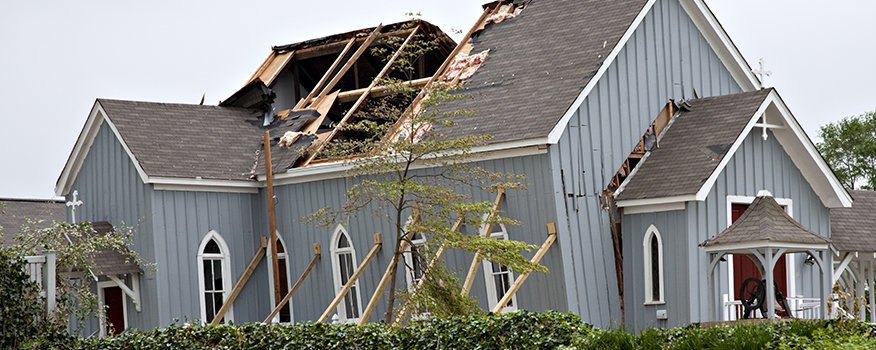
Weather is one of the biggest variables in roofing schedules.
According to the National Oceanic and Atmospheric Administration (NOAA), Kansas experiences frequent thunderstorms and hail events each year. [High Confidence – NOAA Storm Events Database]
Kansas is also among the states with high annual hail activity. [High Confidence – NOAA]
Weather affects roofing projects in several ways:
- Rain pauses exposed work.
- Strong winds limit membrane placement.
- Cold temperatures affect material flexibility.
- Extreme heat requires safety breaks for crews.
Experienced contractors plan for these conditions. They build weather time into the schedule instead of hoping for perfect conditions.
Insurance and Permits
If your roof has storm damage, insurance approval may be required before work begins. That process can take time. [Inference]
City permits may also be required depending on the size and scope of the project.
These steps usually affect the start date, not the installation speed once work begins.
Ongoing Business Operations
An empty building is easier to schedule than an active one.
For example:
- A medical clinic may need quiet hours.
- A retail center must keep entrances open.
- A distribution center may need clear loading dock access.
Roofing can be completed in sections so business operations can continue. This approach protects daily activity but may extend the overall calendar timeline slightly.
That small extension often prevents major disruption.
Hidden Conditions Under the Roof
Sometimes, issues are discovered after the old roof is removed.
Crews may find:
- Wet insulation
- Damaged decking
- Structural concerns
These findings are not common, but they are possible.
When they occur, communication is critical. Clear updates help keep the project organized and prevent confusion.
The Phases of a Commercial Roofing Project
Understanding the step-by-step process makes the timeline easier to follow.
Inspection
A detailed inspection determines the roof’s condition. Photos and notes are taken to document the findings.
Proposal and Planning
You receive a written proposal outlining:
- The recommended roofing system
- The estimated cost
- The projected timeline
This stage sets clear expectations.
Permits and Materials
Permits are submitted if required. Materials are ordered, and crews are scheduled.
Pre-Construction Setup
Safety plans are reviewed. Equipment and dumpsters are delivered. Tenants are notified of the schedule.
Strong preparation at this stage prevents confusion later.
Tear-Off or Surface Preparation
If replacing the roof, old materials are removed, and the deck underneath is inspected.
If applying a coating, the surface is cleaned and properly prepared.
Installation
The new roofing system is installed. Flashing and detailed work are completed. Quality checks occur throughout the process.
This is the most visible stage of the project.
Final Inspection and Documentation
The roof is inspected one final time. Any remaining items are addressed. Warranty documents are provided.
At this point, the project is complete.
How to Reduce Delays
While weather cannot be controlled, many delays can be reduced through planning.
Property owners can help by:
- Scheduling inspections early
- Addressing storm damage quickly
- Keeping insurance paperwork organized
- Confirming material availability
- Planning major work during milder seasons [High Confidence]
Routine inspections also reduce emergency situations and last-minute scheduling pressure. [High Confidence]
Be Careful with Extremely Fast Promises
If a contractor promises to complete a large project in only a few days, ask for details.
Commercial roofing requires:
- Safe work practices
- Detailed flashing installation
- Inspection checkpoints
- Weather planning
A realistic schedule protects your investment and supports long-term performance.
A Realistic Wichita Project Example
Consider a 35,000-square-foot warehouse in Wichita with moderate hail damage.
Week 1: Inspection and documentation
Weeks 2–3: Insurance approval and permits
Week 4: Materials delivered
Weeks 5–6: Installation in phases
Final days: Inspection and warranty paperwork
Total calendar time: about six weeks
Active roofing time: about two weeks
Breaking the timeline into phases makes the project easier to understand and manage.
Conclusion: Clear Timelines Lead to Confident Decisions
Commercial roofing projects do not have to feel overwhelming.
Most repairs take days. Most replacements take weeks. The exact timeline depends on building size, roof design, material choice, weather conditions, and project planning.
When each phase is explained clearly from the beginning, there are fewer surprises. You can notify tenants, prepare employees, and plan operations with confidence.
If you manage commercial property in Wichita, Derby, Newton, or nearby Kansas communities, start by getting clear information about your roof.
Schedule a professional inspection.
Request a written timeline estimate.
Review your options before small issues turn into larger disruptions.
Visit:
???? https://solidrockcorp.com/contact-us/
Or call:
???? (316) 227-2628
Set up your appointment with Solid Rock Commercial Roofing and move forward with a clear, realistic plan for your building.
Frequently Asked Questions
How long does a commercial roof replacement usually take?
Most commercial roof replacements take between one and four weeks. The exact timeline depends on the size of the building, the type of roofing system, the weather, and how complex the roof design is.
Smaller buildings with simple layouts may take closer to one or two weeks. Larger buildings with multiple roof levels or heavy rooftop equipment may take longer.
How long does a commercial roof repair take?
Small repairs can often be completed in one day. Larger repair projects may take two to five days.
The length of time depends on how much damage is present and whether materials need to be ordered.
Is roof coating faster than full roof replacement?
In many cases, yes. A roof coating system can often be installed in three to seven days if the existing roof is still in good condition.
However, if there is major structural damage or saturated insulation, a full replacement may be necessary instead.
Can roofing work be done while my business stays open?
Yes, in most cases.
Commercial roofing projects are often completed in sections so that daily operations can continue. Contractors can plan around business hours, loading docks, and customer entrances when needed.
Clear scheduling and communication help reduce disruption.
What happens if it rains during the project?
If it rains, roofing work may pause temporarily for safety and quality reasons.
Professional crews secure the roof before bad weather moves in. Work resumes once conditions are safe and dry.
Weather delays are common in Kansas due to thunderstorms and hail activity. [High Confidence – NOAA]
Will insurance slow down my roofing project?
Insurance approval can add time before installation begins, especially after storm damage. Adjusters may need to inspect the roof and review documentation.
Once approval is complete, installation typically moves forward as scheduled.
What factors can delay a roofing project?
Common causes of delays include:
- Severe weather
- Permit approval timelines
- Insurance coordination
- Hidden damage found after tear-off
- Material backorders
Many of these delays can be reduced with early planning and clear communication.
How can I reduce the risk of delays?
You can help keep your project on schedule by:
- Scheduling inspections early
- Addressing storm damage quickly
- Keeping insurance paperwork organized
- Planning major work during milder seasons
- Choosing an experienced local contractor
Proactive maintenance also helps prevent emergency repairs.
How do I know what timeline applies to my building?
Every building is different. The best way to get an accurate timeline is to schedule a professional roof inspection.
After evaluating your roof’s condition, layout, and materials, a contractor can provide a written estimate that includes a realistic schedule.
This article is a collaboration between Solid Rock Corporation and OpenAI’s ChatGPT. Created on February 27, 2026, it combines easy-to-read information with Solid Rock’s expert oversight to ensure accuracy and relevance.