Introduction
Picture this: A summer storm just tore through Wichita. Hail rattled your building, and now you’re staring at the roof, wondering—“Do I need a replacement? Is it ruined? Or is that just what contractors want me to believe?”
If you own or manage a commercial property in Wichita, Derby, Newton, or a nearby town, you’ve probably heard all sorts of advice about roofing. Some of it sounds convincing, but much of it is outdated—or completely false. Believing the wrong information can drain your budget and create headaches down the road.
At Solid Rock Commercial Roofing, we’ve seen these myths trip up business owners again and again. That’s why we’re setting the record straight. Below, we’ll tackle the most common roofing myths and give you the facts you need to make smart, cost-saving decisions for your building.
Key Takeaways:
- Metal roofs aren’t noisy. Modern systems use insulation and underlayment, making them as quiet—or quieter—than other roofing types.
- Not all warranties are equal. Some only cover materials, while others include labor and workmanship. Always ask what’s truly covered.
- Roof coatings are more than patches. When applied professionally, they extend roof life, improve efficiency, and save money.
- A new roof still needs maintenance. Regular inspections and cleaning are necessary to prevent early failures.
- Flat roofs don’t always leak. With today’s materials and proper installation, flat roofs can last 20–30 years.
- Storm damage doesn’t always mean replacement. In many cases, targeted repairs or coatings are enough.
- DIY repairs usually cost more. They can void warranties, worsen leaks, and create safety risks.
- Energy efficiency matters. Cool roofs and coatings lower utility costs and reduce strain on HVAC systems.
- Extra myths to remember:
- Roofing projects don’t always take forever.
- The cheapest bid often means hidden costs or poor work.
- Just because a roof isn’t leaking doesn’t mean it’s fine.
- Roofing projects don’t always take forever.
Myth #1: “Metal Roofs Are Too Noisy”
Many people picture an old barn when they think of metal roofing—loud rainstorms echoing inside, impossible to ignore. But modern metal roofing is nothing like that image.
Today’s systems use decking, underlayment, and insulation. These layers absorb sound, keeping the interior just as quiet as other roofing materials. In some cases, buildings are even quieter after a metal roof is installed.
Example: An office complex in Wichita replaces its worn shingles with a standing seam metal roof. Employees expect more noise during storms but quickly notice the opposite—the building feels calmer and quieter.
Takeaway: Don’t let the “noisy metal” myth stop you. Metal roofs are durable, efficient, and no louder than other systems when installed correctly.
Myth #2: “All Roofing Warranties Are the Same”
A warranty sounds like full protection, but not all warranties mean the same thing.
Some cover only defective materials. Others cover workmanship—but only for a short period. Many leave out issues caused by wind, hail, or improper installation.
At Solid Rock, we break warranties down in plain language so there’s no confusion later.
Example: Two warehouses in Wichita hire different roofers. One gets a “20-year warranty” that only covers the materials. The other gets a 20-year warranty covering both materials and labor. When a leak shows up years later, the first owner pays out of pocket for labor, while the second is fully covered.
Takeaway: Always ask what the warranty really covers. A clear, well-structured warranty is worth far more than one with vague promises.
Myth #3: “Roof Coatings Are Just a Quick Patch Job”
Because some contractors misuse coatings, they’ve gained a reputation as a “cheap fix.” In reality, professional-grade coatings are one of the most effective ways to extend a roof’s life.
When applied correctly, coatings can:
- Add 10–20 years to a roof’s lifespan
- Reflect sunlight and keep buildings cooler
- Seal the surface to stop leaks
- Prevent waste by avoiding unnecessary tear-offs
Example: A Newton distribution center faces aging roof issues. Instead of a costly replacement, the owners choose a high-quality coating. The roof is renewed, cooling costs drop, and the business saves hundreds of thousands of dollars.
Takeaway: Coatings aren’t a band-aid. They’re a proven, long-term solution—when handled by experts.
Myth #4: “A New Roof Will Solve All My Problems”
Installing a new roof feels like a fresh start. But that doesn’t mean your worries are over.
Roofs still need maintenance. Debris builds up, drains clog, and Kansas storms can cause damage if issues aren’t caught early. Skipping inspections and cleanings can shorten a roof’s life by years.
Example: A retail strip in Derby gets a brand-new TPO roof. The owner ignores the gutters. Water starts pooling, and within three years, leaks appear. The “new” roof fails much earlier than expected.
Takeaway: A new roof is like a new vehicle. It runs well—but only if you keep up with maintenance.
Myth #5: “Flat Roofs Always Leak”
Flat roofs have a bad reputation, but it’s one that belongs to older systems.
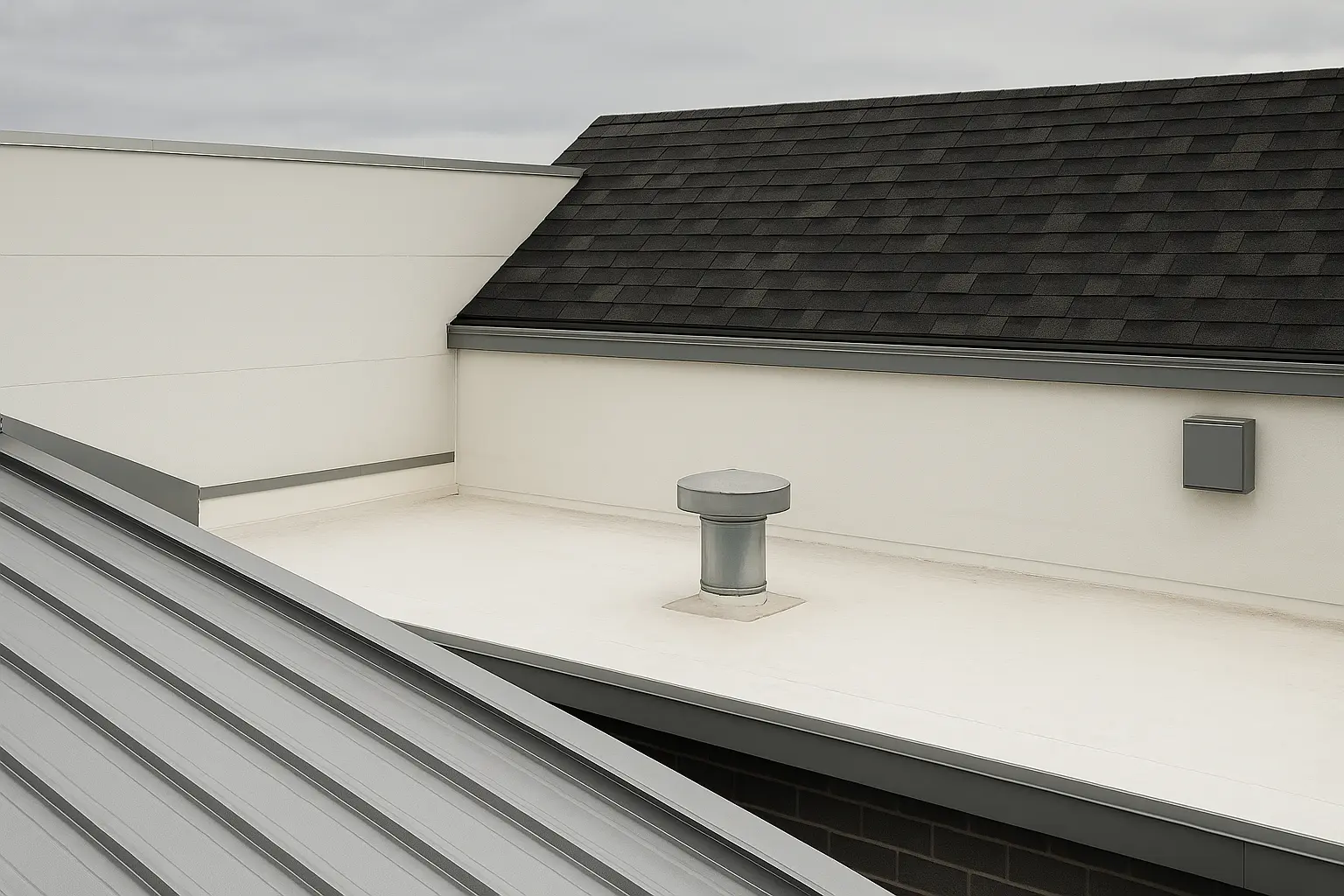
Today’s flat roofing options—like TPO, PVC, and EPDM—are designed with durability in mind. With proper drainage and routine care, a flat roof can last 20–30 years without major issues.
Example: A Wichita healthcare facility installs a PVC flat roof with well-designed drainage. Over the next two decades, only minor repairs are needed—saving millions compared to repeated replacements.
Takeaway: Flat doesn’t mean faulty. When done right, flat roofs are reliable and cost-effective.
Myth #6: “Storm Damage Always Means Total Replacement”
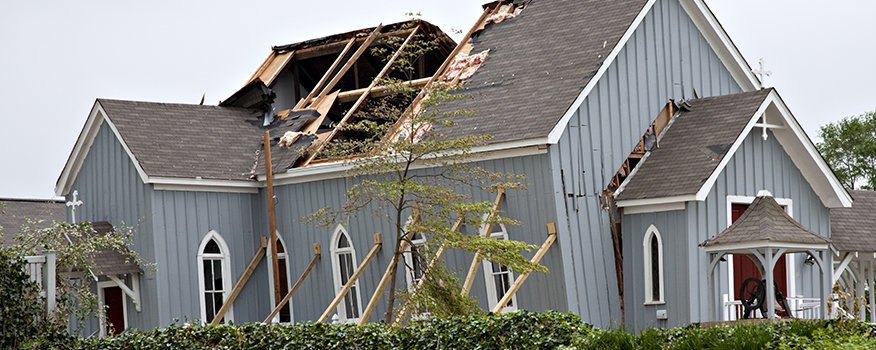
Kansas storms are rough on roofs, but damage doesn’t always mean you need a brand-new system.
Sometimes targeted repairs—or a coating—are enough to restore the roof’s performance. The key is a professional inspection to identify what really needs to be done.
Example: A manufacturing plant in Wichita takes a hail hit. The owner fears a six-figure replacement. After inspection, only 10% of the roof needs repair. With a coating added, the roof lasts another decade.
Takeaway: Don’t assume the worst. Get a trustworthy evaluation before committing to an expensive replacement.
Myth #7: “DIY Repairs Will Save Money”
Leaks can tempt owners to roll up their sleeves and patch things themselves. But DIY roofing almost always costs more in the end.
Quick fixes can:
- Void the manufacturer’s warranty
- Make leaks worse
- Create safety risks
- Fail inspections
Example: A Wichita property manager seals a leak with caulk. The patch fails, water spreads, and mold develops. Cleanup costs are far higher than a professional repair would have been.
Takeaway: DIY might seem cheaper up front, but it often leads to bigger, more expensive problems.
Myth #8: “Energy Efficiency Doesn’t Matter in Roofing”
A roof isn’t just about keeping water out—it also affects how much you spend on utilities.
Reflective “cool roof” systems and coatings can lower rooftop temperatures by 50–60°F in summer [High Confidence]. That cuts down AC strain and reduces energy bills.
Example: A Derby office complex replaces its dark roof with a reflective TPO system. By the next summer, the building’s cooling bills are down 20%.
Takeaway: Energy-efficient roofing isn’t just environmentally friendly—it saves money.
Bonus Myths
We also hear these often around Wichita:
- “Roofing projects take forever.” With the right plan, many projects finish faster than expected.
- “Cheapest bid is always best.” The lowest price can mean shortcuts, poor materials, or hidden costs.
- “If it’s not leaking, it’s fine.” Many issues develop long before you see water inside. Inspections catch them early.
Conclusion
Roofing myths can cost Wichita business owners serious money. They can lead to unnecessary replacements, ignored problems, or choices that shorten a roof’s lifespan.
But now you know better:
- Metal roofs aren’t noisy
- Warranties are not all the same
- Roof coatings extend roof life
- New roofs still need care
- Flat roofs don’t always leak
- Storm damage doesn’t always mean replacement
- DIY repairs usually backfire
- Energy efficiency makes a difference
At Solid Rock Commercial Roofing, we believe in honesty and clarity. We help building owners make informed decisions, save money, and keep their properties secure.
???? Ready to get the facts about your roof?
- Visit: https://solidrockcorp.com/contact-us/
- Or call us today at (316) 227-2628
Protect your investment. Protect your business. Put your roof on solid ground with Solid Rock Commercial Roofing.
Frequently Asked Questions About Commercial Roofing in Wichita
Are metal roofs really loud when it rains?
No. Modern metal roofs are installed with insulation, underlayment, and decking that absorb sound. In fact, many business owners find their buildings quieter with a metal roof than with shingles or older roofing systems.
Do all roofing warranties cover the same things?
Not at all. Some warranties cover only materials, while others include labor and workmanship. Always ask for details about what’s included—wind, hail, and installation errors are often excluded unless specified.
Is a roof coating just a temporary patch?
No. A professionally applied coating can add 10–20 years to a roof’s life, improve energy efficiency, and prevent leaks. It’s a long-term solution, not a quick fix.
If I get a new roof, do I still need maintenance?
Yes. Even new roofs need inspections and upkeep. Debris, clogged drains, and storm damage can cause leaks on a brand-new system if maintenance is ignored.
Do all flat roofs eventually leak?
No. Modern flat roofing systems like TPO, PVC, and EPDM are durable and can last 20–30 years with proper installation and maintenance. Leaks usually come from poor workmanship or neglected care.
If my roof has storm damage, will I always need a full replacement?
Not necessarily. Some storm damage can be fixed with repairs or coatings. A professional inspection is the best way to know whether replacement is required.
Can I save money by fixing roof problems myself?
DIY repairs often cost more in the long run. They can void your warranty, cause safety issues, and lead to bigger leaks. Professional repairs are safer and more reliable.
Does roofing really affect energy bills?
Yes. Reflective “cool roof” materials and coatings can lower roof surface temperatures by 50–60°F in the summer. That means less strain on your HVAC system and lower energy costs.
How long does a commercial roofing project usually take?
It depends on the roof size and condition, but with proper planning, many projects are completed much faster than business owners expect.
What’s the biggest mistake Wichita business owners make with their roofs?
Believing that “if it’s not leaking, it’s fine.” Many roofing problems start long before a leak appears inside. Regular inspections help catch issues early and save money.
This article is a collaboration between Solid Rock Corporation and OpenAI’s ChatGPT. Created on September 2, 2025, it combines AI-generated draft material with Solid Rock’s expert revision and oversight, ensuring accuracy and relevance while addressing any AI limitations.