Why Kansas Weather Matters for Commercial Roofs
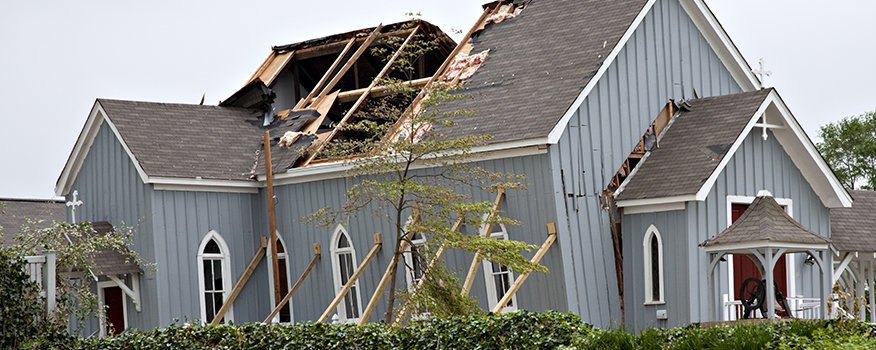
Kansas weather can be extremely hard on commercial roofs. Roofs in this region must deal with intense heat, hail, strong winds, snow, ice, and sudden temperature changes throughout the year.
During the summer, roof surfaces can become extremely hot. Dark roofing materials may absorb heat and raise indoor cooling costs. Roofs also face constant UV exposure during long periods of sunlight. Over time, sunlight can slowly weaken roofing materials and shorten roof lifespan.
Businesses researching energy efficient commercial roofing options often focus on roofing systems that reflect sunlight and reduce rooftop heat buildup.
Storms create another major challenge for Kansas commercial buildings. Hail can damage roofing membranes, especially older roofs or thinner materials. Strong winds may loosen roofing edges or place stress on weak seams. Heavy rain can also lead to leaks if the roofing system was not installed correctly.
Winter weather creates additional wear on roofing systems. Roofing materials expand and contract as temperatures rise and fall. Over many years, this repeated movement can place stress on seams, flashing, drains, and rooftop equipment.
Because Kansas weather is so demanding, commercial property owners should carefully compare roofing systems before making a final decision. A roofing material that performs well in another region may not perform as well under Kansas conditions.
Key Takeaways
- TPO, PVC, and EPDM are the three most common commercial roofing systems used on flat and low-slope buildings in Kansas.
- Kansas weather creates major roofing challenges, including hail, strong winds, heavy rain, intense summer heat, and freezing winter temperatures.
- TPO roofing is popular because it offers a balance between energy efficiency, performance, and moderate installation costs.
- PVC roofing provides strong durability, chemical resistance, and puncture resistance, making it a good fit for restaurants and industrial facilities.
- EPDM roofing remains a dependable and cost-effective option for large commercial buildings and budget-focused projects.
- Reflective roofing systems like TPO and PVC can help reduce rooftop heat buildup and improve energy efficiency during hot Kansas summers.
- Roofing seams play a major role in long-term performance. TPO and PVC use heat-welded seams, while EPDM usually uses adhesive seams.
- Membrane thickness, installation quality, drainage design, and regular maintenance all affect roof lifespan and storm performance.
- No single roofing system is best for every building. The right choice depends on the building’s size, usage, budget, rooftop equipment, and long-term ownership goals.
- A professional commercial roof evaluation can help property owners choose the roofing system that best fits their Kansas property and long-term needs.
What Is TPO Roofing?
TPO stands for Thermoplastic Polyolefin. It is one of the most widely used commercial roofing systems in the United States. TPO roofing is a single-ply membrane commonly installed on flat and low-slope commercial roofs.
Most TPO roofs are white or light-colored. This reflective surface helps reduce heat absorption by reflecting sunlight away from the building. During hot Kansas summers, reflective roofing can help lower rooftop temperatures and reduce cooling demands inside the building.
TPO roofing has become popular because it offers a balance between cost, performance, and energy efficiency.
How TPO Roofing Is Installed
TPO roofing comes in large rolls that are spread across the roof surface. Roofing crews connect the seams using heat-welding equipment. Heat-welded seams create strong waterproof connections that usually hold up well over time.
TPO roofs are commonly installed using one of these methods:
- Mechanically attached systems
- Fully adhered systems
- Ballasted systems
The best installation method depends on the building, the local weather conditions, and the roof design.
Benefits of TPO Roofing
One of the biggest advantages of TPO roofing is energy efficiency. Since the surface reflects sunlight, the building may stay cooler during summer months. This can help reduce air conditioning use in certain commercial buildings.
TPO roofing also offers:
- Strong seam performance
- Good UV resistance
- Moderate installation costs
- Lightweight materials
- Reliable overall durability
For example, a warehouse in Wichita with high summer cooling costs may benefit from a reflective TPO roofing system.
TPO is commonly installed on:
- Warehouses
- Office buildings
- Retail centers
- Schools
- Industrial facilities
Drawbacks of TPO Roofing
Not all TPO roofing products are made the same way. Some manufacturers produce stronger materials than others, and membrane thickness can affect durability.
TPO roofs may also become damaged from heavy rooftop traffic or sharp objects. Buildings with large amounts of rooftop equipment may require additional walkway protection.
Even though TPO performs well in many situations, proper installation is still critical. Poor seam welding or weak flashing details can shorten the roof’s lifespan.
What Is PVC Roofing?
PVC stands for Polyvinyl Chloride. Like TPO, PVC is a single-ply roofing membrane used on flat and low-slope commercial buildings.
PVC roofing is known for its durability and chemical resistance. It is often installed on buildings exposed to grease, oils, or industrial chemicals.
Restaurants are one common example. Grease from kitchen exhaust systems can damage some roofing materials over time. PVC roofing handles grease exposure much better than many other roofing systems.
Benefits of PVC Roofing
PVC roofing offers several advantages for commercial buildings.
One major benefit is seam strength. Like TPO, PVC seams are heat-welded during installation. Properly welded seams create reliable waterproof protection.
PVC roofing also provides:
- Excellent chemical resistance
- Strong puncture resistance
- Long lifespan potential
- Reflective energy-saving surfaces
- Strong weather resistance
Property owners searching for the best commercial roofing for Kansas often compare PVC systems because they perform well during severe weather and hold up in demanding environments.
PVC roofing is commonly installed on:
- Restaurants
- Manufacturing facilities
- Food processing plants
- Industrial buildings
- Commercial properties with rooftop exhaust systems
Drawbacks of PVC Roofing
The biggest drawback of PVC roofing is cost. PVC systems usually cost more upfront than TPO or EPDM roofing systems.
Some building owners believe the higher price is worthwhile because PVC roofs are durable and may need fewer repairs over time.
Installation quality also matters with PVC roofing. Even high-quality roofing materials can fail if seams or flashing details are installed incorrectly.
For example, a manufacturing building in Kansas with rooftop exhaust systems may benefit from PVC roofing because the membrane resists chemicals and heat better than many other roofing systems.
What Is EPDM Roofing?
EPDM stands for Ethylene Propylene Diene Monomer. It is a rubber roofing membrane that has been used in commercial roofing for many years.
Unlike TPO and PVC, most EPDM roofing is black. The darker surface absorbs more heat from sunlight, which can increase rooftop temperatures during hot Kansas summers.
Even so, EPDM remains popular because it is affordable, flexible, and dependable.
Benefits of EPDM Roofing
One reason many property owners choose EPDM roofing is its long track record. EPDM has been installed successfully on commercial buildings for decades.
EPDM also stays flexible during cold weather. This flexibility can help reduce cracking and stress during winter freeze-thaw cycles.
Other benefits include:
- Lower upfront cost
- Good flexibility
- Dependable long-term performance
- Simpler repair methods
Businesses comparing commercial flat roofing systems often consider EPDM because it can cover large buildings at a lower installation cost.
EPDM is commonly installed on:
- Warehouses
- Storage buildings
- Industrial facilities
- Budget-focused commercial projects
Drawbacks of EPDM Roofing
Traditional EPDM roofing absorbs heat because of its dark color. This may increase cooling costs during summer.
EPDM seams are usually connected with adhesives instead of heat-welding. Over time, adhesive seams may require more maintenance than heat-welded seams.
Puncture resistance can also vary depending on membrane thickness and roof traffic levels.
For example, a large storage facility with a limited roofing budget may choose EPDM because it provides reliable protection at a lower upfront cost.
Comparing TPO, PVC, and EPDM Roofing
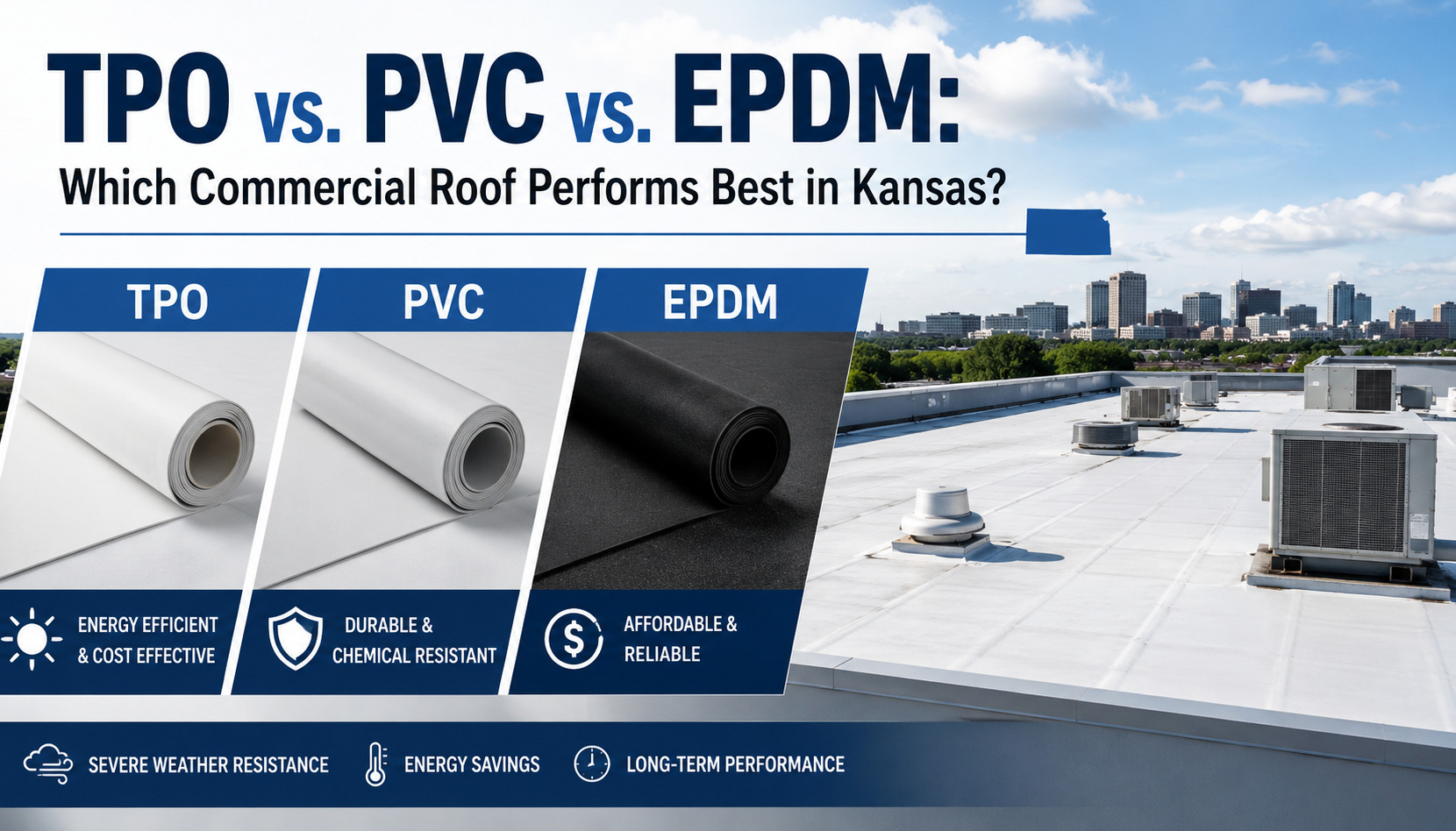
Each roofing system offers different strengths. The best option depends on the building, the owner’s priorities, and the conditions the roof will face over time.
TPO is often selected because it balances energy efficiency, cost, and overall performance. Many office buildings and warehouses use TPO roofing because it provides solid value for the investment.
PVC is commonly chosen for buildings that need stronger durability or chemical resistance. Restaurants and industrial facilities often benefit from PVC roofing.
EPDM is frequently used for budget-focused projects and large commercial roofs where lower upfront cost is important.
The chart below compares some of the biggest differences between these roofing systems.
| Feature | TPO | PVC | EPDM |
| Typical Cost | Moderate | Higher | Lower |
| Reflectivity | High | High | Lower |
| Seam Type | Heat-Welded | Heat-Welded | Adhesive |
| Chemical Resistance | Moderate | Excellent | Moderate |
| Cold Weather Flexibility | Good | Good | Excellent |
| Puncture Resistance | Good | Excellent | Moderate |
| Typical Lifespan | 20–30 Years | 20–30+ Years | 20–25 Years |
Even though these comparisons are helpful, no roofing system is automatically the best choice for every commercial building.
Which Roofing System Handles Kansas Storms Best?
Kansas storms place heavy stress on commercial roofs. Hail, strong winds, and heavy rain can all affect roof performance.
PVC roofing often performs very well during severe weather because of its strong seams and puncture resistance. TPO roofing also performs well when high-quality materials are installed correctly.
EPDM roofing can provide strong storm protection too, especially when thicker membranes are used.
Still, roofing material is only part of the equation. Installation quality matters just as much.
A poorly installed roof may fail early no matter how expensive the roofing material is. Proper seam work, flashing details, drainage systems, and edge securement all affect storm performance.
Regular roof inspections are also important after severe weather events. Small problems found early are usually easier and less expensive to repair.
Why Installation Quality Matters
Even the best roofing system can develop problems if installation quality is poor.
Commercial roofing requires careful workmanship. Seams must be connected correctly. Flashing around roof penetrations must be sealed properly. Drainage systems must move water away from the roof surface.
Improper installation can lead to:
- Roof leaks
- Ponding water
- Loose seams
- Early roof failure
- Higher repair costs
Kansas weather places extra stress on commercial roofing systems, which makes experienced installation even more important.
Routine maintenance also helps extend roof life. Regular inspections can identify damaged seams, punctures, or drainage problems before they become larger repairs.
Choosing the Right Roofing System for Your Building
There is no single roofing system that works best for every commercial building.
TPO may be a good fit for businesses focused on energy savings and balanced performance.
PVC may work best for restaurants, manufacturing buildings, and properties exposed to chemicals or grease.
EPDM may be the right choice for budget-conscious projects or large commercial roofs where lower upfront cost matters most.
The best way to choose a roofing system is to evaluate:
- Building size
- Roof design
- Budget
- Energy goals
- Rooftop equipment
- Long-term ownership plans
- Maintenance expectations
A professional roof inspection can help identify which roofing system makes the most sense for your property.
Conclusion
Choosing between TPO, PVC, and EPDM roofing systems is an important decision for any commercial property owner in Kansas. Each roofing material offers different strengths, and the best choice depends on your building, budget, energy goals, and long-term plans for the property.
TPO roofing is a popular option for businesses looking for energy efficiency and balanced overall performance. Its reflective surface and heat-welded seams make it a strong choice for many office buildings, warehouses, and retail properties.
PVC roofing is often selected for buildings that need added durability and chemical resistance. Restaurants, manufacturing facilities, and industrial properties may benefit from PVC’s ability to handle grease, chemicals, and harsh weather conditions.
EPDM roofing continues to be a dependable option for large commercial buildings and budget-focused projects. Its flexibility and long history of performance make it a practical choice for many property owners.
Kansas weather places heavy stress on commercial roofing systems year-round. Heat, hail, strong winds, and winter temperature swings all affect roof performance over time. That is why choosing the right roofing system—and making sure it is installed correctly—is so important.
If you are comparing roofing options for a commercial property, Solid Rock Commercial Roofing can help you evaluate your building and determine which system best fits your needs.
To schedule your consultation, visit:
Or call Solid Rock Commercial Roofing at:
(316) 227-2628
FAQs
What is the difference between TPO, PVC, and EPDM roofing?
TPO and PVC are single-ply roofing membranes with heat-welded seams and reflective surfaces. EPDM is a rubber roofing membrane that usually uses adhesive seams and has a darker surface. TPO is known for balanced performance and energy efficiency, PVC is known for durability and chemical resistance, and EPDM is known for affordability and flexibility.
Which commercial roofing system lasts the longest?
Roof lifespan depends on installation quality, maintenance, weather exposure, and membrane thickness. In many cases:
- TPO roofs last around 20–30 years
- PVC roofs last around 20–30+ years
- EPDM roofs last around 20–25 years
Regular inspections and maintenance can help extend roof life.
Which roofing system is best for Kansas weather?
There is no single roofing system that works best for every building. Kansas property owners often choose roofing systems based on the building’s needs, budget, and exposure to storms, heat, or rooftop chemicals. TPO, PVC, and EPDM can all perform well in Kansas when installed properly.
Is TPO roofing good for hot Kansas summers?
Yes. TPO roofing has a reflective surface that helps reduce heat absorption during hot weather. Many businesses choose TPO roofing to help improve energy efficiency and reduce cooling demands.
Why do restaurants often choose PVC roofing?
PVC roofing resists grease, oils, and chemicals better than many other roofing systems. This makes it a common choice for restaurants and food processing facilities with rooftop exhaust systems.
Is EPDM roofing still a good option for commercial buildings?
Yes. EPDM remains a popular commercial roofing system because it is dependable, flexible, and often more affordable than other roofing materials. Many large commercial buildings use EPDM roofing successfully.
Which roofing system handles hail the best?
Storm performance depends on several factors, including membrane thickness, roof design, insulation, and installation quality. PVC and thicker TPO systems often provide strong puncture resistance, but properly installed EPDM systems can also perform well during Kansas storms.
Are white commercial roofs better than black roofs?
White roofing systems such as TPO and PVC reflect more sunlight and may help reduce rooftop heat buildup. Black EPDM roofs absorb more heat, which may increase cooling costs during summer months.
How important is commercial roof maintenance?
Routine maintenance is very important for all commercial roofing systems. Regular inspections can help identify seam damage, punctures, drainage problems, and storm-related issues before they become larger repairs.
How do I know which roofing system is right for my building?
The best roofing system depends on several factors, including:
- Building size
- Roof traffic
- Budget
- Energy goals
- Rooftop equipment
- Long-term ownership plans
A professional commercial roof inspection can help determine which roofing system best fits your property.
How can I schedule a commercial roof inspection with Solid Rock Commercial Roofing?
You can schedule a consultation with Solid Rock Commercial Roofing by visiting:
https://solidrockcorp.com/contact-us/
Or by calling:
(316) 227-2628
This article is a collaboration between Solid Rock Corporation and OpenAI’s ChatGPT. Created on 11 May , 2026, it combines easy-to-read information with Solid Rock’s expert oversight to ensure accuracy and relevance.
Recommended Reading
Single-Ply Roofing: TPO vs PVC
Summary: This article provides a detailed comparison of TPO and PVC roofing systems, including membrane composition, energy efficiency, seam performance, and lifecycle considerations. It is especially useful for commercial property professionals evaluating roofing performance in demanding climates.
URL:https://www.buildings.com/building-systems-om/roofing/article/10192343/singleply-roofing-tpo-vs-pvc
Understanding EPDM Roofing Systems for Commercial Buildings
Summary: FacilitiesNet explains how EPDM roofing systems perform on commercial properties, including maintenance expectations, durability factors, and weather-related performance considerations. The article offers practical insights for facility managers and building owners overseeing long-term roof maintenance planning.
URL:https://www.facilitiesnet.com/roofing/article/Understanding-the-Basics-of-EPDM-Roof-Systems–19225
Cool Roofs and Energy Efficiency in Commercial Buildings
Summary: This resource examines how reflective roofing systems affect building energy performance, rooftop temperatures, and cooling demands. It provides valuable context for professionals comparing reflective roofing systems such as TPO and PVC in hot-weather environments like Kansas.
URL: https://www.energy.gov/energysaver/cool-roofs