Introduction: A Situation Most Property Owners Don’t Expect
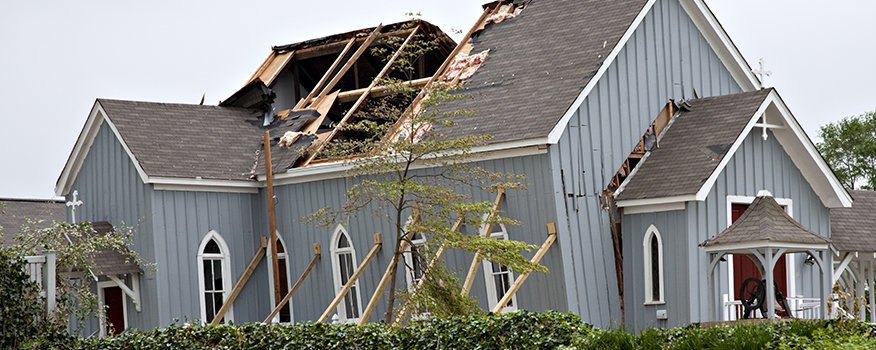
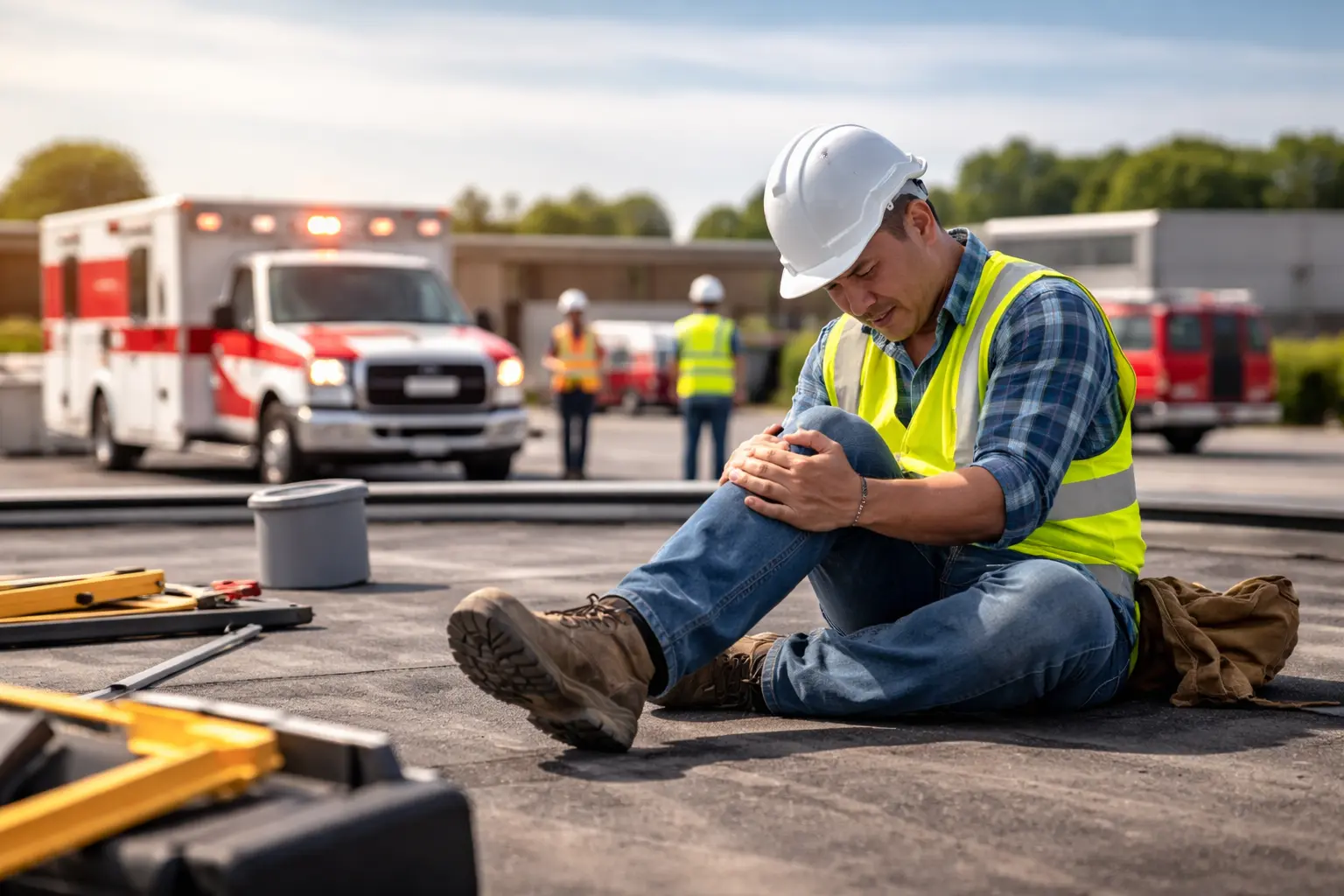
A property owner in Wichita schedules a roof repair after a strong storm. The job seems simple. A crew arrives, sets up ladders, and gets to work. Then something goes wrong. A worker slips and gets hurt. Emergency services arrive, and the job stops.
Now everything changes.
Instead of focusing on the repair, the property owner is left asking:
Who is responsible?
This is not something most owners think about ahead of time. Roofing projects are often seen as routine. But when an injury happens, it can quickly turn into a legal and financial issue.
Many people assume the contractor is always responsible. In many cases, that is true—but not always. Responsibility can depend on insurance, property conditions, and the agreement between both parties.
Understanding how this works can help you avoid unexpected costs and difficult situations.
Key Takeaways
- The contractor is usually responsible—but not always.
Most commercial roofing contractors carry workers’ compensation insurance, which covers employee injuries. However, this protection depends on proper coverage being in place. - Property conditions can shift liability to the owner.
If you know about hazards—like weak decking or unsafe access—and do not disclose them, you may share responsibility for an injury. - Insurance gaps are one of the biggest risks.
If a contractor lacks proper or active insurance, injured workers may seek compensation from the property owner instead. - Subcontractors can increase your exposure.
If subcontractors are not properly insured, liability may extend beyond the contractor to you as the property owner. - Written contracts help protect your business.
Clear agreements that include indemnification clauses and insurance requirements can reduce your financial risk. - Not all contractors manage risk the same way.
Choosing a contractor who verifies insurance, communicates clearly, and documents everything can make a major difference in preventing problems. - Injuries can be expensive—even one incident.
Costs can include medical bills, legal fees, and higher insurance premiums, often totaling tens of thousands of dollars or more. - Planning ahead is the best way to reduce risk.
Checking insurance, sharing known issues, and working with a trusted contractor can help you avoid costly surprises. - Roofing decisions are also risk decisions.
Every roofing project is not just about repairs—it’s also about protecting your property, finances, and long-term operations.
Why Commercial Roofing Projects Have Higher Risk
Roofing work involves real danger.
Workers spend hours above the ground. They carry heavy materials and use tools that require training. Weather can also shift quickly in Kansas, adding more risk to the job.
Falls are one of the leading causes of injuries in construction.
Commercial roofing projects often increase this risk because:
- Roofs are larger
- Jobs take longer
- More workers may be involved
Each of these factors raises the chance of an accident.
Because of this, many property owners choose experienced providers of commercial roofing Wichita KS services. These companies are more likely to focus on both safety and planning.
Who Is Usually Responsible for Injuries
In most situations, the contractor is responsible for worker safety.
Roofing companies are usually independent contractors. This means they manage their own workers, tools, and work processes.
They also carry workers’ compensation insurance. This coverage pays for:
- Medical care
- Lost wages
Most states require this type of insurance.
Here is how this works in a typical situation:
A worker slips while installing roofing material. If the contractor has proper insurance, the claim is handled through their policy. The property owner does not pay for the injury.
This is the standard setup for most roofing projects.
When the Property Owner May Be Responsible
Even though contractors are usually responsible, there are times when the property owner may share that responsibility.
This often happens when the condition of the building plays a role in the accident.
Unsafe Roof Conditions
Property owners are expected to keep their building reasonably safe or warn others about known dangers.
For example:
A section of the roof is weak due to long-term water damage. The owner knows about it but does not mention it. A worker steps on that area and falls through.
In this case, the owner may share responsibility because the risk was not disclosed.
Not Sharing Known Problems
Some issues are not easy to see, such as:
- Weak roof decking
- Hidden water damage
- Structural concerns
Even if these problems are not visible, they still need to be shared before work begins.
Unsafe Access Areas
Getting to the roof is part of the job. If access points are unsafe, the risk increases.
Examples include:
- Damaged ladders
- Blocked walkways
- Poor lighting
These conditions can affect who is responsible if an injury happens.
Fixing known issues early with services like commercial roof repair Wichita can help reduce both safety risks and liability concerns.
Why Insurance Matters So Much
Insurance plays a major role in protecting everyone involved.
There are three main types to understand:
Workers’ Compensation Insurance
Covers injuries to workers on the job.
General Liability Insurance
Covers damage or injury involving other people or property.
Umbrella Insurance
Adds extra protection beyond basic coverage limits.
What Happens When Insurance Is Missing
Problems can arise if the contractor does not have proper insurance.
If workers’ compensation is missing, the injured worker may try to recover costs from the property owner.
This can lead to legal claims and unexpected expenses.
How to Check Insurance
A Certificate of Insurance (COI) provides proof of coverage, but it must be:
- Current
- Accurate
- Match the work being done
Here is a simple example:
A contractor shows an outdated certificate. During the project, a worker is injured. The policy is no longer active. The property owner may now be responsible for the costs.
The Risk of Subcontractors
Many roofing projects include subcontractors. These are workers hired by the main contractor.
This adds another layer of risk.
The key question becomes:
Is everyone on the job site properly insured?
If a subcontractor is not covered and gets injured, the claim may involve:
- The subcontractor
- The main contractor
- The property owner
Working with trusted providers of commercial roofing services Wichita KS can help reduce this risk because they are more likely to check insurance for all workers.
Understanding OSHA and Jobsite Safety
OSHA is a government agency that sets safety rules for workplaces.
Roofing projects must follow these rules.
Some job sites involve more than one employer. OSHA calls this a multi-employer worksite.
In these cases, responsibility can be shared if unsafe conditions are present.
Property owners are not expected to manage the work, but they should avoid creating unsafe conditions on the property.
Why Contracts Are Important
A written contract helps define responsibility before the project begins.
It protects both the property owner and the contractor.
Key Parts of a Strong Contract
- Indemnification clause – states the contractor takes responsibility for certain claims
- Hold harmless clause – helps protect the owner
- Insurance requirements – set clear coverage expectations
How Contracts Help
Think about two situations:
- One owner uses a detailed contract with clear terms
- Another uses a simple agreement with little detail
If an accident happens, the first owner has better protection.
Choosing the Right Contractor Can Reduce Risk
Not all contractors manage risk the same way.
Some focus mainly on price. Others focus on safety, communication, and proper documentation.
Solid Rock Commercial Roofing focuses on both quality work and risk awareness.
Property owners benefit from:
- Clear communication
- Verified insurance
- Strong documentation
- Local experience in Wichita and nearby areas
This helps prevent problems before they start.
The Real Cost of an Injury
An injury on a roofing project can be expensive.
Direct costs may include:
- Medical bills
- Legal fees
- Settlements
Indirect costs can include:
- Higher insurance premiums
- Project delays
- Lost income
Construction injuries can cost tens of thousands of dollars, depending on severity.
Choosing a contractor without proper checks may save money at first, but it can cost much more later.
Why This Topic Matters Right Now
Several changes are increasing the importance of this issue:
- Insurance companies are reviewing claims more closely
- Workers are more aware of their rights
- Roofing systems and project scopes are becoming more complex
These factors make planning ahead more important than ever.
Conclusion: Make Smart Choices Before the Work Begins
Injuries during commercial roofing projects do not happen every day, but they do happen. When they do, responsibility is not always simple.
In many cases, the contractor is responsible. But property conditions, missing insurance, unclear contracts, and subcontractor issues can all shift part of that responsibility to the owner.
Planning ahead can make a big difference.
Before starting a roofing project:
- Check the contractor’s insurance
- Share any known roof issues
- Use a clear, written contract
- Choose a contractor that takes safety seriously
These steps can help reduce risk and protect your business from unexpected costs.
Working with a trusted company also helps. Solid Rock Commercial Roofing works with property owners across Wichita and nearby areas to complete projects with clear communication and proper safeguards.
If you are planning a repair or want to review your roof, now is a good time to take the next step.
Contact Solid Rock Commercial Roofing today:
Visit: https://solidrockcorp.com/contact-us/
Call: (316) 227-2628
A short conversation now can help prevent bigger problems later.
Frequently Asked Questions (FAQs)
1. Am I responsible if a roofing contractor gets injured on my property?
In most cases, no. The contractor is usually responsible for their workers and carries insurance to cover injuries. However, you may share responsibility if your property has unsafe conditions that were not disclosed.
2. What is workers’ compensation, and why does it matter?
Workers’ compensation is insurance that covers medical bills and lost wages if a worker is injured on the job. It is important because it protects both the contractor and the property owner from paying out of pocket.
3. What happens if the contractor does not have insurance?
If the contractor does not have proper insurance, the injured worker may try to recover costs from you as the property owner. This can lead to legal claims and unexpected expenses.
4. Can I be liable for injuries caused by roof damage I didn’t fix?
Yes, in some cases. If you knew about a problem—like a weak roof area or structural issue—and did not share that information, you may be held partly responsible.
5. Do subcontractors increase my risk as a property owner?
They can. If subcontractors are not properly insured, liability may extend beyond the contractor to you. This is why it is important to work with contractors who verify coverage for all workers on-site.
6. What should I check before hiring a commercial roofing contractor?
You should:
- Verify workers’ compensation and general liability insurance
- Review a current Certificate of Insurance (COI)
- Ask about subcontractors and their coverage
- Use a written contract with clear terms
These steps help reduce your risk.
7. What is a Certificate of Insurance (COI)?
A COI is a document that proves a contractor has active insurance coverage. It should always be current and match the type of work being performed.
8. Can a contract really protect me from liability?
A strong contract can reduce your risk by clearly defining responsibility. It often includes clauses that require the contractor to take responsibility for certain claims and maintain proper insurance.
9. Does OSHA hold property owners responsible for safety?
OSHA mainly regulates employers, like roofing contractors. However, unsafe property conditions can still affect how responsibility is assigned in an accident.
10. What is the best way to reduce my liability risk?
The best approach is to plan ahead:
- Hire a reputable contractor
- Verify insurance
- Disclose known issues
- Use a clear contract
Taking these steps can help protect your property and your finances.
This article is a collaboration between Solid Rock Corporation and OpenAI’s ChatGPT. Created on April 03 , 2026, it combines easy-to-read information with Solid Rock’s expert oversight to ensure accuracy and relevance.
External Links:
1. “Multi-Employer Citation Policy” – Occupational Safety and Health Administration (OSHA)
Summary: This resource explains how OSHA assigns responsibility on job sites with multiple employers, including contractors and property owners. It provides important context for understanding how liability may be shared in roofing projects.
URL: https://www.osha.gov/enforcement/directives/cpl-02-00-124
2. “Employer Information: Workers’ Compensation” – U.S. Department of Labor
Summary: This guide outlines how workers’ compensation systems function, including employer responsibilities and coverage requirements. It helps clarify why proper insurance is critical in protecting both contractors and property owners.
URL: https://www.dol.gov/general/topic/workcomp
3. “Premises Liability: A Guide for Property Owners” – Cornell Law School Legal Information Institute
Summary: This article provides a clear explanation of premises liability, including a property owner’s duty to maintain safe conditions and warn of hazards. It directly relates to scenarios where liability may shift from contractor to owner.
URL: https://www.law.cornell.edu/wex/premises_liability