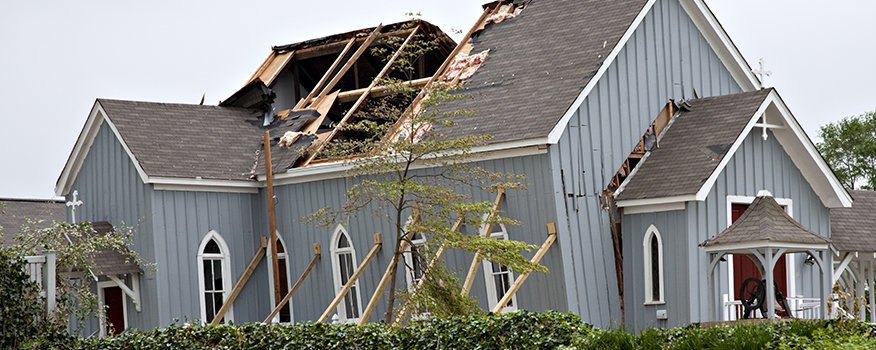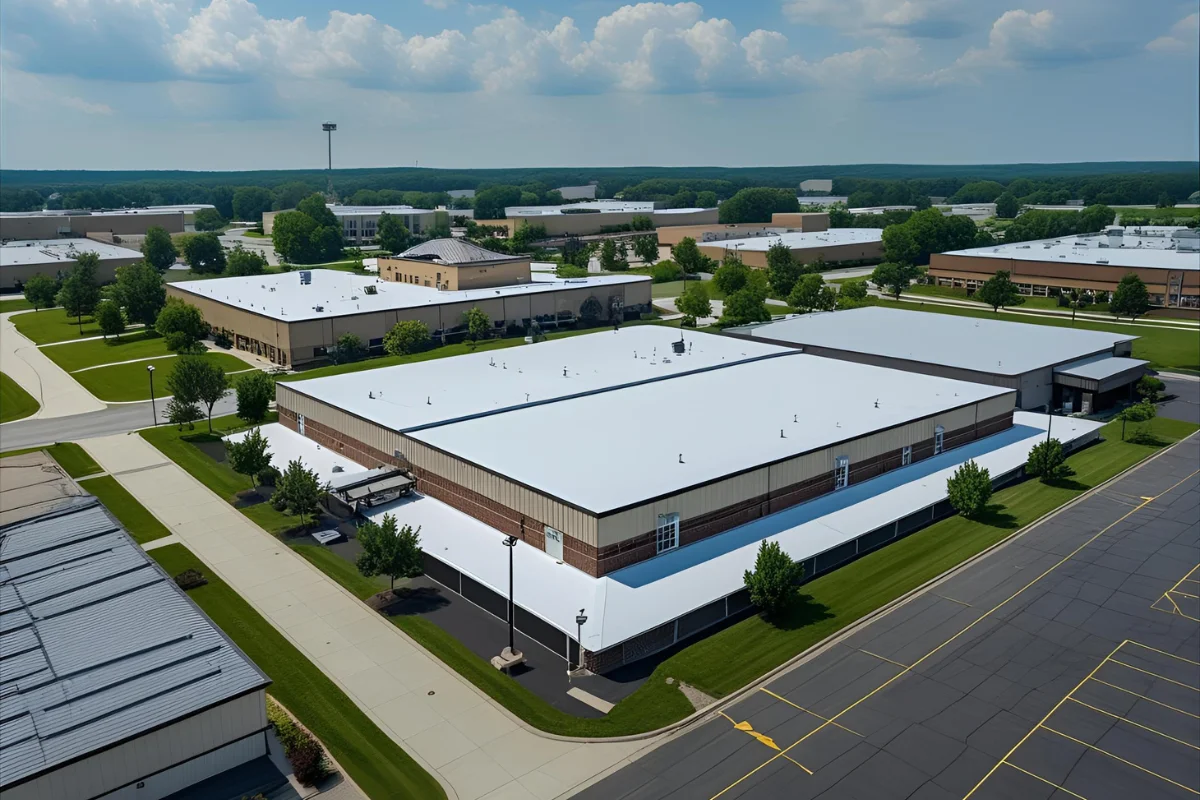
Wichita, Kansas, is a city that understands the power of the wind. Situated squarely within “Tornado Alley,” our community is no stranger to everything from relentless strong gusts to the devastating force of tornadoes. For commercial property owners in Wichita and Sedgwick County, this reality translates into a critical need for robust roofing solutions and proactive strategies to protect their most vital asset: their commercial roof. Wind damage, often insidious and sometimes catastrophic, can lead to costly repairs, business disruption, and significant safety hazards if not adequately addressed.
Solid Rock Commercial Roofing is deeply rooted in the Wichita landscape, possessing firsthand knowledge of the unique wind challenges our businesses face. This article will delve into effective wind damage prevention, outline crucial steps for roof inspections after high wind events, and highlight recommended roofing materials specifically designed for superior wind resistance in our demanding climate.
The Unseen Threat: How Wind Damages Commercial Roofs
Wind damage isn’t always about a roof completely blowing off. Often, it’s a more subtle, cumulative process that weakens your roofing system over time, making it vulnerable to eventual failure. Understanding how wind interacts with your roof is the first step in protecting it:
- Wind Uplift (Negative Pressure): As wind flows over a roof, it creates a suction effect (negative pressure) that tries to lift the roofing material off the deck. This pressure is most intense at the roof’s edges, corners, and around penetrations. If the roofing system isn’t adequately secured, these areas are prime targets for detachment.
- Positive Pressure: Simultaneously, wind can enter the building through openings (doors, windows, vents) or existing roof penetrations, creating internal positive pressure that pushes upward on the roof assembly, exacerbating the uplift forces.
- Turbulence and Vortexes: Wind doesn’t flow smoothly over a roof. It creates turbulent eddies and vortexes, especially around parapet walls, rooftop equipment, and building corners. These localized, intense pressures can cause significant stress on specific points of the roof.
- Debris Impact: High winds can turn loose objects – from tree branches to unsecured rooftop equipment or debris from neighboring properties – into dangerous projectiles that impact and puncture the roof membrane.
- Wind-Driven Rain: Even without direct structural damage, strong winds can drive rain horizontally or upwards into compromised seams, flashing, or small openings, leading to interior water damage.
According to the National Roofing Contractors Association (NRCA), wind damage is consistently one of the leading causes of roof failure, especially for low-slope commercial roofs. A study by the Insurance Institute for Business & Home Safety (IBHS) emphasizes that roof edges, corners, and perimeters are typically the most vulnerable parts of a roof during high wind events, experiencing up to three times the pressure of the field of the roof.
Proactive Wind Damage Prevention: Fortifying Your Investment
The best defense against Wichita’s wild winds is a strong offense. Implementing proactive prevention strategies can significantly reduce your risk:
- Choose Wind-Resistant Materials & Systems:
- Fully Adhered Single-Ply Membranes (TPO, EPDM, PVC): These systems, where the membrane is glued directly to the insulation or substrate, offer excellent wind uplift resistance because the entire membrane is bonded down, eliminating flapping points. TPO and PVC can also be hot-air welded at seams, creating an incredibly strong, monolithic seal.
- Mechanically Attached Systems with Proper Fastening Patterns: For systems like mechanically fastened TPO or metal, the number, type, and pattern of fasteners are crucial. A reputable contractor will adhere to manufacturer specifications and local building codes, which dictate increased fastener density at edges and corners for enhanced wind resistance.
- Metal Roofing (Standing Seam): Metal roofs, particularly standing seam systems, are inherently strong. Their interlocking panels and concealed fasteners provide superior resistance to wind uplift. They are designed to expand and contract without compromising integrity, making them ideal for Wichita’s temperature swings.
- Spray Polyurethane Foam (SPF): SPF creates a seamless, monolithic layer that adheres tenaciously to the substrate. This exceptional adhesion and lack of seams make SPF extremely resistant to wind uplift, often withstanding hurricane-force winds.
- Robust Edge and Flashing Details: As the most vulnerable areas, roof edges, corners, and penetrations (HVAC units, vents, skylights, drains, parapet walls) require meticulous attention.
- Secure Metal Edging: Ensure all metal edge systems are robustly installed and properly fastened to resist wind forces.
- Proper Flashing Installation: All flashing around penetrations must be seamlessly integrated and securely sealed to prevent wind-driven rain infiltration.
- Regular Professional Inspections: This is non-negotiable. Solid Rock Commercial Roofing recommends at least biannual inspections (spring and fall) and immediate inspections after any severe wind event or hailstorm. Our trained professionals can:
- Identify subtle signs of wind stress like lifted seams, loose flashing, or fastener back-out before they lead to major failures.
- Assess overall roof system integrity and adherence.
- Spot any compromised areas from previous storms.
- Clear Debris and Maintain Drainage: Loose debris (leaves, branches, unsecured equipment) on your roof can become wind-borne projectiles, causing damage. Keep your roof surface clean, and ensure all gutters, drains, and scuppers are free of obstructions to prevent water accumulation that can add weight and stress during heavy winds.
Responding to High Wind Events: After the Gusts Settle
When a powerful storm or tornado passes through Wichita, knowing how to react immediately can significantly mitigate damage and streamline your recovery.
- Prioritize Safety First: Do not approach your building if there are downed power lines, gas leaks, or visible structural instability. Secure the perimeter to prevent injury to others.
- Preliminary Ground-Level Assessment: From a safe distance, visually inspect your roof for any obvious signs of damage (e.g., missing sections, large tears, significant debris). Take extensive photos and videos of everything you observe, noting the date and time.
- DO NOT CLIMB ON THE ROOF: Unless you are a certified and properly equipped roofing professional, never attempt to climb onto a storm-damaged roof. It is extremely dangerous and could lead to further damage or serious injury.
- Contact Solid Rock Commercial Roofing IMMEDIATELY: This is the most critical step. As your local Wichita commercial roofing expert, we prioritize emergency responses. We will:
- Safely Access and Assess: Our team is trained to safely access damaged roofs and conduct thorough, professional inspections to identify all wind-related damage, often uncovering issues not visible from the ground.
- Emergency Tarping and Mitigation: If there are active leaks or exposed areas, we can perform immediate temporary repairs and tarping to prevent further water intrusion and interior damage. This is vital for protecting your assets and often a requirement of your insurance policy.
- Detailed Damage Report: We will provide you with a comprehensive report of the damage, complete with photographic evidence, which is invaluable for your insurance claim.
- Assist with Insurance Claims: We have extensive experience working with insurance adjusters and can help guide you through the claims process, ensuring all damage is accurately assessed and covered.
FAQs: Protecting Your Commercial Roof from Wichita’s Winds
How often should I have my commercial roof inspected for wind damage in Wichita?
Solid Rock Commercial Roofing recommends at least twice a year (spring and fall). However, it is absolutely critical to schedule an immediate inspection after any severe wind event, hailstorm, or significant weather anomaly, regardless of the regular schedule.
Can I just patch up small areas after wind damage, or do I need a full replacement?
It depends on the extent and type of damage. Small, isolated tears or lifted seams can often be effectively patched by a professional. However, widespread damage, compromised adhesion across large sections, or underlying structural issues may necessitate a full replacement. A professional inspection from Solid Rock Commercial Roofing will provide an accurate assessment and recommendation.
Does my insurance cover wind damage to my commercial roof?
Most commercial property insurance policies do cover wind damage. However, coverage specifics, deductibles, and whether it’s an Actual Cash Value (ACV) or Replacement Cost Value (RCV) policy vary. It’s crucial to review your policy details and contact your insurance provider promptly after a storm. Solid Rock Commercial Roofing can assist in documenting damage for your claim.
What’s the best roofing material for wind resistance in Wichita?
Several materials offer excellent wind resistance when properly installed. Standing seam metal roofing, fully adhered TPO/EPDM/PVC single-ply membranes, and Spray Polyurethane Foam (SPF) are among the top choices. Each has specific benefits, and the best choice for your building depends on factors like roof slope, budget, and specific wind zone requirements.
Can I get my roof inspected from the ground with binoculars after a storm?
You can conduct a preliminary visual check from the ground for obvious, large-scale damage for safety reasons. However, a ground-level inspection is never sufficient for comprehensively assessing wind damage. Many critical issues like lifted seams, subtle tears, or compromised flashing can only be detected safely and accurately by trained professionals on the roof using specialized techniques.
Conclusion: Trust Solid Rock for Your Wind-Resistant Roof
Wichita’s wild winds are a constant force that commercial property owners must contend with. By understanding the dynamics of wind damage, investing in proactive prevention, choosing high-performance wind-resistant materials, and knowing how to react swiftly after a storm, you can significantly enhance the longevity and security of your commercial roof.
Solid Rock Commercial Roofing is more than just a contractor; we are your local partner in safeguarding your business against the elements. Our expertise in wind damage assessment, emergency repairs, and the installation of durable, wind-resistant commercial roofing systems ensures that your property stands strong against whatever Wichita’s skies may bring. Don’t leave your vital assets to chance; contact Solid Rock Commercial Roofing today for a comprehensive consultation and fortify your investment.