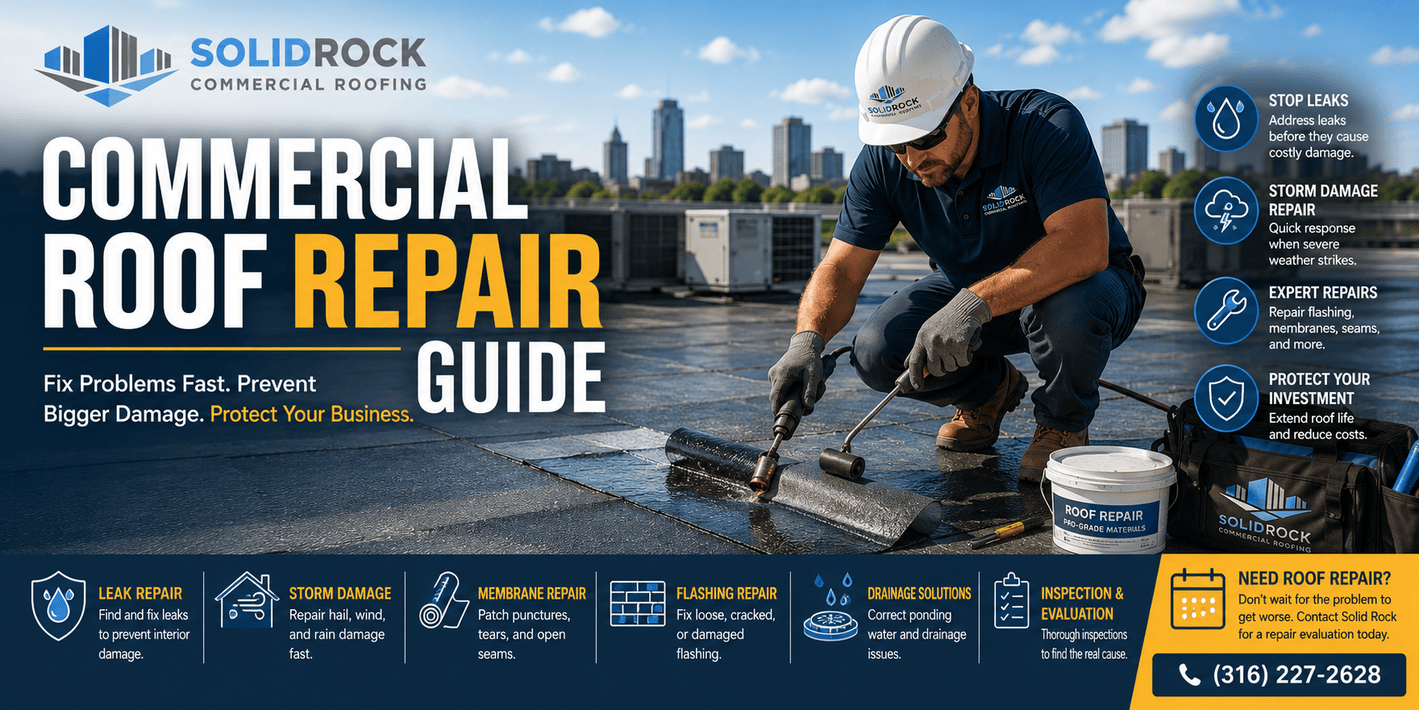
Most commercial roof failures do not happen overnight. They begin with small problems that were repairable weeks, months, or even years earlier.
A loose flashing detail, punctured membrane, clogged drain, hail impact, or small leak can turn into interior damage, tenant disruption, warranty issues, and expensive emergency work when ignored. This guide explains how commercial roof repair works, when repair makes sense, what problems to watch for, and how building owners can make confident decisions before minor damage becomes a major cost.
Key Takeaways
- Commercial roof repair addresses specific roofing problems before they spread into larger failures.
- Leaks, ponding water, flashing failures, membrane damage, storm damage, and drainage issues are common repair triggers.
- Repair is often the right move when damage is localized and the roof system still has useful life left.
- Emergency roof repair focuses on stopping active damage, while planned repair supports long-term roof performance.
- The right repair method depends on the roofing system, roof age, leak history, and condition of the underlying assembly.
- A professional inspection helps determine whether repair, restoration, or replacement is the smartest path.
What Is Commercial Roof Repair?
Commercial roof repair is the process of identifying and fixing specific roofing problems that threaten the performance of a commercial roof system. Repairs may address leaks, punctures, open seams, flashing failures, storm damage, drainage problems, roof penetrations, or other localized failures.
The goal is not just to cover a problem temporarily. A good repair should address the source of the issue, protect the roof system, reduce water intrusion risk, and help the building owner avoid unnecessary disruption.
For service-specific help, start with Solid Rock’s commercial roof repair page. If the roof has not been evaluated recently, review the Commercial Roof Inspection Guide.
The Most Common Commercial Roofing Problems
Leaks
Leaks are one of the most common reasons building owners call for commercial roof repair. The visible drip is often only the final symptom. The actual entry point may be a seam, flashing detail, drain area, penetration, or storm-damaged section of roof.
Ponding Water
Ponding water can accelerate roof deterioration, stress seams, and expose drainage problems. It is especially important on flat roofing and low-slope commercial systems.
Flashing Failures
Flashing around walls, curbs, edges, penetrations, and equipment can crack, separate, lift, or pull away. These details are common leak sources because they connect the roof surface to other building components.
Membrane Damage
Punctures, tears, blisters, open seams, and surface wear can affect TPO, PVC, EPDM, modified bitumen, coatings, and other roof systems. The repair approach depends on the system and the condition of the surrounding roof area.
Wind, Hail, and Storm Damage
Kansas weather can damage membranes, flashing, edges, coatings, drains, and rooftop equipment. Supporting resources include commercial roofing hail damage guidance and high-wind roof damage risks.
Signs Your Commercial Roof Needs Repair
Commercial roofs often show warning signs before a larger failure occurs. The sooner those signs are investigated, the more options the building owner usually has.
- Active leaks or recurring interior stains
- Ponding water that remains after rain
- Open seams, punctures, tears, or blistering
- Loose flashing, edge metal, or wall transitions
- Clogged drains, gutters, or scuppers
- Soft spots, wet insulation indicators, or roof deck concerns
- Visible storm damage after hail, wind, snow, or severe weather
For deeper warning-sign guidance, read top signs your commercial roof needs repair and signs your commercial roof will need attention in the next 12 months.
Emergency Roof Repair vs. Planned Roof Repair
Not every roof repair is an emergency. Planned repairs are typically scheduled after an inspection identifies damage that needs attention. Emergency roof repairs happen when active water intrusion, storm damage, structural risk, or business disruption requires faster response.
- Emergency repair: Focuses on stopping active damage and protecting the building immediately.
- Planned repair: Addresses identified issues before they become urgent.
- Long-term repair planning: Helps owners compare repair, restoration, or replacement before costs escalate.
Helpful emergency resources include emergency roof repairs in Wichita and what to do when your roof leaks during a snowstorm.
Commercial Roof Leak Repair
A leaking commercial roof should be handled carefully. The first priority is protecting people, inventory, equipment, tenants, and building operations. The second priority is identifying where water is entering and whether the leak is isolated or part of a broader roof system problem.
Leak repair may involve membrane patching, seam repair, flashing correction, drain work, penetration sealing, or other system-specific repairs. What matters most is diagnosing the source instead of only treating the visible symptom inside the building.
For more leak-specific help, review how to handle roof leaks in Wichita commercial buildings, the impact of a leaky roof on your business, and the unexpected costs of a leaky commercial roof.
Storm Damage Roof Repairs
Wichita and South Central Kansas commercial roofs face hail, wind, heavy rain, snow, ice, and freeze-thaw movement. After severe weather, a repair evaluation can help determine whether damage is superficial, localized, or part of a larger problem.
Hail Damage
Hail can damage membranes, coatings, metal panels, flashing, and rooftop equipment. For more information, see hail damage roof repair for commercial buildings.
Wind Damage
High winds can lift edges, stress seams, damage flashing, and create vulnerabilities that are not always obvious from the ground. See protecting your commercial roof from Wichita’s wild winds.
Freeze-Thaw Damage
Freeze-thaw cycles can make existing cracks, seams, and moisture problems worse. Related resources include how Kansas freeze-thaw cycles damage commercial roofs.
Commercial Roof Repair Methods
Commercial roof repair methods depend on the roofing system, damage type, roof condition, and whether the issue is isolated or widespread.
- Patching and spot repairs: Used for localized damage when the surrounding roof remains sound.
- Seam repairs: Address open seams or separation in membrane systems.
- Flashing repairs: Correct leaks and vulnerabilities around walls, curbs, edges, and transitions.
- Penetration repairs: Address pipes, vents, skylights, HVAC curbs, and rooftop equipment areas.
- Drainage corrections: Improve water flow and reduce ponding-related damage.
- Coating or surface repairs: May be used when the existing system is still a good candidate for localized service or restoration.
For the repair-versus-patch decision, read when a commercial roof patch is enough.
Repair Considerations by Roofing System
TPO and PVC Roof Repair
TPO and PVC roofs often require attention to seams, punctures, flashing, drainage, and membrane details.
EPDM Roof Repair
EPDM roofing repairs may involve seams, punctures, flashing details, drainage issues, or areas affected by rooftop traffic.
Metal Roof Repair
Metal roofing repairs may involve fasteners, seams, panels, penetrations, coatings, flashing, or leak paths around transitions.
Modified Bitumen Roof Repair
Modified bitumen roofs may require surface repairs, seam attention, flashing corrections, or drainage-related work.
SPF and Coating Repairs
Spray polyurethane foam and commercial roof coatings require careful evaluation of surface condition, coating wear, drainage, and compatibility before repair or restoration work is recommended.
Commercial Roof Repair Costs
Commercial roof repair cost depends on roof size, system type, damage severity, access, materials, drainage conditions, leak complexity, and whether the repair is planned or urgent. A small isolated issue may be straightforward. A leak tied to wet insulation, widespread seam failure, storm damage, or deck deterioration may require a larger scope.
For deeper cost planning, review what factors affect commercial roof repair costs in Kansas and the Commercial Roofing Cost Guide.
Repair vs. Restoration vs. Replacement
The best roofing decision is not always the biggest one. Some commercial roofs need a targeted repair. Others are better candidates for restoration. Some have reached the point where replacement is the more responsible long-term answer.
- Repair may be right when the issue is isolated and the roof still has useful life left.
- Restoration may make sense when the roof is aging but still structurally viable.
- Replacement may be necessary when damage is widespread, recurring, or beyond practical repair.
Compare options through commercial roof restoration, commercial roof replacement, and restoration vs. replacement.
What Happens During a Commercial Roof Repair Project?
A professional repair process should be clear, documented, and focused on solving the right problem. The process often starts with inspection, diagnosis, photos, recommendations, scope review, repair work, and follow-up documentation.
- Inspect the roof and identify the likely source of damage.
- Document findings with photos and clear notes.
- Explain repair options and whether restoration or replacement should also be considered.
- Perform repair work according to the roof system and scope.
- Provide records that support maintenance history, budgeting, and warranty files.
To understand Solid Rock’s project approach, read how Solid Rock handles commercial roofing projects from start to finish.
How to Choose a Commercial Roof Repair Contractor
Roof repair requires more than a quick patch and a ladder. Choose a contractor who understands commercial roofing systems, documents findings clearly, explains repair limitations honestly, and helps you decide whether repair truly fits the condition of the roof.
- Commercial roofing specialization
- Clear inspection and documentation process
- Experience with your roof system
- Local knowledge of Kansas weather and storm risks
- Honest guidance on repair, restoration, and replacement options
Helpful contractor-selection resources include commercial roofing contractor, 5 questions to ask before hiring a Wichita commercial roofing contractor, and why local knowledge matters.
When Is It Too Late to Repair a Commercial Roof?
Repair may no longer be the best option when leaks are recurring, insulation is saturated, damage is widespread, the roof deck is compromised, seams or flashing are failing across the system, or repair costs are stacking up without solving the underlying problem.
If you are unsure whether repair still makes sense, read when it is too late to repair a commercial roof and commercial roof replacement vs. ongoing repairs over 20 years.
Need Commercial Roof Repair in Wichita or South Central Kansas?
Do not wait for a small roof problem to become a building-wide issue. Solid Rock helps commercial property owners identify the problem, understand the options, and choose the right path forward.
Request a Repair Evaluation
Schedule a Roof Inspection
Explore Commercial Roofing Services
- Need storm help? Visit storm damage roof repair.
- Considering restoration? Explore commercial roof restoration.
- Planning long term? Review commercial roof preventative maintenance.
Frequently Asked Questions About Commercial Roof Repair
How much does commercial roof repair cost?
Commercial roof repair cost depends on roof size, system type, damage severity, access, materials, urgency, and whether the issue is isolated or part of a larger roof problem.
Can a leaking commercial roof be repaired?
Yes, many leaking commercial roofs can be repaired if the source is identified and the surrounding roof area is still in repairable condition.
How long does commercial roof repair take?
Repair timing depends on the size and complexity of the issue. Some minor repairs may be completed quickly, while larger repairs, storm damage, or moisture-related problems may take longer.
When should I repair vs. replace my commercial roof?
Repair may make sense when damage is localized and the roof still has useful life left. Replacement may be better when damage is widespread, recurring, or too advanced for repairs to create lasting value.
What causes commercial roof leaks?
Commercial roof leaks can be caused by open seams, flashing failures, punctures, ponding water, clogged drains, storm damage, rooftop equipment, aging materials, or improper previous repairs.
Does insurance cover commercial roof repairs?
Insurance may cover certain commercial roof repairs when damage is tied to covered events such as hail, wind, or storms. Coverage depends on the policy, damage cause, documentation, and claim review.
How long do commercial roof repairs last?
Repair life depends on the quality of the repair, roof system, surrounding roof condition, weather exposure, and maintenance. A repair on a sound roof may perform well, while a repair on a failing roof may only be temporary.
Can roof coatings repair a commercial roof?
Roof coatings may help extend roof life or restore certain roofs, but they are not a cure for every repair issue. The existing roof must be evaluated to determine whether coating, repair, restoration, or replacement is appropriate.
This article is a collaboration between Solid Rock Corporation and OpenAI’s ChatGPT. Created on May 29, 2026, it combines AI-generated draft material with Solid Rock’s expert revision and oversight, ensuring accuracy and relevance while addressing any AI limitations.