Energy costs are one of the biggest ongoing expenses for many commercial property owners. Whether you own a warehouse, office building, retail center, manufacturing plant, school, or church, improving energy efficiency can help lower utility bills, create a more comfortable indoor environment, and reduce operating costs over time. While many owners focus on HVAC equipment, lighting upgrades, or insulation improvements, one of the most important parts of the building is often overlooked—the roof.
A commercial roof does much more than keep out rain, snow, and wind. It is an important part of the building envelope, which separates the inside of the building from the outside environment. A well-designed roofing system can help reduce heat entering the building during the summer while helping retain conditioned air throughout the year. This allows heating and cooling systems to work more efficiently and may lower energy costs over time.
The commercial roofing market offers several systems designed to improve energy efficiency. Reflective single-ply membranes such as TPO and PVC, metal roofing with reflective finishes, and roof coating systems each offer different advantages depending on the building’s design, climate, and operating needs. The best choice depends on several factors, including your building’s current condition, budget, and long-term plans.
If you’re planning for the future of your building, learning more about commercial roof replacement can help you decide when replacing an aging roof makes more financial sense than continuing to repair it.
This guide explains how commercial roofing affects energy efficiency, what features make a roof more energy efficient, and how several of the most common commercial roofing systems compare. With a better understanding of your options, you can make an informed decision that supports your building for years to come.
Key Takeaways
- Commercial roofing plays a major role in a building’s overall energy efficiency by reducing heat transfer and supporting HVAC performance.
- An energy-efficient roof is more than just a reflective surface. Insulation, air sealing, drainage, and installation quality all contribute to long-term performance.
- TPO roofing is a popular choice for many commercial buildings because it offers a balance of energy efficiency, durability, and cost-effectiveness.
- PVC roofing provides excellent reflectivity while also offering strong resistance to chemicals, grease, and industrial contaminants, making it well suited for specialized facilities.
- Metal roofing systems combine long service life with reflective finishes that can help reduce heat absorption and support sustainability goals.
- Roof coatings can improve reflectivity and extend the life of qualifying commercial roofs, although they are not appropriate for every roofing system.
- Proper insulation is essential for controlling heat transfer and maximizing the energy-saving benefits of any commercial roofing system.
- Reflective white roofs can reduce roof surface temperatures, but roof color should be considered alongside insulation, climate, and overall building design.
- Routine inspections and preventive maintenance help preserve energy performance and extend the life of commercial roofing systems.
- Choosing the right commercial roofing system requires evaluating the building’s condition, budget, operational needs, and long-term ownership plans.
Why Commercial Roofs Have a Major Impact on Energy Efficiency
The roof is one of the largest surfaces on most commercial buildings. Every day, it is exposed to sunlight, changing temperatures, rain, wind, and other weather conditions. Because it covers such a large area, the roof has a major influence on how heat moves into and out of the building.
When sunlight strikes a roof, some of the sun’s energy is reflected away while the rest is absorbed by the roofing material. As the roof heats up, some of that heat moves through the roof assembly and into the building below. The more heat that enters the building, the harder the air conditioning system must work to maintain comfortable indoor temperatures.
This effect is especially noticeable during the hottest part of the day. Some roofing materials can become much hotter than the surrounding air, increasing the amount of heat transferred into occupied spaces. Reflective roofing systems are designed to reduce this heat absorption, helping keep roof temperatures lower and reducing the amount of heat that enters the building.
Consider two similar warehouse buildings located next to each other. One has an older dark-colored roof that absorbs a large amount of heat. The other has a newer reflective roofing system with modern insulation. On a hot summer afternoon, the reflective roof stays much cooler because it reflects more sunlight away from the building. Since less heat enters the structure, the cooling system may not need to work as hard to maintain comfortable indoor temperatures.
Every building is different, so actual energy savings vary. Factors such as insulation, local climate, occupancy, and HVAC efficiency all affect energy use. Even so, reducing heat transfer through the roof is one of the most effective ways to improve a commercial building’s overall energy performance.
Energy-efficient roofing is not about stopping heat completely. Instead, it is about slowing heat transfer so the building remains more comfortable while using energy more efficiently.
What Makes a Commercial Roofing System Energy Efficient?
Many people think an energy-efficient roof is simply a white roof. While roof color is important, it is only one part of the equation. Several features work together to improve a roof’s overall performance.
One of the most important is solar reflectance, which measures how much sunlight a roof reflects instead of absorbs. Roofing materials with higher solar reflectance generally stay cooler because they absorb less heat from the sun. Lower roof temperatures can reduce heat transfer into the building and lessen the workload placed on the HVAC system.
Another important characteristic is thermal emittance, which describes how well a roofing material releases absorbed heat. Even reflective roofs absorb some heat during the day. Materials with good thermal emittance cool down more quickly after sunset, helping reduce heat buildup.
Insulation is just as important. Commercial roof insulation slows the movement of heat between the inside and outside of the building. During the summer, it helps keep outdoor heat from entering the building. During cooler months, it helps retain conditioned air, improving overall energy performance.
Air leaks also reduce efficiency. Small gaps around vents, pipes, skylights, and rooftop equipment allow conditioned air to escape while outside air enters the building. Over time, these small openings can increase heating and cooling costs.
Finally, installation quality plays a major role. Even the best roofing materials cannot perform as intended if they are installed incorrectly. Properly installed insulation, flashing, seams, and drainage all help the roofing system perform reliably for years.
When these components work together, the entire roof system becomes more energy efficient than any single material could achieve on its own.
TPO Roofing: A Popular Choice for Energy Efficiency
Thermoplastic Polyolefin, commonly known as TPO, has become one of the most popular commercial roofing systems in the United States. Many property owners choose it because it offers a strong balance of energy efficiency, durability, and value.
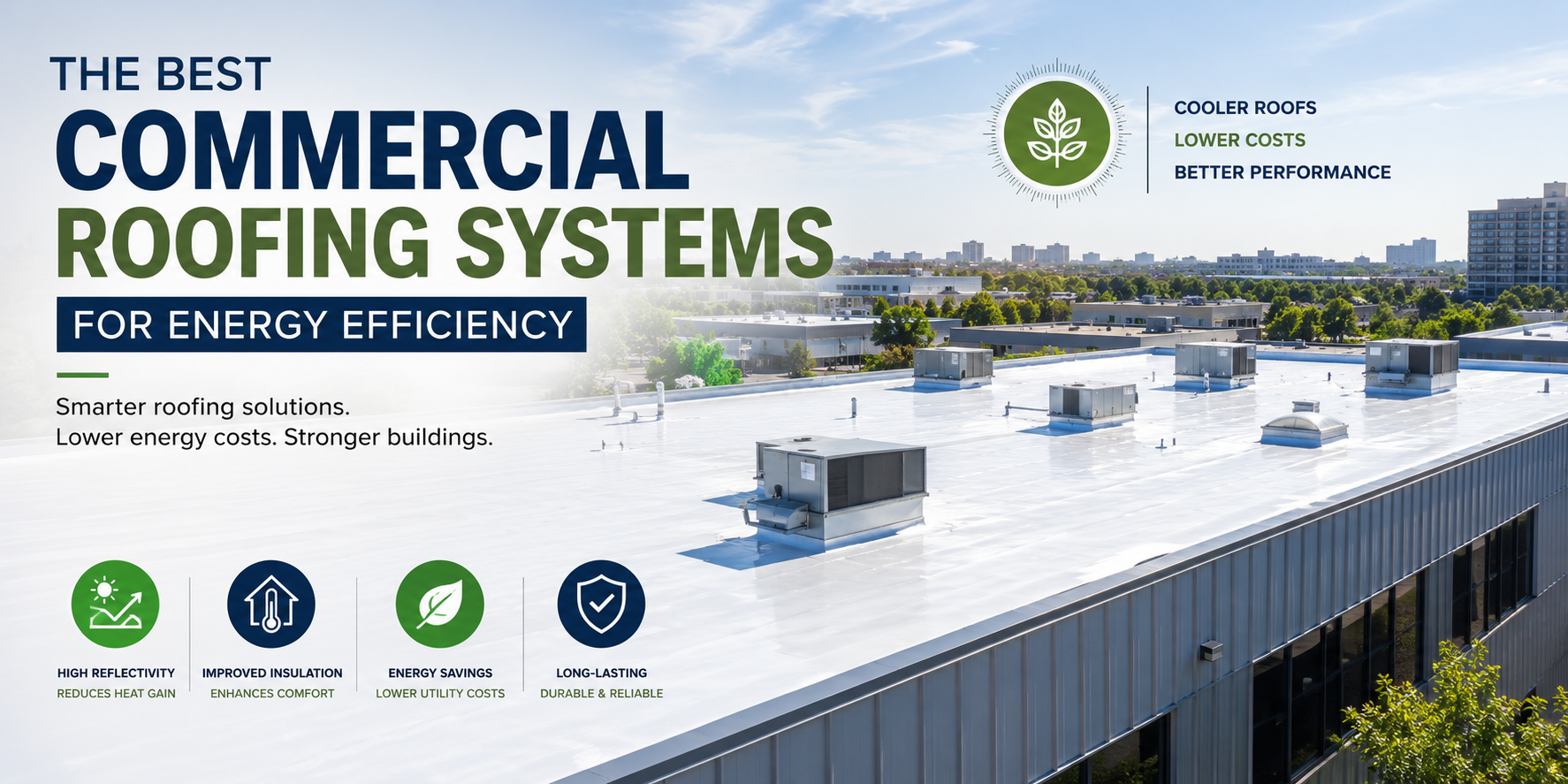
Most TPO roofing membranes are white or another light color. Their reflective surfaces help bounce sunlight away from the roof instead of absorbing it. As a result, TPO roofs often stay cooler during hot weather than many darker roofing materials.
Lower roof temperatures help reduce the amount of heat entering the building. This may decrease the workload placed on the air conditioning system, especially during long summer days. The amount of energy savings depends on factors such as insulation, climate, operating hours, and building design, but reducing heat gain supports better overall energy performance.
TPO roofing is also known for its heat-welded seams. During installation, the seams are fused together using heat rather than adhesives. This creates strong, watertight connections that help prevent leaks.
Another advantage is versatility. TPO performs well on many types of low-slope commercial buildings, including warehouses, schools, office buildings, shopping centers, and distribution facilities.
Like any commercial roofing system, TPO benefits from regular inspections and maintenance. Keeping drains clear and repairing minor issues early can help extend the roof’s service life.
PVC Roofing: Built for Demanding Commercial Environments
PVC, or Polyvinyl Chloride, is another single-ply roofing membrane that offers excellent energy performance. At first glance, it looks similar to TPO because it is often installed in white or other reflective colors. These light-colored surfaces help reduce heat absorption and keep roof temperatures lower.
Where PVC stands apart is its ability to perform well in demanding environments. Some commercial buildings release grease, oils, or chemicals onto the roof through exhaust systems. Over time, these substances can damage certain roofing materials. PVC resists many of these contaminants, making it a common choice for restaurants, food processing facilities, manufacturing plants, and some healthcare buildings.
Like TPO, PVC roofing uses heat-welded seams that provide dependable protection against water intrusion. Strong seams are especially valuable on large commercial roofs where hundreds of feet of roofing material are joined together.
Although PVC roofing usually costs more than TPO, some building owners find the added durability worthwhile, especially when the building’s operations expose the roof to harsh conditions.
Metal Roofing Systems Offer Long-Term Value
Metal roofing has been used on commercial buildings for decades because of its strength and long service life. Improvements in reflective coatings have also made metal roofing a practical choice for owners looking to improve energy efficiency.
Many commercial metal roofs are finished with reflective paint systems that reduce heat absorption. These finishes help keep the roof cooler while protecting the metal from weather and ultraviolet exposure.
One reason many owners choose metal roofing is its longevity. Although the upfront cost may be higher than some other roofing systems, metal roofs often provide dependable performance for many years when properly maintained.
For example, imagine a company building a new warehouse that it expects to occupy for several decades. Instead of choosing the lowest-cost roofing system, the owner may decide that investing in a durable metal roof offers better long-term value by reducing future replacement costs.
Metal roofing can also support sustainability goals. Many metal roofing products contain recycled materials, and the panels can often be recycled again when they eventually reach the end of their service life. Depending on the building’s design, metal roofing may also provide a suitable platform for future solar panel installations.
As with every roofing system, proper installation and routine maintenance play an important role in long-term performance.
Roof Coatings Can Improve Energy Efficiency Without Replacing the Roof
A complete roof replacement is not always necessary to improve a building’s energy performance. If an existing commercial roof remains structurally sound, a roof coating may improve performance while extending the roof’s service life.
Roof coatings create a new protective layer over the existing roofing system while improving its ability to reflect sunlight. By reducing heat absorption, these systems can help lower roof temperatures and improve overall energy performance.
For buildings that qualify for restoration, roof coatings can improve reflectivity, extend roof service life, and delay the need for a full replacement.
Several coating materials are commonly used on commercial roofs, including silicone, acrylic, and polyurethane. Each offers different benefits depending on the roof’s condition and the building’s environment.
Imagine an office building with a roof that is showing signs of weathering but remains structurally sound. After a professional inspection, the owner learns that a roof coating could provide several more years of service while improving the roof’s energy performance. This allows the owner to postpone a full roof replacement while continuing to protect the building.
Roof coatings are not the right solution for every building. If water has damaged the insulation or the roof structure has major problems, replacing the roofing system may provide better long-term value. A professional roof inspection can help determine which option is the better fit.
The Importance of Commercial Roof Insulation
Roofing materials receive a great deal of attention, but insulation is just as important when it comes to energy efficiency.
Insulation slows the movement of heat through the roof assembly. During hot weather, it helps keep outdoor heat from entering the building. During cooler weather, it helps retain conditioned air inside the building. This allows heating and cooling systems to operate more efficiently throughout the year.
Several insulation products are commonly used in commercial roofing systems, including polyisocyanurate (polyiso), expanded polystyrene (EPS), and extruded polystyrene (XPS). Each offers different characteristics, and the right choice depends on the building, roofing system, and project requirements.
Installation quality matters just as much as the insulation itself. Gaps, compressed insulation, or trapped moisture can reduce insulation performance. Even a small installation issue can affect how well the roof performs over time.
Although insulation is hidden beneath the roofing system, it plays one of the biggest roles in improving a building’s energy efficiency.
Should You Choose a White Roof?
White roofs are often associated with energy efficiency because they reflect more sunlight than darker roofing materials. This helps reduce roof temperatures during hot weather.
Buildings with large roof areas often benefit from reflective white roofing. Warehouses, shopping centers, office buildings, and manufacturing facilities may all experience improved energy performance when less heat is absorbed throughout the day.
However, roof color alone should not determine your decision.
The roof’s insulation, drainage, installation quality, and maintenance program all influence how well the roofing system performs. A white roof with poor insulation may not perform as well as another roofing system that has been carefully designed and professionally installed.
Climate also matters. Buildings in different parts of the country have different heating and cooling demands. Choosing the right roofing system means evaluating the building as a whole rather than focusing only on roof color.
Working with an experienced commercial roofing contractor can help you select a roofing system that matches your building’s needs and long-term goals.
Energy Efficiency Depends on the Entire Roofing System
It is easy to focus on roofing materials alone, but energy performance depends on the complete roofing system.
Good drainage allows water to leave the roof quickly. Standing water can shorten the life of roofing materials and may affect insulation if moisture enters the roof assembly.
Proper flashing around rooftop equipment, vents, skylights, and walls helps prevent water intrusion and unwanted air leaks. Although these details may seem minor, they play an important role in protecting the roofing system.
Routine maintenance also supports energy efficiency. Regular inspections make it easier to find and repair small problems before they become larger and more expensive. Replacing damaged flashing, repairing punctures, and keeping drains clear all help preserve the roof’s performance.
Every part of the roofing system works together. Quality materials, proper installation, effective drainage, and regular maintenance all contribute to better long-term energy performance.
How to Choose the Right Energy-Efficient Commercial Roofing System
Choosing a commercial roofing system involves more than comparing installation costs. Every building has different needs, so the best roofing system for one property may not be the best choice for another.
Start by evaluating the building itself. The roof’s size, slope, age, and current condition all influence which roofing systems are appropriate. Local weather conditions, rooftop equipment, and the building’s daily use should also be part of the decision.
Budget is another important consideration. While installation costs matter, it is also helpful to think about maintenance expenses, expected service life, repair costs, and potential energy savings over the life of the roof.
Long-term ownership plans also influence the decision. A property owner planning to keep a building for many years may place greater value on durability and long-term performance. Someone preparing a property for sale may focus on improving the building’s condition before listing it.
Working with an experienced commercial roofing contractor allows you to compare your options and select a roofing system that fits your building, your budget, and your long-term goals.
Conclusion
An energy-efficient commercial roof does much more than protect a building from the weather. It can help reduce heat entering the building, improve indoor comfort, support HVAC efficiency, and lower operating costs over time. TPO, PVC, reflective metal roofing, and roof coating systems each offer unique advantages, and the best choice depends on your building’s condition, how the property is used, your local climate, and your long-term plans.
It is also important to remember that energy efficiency depends on more than the roofing material alone. Quality insulation, professional installation, effective drainage, and regular maintenance all contribute to long-term performance. Looking at the entire roofing system instead of focusing on a single product gives you a better opportunity to make a sound long-term investment.
If you are planning a roof replacement, considering a restoration coating, or simply want to learn more about your roof’s condition, a professional evaluation is a smart place to begin.
The team at Solid Rock Commercial Roofing can inspect your roof, explain your options, and help you choose a roofing solution that fits your building and budget.
Schedule your appointment today by visiting https://solidrockcorp.com/contact-us/ or call Solid Rock Commercial Roofing at (316) 227-2628 to schedule your commercial roof evaluation.
Frequently Asked Questions
What is the most energy-efficient commercial roofing system?
There is no single roofing system that is best for every building. TPO, PVC, reflective metal roofing, and roof coating systems can all improve energy efficiency when paired with quality insulation, proper installation, and regular maintenance.
Do reflective commercial roofs really lower energy costs?
Reflective roofing systems reduce the amount of solar heat absorbed by the roof. This can reduce the workload on air conditioning systems during warm weather, although actual energy savings depend on factors such as climate, insulation, building size, and HVAC efficiency.
Is a white roof always the best choice?
Not necessarily. White roofs reflect more sunlight and often perform well in buildings with high cooling demands, but insulation, roof design, local climate, and installation quality are equally important when selecting the right roofing system.
Can a roof coating improve energy efficiency?
Yes. Reflective roof coatings can lower roof surface temperatures and improve energy performance while extending the life of a roof that is still structurally sound. A professional inspection can determine whether a roof is a good candidate for restoration.
Does roof insulation make a difference in energy efficiency?
Absolutely. Insulation slows the movement of heat through the roof assembly, helping reduce cooling costs during the summer and heating costs during colder months. Even highly reflective roofing systems benefit from proper insulation.
How long do commercial roofing systems typically last?
The lifespan of a commercial roof depends on the roofing material, installation quality, weather conditions, maintenance practices, and building use. Regular inspections and timely repairs can help maximize the roof’s service life.
How often should a commercial roof be inspected?
Many commercial roofing professionals recommend inspecting a commercial roof at least twice a year—typically in the spring and fall—and after severe weather events. Regular inspections can identify small issues before they develop into expensive repairs.
Should I restore my roof with a coating or replace it?
The answer depends on the roof’s condition. If the roof remains structurally sound, a coating may extend its service life and improve energy performance. If the roof has extensive damage, moisture intrusion, or failing insulation, replacement may be the better long-term investment.
This article is a collaboration between Solid Rock Corporation and OpenAI’s ChatGPT. Created on June 29, 2026, it combines easy-to-read information with Solid Rock’s expert oversight to ensure accuracy and relevance.
Recommended Reading
DOE Building America Solution Center: Cool Roofs
Summary: This resource from the U.S. Department of Energy explains how cool roofs work, discusses reflective roofing materials, and explores how climate affects roofing decisions. It provides science-based guidance that complements discussions about commercial energy-efficient roofing systems.
URL: https://basc.pnnl.gov/resource-guides/cool-roofs
ENERGY STAR® – Cool Roofs
Summary: ENERGY STAR provides an overview of cool roofing products, explains solar reflectance and thermal emittance, and discusses how reflective roofing can influence building energy performance. It’s a valuable reference for understanding the principles behind energy-efficient roofing.
URL: https://www.energystar.gov/products/roof_products
Oak Ridge National Laboratory – Building Envelope Research
Summary: Oak Ridge National Laboratory conducts extensive research on roofing systems, insulation, and building envelope performance. This resource offers technical insights into how roofing assemblies affect energy efficiency, durability, and long-term building performance.
URL: https://www.ornl.gov/research/buildings