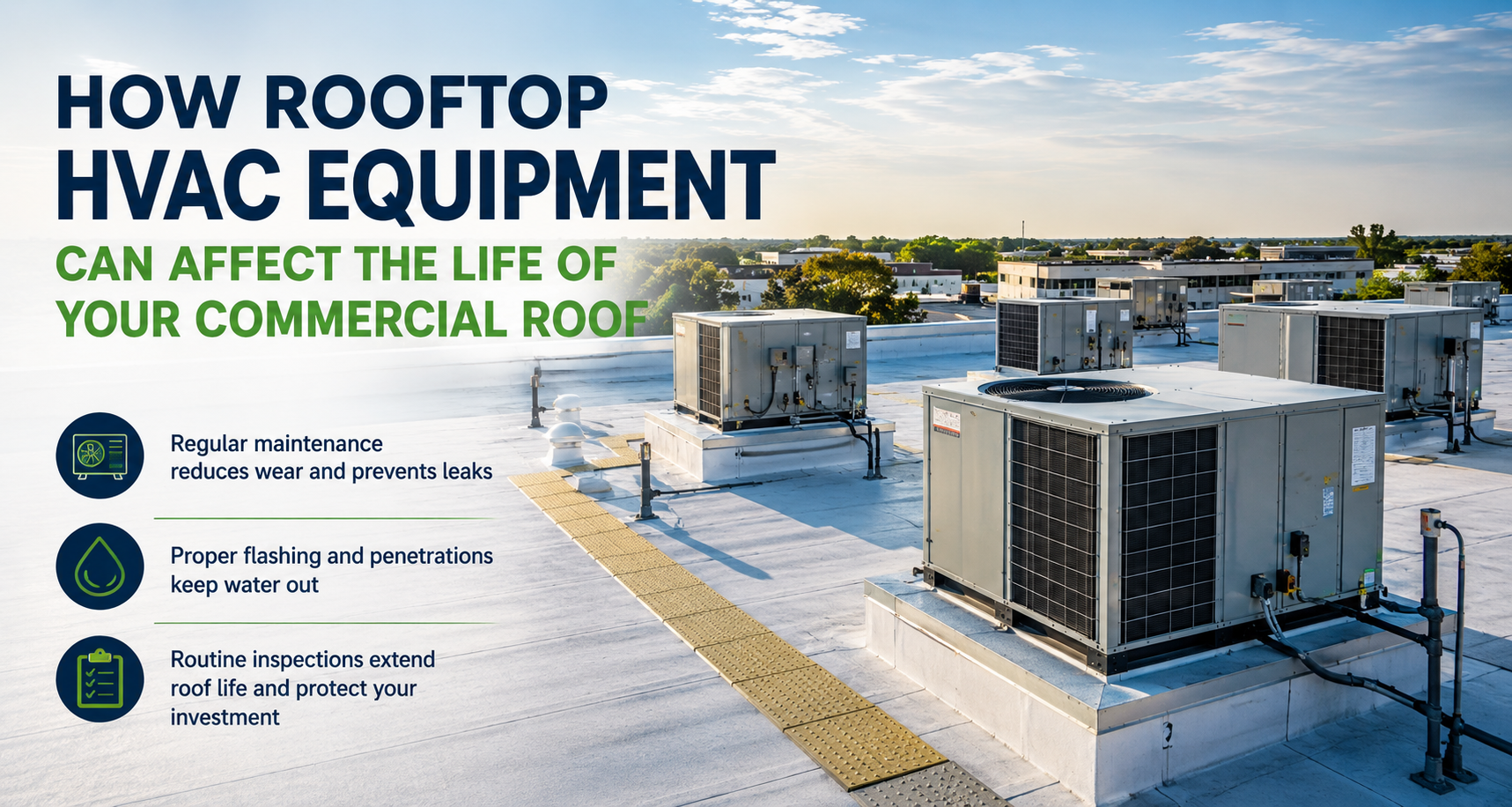
Commercial buildings rely on heating and cooling systems every day. These systems keep employees comfortable, protect equipment, and help businesses operate without interruption. In many commercial buildings, the HVAC equipment is installed on the roof. This design saves valuable indoor space and makes it easier for technicians to perform routine maintenance.
While rooftop HVAC equipment offers many advantages, it also affects the roof beneath it. Every maintenance visit, repair, and equipment replacement places additional stress on the roofing system. Over time, that extra activity can lead to wear that shortens the life of the roof if it isn’t properly managed.
Many building owners think of the roof and the HVAC system as separate parts of the building. In reality, they work together every day. The roof supports heavy mechanical equipment, keeps water out of the building, and protects the openings where pipes, wiring, and ductwork pass through the roof. If one system develops a problem, the other may also be affected.
Consider a commercial office building in Wichita during the middle of summer. The rooftop HVAC units are running throughout the day to keep employees comfortable despite the Kansas heat. During the year, HVAC technicians visit the roof several times to replace filters, inspect electrical components, check refrigerant levels, and complete other routine maintenance. Every visit requires people, tools, and equipment to move across the roof.
Most service calls are completed without causing any damage. However, years of foot traffic, changing weather, and normal aging can slowly wear roofing materials. Sealants may begin to crack, flashing can loosen, and small punctures may appear in the roof membrane. These issues often go unnoticed until water begins leaking into the building.
Fortunately, many of these problems can be avoided. Understanding how rooftop HVAC equipment affects your commercial roof allows building owners and facility managers to make better maintenance decisions that help protect both systems.
Whether you own an office building, warehouse, retail center, church, manufacturing facility, school, or healthcare building, protecting your roof helps protect your investment. If you’re looking for trusted professionals in commercial roofing Wichita, understanding how rooftop HVAC equipment affects your roof is an excellent place to begin.
Key Takeaways
- Rooftop HVAC equipment and your commercial roof work together as one system. Problems with one can affect the other.
- Routine HVAC service traffic can gradually wear down roofing materials, especially in high-traffic areas around rooftop units.
- Roof penetrations created for HVAC equipment, electrical conduit, gas lines, and drain pipes are common locations for roof leaks if flashing or sealants begin to fail.
- Proper flashing is essential for keeping water out of the roofing system and protecting the building from moisture damage.
- Coordinating roofing and HVAC maintenance helps prevent accidental damage during equipment installations, repairs, and replacements.
- Regular commercial roof maintenance allows small issues to be identified and repaired before they become costly problems.
- Building owners should watch for early warning signs such as water stains, cracked sealants, loose flashing, standing water, and recurring leaks around rooftop equipment.
- Installing walkway pads and using designated service paths can reduce unnecessary wear caused by technician foot traffic.
- Maintaining accurate records of roof inspections, HVAC service, and repairs helps property owners make informed maintenance decisions and plan future budgets.
- A proactive maintenance strategy can extend the life of a commercial roof, reduce repair costs, and minimize disruptions to business operations.
Why Rooftop HVAC Equipment Is Common on Commercial Buildings
Rooftop HVAC equipment has become the standard for many commercial buildings because it offers several practical benefits. It makes better use of interior space, reduces mechanical noise inside the building, and gives technicians convenient access for inspections and repairs.
Without large mechanical rooms inside the building, owners have more usable space for offices, storage, manufacturing, or retail displays. This added flexibility is one reason rooftop HVAC systems are so common in commercial construction.
Common types of rooftop HVAC equipment include:
- Packaged HVAC units
- Air handling units
- Exhaust fans
- Make-up air systems
- Condensing units
- Ventilation equipment
Although these systems improve building comfort and efficiency, they also create additional demands on the roofing system.
Each rooftop unit adds weight to the building’s structure. Every unit also requires electrical wiring, refrigerant lines, gas piping, drainage, or ductwork that must pass through the roof. These connections create openings that need to remain watertight throughout the life of the roof.
Unlike other areas that may receive little attention, the space around rooftop HVAC equipment sees regular activity. HVAC technicians visit these locations for seasonal maintenance, emergency service calls, inspections, and equipment replacements. As a result, these sections of the roof often experience more wear than other areas.
This doesn’t mean rooftop HVAC equipment is harmful to your roof. Instead, it means these areas deserve extra attention during routine maintenance and inspections. Taking care of both systems together can help extend the life of your commercial roof.
How Service Traffic Can Affect Your Commercial Roof
Weather is one of the biggest causes of roof wear, but it isn’t the only one. Routine foot traffic can also affect the condition of a commercial roof over time.
Every time technicians service rooftop HVAC equipment, they walk across the roofing system carrying tools, replacement parts, ladders, and testing equipment. A single visit is unlikely to damage the roof. However, repeated traffic over many years gradually wears down the roofing surface.
Preventative HVAC maintenance is necessary to keep equipment operating safely and efficiently. During these visits, technicians inspect motors, replace filters, test electrical systems, and perform many other tasks. While this work is essential, it also means certain areas of the roof receive far more traffic than others.
As technicians follow the same routes to rooftop units, those paths naturally begin showing more wear. Protective surfaces can become scuffed, seams may receive added stress, and the roof membrane may become more vulnerable to damage.
Service equipment can also affect the roof. Toolboxes, replacement motors, refrigerant cylinders, and ladders place concentrated weight on the roofing system. Even experienced technicians may accidentally drag equipment across the roof or drop a tool while working. Small punctures or scrapes may not seem serious at first, but they can create openings where water enters the roofing system.
Consider a shopping center with several rooftop HVAC units. The HVAC contractor visits every month to perform routine maintenance. Because there are no designated walkway pads, technicians naturally follow the shortest path from the roof access point to each unit.
After several years, the roofing materials along that route begin showing more wear than the surrounding roof. During one service visit, a heavy tool accidentally punctures the roof membrane. The opening is small enough that no one notices it.
A few weeks later, a strong thunderstorm moves through Wichita. Rain enters through the damaged area and begins soaking the insulation beneath the roof. The building owner doesn’t discover the problem until a tenant reports water stains on the ceiling.
The HVAC equipment wasn’t the direct cause of the leak. Instead, years of normal maintenance activity gradually weakened one section of the roof, making it easier for water to enter.
Fortunately, there are simple ways to reduce this type of wear.
Many commercial buildings install walkway pads around rooftop equipment. These reinforced paths protect the roofing surface while giving technicians a safe, consistent route to follow during service visits. Walkway pads also reduce unnecessary foot traffic across other areas of the roof.
Routine roof inspections provide another layer of protection. Since the areas around rooftop HVAC equipment experience the most activity, they should receive extra attention during every inspection. Small repairs made early can often prevent larger roofing problems later.
While service traffic is an important factor, it isn’t the only way rooftop HVAC equipment affects a commercial roof. The equipment itself also requires openings through the roofing system, and those openings need ongoing attention to remain watertight.
Understanding Roof Penetrations
Every rooftop HVAC system requires one or more roof penetrations. Although the term sounds technical, the concept is simple.
A roof penetration is any opening through the roof that allows pipes, electrical wiring, ductwork, conduit, drains, or other building systems to pass between the rooftop equipment and the interior of the building.
Some of the most common roof penetrations include:
- HVAC equipment curbs
- Refrigerant lines
- Electrical conduit
- Gas piping
- Vent pipes
- Drain lines
- Equipment supports
Each penetration interrupts the roof’s continuous weather barrier. If these openings are not properly protected, they can become places where water enters the roofing system.
When a commercial roof is installed, flashing and sealants are used to create a watertight seal around every penetration. These materials are designed to keep rain out while allowing the roof to expand and contract as temperatures change.
Over time, however, these materials naturally wear.
Kansas weather can be especially demanding on commercial roofs. Hot summer days, freezing winter temperatures, heavy rain, hail, and strong winds all place stress on roofing materials. As the roof expands in warm weather and contracts in colder temperatures, the flashing and sealants around roof penetrations move with it.
After years of this cycle, sealants may dry out, shrink, or crack. Flashing can loosen, creating small gaps where water begins entering the roofing system.
Rooftop HVAC equipment also produces small vibrations during normal operation. Although these vibrations are expected, they can slowly add to the wear around equipment curbs and utility connections over many years.
Consider a manufacturing facility with a rooftop HVAC unit that has been operating for more than fifteen years. The equipment continues to cool the building efficiently because it receives regular mechanical maintenance. However, the flashing and sealants around the equipment curb have been exposed to years of sunlight, storms, and changing temperatures.
Eventually, small cracks develop around the sealant. During a wind-driven rainstorm, water enters through one of those tiny openings and travels beneath the roof membrane. At first, the moisture remains hidden. Weeks later, a stained ceiling tile appears inside the building.
The leak seems to have come out of nowhere, but the damage actually began much earlier.
Water often travels beneath a commercial roofing system before becoming visible indoors. That is why the location of an interior leak does not always match the place where the water entered the roof.
Regular inspections help identify worn flashing and aging sealants before they lead to costly water damage. Paying close attention to roof penetrations is one of the most effective ways to extend the life of a commercial roof.
Why Proper Flashing Matters Around Rooftop HVAC Equipment
Once a roof penetration is created, it must be protected from water. That is where flashing plays an important role.
Flashing is installed around HVAC curbs, pipes, vents, walls, and other roof openings. Its job is to create a watertight seal and direct rainwater away from places where it could enter the building. When flashing is in good condition, it works quietly in the background, protecting the roof through heavy rain, snow, wind, and changing temperatures.
Like every part of a commercial roof, flashing does not last forever. Years of sunlight, weather, and normal building movement slowly wear it down. Sealants may dry out and crack. Metal flashing can loosen over time. Even small gaps can allow water to work its way beneath the roofing system.
This type of damage usually develops slowly. Most roof leaks do not begin with a major storm or a sudden failure. Instead, they often start with a small opening that grows larger over time.
For example, imagine an office building that replaces an older rooftop HVAC unit with a newer, more energy-efficient model. The installation goes smoothly, and the new equipment performs well. Everyone assumes the project is complete.
Several months later, employees notice water stains on a ceiling after a heavy rain.
A roofing inspection reveals that the HVAC equipment is working properly. The problem is the flashing around the equipment curb. During the replacement, part of the flashing was disturbed and no longer formed a complete seal with the roof. The opening was small enough to go unnoticed at first, but repeated rainstorms eventually allowed water to enter.
Situations like this show why roofing details are just as important as the equipment itself.
Some building owners try to solve small leaks by applying more caulk around rooftop equipment. While that may stop a leak for a short time, it does not always fix the underlying problem. If the flashing has pulled away or the roofing materials have been damaged, more sealant alone may not provide a lasting repair.
A professional roofing contractor can determine whether the flashing simply needs maintenance or whether it should be repaired or replaced.
When problems are addressed early, timely commercial roof repair can prevent water from reaching the insulation and roof deck. In many cases, fixing a small problem today helps avoid a much larger repair in the future.
Why Roofing and HVAC Maintenance Should Work Together
Commercial roofs and HVAC systems share the same space, so it makes sense to maintain them as a team.
Many building owners hire separate contractors for roofing and HVAC work. Each contractor has specialized knowledge, but they often work around the same equipment and the same roof penetrations. Good communication between both contractors helps protect the building.
Think about what happens during a rooftop HVAC replacement.
The old equipment must be disconnected and removed. A crane may lift it from the roof while another crane places the new unit into position. Electrical wiring, refrigerant lines, gas piping, and drainage connections may all need to be adjusted before the installation is complete.
While the focus is often on getting the new HVAC system running, the roofing system also deserves attention. The flashing around the equipment curb should be inspected. Sealants should be checked for damage. The surrounding roof membrane should also be examined to make sure it was not damaged during the project.
The same idea applies to smaller projects.
Adding a new exhaust fan, installing electrical conduit, relocating equipment, or running communication cables all require work on the roof. Each project creates another opportunity to inspect the surrounding roofing materials and make sure the roof remains watertight.
Planning roofing and HVAC work together offers several benefits.
It allows contractors to identify potential issues before they become leaks. It can reduce the need for repeat service visits. It also gives building owners confidence that both systems are working together to protect the building.
Good recordkeeping also makes a difference.
Facility managers should keep records of:
- Roof inspections
- HVAC maintenance visits
- Roof repairs
- Equipment replacements
- Storm inspections
- Preventative maintenance
These records provide a clear history of the building and help contractors understand previous work. They can also make it easier to spot recurring problems or plan future maintenance.
When roofing and HVAC contractors communicate with each other, building owners often avoid unnecessary repairs and reduce the chance of unexpected roof leaks.
Why Regular Roof Inspections Matter
Routine inspections are one of the best ways to extend the life of a commercial roof.
Many business owners understand the value of servicing their HVAC equipment before it breaks down. The same approach works for roofing systems. Looking for small problems before they become large ones helps protect both the building and the budget.
The areas around rooftop HVAC equipment deserve special attention because they experience more activity than most other parts of the roof. Service technicians visit these locations throughout the year, and every rooftop unit includes flashing, sealants, and roof penetrations that should be checked regularly.
During a professional roof inspection, a contractor looks for signs of wear that may not be obvious from the ground.
The inspection may include checking:
- Flashing around HVAC equipment
- Roof penetrations
- Roofing seams
- Sealants
- Drainage around rooftop units
- Punctures caused by foot traffic
- Areas of standing water
- Storm damage
- Signs of membrane wear
Many roofing problems are small when they first begin.
For example, a contractor may notice that the sealant around an HVAC curb has started to crack. The building owner has not seen any leaks, and the roof appears to be in good condition. Replacing the worn sealant during a routine inspection may prevent water from entering during the next heavy rainstorm.
That simple repair can add years to the life of the surrounding roofing materials.
Scheduling regular commercial roof maintenance also helps building owners plan ahead. Instead of waiting for an emergency repair, they can schedule maintenance when it is convenient and budget for future work based on the roof’s actual condition.
Routine inspections are especially valuable after severe Kansas weather.
Strong winds can loosen flashing around rooftop equipment. Hail can damage roofing materials. Heavy rain may reveal drainage problems that were not noticeable during dry weather.
A post-storm inspection can identify these issues before they lead to leaks or more extensive damage.
Commercial roofs are a major investment, and regular inspections help protect that investment. Finding a small problem early is usually much less expensive than repairing water damage after it spreads beneath the roofing system.
The roof should also be checked whenever new rooftop equipment is installed or existing equipment is replaced. This extra step helps confirm that the roofing system continues to provide the protection your building depends on every day.
Warning Signs Your Roof May Need Attention Around Rooftop HVAC Equipment
Commercial roofs usually give warning signs before a major leak develops. The challenge is that these signs can be easy to miss if no one is looking for them. By the time water appears inside the building, the problem may have been growing for weeks or even months.
Knowing what to watch for can help building owners and facility managers address roofing issues early, when repairs are often simpler and less expensive.
One of the first signs is water stains on ceiling tiles, walls, or around light fixtures. While these stains tell you that moisture has entered the building, they do not always point to the source of the leak. Water can travel beneath the roof membrane before it appears inside, so the leak may have started several feet away from where the stain is visible.
It’s also a good idea to look at the condition of the rooftop HVAC equipment and the roofing materials around it. Cracked sealants, loose flashing, or rust around equipment curbs can all suggest that water has been present or that the waterproofing system is beginning to wear out.
Standing water is another condition that deserves attention. After a heavy rain, it is normal for some roofs to hold small amounts of water for a short time. However, water that remains for several days can speed up the aging of roofing materials. Ponding water around rooftop HVAC equipment places additional stress on flashing, sealants, and the roof membrane.
Heavy foot traffic can also leave visible signs. Worn walking paths, scuffed roofing materials, small punctures, or damaged walkway pads may indicate that the roof is experiencing more wear than expected.
If you notice any of the following conditions, schedule a professional roof inspection as soon as possible:
- Water stains on ceilings or interior walls
- Loose or damaged flashing around rooftop equipment
- Cracked, missing, or dried-out sealant
- Standing water that remains after rainfall
- Torn or punctured roofing membrane
- Rust around rooftop equipment or supports
- Soft areas in the roof surface
- Leaks that return after heavy rain
- Areas that require repeated repairs
Finding one of these issues does not automatically mean the roof needs to be replaced. In many cases, a timely repair is all that is needed to restore the roof’s performance. The sooner a problem is identified, the easier it is to prevent additional damage.
Long-Term Ways to Protect Your Commercial Roof
Protecting a commercial roof is an ongoing process, not a one-time project. A consistent maintenance plan can help extend the roof’s service life, reduce repair costs, and lower the risk of unexpected leaks.
One of the most effective steps is scheduling regular roof inspections. Inspections provide an opportunity to identify worn flashing, aging sealants, damaged membranes, and other issues before they affect the building.
Routine HVAC maintenance is just as important. Well-maintained equipment is less likely to require emergency repairs that can increase rooftop traffic or lead to rushed work around the roofing system. When HVAC equipment performs as expected, technicians can focus on planned maintenance instead of responding to unexpected breakdowns.
Another smart investment is installing walkway pads in areas that receive frequent foot traffic. These reinforced paths help protect the roofing surface while giving service technicians a safe route to rooftop equipment. Over time, walkway pads can reduce wear on the roof and help preserve the surrounding roofing materials.
Building owners should also encourage communication between their roofing contractor and HVAC contractor. When a rooftop unit is replaced or new equipment is installed, both contractors should understand how the project affects the roof. Working together helps ensure that flashing, sealants, and roof penetrations remain properly protected after the work is complete.
Responding quickly to minor roofing issues is another important part of a good maintenance plan. A small puncture or loose section of flashing may not seem urgent, but delaying repairs gives water more time to enter the roofing system. Once moisture reaches the insulation or roof deck, repairs often become more expensive.
Depending on the age and condition of the roof, restoration may also be an option. In some cases, professionally installed roof coatings can help protect the existing roof from sunlight, weather, and normal aging. A commercial roofing professional can inspect your roof and determine whether a roof coating is a good fit for your building.
Finally, keep detailed maintenance records. Save reports from roof inspections, HVAC service visits, repairs, equipment installations, and storm damage assessments. These records provide valuable information about the condition of the roof over time and help you make informed decisions about future maintenance and budgeting.
A roof that receives regular care is more likely to provide reliable performance for many years than one that is only repaired after leaks develop.
Conclusion
Rooftop HVAC equipment is an important part of most commercial buildings, but it also places added demands on the roofing system. Service traffic, roof penetrations, changing weather, and normal wear all affect how long a commercial roof will last.
The good news is that many roofing problems can be prevented with a proactive maintenance plan. Regular inspections, prompt repairs, properly maintained flashing, and good communication between roofing and HVAC contractors all help protect the roof and extend its service life. Taking care of small issues before they grow into larger problems can also reduce repair costs and help prevent interruptions to your business.
If your building has rooftop HVAC equipment, now is a good time to have your roof inspected. A professional evaluation can identify areas that need attention and help you plan for future maintenance before leaks develop.
Solid Rock Commercial Roofing provides inspections, repairs, preventative maintenance, roof coatings, and roof replacement services for businesses throughout Wichita and the surrounding communities. If you need experienced professionals for commercial roofing Wichita, our team is ready to help.
Whether you need routine maintenance, repairs, or a complete roof evaluation, we’re here to help you protect your investment.
Request your free estimate today by visiting https://solidrockcorp.com/contact-us/ or call (316) 227-2628 to schedule an appointment with Solid Rock Commercial Roofing.
Frequently Asked Questions (FAQs)
How does rooftop HVAC equipment affect a commercial roof?
Rooftop HVAC equipment adds weight to the roof and requires penetrations for electrical, plumbing, and mechanical connections. Routine maintenance also increases foot traffic, which can wear down roofing materials over time if the roof is not properly maintained.
What are roof penetrations?
Roof penetrations are openings through the roofing system that allow pipes, conduit, ducts, vents, and other building systems to pass through the roof. Because they interrupt the roof’s waterproof surface, they require properly installed flashing and sealants to prevent leaks.
Why do roof leaks often occur around HVAC equipment?
Many roof leaks develop around rooftop HVAC equipment because flashing and sealants naturally wear over time. Equipment vibration, changing temperatures, and years of weather exposure can create small openings where water enters the roofing system.
How often should a commercial roof be inspected?
Most commercial roofs should be professionally inspected at least twice a year—typically in the spring and fall. Additional inspections are recommended after severe storms, hail events, major HVAC installations, or significant roof repairs.
Can HVAC technicians accidentally damage a commercial roof?
Yes. Although HVAC technicians work carefully, routine service requires walking across the roof with tools and equipment. Over time, repeated foot traffic, dropped tools, or heavy equipment can cause membrane wear or punctures if protective walkway pads are not in place.
What are walkway pads, and why are they important?
Walkway pads are reinforced sections installed on commercial roofs to protect areas that receive frequent foot traffic. They help reduce wear on the roofing membrane while providing technicians with safer, designated walking paths.
Should roofing contractors inspect the roof after HVAC equipment is replaced?
Yes. Replacing rooftop HVAC equipment can disturb flashing, sealants, and nearby roofing materials. A roof inspection after the installation helps confirm that the roofing system remains watertight and that no damage occurred during the project.
Can roof coatings help protect a commercial roof with rooftop HVAC equipment?
In some cases, yes. If the roof is structurally sound and a good candidate for restoration, a professionally installed roof coating can help protect the roofing system from UV exposure and weather while extending its service life. A commercial roofing contractor can determine whether a roof coating is appropriate for your building.
What are the first signs of roof problems around rooftop HVAC units?
Common warning signs include water stains on ceilings, cracked or missing sealant, loose flashing, standing water, torn roofing materials, rust around rooftop equipment, and recurring leaks after heavy rain.
Why is preventative roof maintenance important?
Preventative maintenance helps identify and correct small roofing problems before they develop into expensive repairs. Regular inspections also help extend the roof’s service life and support better long-term budgeting for commercial property owners.
This article is a collaboration between Solid Rock Corporation and OpenAI’s ChatGPT. Created on July 15, 2026, it combines easy-to-read information with Solid Rock’s expert oversight to ensure accuracy and relevance.
Recommended Reading
1. Roof System Maintenance Manual
National Roofing Contractors Association (NRCA)
The NRCA’s Roof System Maintenance Manual provides comprehensive guidance on maintaining commercial roofing systems, identifying common problem areas, and developing preventative maintenance programs. It is an excellent resource for facility managers and commercial property owners looking to extend roof life.
Link: https://www.nrca.net/roofing
2. Preventive Maintenance for Commercial HVAC Systems
ASHRAE (American Society of Heating, Refrigerating and Air-Conditioning Engineers)
ASHRAE offers technical guidance on preventive HVAC maintenance, emphasizing the importance of regular inspections and proper servicing to improve equipment reliability and building performance. This resource complements roofing maintenance by highlighting the operational side of rooftop mechanical systems.
Link: https://www.ashrae.org/
3. Preventive Maintenance
Building Owners and Managers Association (BOMA) International
BOMA provides educational resources and best practices for commercial building maintenance, including preventative maintenance planning, asset management, and facility operations. It offers valuable insight into coordinating maintenance activities across multiple building systems, including roofing and HVAC.
Link: https://www.boma.org/education/