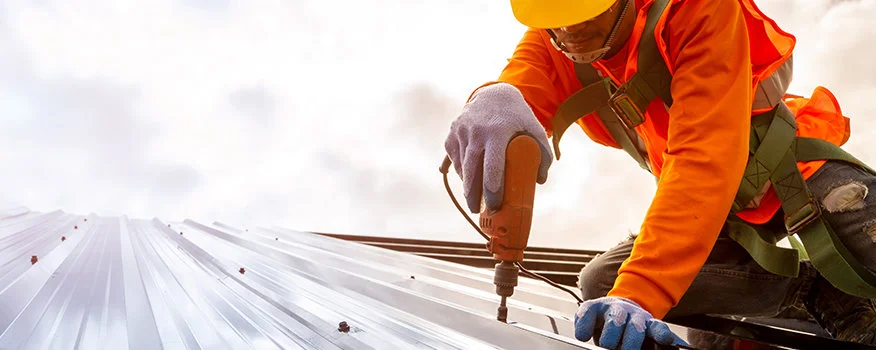
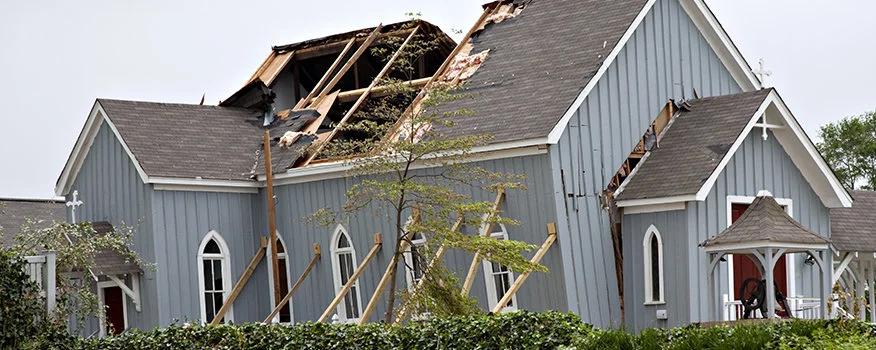
When choosing between TPO and PVC for a Wichita commercial roof, both materials are excellent choices, but PVC often has a slight edge in extreme cold because it remains more flexible at lower temperatures, while TPO is highly durable but can become slightly more brittle as it ages if not maintained. Choosing the right material depends on your building’s specific needs, such as chemical exposure or your long-term budget.
Key Takeaways: TPO vs. PVC Roofing in Kansas
Choosing between TPO and PVC involves understanding how each material handles the extreme temperature fluctuations of a Wichita winter.
Material Performance in Cold Weather
- Flexibility is Key: PVC contains plasticizers that keep it soft and rubbery even in sub-zero temperatures. TPO is durable but can become brittle after 15–20 years of aging.
- Thermal Movement: Kansas roofs must stretch and shrink rapidly. PVC acts like a “rubber band,” while older TPO can act like a “dry twig” and crack under pressure.
- Freeze-Thaw Resistance: PVC’s chemically welded seams are often stronger and more resistant to the “wedging” effect of expanding ice compared to other materials.
Application and Suitability
- Chemical Resistance: PVC is the standard choice for restaurants or factories due to its natural resistance to grease, oils, and chemicals.
- Cost vs. Value: TPO is more budget-friendly upfront and offers excellent summer reflectivity. PVC has a higher initial cost but typically lasts 5–10 years longer.
- Complex Roofs: PVC is generally easier to form around complex shapes like pipes and vents, whereas TPO is ideal for large, open warehouse spaces.
Maintenance and Safety
- Winter Slippiness: Both membranes are extremely slippery when frosted or wet. Installing walkway pads is highly recommended for safety and membrane protection.
- Winter Repairs: While emergency hot-air welding is possible in 10°F weather, it is difficult and less reliable than repairs done during warmer “weather windows.”
- Snow Loads: Both materials are strong enough to support heavy Kansas snow, provided the building’s structural bones are sound. Their smooth surfaces actually help snow slide toward drains more efficiently.
Why is “cold-weather flexibility” so important for Kansas roofs?
Cold-weather flexibility is critical because roofing membranes must be able to stretch and shrink as the temperature changes without cracking or shattering, a process called thermal expansion and contraction. In Wichita, the temperature can drop 40 degrees in a single evening, forcing your roof to move rapidly.
If a roofing material is too stiff or “brittle,” it cannot handle this movement. Think of a rubber band versus a dry twig. In the summer, both might seem fine. But in the winter, the rubber band (flexible material) still stretches, while the twig (brittle material) snaps. PVC (Polyvinyl Chloride) contains “plasticizers,” which are chemicals that keep the membrane soft and rubbery even when it is below zero. TPO (Thermoplastic Polyolefin) is also flexible, but as it gets older—usually after 15 to 20 years—it can lose some of that “stretch,” making it more likely to develop small cracks during a deep freeze.
How does the Kansas “Freeze-Thaw Cycle” damage a commercial roof?
The Kansas freeze-thaw cycle damages a roof by allowing water to seep into tiny gaps during a warm afternoon and then forcing that water to expand as it turns into ice at night, which physically tears the roofing material apart. This cycle can happen over 100 times in a single Wichita winter.
Water is unique because it grows larger when it freezes. If you have a small, weak seam in your roof, water will find it. When that water turns to ice, it acts like a wedge, pushing the seam open further. According to the National Roofing Contractors Association (NRCA), the “mechanical stress” caused by this constant movement is one of the leading causes of premature roof failure in the Midwest [Source: NRCA Weathering Studies: https://www.nrca.net/technical]. Both PVC and TPO are designed to resist this, but because PVC seams are “chemically welded” together, they often stay stronger for a longer period of time under the pressure of expanding ice.
What are the main differences between TPO and PVC membranes?
The main differences between TPO and PVC are their chemical makeup, their resistance to grease and chemicals, and their overall lifespan, with PVC being the older, more “proven” technology and TPO being the newer, more budget-friendly option. Both are “single-ply” membranes, meaning they are installed in one thick layer.
- TPO (Thermoplastic Polyolefin): This is usually white and very reflective, which helps save money on cooling bills in the summer. It is a very “tough” material that resists punctures and tears. It is often the most popular choice for warehouses and retail stores because it is more affordable to install.
- PVC (Polyvinyl Chloride): This is the “heavy-duty” option. It is naturally resistant to grease, oils, and chemicals, making it the only real choice for restaurants or factories. Because of the plasticizers mentioned earlier, it stays very flexible throughout its entire life, which can often last 25 to 30 years.
While TPO has improved a lot over the last decade, PVC still holds the record for the longest-lasting performance in extreme climates. If your budget allows for the higher initial cost, PVC often provides the best “peace of mind” during a record-breaking Kansas winter.
Can TPO or PVC handle the weight of heavy Kansas snow?
Yes, both TPO and PVC are extremely strong and can easily handle the weight of heavy snow, provided that the building’s underlying structure (the deck and beams) is in good condition. The membrane itself is not what supports the weight; the building’s “bones” do that work.
However, the “smoothness” of these roofs is a big advantage. Because they are slick, snow and ice can often slide toward the drains more easily than they would on a rough gravel roof. This helps prevent the snow from piling up too high. In a hypothetical situation, a roof with 12 inches of heavy, wet snow can hold over 20 pounds per square foot [Source: FEMA Snow Load Data: https://www.fema.gov/fact-sheet/snow-load-safety-guide]. A properly installed TPO or PVC roof from Solid Rock Commercial Roofing ensures that the waterproof skin stays intact even under this massive pressure, preventing the water from leaking in as the snow begins to melt.
Which material offers a better Return on Investment (ROI) for Wichita owners?
TPO generally offers a faster return on investment due to its lower upfront cost and high energy efficiency, while PVC offers a better “total life cycle” value because it typically lasts 5 to 10 years longer than a standard TPO roof. The “best” ROI depends on how long you plan to own the building.
Hypothetical ROI Comparison:
- TPO Project: Costs $40,000. Lasts 20 years.
- Cost per year: $2,000.
- Benefit: Very high summer energy savings.
- PVC Project: Costs $55,000. Lasts 30 years.
- Cost per year: $1,833.
- Benefit: Superior winter flexibility and chemical resistance.
If you are planning to sell the building in 5 years, TPO is likely the smarter financial move. If you are a family business that plans to keep the building for 40 years, the PVC roof is actually the cheaper option over the long run because you won’t have to replace it as soon.
Frequently Asked Questions (FAQs)
Is TPO or PVC more slippery in the winter?
Both materials are extremely slippery when wet or covered in frost. This is a major safety concern for anyone walking on your roof. If your roof requires frequent maintenance (like for HVAC units), we recommend installing “walkway pads.” These are thick, textured mats that are welded directly to the roof to provide a safe, non-slip path for workers, protecting both the people and the roof membrane.
Can you repair TPO and PVC in the middle of winter?
Yes, but it is difficult. These roofs are repaired using “hot air welding.” If it is 10 degrees outside, the welding machine has to work much harder to reach the 800-degree temperature needed to melt the material. Furthermore, the “patch” material must be warmed up so it doesn’t crack. While emergency repairs are possible, we always prefer to do permanent welding during “weather windows” where the temperature is at least 40 degrees.
Do these roofs come in colors other than white?
Yes! While white is the most popular because it saves energy, TPO and PVC come in grey, tan, and even custom colors. In Kansas, some owners prefer a light grey or tan roof. These colors still reflect a lot of sunlight but don’t show dirt as easily as a bright white roof. From an energy standpoint, white is still the champion for summer savings, but any light color will perform well.
Which material is better for a roof with many “penetrations” (pipes and vents)?
PVC is often easier to install around complex shapes because it is more flexible and easier to “form” around pipes and corners. If your roof has dozens of vents, skylights, and AC units, a PVC membrane might result in a more reliable, watertight finish. TPO is great for large, open “big box” roofs with fewer interruptions.
Conclusion & Call to Action: Choosing Your Winter Shield
Wichita winters don’t play fair. The combination of sub-zero temperatures, high winds, and the constant freeze-thaw cycle will find the weakness in any roof. Whether you choose the tough, budget-friendly durability of TPO or the long-lasting, cold-weather flexibility of PVC, the most important factor is the quality of the installation. A roof is only as good as its seams, and in Kansas, those seams need to be perfect.
Contact Solid Rock Commercial Roofing today for a free consultation. Our Wichita experts will look at your building, your budget, and your business goals to help you choose the perfect membrane. We will make sure your building is protected by a roof that can handle everything the Kansas clouds throw at it.
Call us now to schedule your inspection and choose the right material to survive this winter!