Introduction
Many commercial buildings in Kansas have flat roofs. They’re common on warehouses, schools, offices, and stores. But by year ten, many of these roofs are already leaking or showing serious damage. Some even need full replacements.
Why do flat roofs fail so soon?
The reasons usually come down to three things: Kansas’s tough weather, poor installation, and skipped maintenance. Summer heat, winter ice, hail, and strong winds can all wear down a roof quickly—especially if it wasn’t built or cared for properly.
The good news? Most early roof problems can be avoided. In this article, we’ll show you:
- The main reasons flat roofs fail early in Kansas
- The warning signs to watch for
- How to make your roof last longer
If you manage a commercial building in Wichita, Derby, Newton, or nearby, this guide is for you.
Key Takeaways
- Flat Roofs Should Last 15–30 Years
- Most flat roofs in Kansas fail early due to weather, poor installation, or lack of maintenance—not because they’ve reached their full lifespan.
- Most flat roofs in Kansas fail early due to weather, poor installation, or lack of maintenance—not because they’ve reached their full lifespan.
- Kansas Weather Accelerates Roof Wear
- Heat, freeze-thaw cycles, hail, and wind all contribute to early damage if the roof isn’t built or maintained for local conditions.
- Heat, freeze-thaw cycles, hail, and wind all contribute to early damage if the roof isn’t built or maintained for local conditions.
- Common Causes of Early Failure Include:
- Improper installation (poor slope, loose seams, weak flashing)
- Standing water and clogged drains
- Low-quality or weather-incompatible materials
- Skipped inspections and repairs
- Storm damage left unaddressed
- Adding new layers over damaged roofs
- Improper installation (poor slope, loose seams, weak flashing)
- Watch for Early Warning Signs
- Blisters, bubbles, ponding water, soft spots, leaks, and rising energy bills are all signs your roof needs immediate attention.
- Blisters, bubbles, ponding water, soft spots, leaks, and rising energy bills are all signs your roof needs immediate attention.
- Routine Maintenance Extends Roof Life
- Inspections twice a year, plus after major storms, help catch issues early and avoid costly repairs or replacements.
- Inspections twice a year, plus after major storms, help catch issues early and avoid costly repairs or replacements.
- Roof Coatings Are a Cost-Effective Solution
- Reflective coatings can extend roof life by 10+ years, reduce cooling costs, and seal small cracks.
- Reflective coatings can extend roof life by 10+ years, reduce cooling costs, and seal small cracks.
- A Well-Maintained Roof Saves Money
- Preventing leaks, improving insulation performance, and avoiding full tear-offs lead to significant long-term savings.
- Preventing leaks, improving insulation performance, and avoiding full tear-offs lead to significant long-term savings.
- Solid Rock Commercial Roofing Offers Local, Honest Help
- Based in Wichita, Solid Rock provides expert installation, inspections, coating services, and insurance support for businesses throughout Kansas.
1. Kansas Weather Is Tough on Flat Roofs
Kansas weather changes fast. One day it’s hot and sunny; the next, it’s cold and snowy. These shifts put a lot of pressure on flat roofs.
Hot Summers
In the summer, roof surfaces can reach over 160°F. Heat causes roofing materials to dry out and crack. The sun also weakens seams and flashing over time.
Freeze-Thaw Cycles
In winter and early spring, temperatures swing above and below freezing. Water seeps into small cracks and freezes overnight. As it freezes, it expands, making the cracks worse. Over time, this cycle causes serious damage.
Hail and Wind Storms
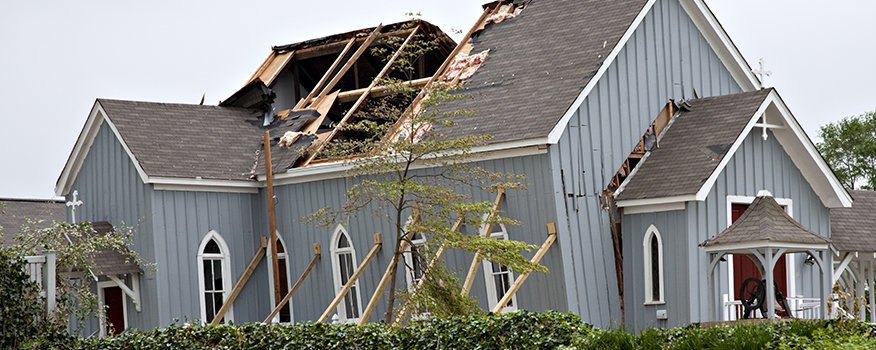
Kansas often sees hailstorms and strong winds. Even small hail can punch holes in an older roof. Wind can lift up edges and seams. If damage isn’t fixed right away, water can start getting in.
2. Why Flat Roofs Fail Before Their Time
Flat roofs are built to last 15 to 30 years—but many don’t. Here’s why:
A. Poor Installation
Even the best materials won’t last long if the roof is installed incorrectly. Common mistakes include:
- No slope for water to drain
- Seams not sealed properly
- Loose flashing around vents or edges
Example (fictional):
A business in Derby had a new flat roof installed. Within three years, it leaked around the AC units. The cause? Seams weren’t sealed properly, and rainwater found its way in.
B. Standing Water and Clogged Drains
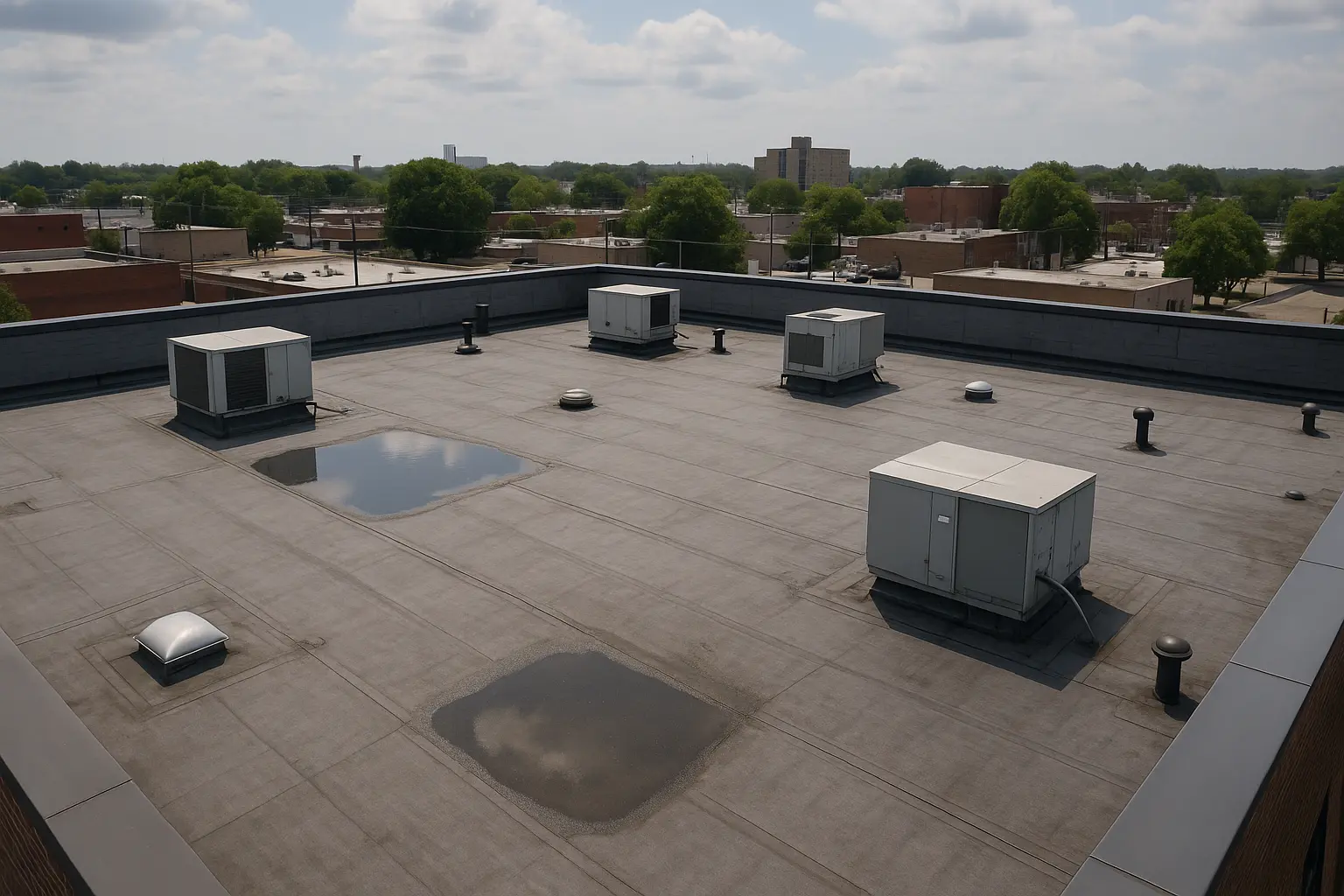
Flat roofs need a slight slope so water can drain. If the slope is wrong—or drains get blocked—water stays on the roof. Standing water can:
- Soften and wear out the roof surface
- Add weight that stresses the structure
- Grow algae and mold
- Cause leaks or sagging
Drains should be cleared regularly, especially after storms.
C. Skipped Maintenance
Flat roofs need care at least twice a year. Without it, small problems can grow quickly.
Watch for:
- Bubbles or blisters
- Soft or sunken areas
- Flashing that’s coming loose
Routine checks and minor repairs can prevent big issues later.
D. Low-Quality or Unsuitable Materials
Some roofs fail early because the wrong materials were used. For example:
- Thin membranes can tear during hailstorms
- Non-reflective roofs overheat in summer
- Poor adhesives may crack in cold weather
Always choose materials designed for Kansas’s extreme conditions.
E. Covering Up Old Problems
Adding a new roof layer over an old one may seem cost-effective, but it often hides deeper issues like trapped moisture or insulation damage. Kansas codes also limit buildings to two roofing layers. Ignoring this can lead to fines and forced replacements.
F. Delaying Storm Repairs
After storms, even small holes or cracks should be fixed quickly. Waiting allows water to seep in, damaging insulation and rusting metal parts. One small issue can become a major repair if left unchecked.
3. How Long Should a Flat Roof Last?
Some people think flat roofs only last 10 years. That’s not true. Most are built to last longer, if installed properly and maintained regularly.
Average Lifespans:
- TPO roofs: 15–25 years
- EPDM roofs: 20–30 years
- Modified Bitumen: 15–25 years
- Roof Coatings: 10–15 years (can be renewed)
Example (fictional):
A warehouse in Newton skipped inspections for years. At year ten, they found mold, water stains, and soggy insulation. The damage was too far gone—a full roof replacement was their only option.
4. Warning Signs: What to Watch For
You don’t have to wait for leaks to know your roof’s in trouble. Look for these warning signs:
On the Roof:
- Water that doesn’t drain within 48 hours
- Blistered or bubbled roof surfaces
- Cracked seams or missing flashing
- Algae, moss, or plant growth
- Rusted metal near edges or vents
Inside the Building:
- Water stains on ceilings
- Musty smells
- Soggy insulation
- Unexplained spikes in energy bills
Urgent Signs:
- Sagging areas on the roof
- Active leaks
- Torn or missing roof material
If you see any of these, call a roofing professional right away.
5. How Solid Rock Can Help
Solid Rock Commercial Roofing works with businesses across Kansas to protect and extend the life of their roofs. Here’s how we help:
A. Proper Installation
We install flat roofing systems using best practices tailored to Kansas weather. Our crews ensure:
- Correct slope
- Strong seams
- Secure flashing
B. Routine Inspections
We offer seasonal and post-storm inspections that include:
- Clearing debris
- Checking drains and flashing
- Finding and fixing minor problems
- Providing photos and notes for your records
C. Roof Coatings
Coatings can add 10+ years to the life of your roof. They:
- Reflect heat, lowering indoor temperatures
- Seal small cracks and prevent leaks
- Delay the need for full replacement
Our coatings are made for Kansas heat, wind, and hail.
D. Insurance Support After Storms
We help with storm damage reports and photos for insurance claims. Our team gives honest assessments—no pressure to replace what can be repaired.
E. Local, Reliable Service
We’re based in Wichita and serve the surrounding areas. That means fast response, familiar faces, and work you can trust.
6. Energy and Cost Savings of a Healthy Roof
Taking care of your roof doesn’t just prevent leaks—it also saves money.
Energy Savings:
- Reflective coatings reduce air conditioning use
- Dry insulation keeps warm air in during winter
- No leaks means fewer humidity and mold issues
Repair Savings:
- Small fixes now prevent large costs later
- Coatings cost 40–60% less than full replacements
- Staying ahead of damage may lower insurance claims
7. Conclusion: Keep Your Roof from Failing Early
Flat roofs in Kansas face heat, hail, wind, and fast-changing weather. Many fail early—not because they’re old, but because of skipped maintenance, poor installation, or delayed repairs. Fortunately, these problems are preventable.
To make your roof last longer:
- Use materials built for Kansas weather
- Ensure your roof drains correctly
- Schedule two inspections per year
- Fix small issues before they grow
- Apply coatings when signs of aging appear
At Solid Rock Commercial Roofing, we help building owners extend the life of their roofs. Whether you need a quick inspection or a full maintenance plan, we’re ready to help.
???? Call us today at (316) 227‑2628
???? Or visit solidrockcorp.com/contact-us
Frequently Asked Questions (FAQs)
How long should a commercial flat roof last in Kansas?
A properly installed and maintained flat roof in Kansas should last between 15 and 30 years, depending on the material. Coatings can extend the life of some roofs by an additional 10+ years.
Why do so many flat roofs fail after only 10 years?
Early failure usually happens due to:
- Use of cheap or unsuitable roofing materials
- Improper installation
- Poor drainage and ponding water
- Lack of regular inspections
- Damage from storms that goes unrepaired
What are the early signs of flat roof problems?
Warning signs include:
- Rising energy bills due to wet insulation
- Standing water after 48 hours
- Blisters or bubbles in the roofing surface
- Cracks in seams or flashing
- Interior water stains or mold
Can I just add a new layer on top of an old flat roof?
In some cases, yes—but only if the existing roof is dry and undamaged. Kansas building codes limit roofs to two layers. Adding another layer over a damaged one can trap moisture and lead to faster failure.
How often should I have my flat roof inspected?
We recommend at least two inspections per year (spring and fall), plus an inspection after any major storm. Regular checkups help catch small problems before they turn into major repairs.
What is a roof coating, and when should I consider one?
A roof coating is a protective layer that reflects sunlight, seals small cracks, and prevents water from soaking in. It’s a good option for roofs that are aging but still structurally sound. Coatings can extend roof life by 10 years or more and help reduce cooling costs.
How does Solid Rock Commercial Roofing help with storm damage claims?
We provide photos, documentation, and professional assessments to help with your insurance claim. We don’t pressure you to replace a roof that can be repaired—we focus on honest, cost-effective solutions.
What types of roofing does Solid Rock install or service?
We install and service all major flat roofing systems, including:
- TPO
- EPDM
- Modified Bitumen
- Elastomeric and reflective coatings
Is Solid Rock a local company?
Yes! We’re based in Wichita, Kansas and serve commercial clients across Wichita, Derby, Newton, and surrounding communities. We understand the weather challenges unique to Kansas and respond quickly to service calls.
How do I schedule a roof inspection or service?
You can call us at (316) 227‑2628 or fill out a request form online at:
???? https://solidrockcorp.com/contact-us
This article is a collaboration between Solid Rock Corporation and OpenAI’s ChatGPT. Created on Aug 18, 2025, it combines AI-generated draft material with Solid Rock’s expert revision and oversight, ensuring accuracy and relevance while addressing any AI limitations.