I. Introduction
If you manage a commercial building in Wichita, you already juggle many responsibilities. From working with tenants to managing repairs and budgets, your job is full of important tasks. One task that often gets delayed—until there’s a problem—is checking the condition of your building’s roof.
Doing an annual roof report can help you avoid costly repairs later. A good report doesn’t just find leaks. It helps you catch small issues early, plan repairs, set a budget, and show building owners that the property is well cared for. It also gives you the records you need for warranties or insurance claims after a storm.
In this guide, you’ll learn what a strong commercial roof report should include—and how Solid Rock Commercial Roofing can help make the job easier.
Key Takeaways
- Annual Roof Reports Are Essential
A yearly commercial roof report helps property managers catch issues early, avoid expensive repairs, and maintain building value. - Kansas Weather Demands Regular Inspections
Wichita’s extreme weather—hail, wind, heat, and freezing—makes regular roof inspections even more important for long-term roof performance. - A Good Report Includes Specific Elements
Every roof report should cover the building’s roof system, photos (with labels), current condition, drainage, repair history, safety access, and clear repair recommendations. - Photos and Visuals Add Credibility
Labeled, timestamped photos help document the roof’s condition and support insurance or warranty claims. - Timing Matters
Schedule inspections in spring and fall, after major storms, or during budget planning cycles to stay ahead of damage and costs. - Mistakes Can Be Costly
Skipping inspections, ignoring small problems, or producing vague reports can lead to major repairs, tenant complaints, and lost warranty coverage. - Make It Part of a Long-Term Plan
Annual reports help track wear, predict future costs, and support smart decision-making for repairs or replacements. - Solid Rock Simplifies the Process
Solid Rock Commercial Roofing provides detailed, photo-rich reports, expert inspections, and personalized consultations to help Wichita-area property managers manage their roofs with confidence. - Clear, Actionable Reports Build Trust
Whether it’s for owners, investors, or insurance agents, a well-prepared roof report demonstrates professional property management. - Schedule Your Inspection Today
Solid Rock makes it easy to stay on top of your roof’s condition. Call (316) 227-2628 or visit solidrockcorp.com/contact-us to schedule your inspection.
II. Why a Roof Report Is Important
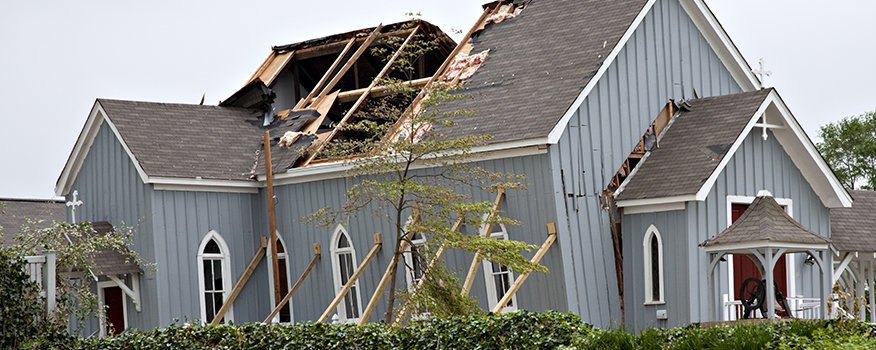
Kansas weather can be tough on commercial roofs. With hot summers, cold winters, hail, and high winds, even strong roofs get worn down over time.
Doing a roof report each year helps you:
- Catch problems early – Small cracks or leaks can grow fast if ignored.
- Make better repair plans – Know what needs fixing now and what can wait.
- Prepare your budget – Avoid surprise costs by planning ahead.
- Keep owners and investors informed – Show them that the building is being managed well.
- Support warranty and insurance claims – A report shows the roof’s condition before and after any damage.
Example: A warehouse manager in Wichita spots a blister on the roof membrane. By fixing it right away and documenting it in the report, they avoid a major leak and damage to stored inventory.
III. What to Include in a Roof Report
Your roof report should be clear, easy to read, and include all key details. Here’s what you should cover:
A. Building and Roof Basics
Start with general information:
- Building name and address
- Roof size (square feet)
- Roof type (like TPO, EPDM, metal)
- Installation year
- Warranty status and installer name
This helps others understand what kind of roof they’re reading about.
B. Photos and Visuals
Photos help explain what’s going on:
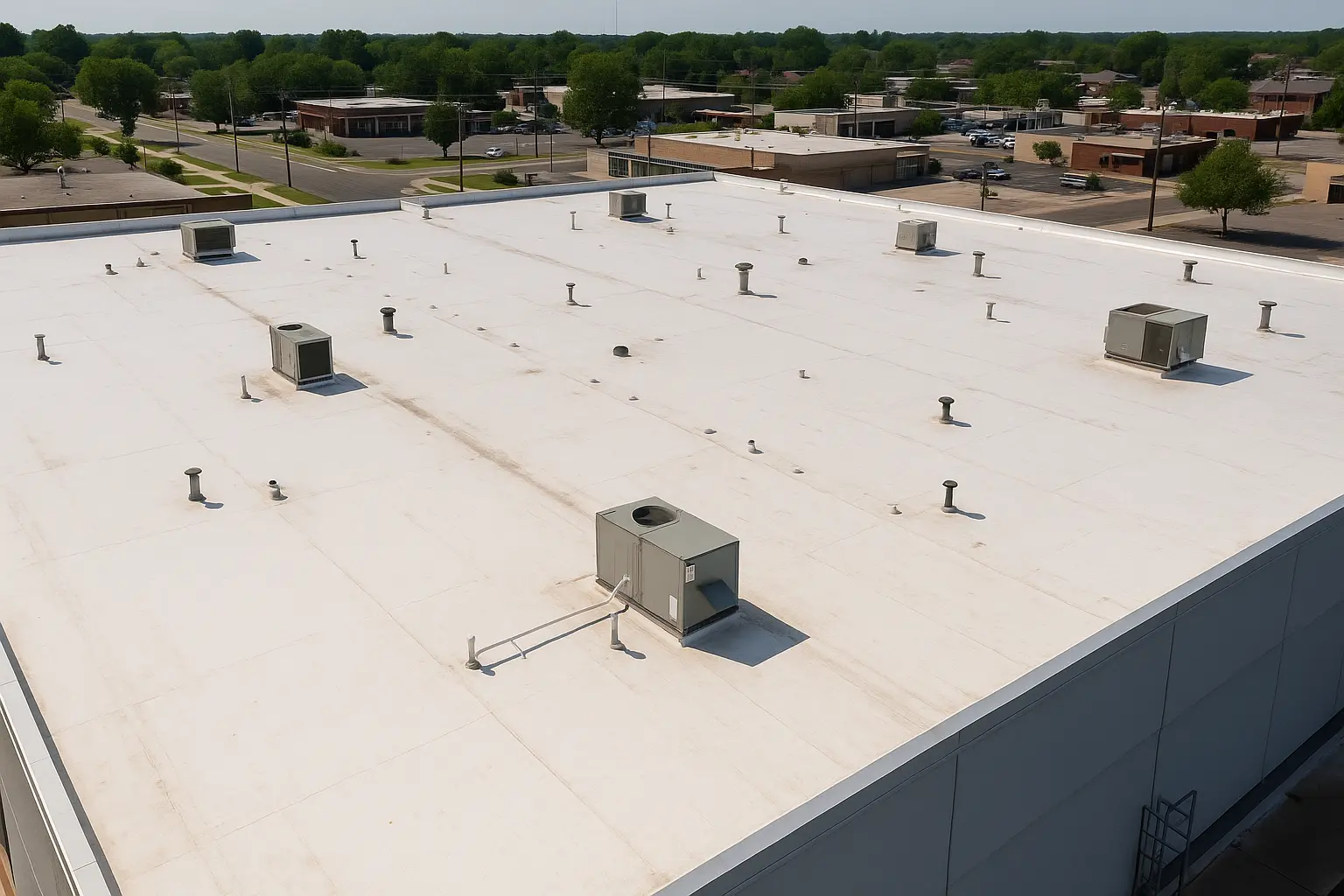
- Wide shots of the whole roof
- Close-up images of damaged areas
- Photos of drains, seams, and curbs
- Before and after pictures for any repairs
- Labels showing where each photo was taken
- Drone photos, if the roof is large
Example: You take a photo of standing water near a clogged drain. Later, you add a second photo showing the cleaned drain with no standing water.
C. Current Roof Condition
Write down what you find:
- Cracks, splits, or bubbles in the roof
- Loose seams or fasteners
- Worn or missing flashing
- Areas where the roof connects to HVAC units or skylights
- Notes about past repairs and whether they’re still holding up
D. Drainage
Make sure water can drain off the roof:
- Are drains or scuppers blocked?
- Is there standing water or signs of mold?
- Is the roof sloped properly to drain?
- Are there any plants growing where they shouldn’t be?
E. Leak and Repair History
List previous problems and fixes:
- Where and when leaks happened
- What was done to fix them
- If the repairs were successful
- Any problems that still need attention
F. Roof Safety
Check for safe access and working conditions:
- Is the ladder secure and easy to use?
- Are there safety rails or warning signs?
- Are there trip hazards, loose panels, or damaged walkways?
G. Repair Recommendations
Break down your suggestions:
- Urgent repairs (within 6 months)
- Medium-term issues (6–18 months)
- Long-term upgrades or replacements (2+ years)
- Estimated costs for each step
This makes it easier to plan and budget for future work.
IV. How Solid Rock Commercial Roofing Helps
At Solid Rock, we work with building managers throughout Wichita and the surrounding areas. We take care of the hard part—so you can focus on your job. Here’s what we offer:
- Skilled Inspectors – Our team understands local roofing systems and weather damage.
- Clear Reports – You’ll get a photo-filled report with notes that are easy to understand.
- Professional Format – Our reports are made to share with building owners and investors.
- Personal Support – We’ll go over the report with you and explain everything step by step.
Example: A property manager for a shopping center gets a detailed report from Solid Rock. It includes 20 photos, repair priorities, and a five-year plan. The report helps them get repair funding approved by the building owner.
V. What to Ask When Reviewing a Roof Report
After the inspection, review the report with these questions in mind:
- Is anything causing damage right now?
- Will any of these problems affect the warranty?
- Can we fix the roof now, or is replacement coming soon?
- What should I budget for next year?
- Will this report help if we file an insurance claim?
Solid Rock designs every report to help answer these questions clearly and confidently.
VI. When to Schedule a Roof Inspection
Timing matters when it comes to roof inspections. Here’s when to schedule one:
- Spring – Look for damage after freezing weather
- Fall – Check drains and roof materials before winter
- After storms – Hail, wind, or tornadoes can do damage fast
- Before budget season – Late summer or early fall is great for planning costs
Some roofs may need two inspections a year—especially if they’re old or have lots of equipment on them.
VII. Mistakes to Avoid
Avoid these common problems when making or reviewing roof reports:
- Forgetting to include clear, labeled photos
- Skipping past repairs or leaving out important history
- Ignoring small problems that could grow worse
- Relying only on building staff for inspections
- Not keeping warranty records up to date
Solid Rock’s process helps you avoid these mistakes by giving you a complete and clear report every time.
VIII. Make It Part of a Long-Term Plan
A single report is useful—but when you do one every year, you can build a bigger plan:
- Watch for patterns in roof wear
- Track repeat repairs
- Decide when repair costs are getting too high
- Explore roof coating or restoration to delay full replacement
- Make smarter spending choices with more data
Solid Rock keeps your past reports, so you can look back and compare each year.
IX. Conclusion: Protect Your Roof, Your Budget, and Your Building
Staying on top of your roof’s condition doesn’t need to be difficult. A yearly roof report helps you catch small issues early, plan your maintenance, avoid surprise costs, and give owners peace of mind. It also provides the proof you need for insurance or warranty coverage when storms hit.
At Solid Rock Commercial Roofing, we help property managers across Wichita stay ahead of roof problems. We provide expert inspections and easy-to-understand reports that are ready to share with building owners or investors.
Call us at (316) 227-2628 or book your inspection today at:
???? https://solidrockcorp.com/contact-us
Let us help you keep your roof in good shape—before small problems become big ones.
Frequently Asked Questions (FAQs)
What is a commercial roof report?
A commercial roof report is a written document that includes detailed observations about a building’s roof. It typically contains photos, descriptions of current conditions, a history of past repairs, and recommendations for maintenance or replacement.
Why should I do a roof report every year?
Annual roof reports help catch small problems before they become expensive repairs. They also support budget planning, show owners that the building is being cared for, and provide records for warranties or insurance claims.
When is the best time to schedule a roof inspection?
The ideal times are in spring (after winter weather), fall (before freezing temperatures), after major storms, and before annual budget planning in late summer or early fall.
What should be included in the report?
A thorough report should include:
- Roof size, type, and installation date
- Photos with labels
- Notes on roof condition
- Drainage checks
- Leak and repair history
- Safety issues
- A prioritized repair plan with cost estimates
How do roof reports help with insurance claims?
Reports with pre- and post-storm photos document the roof’s condition before damage occurs. This helps prove your case to insurance adjusters and speeds up claims processing.
Can my maintenance staff write the report?
While staff can help with basic inspections, a professional roofing contractor like Solid Rock is trained to spot technical problems and provide detailed, reliable reports that meet industry standards.
What are common mistakes in roof reporting?
Mistakes include missing photos, unclear repair history, skipping hard-to-reach areas, or ignoring minor problems that grow worse over time.
How does Solid Rock Commercial Roofing help?
Solid Rock provides full roof inspections and photo-rich reports tailored for commercial property managers. Our team explains everything clearly and helps with budgeting and long-term planning.
Do I need a roof report if my roof looks fine?
Yes. Problems like slow leaks or material shrinkage often start before they’re visible. An annual report catches these early and helps extend your roof’s life.
How can I schedule a roof inspection with Solid Rock?
Call us at (316) 227-2628 or visit https://solidrockcorp.com/contact-us to schedule your inspection.
This article is a collaboration between Solid Rock Corporation and OpenAI’s ChatGPT. Created on October 14, 2025, it combines AI-generated draft material with Solid Rock’s expert review to ensure accuracy and usefulness.